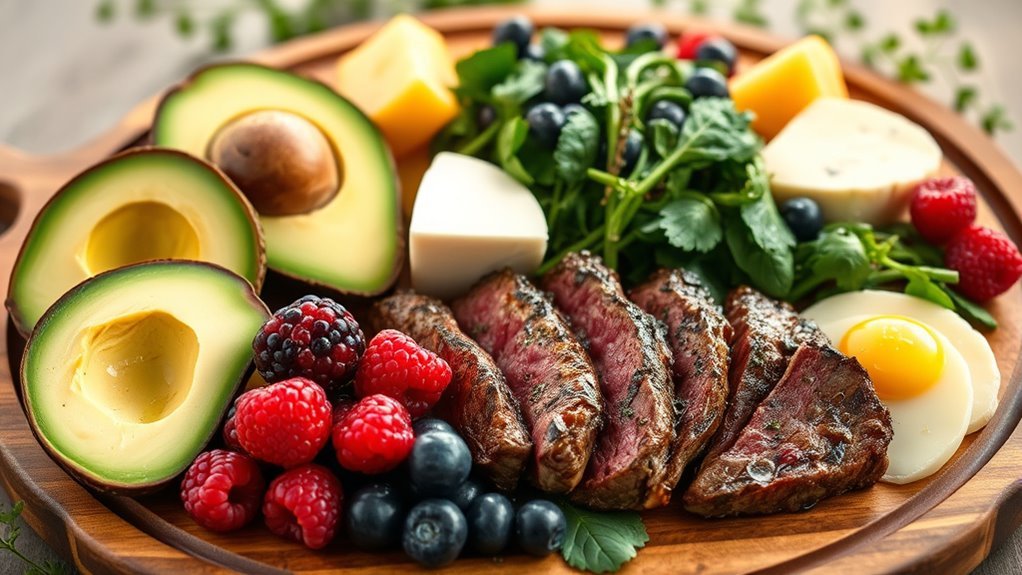

On the keto diet, you’ll cut carbs and focus on healthy fats and quality proteins. Enjoy avocados, olive oil, and fatty fish like salmon, while incorporating lean meats and full-fat dairy. For veggies, go for low-carb options like spinach and zucchini. You can also indulge in keto-friendly snacks such as cheese crisps and desserts made with almond flour. This approach boosts energy and curbs cravings. There’s more to explore on what you can enjoy!
Understanding the Basics of the Keto Diet
While many diets promise quick results, understanding the basics of the keto diet can help you make an informed decision about whether it’s suitable for you. The keto diet overview centers around drastically reducing carbohydrates and increasing healthy fats to shift your body’s metabolism into ketosis. In this state, your body becomes highly efficient at burning fat for fuel.
The benefits explanation includes weight loss, increased energy levels, and improved mental clarity. You’ll also find that many people experience reduced hunger pangs and cravings, granting you more freedom in your eating choices. However, it’s crucial to evaluate potential downsides, such as nutrient deficiencies. Ultimately, educating yourself on the keto diet can empower you to make choices that align with your health goals.
Healthy Fats to Include in Your Diet
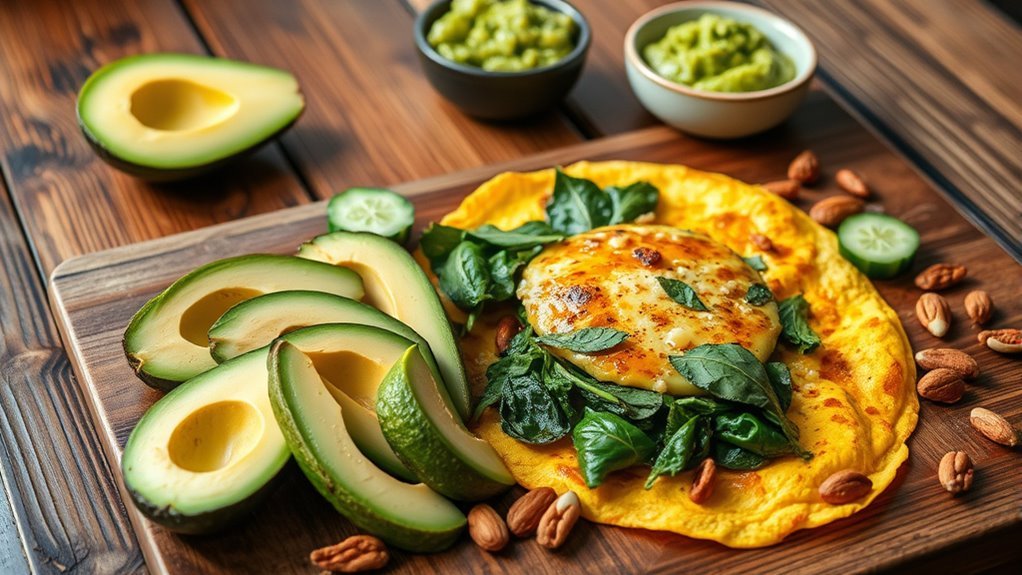
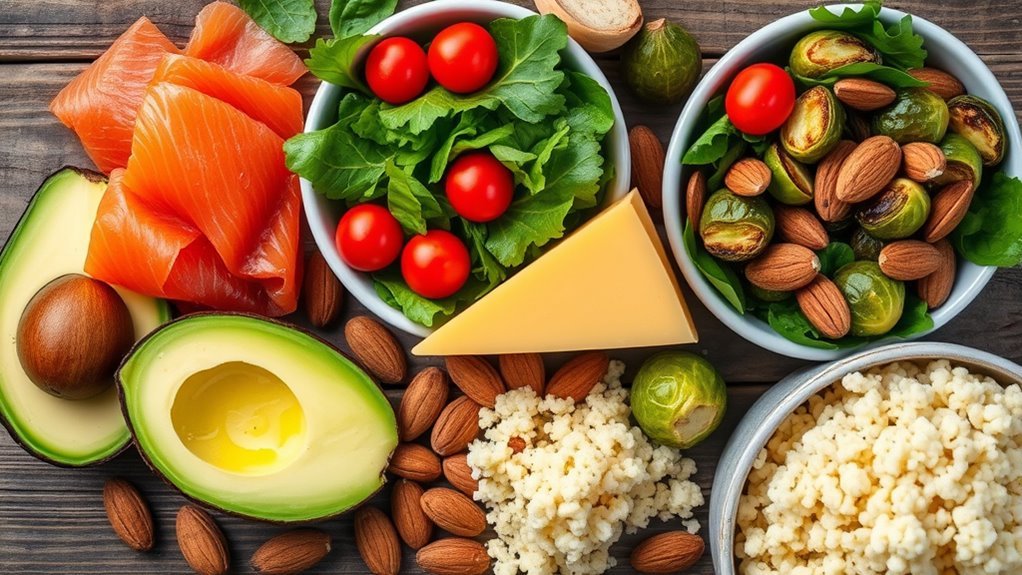
When you commence a keto diet, incorporating healthy fats is essential for achieving and maintaining ketosis. Avocados are a fantastic choice; their benefits include high monounsaturated fat content, which supports heart health and provides essential nutrients. You can enjoy them in salads, smoothies, or simply on their own. Olive oil is another excellent fat to include; it’s rich in antioxidants and has anti-inflammatory properties. Drizzling it over vegetables or using it as a base for salad dressings makes for delicious, heart-healthy meals. By focusing on these healthy fats, you can enhance your diet while promoting overall wellness. Remember, the right fats are key to feeling energized and satisfied on your keto journey.
Protein Sources Suitable for Keto
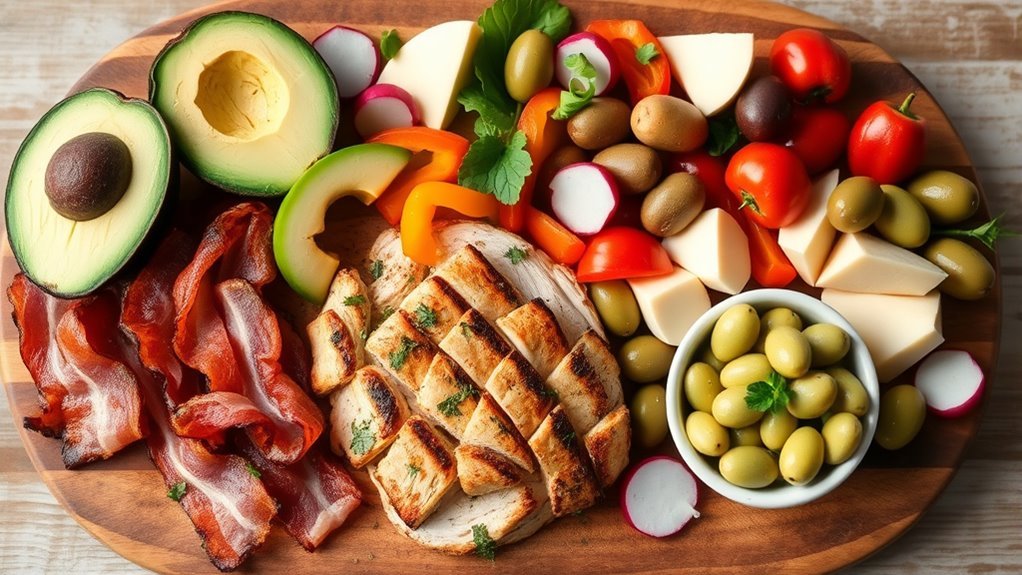
Choosing the right protein sources is essential for anyone following a keto diet, as they not only help maintain muscle mass but also support overall health. Focus on lean meats like chicken, turkey, and grass-fed beef, which provide high-quality protein without excess carbs. Fish, especially fatty varieties like salmon, is another great option, offering both protein and healthy fats. Don’t overlook dairy options, such as full-fat yogurt, cheese, and cottage cheese, which can enhance your meals while keeping you in ketosis. Eggs are also a versatile protein source, packed with nutrients. By selecting these protein-rich foods, you’ll enjoy delicious meals while fueling your body effectively on the keto journey.
Low-Carb Vegetables to Enjoy
Incorporating low-carb vegetables into your keto diet is a fantastic way to boost nutrient intake without exceeding your carbohydrate limits. Veggies like spinach, zucchini, and broccoli provide essential vitamins while offering keto vegetable benefits, such as increased fiber and antioxidants. You can easily include them in your meals through tasty low carb recipes, like sautéed spinach or zucchini noodles. These options not only satisfy your cravings but also help maintain your energy levels. Remember, the key is variety; rotating different low-carb vegetables guarantees you get a range of nutrients. So, don’t hesitate to experiment and enjoy the freedom of creating delicious, healthy dishes while staying true to your keto lifestyle. Your body will thank you!
Delicious Keto-Friendly Snacks and Desserts
While many snacks and desserts are off-limits on traditional diets, the keto lifestyle offers plenty of delicious options that satisfy your cravings without derailing your progress. You can explore keto snack ideas like cheese crisps, nut butter, or avocado slices topped with sea salt. For something sweet, try keto dessert recipes featuring almond flour or coconut flour, which are low in carbs yet full of flavor. Consider whipping up a batch of chocolate avocado mousse or baking keto-friendly cookies using erythritol as a sugar substitute. These treats not only keep you on track but also allow you to enjoy the freedom of indulgence without the guilt. Embrace these options, and your keto journey can be both satisfying and enjoyable!
1. What foods are allowed on the keto diet?
On the keto diet, you can consume foods that are high in fats and low in carbohydrates. This includes fatty cuts of meat, fish, eggs, dairy products like cheese and butter, nuts, seeds, avocados, and non-starchy vegetables such as leafy greens, broccoli, and cauliflower. It’s essential to avoid grains, sugars, and most fruits to maintain a state of ketosis.
2. Can I eat fruits on the keto diet?
While most fruits are high in sugar and carbohydrates, there are some low-carb options that can be included in moderation on a keto diet. Berries such as strawberries, raspberries, and blackberries are lower in carbs and can be enjoyed in small quantities. However, it’s best to limit fruit intake overall to stay within your daily carb limits.
3. Are there any snacks I can have on the keto diet?
Yes, there are plenty of keto-friendly snacks available. You can enjoy nuts and seeds, cheese slices, hard-boiled eggs, and avocados. Additionally, you can make keto-friendly snacks like guacamole, celery sticks with cream cheese, or keto protein bars that are low in carbs. Always check the nutritional information to ensure that your snacks align with your keto goals.
4. What should I avoid eating on the keto diet?
On the keto diet, you should avoid foods that are high in carbohydrates. This includes bread, pasta, rice, sugary foods, and most fruit (except for small amounts of berries). Avoid starchy vegetables like potatoes and corn, as well as processed foods that may contain hidden sugars and carbs. Staying clear of these foods will help you maintain ketosis.
5. Can I drink alcohol on the keto diet?
Alcohol can be consumed on the keto diet, but it’s important to choose wisely. Opt for low-carb options such as dry wine, spirits (like vodka, gin, or whiskey), and sugar-free mixers. Be cautious with flavored liquors and cocktails, as they often contain added sugars. Keep in mind that alcohol can affect your ketosis, so moderation is key.
References
- https://en.wikipedia.org/wiki/Ketogenic_diet
- https://www.healthline.com/nutrition/what-to-eat-on-keto
- https://www.cdc.gov/healthyweight/healthy_eating/dietary_guidelines.html
- https://www.ncbi.nlm.nih.gov/pmc/articles/PMC6302158/
- https://www.jamanetwork.com/journals/jama/fullarticle/2760431
- https://www.hsph.harvard.edu/nutritionsource/healthy-weight/dietary-guidelines/
- https://www.mayoclinic.org/healthy-lifestyle/nutrition-and-healthy-eating/expert-answers/keto-diet/faq-20490588
- https://www.webmd.com/diet/a-z/keto-diet-overview
- https://www.eatright.org/health/wellness/preventing-illness/keto-diet-explained