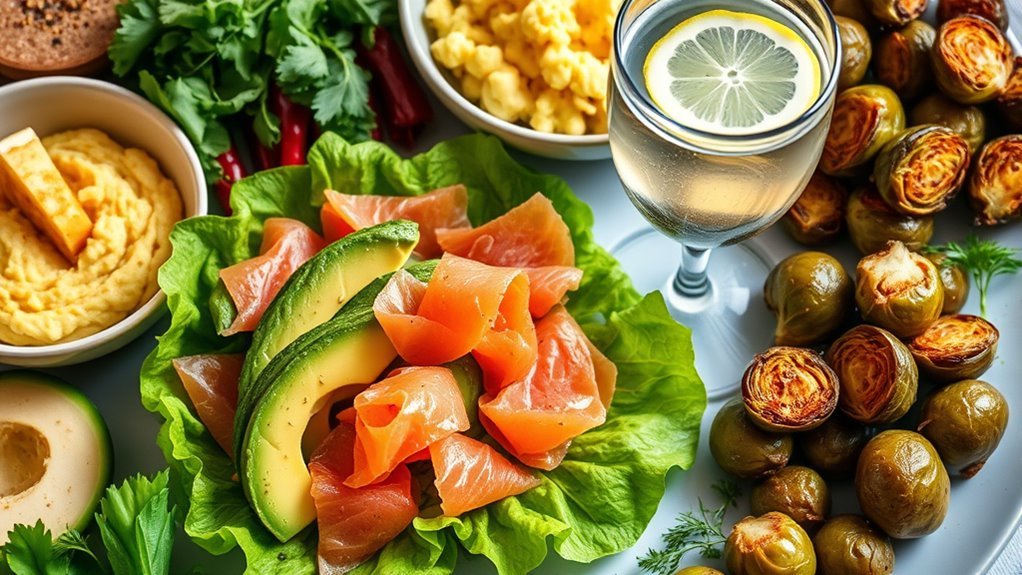

On a keto diet, you can enjoy low-carb veggies like spinach and broccoli, healthy fats such as avocados and olive oil, and lean proteins including chicken and fish. Dairy options like high-fat cheeses and unsweetened Greek yogurt can enhance your meals. Don’t forget about keto-friendly snacks like nut butter and cheese crisps to keep cravings at bay. This balanced approach supports weight loss and overall health, and there’s so much more to explore!
Low-Carb Vegetables
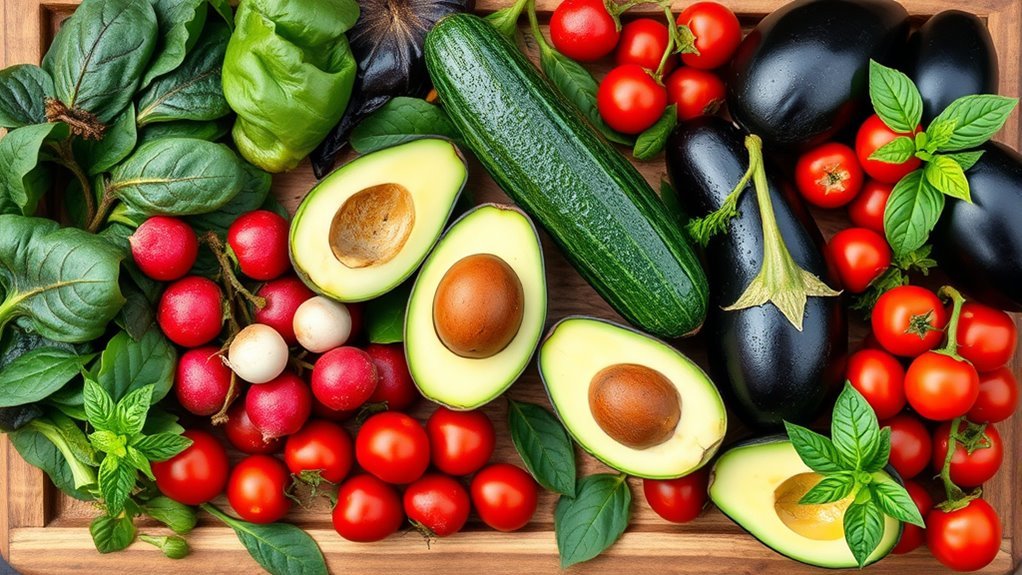
When it comes to the keto diet, low-carb vegetables are your best friends. Incorporating leafy greens like spinach, kale, and arugula can provide essential nutrients while keeping your carb intake low. These greens are packed with vitamins and minerals, making them a smart choice for maintaining overall health. Cruciferous vegetables, such as broccoli and cauliflower, are also excellent options. They’re not only low in carbs but high in fiber, which aids digestion and helps you feel full longer. Plus, their versatility allows you to enjoy them in a variety of dishes. By focusing on these low-carb veggies, you can enjoy a satisfying, nutrient-dense diet that supports your keto lifestyle and gives you the freedom to explore diverse flavors.
Healthy Fats
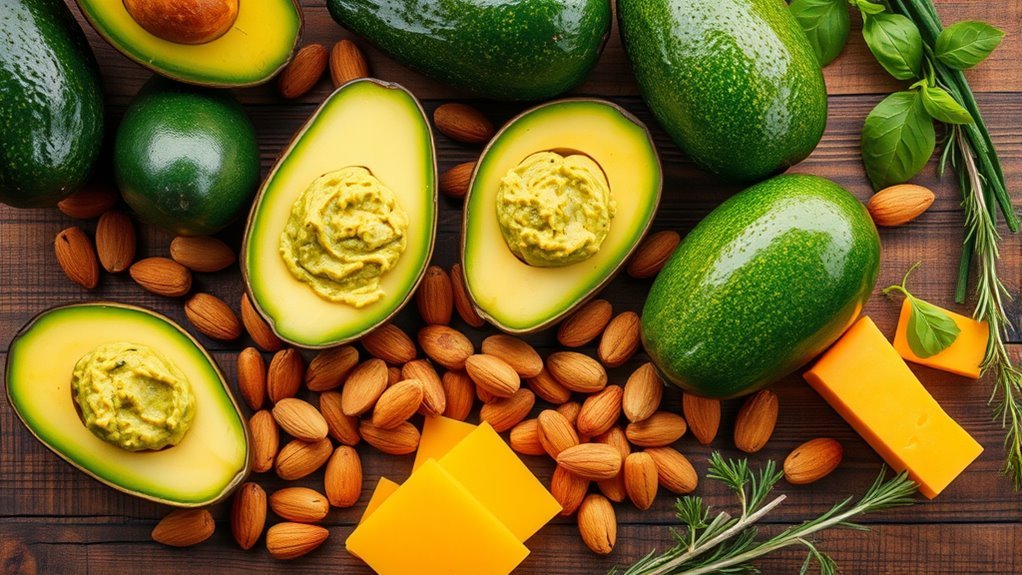
Incorporating low-carb vegetables into your keto diet lays a solid foundation, but pairing them with healthy fats is what truly enhances your meals and supports your goals. Healthy fats not only provide energy but also help you feel fuller longer. Here are some excellent options to include:
Pairing low-carb vegetables with healthy fats enhances your keto meals, providing energy and lasting fullness.
- Avocados: Packed with fiber and nutrients, the avocado benefits include heart health and improved digestion.
- Coconut Oil: Rich in medium-chain triglycerides (MCTs), it can boost your metabolism and support ketone production.
- Olive Oil: A staple in Mediterranean diets, it’s loaded with antioxidants and promotes heart health.
- Nuts and Seeds: They offer a great source of healthy fats, protein, and essential vitamins.
Incorporating these fats into your meals keeps your diet enjoyable and satisfying!
Protein Sources
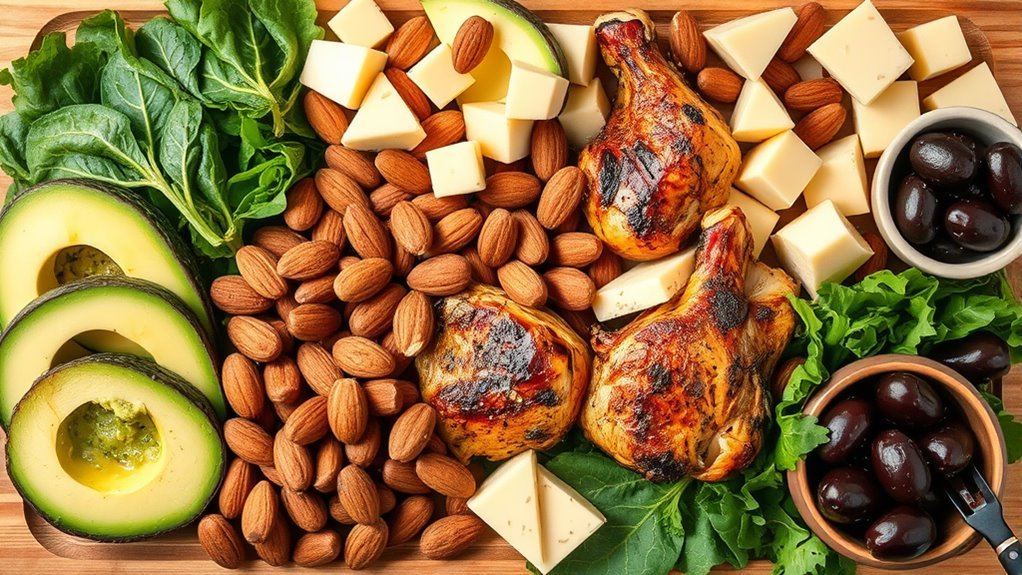
Although you might think of protein sources as limited on a keto diet, there are actually plenty of delicious and nutritious options to choose from. Lean meats, like chicken, turkey, and beef, are fantastic choices that provide essential amino acids while keeping carbs low. Fish and seafood also offer high-quality protein and healthy fats, making them ideal for your keto journey. If you’re looking for variety, consider incorporating plant proteins such as tofu, tempeh, and legumes, which can fit within your carb limit when consumed in moderation. These options not only help you meet your protein needs but also enhance your meals with different flavors and textures. Embrace these protein sources to stay satisfied and energized while enjoying your keto lifestyle.
Dairy Products
While you might think dairy products are off-limits on a keto diet, many can actually be excellent additions to your meal plan. Incorporating the right dairy can enhance flavor and nutrition while keeping carbs low. Here are some great options:
Dairy can be a delicious and nutritious part of your keto diet, enhancing flavors while keeping carbs low.
- Cheese Varieties: Opt for high-fat cheeses like cheddar, mozzarella, and cream cheese.
- Greek Yogurt Options: Choose full-fat, unsweetened Greek yogurt for a creamy, low-carb treat.
- Heavy Cream: Perfect for coffee or sauces, it adds richness without excessive carbs.
- Butter: A staple for cooking, butter is a fantastic source of healthy fats.
These dairy products not only provide essential nutrients but also give you the freedom to enjoy delicious meals while staying within your keto goals.
Keto-Friendly Snacks
Finding the right snacks on a keto diet can be a game-changer, especially when you’re looking to satisfy cravings without derailing your low-carb goals. There are plenty of delicious keto-friendly snacks you can enjoy. For quick options, consider store-bought choices like cheese crisps, nut butter packets, or jerky—just check the labels for added sugars. If you prefer homemade treats, explore keto snack recipes such as avocado deviled eggs or almond flour crackers. These options not only keep your carb count in check but also offer essential nutrients. With a bit of creativity and planning, you can enjoy satisfying snacks that align perfectly with your keto lifestyle, giving you the freedom to indulge without guilt.
Frequently Asked Questions about the Keto Diet
1. What foods can I eat on a keto diet?
On a keto diet, you can enjoy a variety of foods that are low in carbohydrates and high in healthy fats. These include meats (like beef, chicken, and pork), fatty fish (such as salmon and mackerel), eggs, dairy products (cheese, butter, and cream), non-starchy vegetables (like spinach, broccoli, and cauliflower), nuts and seeds, and healthy oils (like olive oil and coconut oil). Be sure to avoid high-carb foods such as grains, sugars, and most fruits.
2. Can I eat fruits on a keto diet?
Fruits are generally high in carbohydrates and sugars, which makes them less suitable for a keto diet. However, you can consume small amounts of low-carb fruits such as berries (strawberries, raspberries, and blackberries) in moderation. Avocados and tomatoes are also considered fruits and are excellent options due to their low carb content and high healthy fat content.
3. Are there any snacks I can have on a keto diet?
Yes, there are plenty of keto-friendly snacks you can enjoy! Some great options include cheese slices, hard-boiled eggs, nuts (like almonds and walnuts), seeds (such as sunflower or pumpkin seeds), olives, and low-carb vegetable sticks with guacamole or cream cheese. You can also find various keto-friendly bars and chips marketed specifically for those following the ketogenic lifestyle.
4. Can I drink alcohol on a keto diet?
While alcohol can be consumed on a keto diet, it’s important to choose wisely. Opt for low-carb options such as spirits (vodka, gin, tequila) mixed with soda water or dry wines (red or white) which contain fewer carbs. Be cautious with flavored liquors, sweet wines, and beer, as they can quickly raise your carb intake and potentially kick you out of ketosis.
5. How can I ensure I’m getting enough nutrients on a keto diet?
To ensure you’re getting enough nutrients on a keto diet, focus on incorporating a wide variety of low-carb vegetables to provide vitamins and minerals. Include different protein sources, such as fish, poultry, and plant-based options like tofu, to diversify your nutrient intake. Additionally, consider supplementing with electrolytes and vitamins as needed, especially magnesium, potassium, and sodium, to help balance nutrient levels and maintain overall health.
References
- https://www.ncbi.nlm.nih.gov/pmc/articles/PMC7071572/
- https://www.health.harvard.edu/staying-healthy/the-ketogenic-diet
- https://www.webmd.com/diet/obesity/what-is-the-keto-diet
- https://www.cdc.gov/healthyweight/assessing/bmi/adult_bmi/index.html
- https://www.mayoclinic.org/healthy-lifestyle/nutrition-and-healthy-eating/expert-answers/keto-diet/faq-20417611
- https://www.bbcgoodfood.com/howto/guide/keto-diet-what-can-eat
- https://www.eatright.org/health/wellness/preventing-illness/keto-diet-what-you-need-to-know
- https://www.diabetes.org/nutrition/healthy-foods/keto-diet
- https://www.who.int/news-room/fact-sheets/detail/healthy-diet