

Experiencing keto flu is common when transitioning to a ketogenic diet, and it can include a variety of symptoms such as fatigue, irritability, and headaches. Understanding these symptoms can help you manage them more effectively and ease your transition into ketosis. In this article, we’ll explore the key symptoms of keto flu and how to cope with them.
Understanding Keto Flu

Keto flu refers to a group of symptoms that occur as your body adjusts to a low-carb, high-fat diet. When you drastically reduce carbohydrate intake, your body goes through a metabolic shift that can lead to temporary discomfort. This adjustment period typically begins within the first week of starting a ketogenic diet and can last anywhere from a few days to a week. During this time, your body is depleting glycogen stores and transitioning to fat as its primary energy source. The keto flu is not a medically recognized condition, but it is a term widely used to describe this transitional phase. It serves as a reminder that dietary changes can have profound effects on the body, necessitating both patience and preparation.
Common Symptoms of Keto Flu
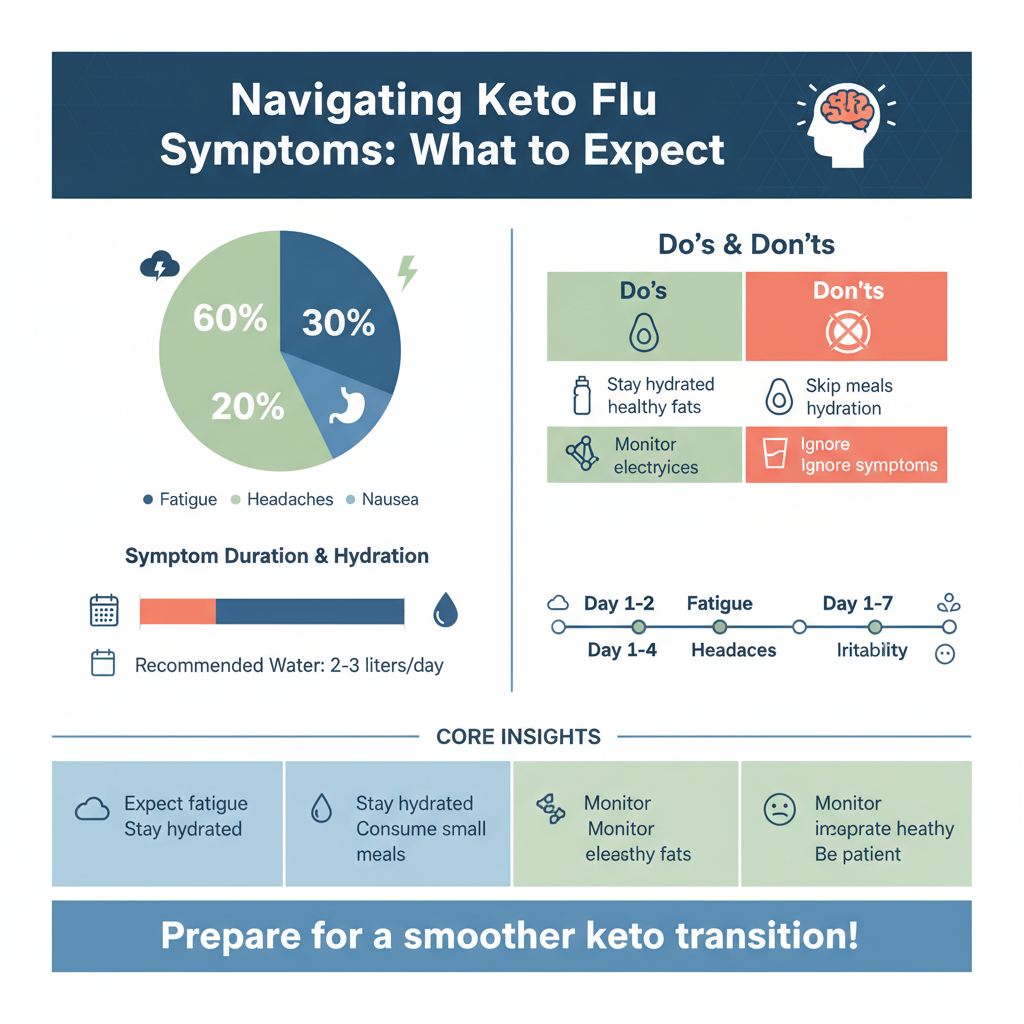
– Fatigue and lethargy: Many individuals report feeling unusually tired as their energy source shifts from carbohydrates to fats. This fatigue can be exacerbated by a lack of essential nutrients that are typically consumed in higher-carb diets, leading to a feeling of sluggishness. To combat this, consider incorporating nutrient-dense foods rich in healthy fats, such as avocados, nuts, and seeds, which can provide sustained energy.
– Headaches and migraines: Dehydration and electrolyte imbalances can lead to headaches during the initial stages of keto. As your body excretes more water and electrolytes in response to lower insulin levels, the risk of headaches increases. Staying well-hydrated and monitoring your electrolyte intake can help alleviate this symptom. Drinking bone broth or sports drinks with low sugar can also be beneficial.
Other Notable Symptoms

– Nausea: Some people may experience digestive discomfort or nausea as their body adapts. This symptom can be particularly distressing and may vary in intensity among individuals. To ease nausea, try consuming smaller, more frequent meals that are high in fat and low in carbohydrates. Ginger tea or peppermint tea can also be soothing and help settle the stomach.
– Irritability: Mood swings and irritability can result from changes in energy levels and hormonal fluctuations. As your brain adjusts to using ketones instead of glucose for fuel, you may find yourself feeling more irritable than usual. Engaging in regular physical activity and ensuring you get adequate sleep can help stabilize your mood and improve overall well-being during this transition.
Causes of Keto Flu Symptoms
– Electrolyte imbalances: Reducing carbohydrate intake can lead to a loss of essential electrolytes like sodium, potassium, and magnesium. These electrolytes play crucial roles in muscle function, hydration, and overall cellular function. As your body adapts to the ketogenic diet, it’s vital to monitor and replenish these electrolytes, either through food sources or supplements. Foods such as leafy greens, nuts, and seeds can help restore balance.
– Dehydration: The keto diet can cause the body to excrete more water, leading to dehydration, which exacerbates symptoms. This diuretic effect is often a result of lower insulin levels, which prompt the kidneys to release excess sodium and water. To combat dehydration, aim to drink at least half your body weight in ounces of water daily. Including electrolyte-rich fluids or consuming foods with high water content can also aid hydration.
How to Alleviate Symptoms
– Stay hydrated: Drink plenty of water and consider electrolyte supplements to help balance your body’s needs. Hydration is key during this transition, as it can alleviate many of the symptoms associated with keto flu. Consider adding a pinch of salt to your water or using electrolyte powders designed for keto dieters that contain no added sugars.
– Gradual transition: Transitioning slowly into a keto diet can reduce the intensity of symptoms by allowing your body to adjust more comfortably. Instead of going cold turkey on carbohydrates, gradually reduce your intake over a week or two. This approach can help your body adjust without overwhelming it, making the transition smoother and more manageable.
When to Seek Medical Advice
– Persistent symptoms: If symptoms last longer than a week or worsen, it might be wise to consult a healthcare professional. While keto flu is typically temporary, prolonged symptoms could indicate other underlying health issues that need to be addressed.
– Severe symptoms: Symptoms such as extreme fatigue, heart palpitations, or confusion warrant immediate medical attention. It is essential to prioritize your health and seek professional guidance if you experience any concerning symptoms during your dietary transition.
Keto flu can be an uncomfortable part of starting a ketogenic diet, but understanding the symptoms and knowing how to manage them can make the transition smoother. Staying hydrated, replenishing electrolytes, and considering a gradual transition can significantly alleviate discomfort. Remember to listen to your body and be mindful of your symptoms; if they persist or worsen, don’t hesitate to reach out for professional advice. With the right strategies in place, you can navigate keto flu and pave the way for a successful ketogenic lifestyle.
Frequently Asked Questions
What are the common symptoms of keto flu?
The common symptoms of keto flu include fatigue, headache, irritability, dizziness, nausea, and muscle cramps. These symptoms typically occur within the first few days of starting a ketogenic diet as your body adjusts to burning fat for fuel instead of carbohydrates. It’s essential to stay hydrated and maintain your electrolyte levels during this transition to alleviate these symptoms.
How long does keto flu last and when can I expect relief?
Keto flu usually lasts between 1 to 2 weeks, but the duration can vary from person to person. Relief often comes as your body adapts to ketosis, typically after the first few days to a week. Staying well-hydrated, consuming enough electrolytes, and gradually reducing carbohydrate intake can help shorten the duration and severity of these symptoms.
Why do people experience keto flu when starting a ketogenic diet?
People experience keto flu due to the sudden shift in their body’s primary energy source from carbohydrates to fats. During this transition, the body goes through withdrawal from carbs, which can lead to a variety of symptoms as it adjusts to ketosis. Additionally, factors such as dehydration and electrolyte imbalances can exacerbate these symptoms.
What are the best ways to alleviate symptoms of keto flu?
To alleviate symptoms of keto flu, ensure you are drinking plenty of water to stay hydrated and consider supplementing with electrolytes such as sodium, potassium, and magnesium. Eating nutrient-dense foods that are low in carbs can also help, along with gradually transitioning into the diet instead of making abrupt changes. Gentle physical activity may also aid in easing symptoms.
Which foods should I avoid to prevent keto flu symptoms?
To prevent keto flu symptoms, avoid high-carbohydrate foods such as bread, pasta, rice, sugary snacks, and starchy vegetables. These foods can hinder your body’s ability to enter ketosis, prolonging the transition period. Instead, focus on low-carb, high-fat foods like avocados, nuts, seeds, and healthy oils to promote a smoother transition and minimize symptoms.
References
- The Keto Flu: Symptoms and How to Get Rid of It
- https://www.webmd.com/diet/what-is-keto-flu
- https://www.ncbi.nlm.nih.gov/pmc/articles/PMC6837319/
- https://www.mayoclinic.org/healthy-lifestyle/nutrition-and-healthy-eating/expert-answers/keto-diet/faq-20461183
- https://www.verywellfit.com/keto-flu-symptoms-5191430
- https://www.clevelandclinic.org/health/diseases/21664-ketogenic-diet
- https://www.health.harvard.edu/staying-healthy/the-ketogenic-diet
- https://www.nutrition.gov/topics/nutrition-101/dietary-approaches/keto-diet