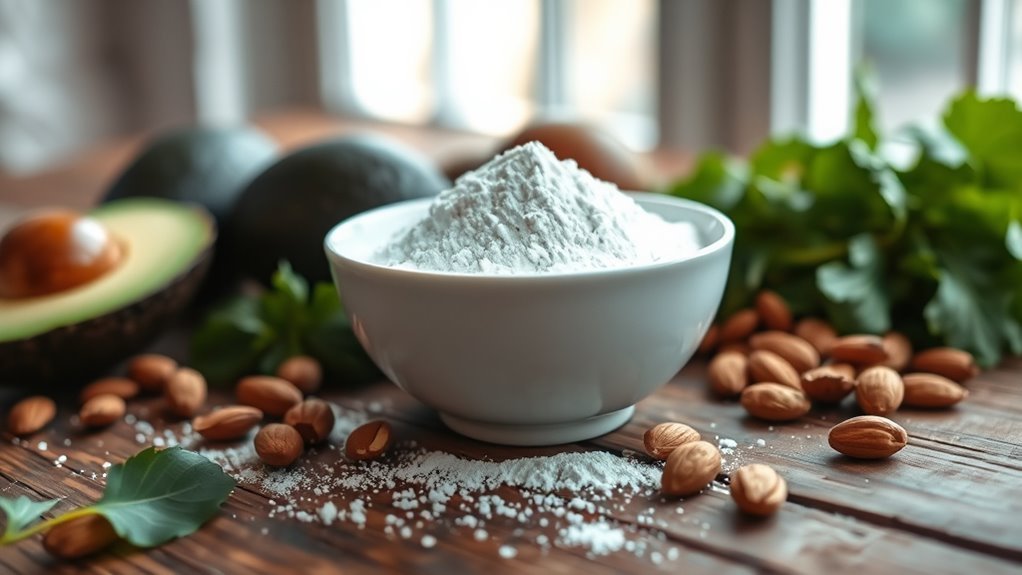

Yes, xanthan gum is keto-friendly. It contains virtually no calories or carbohydrates, making it perfect for low-carb diets. This ingredient enhances texture and stability in recipes, helping you achieve creamy sauces and soups without adding macros. While it’s beneficial for digestive health as a soluble fiber, moderation is key, as excessive use can lead to digestive issues. Curious about how to incorporate xanthan gum into your keto meals? There’s more to explore!
What Is Xanthan Gum?
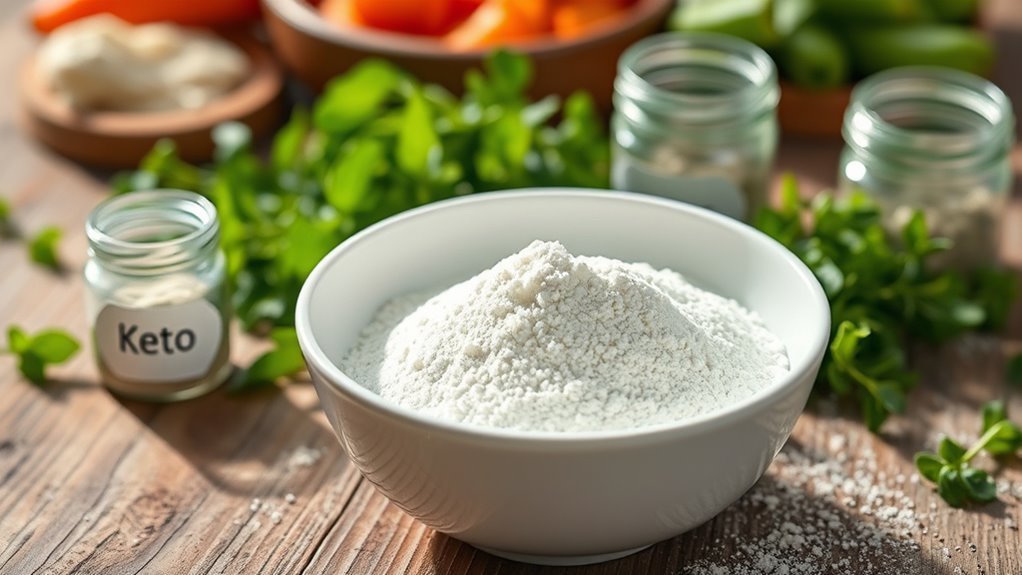
Xanthan gum is a popular food additive derived from the fermentation of sugar by the bacterium Xanthomonas campestris. You’ll find it commonly used as a thickening and stabilizing agent in various food products. One of the key xanthan gum benefits is its ability to improve texture and viscosity, making it ideal for gluten-free baking and sauces, where it helps mimic the characteristics of gluten. Additionally, xanthan gum acts as a stabilizer in salad dressings and ice creams, preventing separation. Its versatility extends beyond food; it’s also used in cosmetics and pharmaceuticals. By incorporating xanthan gum into your diet, you can enjoy improved consistency and mouthfeel in your favorite recipes while adhering to specific dietary preferences.
Nutritional Profile of Xanthan Gum
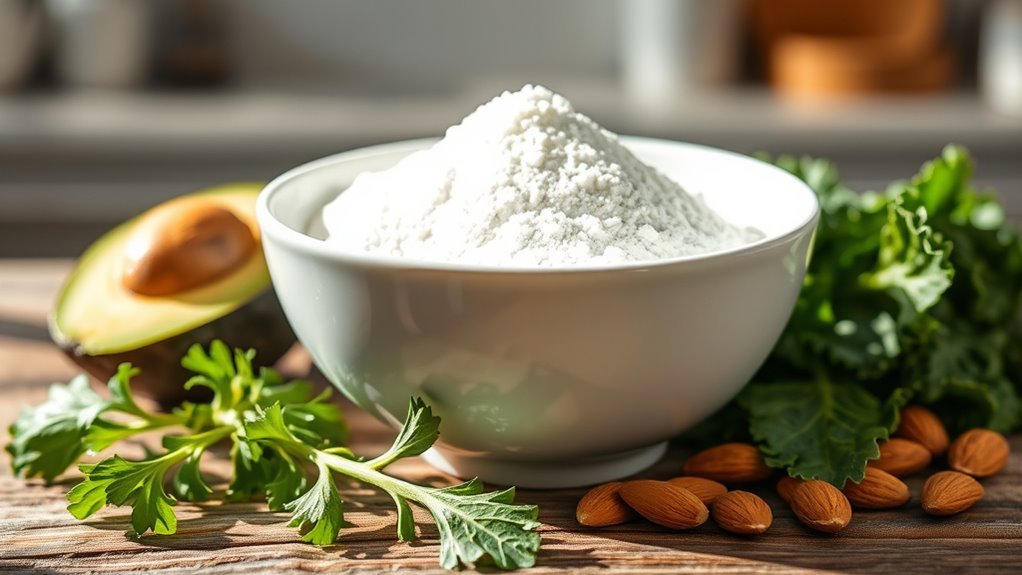
When considering the nutritional profile of xanthan gum, it is essential to note its unique composition. This thickening agent, derived from fermented sugars, contains virtually no calories or carbohydrates, making it a popular choice in keto diets. Its primary nutritional benefits stem from its ability to enhance texture and stability in food products without adding significant macronutrients. Xanthan gum also acts as a soluble fiber, which can aid digestion and promote gut health. Since it absorbs water, it can help you feel fuller longer, which can be beneficial for weight management. Overall, xanthan gum serves as a versatile ingredient that aligns well with a low-carb lifestyle, providing functionality without compromising your nutritional goals.
How Xanthan Gum Is Made
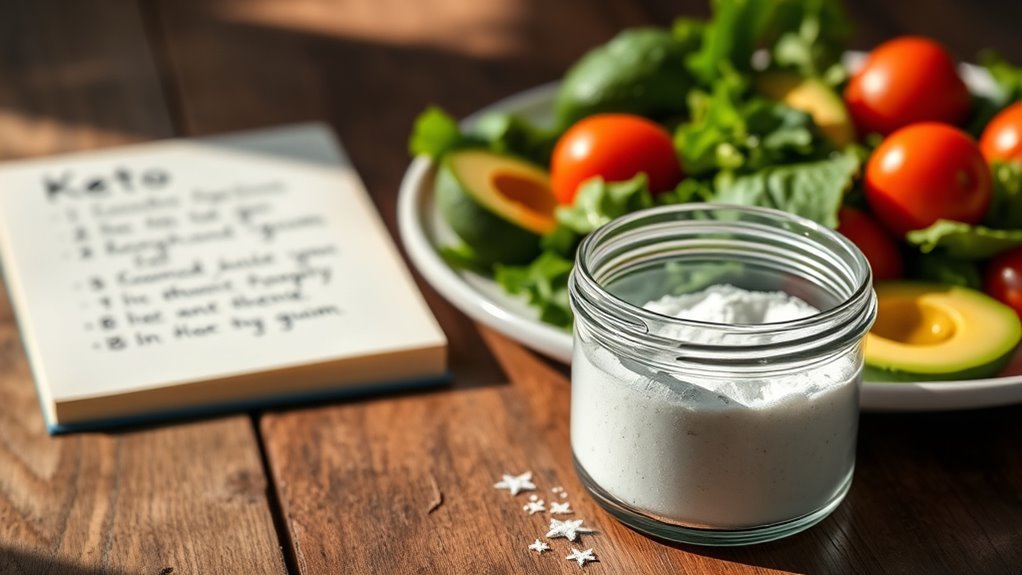
Xanthan gum is produced through a fermentation process that utilizes specific ingredients, primarily from the Xanthomonas campestris bacteria. This method not only influences the final product’s characteristics but also determines its thickening and stabilizing properties. Understanding these aspects can help you appreciate its role in various food applications.
Fermentation Process Explained
While many might not realize it, the production of xanthan gum involves a fascinating fermentation process that transforms a simple sugar into a versatile thickening agent. This process is primarily driven by microbial activity, specifically the bacterium Xanthomonas campestris. There are various fermentation types, each impacting the final product’s quality and characteristics.
Here’s a quick overview:
| Fermentation Type | Microbial Activity | Final Product Characteristics |
|---|---|---|
| Batch | Controlled growth | High viscosity |
| Continuous | Steady supply | Consistent texture |
| Semi-continuous | Intermittent input | Variable viscosity |
| Solid-state | Limited moisture | Unique flavors and textures |
Understanding these fermentation types helps you appreciate the complexity behind xanthan gum’s versatility in food and other industries.
Ingredients Used in Production
The creation of xanthan gum relies on a specific set of ingredients that play essential roles in its production process. Primarily, xanthan production starts with the fermentation of glucose or sucrose, which are derived from various ingredient sources such as corn, wheat, or sugar beets. This fermentation is carried out by the bacterium Xanthomonas campestris, which metabolizes these sugars to produce xanthan gum. Additional nutrients, like nitrogen sources, are often added to optimize bacterial growth and enhance the fermentation process. By understanding these ingredient sources, you can appreciate the complexity behind xanthan gum’s creation and its versatility in food formulations. Ultimately, this knowledge empowers you to make informed choices regarding ingredients in your diet.
Final Product Characteristics
In order to understand the final product characteristics of xanthan gum, it’s essential to take into account the fermentation process and subsequent purification steps. This biopolymer, produced by fermenting glucose or sucrose with Xanthomonas campestris bacteria, results in a thick, viscous gel. The final product exhibits unique properties, making it valuable in various applications.
| Characteristic | Description |
|---|---|
| Viscosity | Increases thickness in liquids |
| Stability | Maintains consistency under heat |
| Xanthan Gum Uses | Thickening agent, stabilizer in foods |
Although xanthan gum is widely used, alternatives like guar gum and locust bean gum can serve as xanthan gum substitutes for those seeking options.
Benefits of Using Xanthan Gum on Keto
Xanthan gum serves as a versatile thickening agent in the keto diet, offering several benefits that can enhance your culinary creations. Incorporating xanthan gum into your keto recipes not only improves texture but also supports various health benefits, making it a valuable addition to your pantry.
Xanthan gum enhances keto recipes by improving texture and providing health benefits, making it an essential pantry staple.
Here are some key advantages:
- Improves Texture: It helps achieve a creamy or chewy consistency in foods.
- Low-Calorie: Xanthan gum is virtually calorie-free, fitting perfectly into a keto lifestyle.
- Stabilizes Ingredients: It prevents separation in dressings and sauces.
- Enhances Fiber Intake: Promotes digestive health by adding soluble fiber.
- Versatile Usage: Works well in both savory and sweet dishes, expanding your recipe options.
Potential Drawbacks of Xanthan Gum
While xanthan gum can enhance your keto cooking, it’s important to contemplate some potential drawbacks that may arise from its use. One significant concern is that xanthan gum can lead to digestive issues for some individuals, particularly if consumed in large quantities. This thickening agent may cause bloating, gas, or diarrhea, especially for those with sensitive stomachs or pre-existing gastrointestinal conditions. Additionally, there are health concerns regarding its impact on gut health, as it can alter the balance of gut bacteria when used excessively. So, while xanthan gum serves a purpose in low-carb recipes, being mindful of its potential side effects is vital for maintaining overall well-being on your keto journey.
How to Use Xanthan Gum in Keto Recipes
When you’re looking to enhance the texture and consistency of your keto recipes, incorporating xanthan gum can be a game-changer. Its unique properties allow it to mimic the texture of gluten, making it ideal for various dishes. Here are some effective xanthan gum uses to evaluate:
- Thickening Sauces: Add a small amount to create a glossy, smooth sauce.
- Baking: Use it in gluten-free flour blends for better elasticity.
- Dressings: Emulsify your homemade dressings for a creamy texture.
- Ice Cream: Prevent ice crystals in low-carb ice cream recipes.
- Soups and Stews: Enhance the body without adding carbs.
These keto recipe tips can elevate your dishes, ensuring you enjoy both taste and texture while staying within your dietary goals.
Alternatives to Xanthan Gum on Keto
If you’re looking for alternatives to xanthan gum on a keto diet, several options can deliver similar thickening and stabilizing effects without compromising your carb count. Here are some keto substitutes that can work well:
| Alternative Ingredient | Carb Count (per 1 tbsp) |
|---|---|
| Guar Gum | 0g |
| Psyllium Husk | 0g |
| Chia Seeds | 1g |
| Flaxseed Meal | 0g |
Guar gum is an excellent choice, providing a smooth texture. Psyllium husk offers fiber benefits too. Chia seeds and flaxseed meal not only thicken but add nutritional value. These low carb thickeners can help maintain the desired consistency in your recipes while keeping your keto journey on track.
Common Keto Recipes Featuring Xanthan Gum
When you’re following a keto diet, xanthan gum can be a game changer in the kitchen. It’s particularly effective for thickening sauces and dressings without adding carbs, making it a staple in many recipes. Additionally, it serves as a valuable gluten-free baking substitute and can enhance the creaminess of soups and stews, allowing you to enjoy a satisfying texture while staying within your dietary goals.
Thickening Sauces and Dressings
Xanthan gum is a powerful ingredient in the keto kitchen, especially for thickening sauces and dressings. It helps you achieve the perfect sauce consistency and dressing texture without adding carbs. Here are some common ways to use xanthan gum in your recipes:
- Creamy salad dressings: Enhance thickness while keeping it keto-friendly.
- Gravy: Create a rich, satisfying gravy without flour.
- Stews and soups: Thicken them to your desired consistency effortlessly.
- Dips: Make your favorite dips creamy and indulgent.
- Sauces: Elevate marinara or alfredo sauces for a restaurant-quality finish.
Gluten-Free Baking Substitutes
While many traditional baking recipes rely on gluten for structure and texture, those following a keto or gluten-free diet often need to adapt their approach. Xanthan gum serves as an essential ingredient, enhancing the performance of gluten-free flours. By incorporating the right baking techniques, you can achieve satisfying results.
| Gluten-Free Flour | Best Uses |
|---|---|
| Almond Flour | Cakes, cookies |
| Coconut Flour | Pancakes, muffins |
| Flaxseed Meal | Breads, smoothies |
| Oat Fiber | Baked goods, crusts |
Utilizing xanthan gum with these gluten-free flours can help mimic the elasticity and rise that gluten provides. You’ll find that experimenting with these substitutes opens new culinary doors without sacrificing your dietary goals.
Creamy Soups and Stews
Creamy soups and stews can be a comforting staple in a keto diet, especially when you want to maintain a rich texture without the carbs. Xanthan gum is a fantastic thickening agent that not only adds a creamy texture but also enhances the flavors of your dishes. Here are some common keto recipes where you can incorporate xanthan gum:
- Creamy Mushroom Soup: Perfect for a hearty lunch.
- Chicken Alfredo Stew: A flavorful twist on a classic.
- Broccoli Cheddar Soup: A comforting favorite with a creamy finish.
- Spicy Tomato Basil Soup: Great for a zesty kick.
- Pumpkin Spice Stew: Ideal for fall, rich in flavor.
Using xanthan gum allows you to enjoy delicious, satisfying meals while staying true to your keto goals.
Final Thoughts on Xanthan Gum and Keto
As you navigate the keto diet, it’s essential to contemplate how various ingredients can fit into your meal plan, and xanthan gum is no exception. This thickening agent offers numerous xanthan gum benefits, such as enhancing texture and stability in your low-carb recipes. With its minimal carbohydrate content, xanthan gum showcases impressive keto diet compatibility, making it a valuable addition to your pantry.
Using it in moderation allows you to enjoy creamy soups, sauces, and dressings without straying from your macro goals. However, be mindful of potential digestive sensitivities. Ultimately, incorporating xanthan gum can elevate your meals while keeping your keto journey enjoyable and flexible. Embrace this ingredient to reveal new culinary experiences while staying committed to your health goals.
Frequently Asked Questions
Can Xanthan Gum Impact Blood Sugar Levels on a Keto Diet?
Xanthan gum’s impact on blood sugar levels is negligible, almost as if it’s a ghost in the keto world. It’s keto compatible and doesn’t spike your blood sugar, making it a fantastic thickening agent for low-carb recipes. Research shows that it’s safe for those managing their glucose levels. So, feel free to incorporate it into your diet, knowing you’re not sacrificing your keto goals or your freedom to enjoy delicious meals.
Is Xanthan Gum Safe for Those With Gluten Intolerance?
Yes, xanthan gum’s safe for those with gluten intolerance, as it’s derived from fermented sugars and doesn’t contain gluten. Its benefits include acting as a thickener and stabilizer in gluten-free alternatives, enhancing texture in baked goods without compromising taste. By incorporating xanthan gum into your diet, you can enjoy various recipes while maintaining your gluten-free lifestyle. Always check labels to verify products meet your dietary needs, but xanthan gum is generally a reliable choice.
How Does Xanthan Gum Compare to Other Thickeners?
Xanthan gum stands out among thickeners like cornstarch and guar gum due to its unique properties. While some might argue it’s overly processed, it’s gluten-free and offers a strong thickening ability even in small amounts. In a guar gum comparison, xanthan gum often provides a smoother texture, making it a preferred choice for sauces and dressings. If you’re looking for reliable cornstarch alternatives, xanthan gum’s versatility can enhance your culinary freedom.
Can Xanthan Gum Cause Digestive Issues in Some Individuals?
Yes, xanthan gum can cause digestive discomfort in some individuals, particularly those with sensitivities to soluble fibers. Your individual tolerance plays a significant role; while many people digest it without issues, others may experience bloating or gas. If you’re prone to digestive problems, it’s wise to start with small amounts and monitor your body’s response. Understanding your own tolerance will help you enjoy xanthan gum’s benefits without adverse effects.
Is Xanthan Gum Suitable for a Vegan Keto Diet?
Yes, Xanthan gum’s a suitable selection for a vegan keto diet. This versatile vegan alternative boasts keto compatibility, enhancing texture without adding carbs. It’s derived from fermenting sugars, making it a perfect pick for plant-based diets. Research shows it can also aid digestion, although some might experience mild discomfort. Overall, incorporating Xanthan gum can elevate your culinary creations while keeping your diet aligned with both vegan and keto principles. Enjoy the freedom to indulge!
Frequently Asked Questions about Xanthan Gum and Keto
1. What is Xanthan Gum?
Xanthan gum is a polysaccharide used as a thickening agent and stabilizer in various food products. It is produced through the fermentation of carbohydrates by the bacterium Xanthomonas campestris. Xanthan gum is popular in gluten-free cooking and is often used to improve the texture of sauces, dressings, and baked goods.
2. Is Xanthan Gum Keto-Friendly?
Yes, xanthan gum is considered keto-friendly. It is low in carbohydrates and does not significantly impact blood sugar levels, making it suitable for those following a ketogenic diet. It can be used to add texture and thickness to keto recipes without adding excessive carbs.
3. How can I use Xanthan Gum in my Keto Recipes?
Xanthan gum can be used in various keto recipes to improve texture and viscosity. Common uses include thickening sauces, soups, and dressings, as well as enhancing the stability of baked goods. A little goes a long way; typically, about 1/4 to 1/2 teaspoon is sufficient for most recipes. It’s best to mix it with dry ingredients before adding it to liquids to prevent clumping.
4. Are there any side effects of consuming Xanthan Gum?
While xanthan gum is generally recognized as safe, some individuals may experience digestive issues, such as gas, bloating, or diarrhea, especially when consumed in large amounts. It is advisable to start with small quantities and monitor your body’s response. If you have specific health concerns, consulting with a healthcare professional is recommended.
5. Where can I buy Xanthan Gum?
Xanthan gum can be purchased at most grocery stores, health food stores, and online retailers. It is often found in the baking or gluten-free section. When selecting xanthan gum, look for brands that are free from additives or fillers to ensure quality and purity.
References
- https://www.ncbi.nlm.nih.gov/pmc/articles/PMC7201730/
- https://www.healthline.com/nutrition/xanthan-gum
- https://www.sciencedirect.com/topics/food-science/xanthan-gum
- https://www.webmd.com/diet/what-is-xanthan-gum
- https://www.wikipedia.org/wiki/Xanthan_gum
- https://www.ncbi.nlm.nih.gov/pmc/articles/PMC7010545/
- https://www.diabetes.co.uk/nutrition/xanthan-gum.html
- https://www.cdc.gov/nutrition/resources-publications/healthy-eating/food-additives.html