

Tapioca isn’t keto-friendly due to its high carbohydrate content, with around 38 grams per 100 grams. This can disrupt your ketosis, making it challenging to maintain your diet. Although it’s gluten-free and easy to digest, it offers minimal nutritional value and can cause spikes in blood sugar. If you’re looking for alternatives or ways to incorporate tapioca in moderation, there are options available that can keep your meals delicious and within keto guidelines.
Understanding Tapioca: What Is It?
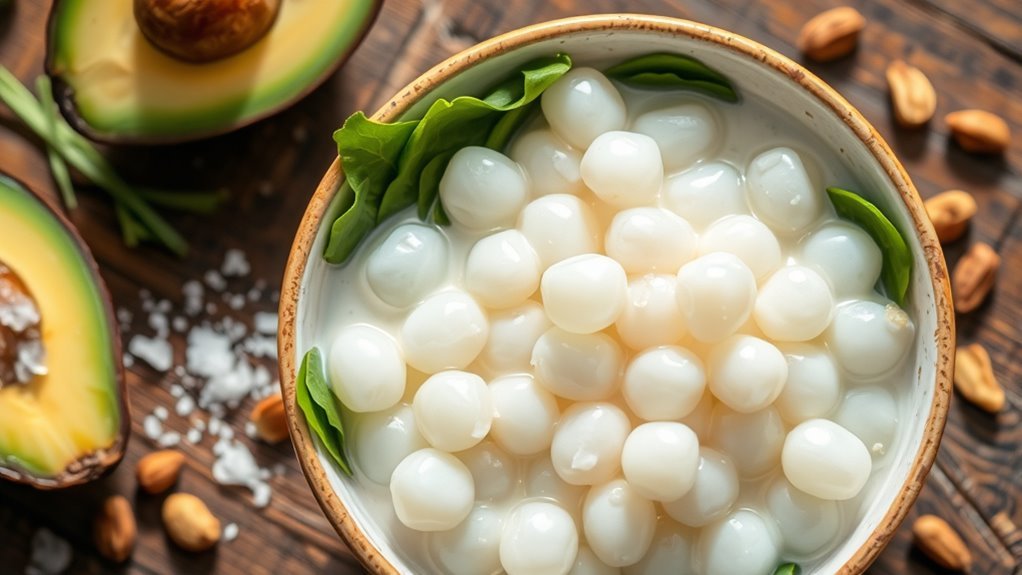
Tapioca is a starchy substance derived from the cassava root, primarily known for its use in various culinary applications, such as puddings and bubble tea. Its origins trace back to South America, where indigenous peoples first harnessed the cassava plant for sustenance. As it spread globally, tapioca found its place in diverse cuisines, particularly in Asia and Africa. You might be familiar with its versatility; it can be used in desserts, as a thickening agent, or as a gluten-free alternative in baking. The unique texture and chewiness it adds to dishes make it a popular choice for many. Understanding tapioca’s origins and uses can empower you to explore new culinary experiences and appreciate its cultural significance.
Nutritional Profile of Tapioca
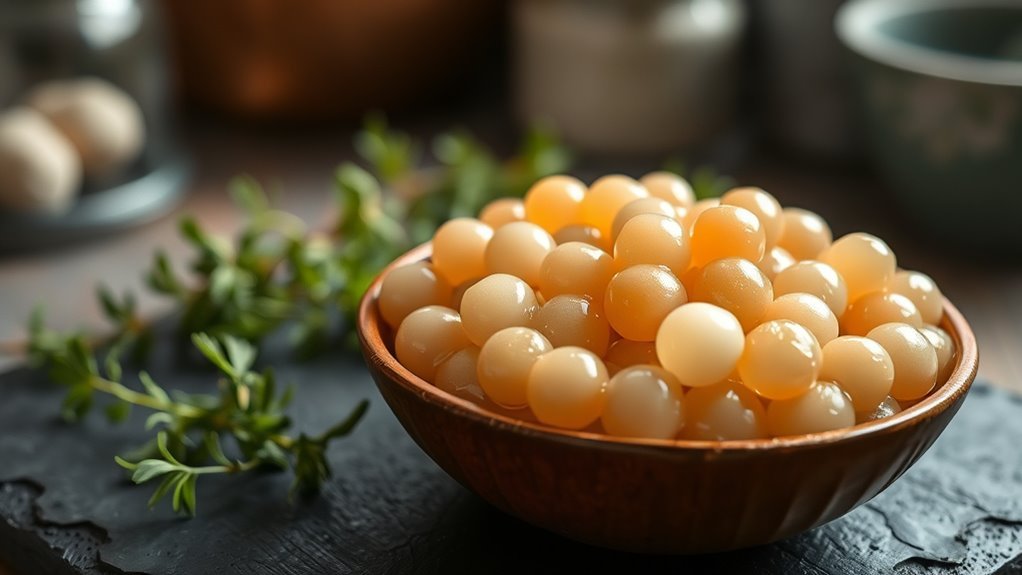
When you look at tapioca’s nutritional profile, you’ll notice that it’s primarily made up of carbohydrates, which can be a key factor if you’re considering a keto diet. In addition to its high carbohydrate content, tapioca also contains some essential nutrients and minerals that contribute to its overall value. Understanding these components can help you make informed dietary choices.
Carbohydrate Content Overview
Although many enjoy tapioca for its unique texture and versatility, its carbohydrate content makes it a less-than-ideal choice for those following a ketogenic diet. Originating from the cassava root, tapioca has various forms, such as pearls, flour, and flakes, but they all share a high carbohydrate profile. Here’s a quick overview:
- Contains about 38 grams of carbs per 100 grams
- Low in fiber, making it less satiating
- Minimal protein content compared to other foods
- High glycemic index, which can spike blood sugar levels
- Commonly used in desserts and bubble tea, increasing its appeal
If you’re seeking low-carb options, exploring alternatives to tapioca varieties may be beneficial for maintaining your keto lifestyle.
Nutrients and Minerals Present
While many people enjoy tapioca for its unique texture, it’s important to contemplate its nutritional profile. Tapioca is primarily composed of carbohydrates, providing quick energy, but it lacks significant protein, fiber, vitamins, and minerals. Some tapioca benefits include being gluten-free and easy to digest, making it suitable for those with dietary restrictions. However, the tapioca drawbacks are evident in its low nutritional density, as it offers minimal essential nutrients. You’ll find small amounts of calcium and iron, but these are not sufficient to meet your daily needs. If you’re considering tapioca in your diet, be mindful of its role as a carb source and balance it with other nutrient-rich foods to guarantee a well-rounded diet.
Carbohydrates in Tapioca: A Closer Look
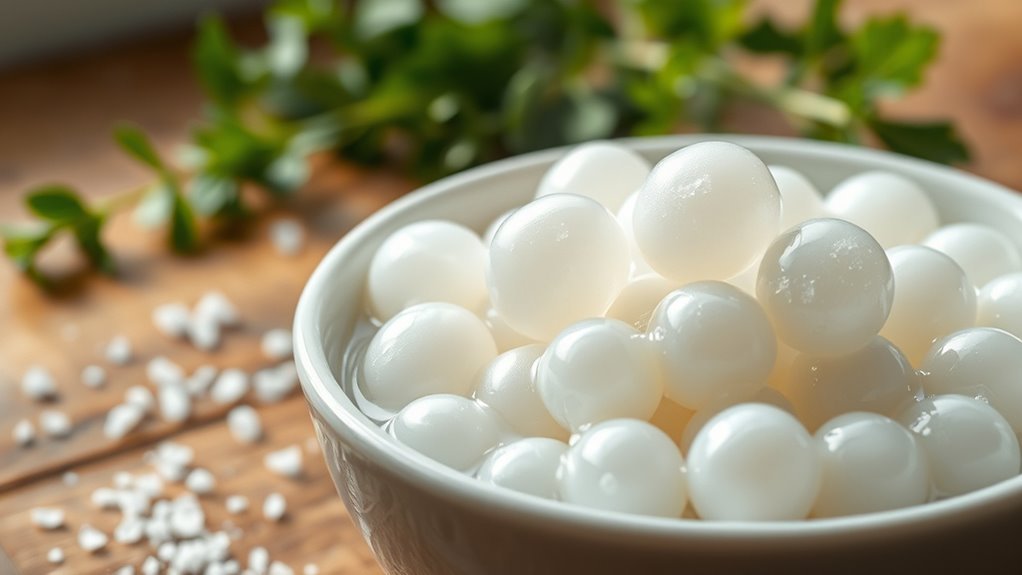
Tapioca, a starchy extract derived from cassava root, is mainly composed of carbohydrates, making it a significant energy source. If you’re exploring different tapioca varieties, it’s essential to understand their carbohydrate content as it influences your dietary choices. Here’s a closer look:
- Tapioca pearls: Commonly used in bubble tea, high in carbs.
- Tapioca flour: A popular gluten-free option, rich in starch.
- Tapioca chips: Crunchy snacks with concentrated carbs.
- Instant tapioca: Quick-cooking, retains high carbohydrate levels.
- Cassava flour: A versatile ingredient with similar carb content.
When considering cooking methods, keep in mind that boiling or frying can change the texture but not the carbohydrate density. Knowing these details helps you navigate your dietary path with freedom and confidence.
The Role of Carbs in a Ketogenic Diet
Understanding the carbohydrate content in foods like tapioca is important when following a ketogenic diet. Keto principles emphasize a low-carb intake to shift your body into ketosis, where it burns fat for fuel instead of carbs. There are different carb types, including fiber, starch, and sugars, each impacting your body differently. In a ketogenic framework, you’ll want to limit net carbs—total carbs minus fiber—to maintain ketosis. High-carb foods, like tapioca, can disrupt this balance, leading you away from your goals. That’s why it’s essential to assess the carb types in your diet. By focusing on low-carb options, you’ll empower yourself to make informed choices that support your journey while enjoying the freedom of a healthier lifestyle.
Effects of Tapioca on Ketosis
When considering tapioca on a ketogenic diet, it’s vital to analyze its carbohydrate content. Tapioca is primarily made up of carbs, which can greatly impact your state of ketosis. If you’re aiming to maintain ketosis, understanding how tapioca fits into your daily carb limit is essential.
Carb Content Analysis
With approximately 38 grams of carbohydrates per 100 grams, tapioca can greatly impact your ketosis journey. If you’re thinking about incorporating this ingredient, understanding its carb content is vital. Here are a few key points to keep in mind:
- Different tapioca varieties have varying carb levels.
- Cooking methods like boiling or frying can alter the final carb count.
- Tapioca pearls and flour both have high carbohydrate content.
- Consuming tapioca in moderation is important for maintaining ketosis.
- Explore alternative low-carb options if you’re serious about your keto goals.
Impact on Ketosis
Although tapioca is often seen as a versatile ingredient in various dishes, its high carbohydrate content can greatly hinder your progress on a ketogenic diet. Consuming tapioca can lead to ketosis challenges since it considerably increases your carb intake, pushing you out of the state of fat-burning that keto aims for. While tapioca benefits include some digestible energy and potential dietary fiber, these are outweighed by its detrimental effects on maintaining ketosis. If you’re aiming for that elusive keto lifestyle, it’s essential to be mindful of your carbohydrate sources. Instead of tapioca, consider alternatives that align better with your goals, allowing you to enjoy freedom in your diet without compromising your ketogenic journey.
Alternatives to Tapioca on a Keto Diet
If you’re following a keto diet and looking to replace tapioca, there are several low-carb alternatives that can keep your meals satisfying. These options not only fit within your carb limits but also offer unique textures and flavors. Here are some great low-carb substitutes:
- Shirataki noodles: Made from konjac yam, they’re extremely low in carbs.
- Cauliflower rice: A versatile base for many dishes, it’s low in carbs and high in fiber.
- Zoodles (zucchini noodles): Spiralized zucchini provides a fresh, low-carb pasta alternative.
- Ground flaxseed: Great for thickening sauces, it’s high in fiber and healthy fats.
- Almond flour: Perfect for baking, it’s a fantastic substitute for traditional flours and keto-friendly.
These keto-friendly grains can keep your meals deliciously varied!
How to Incorporate Tapioca in Moderation
While tapioca is often avoided on a keto diet due to its high carbohydrate content, it can still be enjoyed in moderation with careful planning. You can incorporate small amounts of tapioca into your meals by creating delicious tapioca desserts or snacks. For instance, consider making a mini tapioca pudding using unsweetened almond milk and a low-carb sweetener. This way, you can satisfy your sweet tooth without derailing your diet. Alternatively, you might try tapioca in a savory dish, ensuring it complements your overall daily carb intake. Just remember to track your portions; a little goes a long way. By being mindful, you can enjoy the unique texture of tapioca while maintaining your keto lifestyle.
Recipes Featuring Tapioca for Keto-Friendly Meals
When you’re looking to enjoy tapioca on a keto diet, you’ll find that creative recipes can help you balance its carbohydrate content with your daily intake. Here are some keto-friendly ideas that feature tapioca:
- Tapioca Pudding: Use unsweetened coconut milk and a sugar substitute for a creamy dessert.
- Savory Tapioca Balls: Fill them with cheese and herbs for a tasty snack.
- Tapioca Flour Wraps: Create low-carb wraps using tapioca flour mixed with almond flour.
- Tapioca and Cauliflower Casserole: Combine cooked tapioca balls with cauliflower for a filling dish.
- Tapioca Smoothie: Blend tapioca pearls with spinach and a low-carb protein powder for a revitalizing drink.
These recipes let you enjoy tapioca while keeping your carb intake in check!
Final Thoughts on Tapioca and Keto Compatibility
Though tapioca can be a delightful addition to various dishes, its compatibility with a keto diet is nuanced. While it’s naturally gluten-free and adds texture, tapioca is high in carbohydrates, which can hinder your keto goals. If you love tapioca, consider moderation strategies—small portions can fit into your plan if you manage your overall carb intake wisely. Alternatively, you might explore tapioca alternatives like cauliflower rice or zucchini noodles, which provide similar textures without the carbs. Ultimately, it’s about balancing your cravings with your dietary needs. If you’re committed to keto, being mindful of how tapioca fits into your meals will help maintain your freedom while enjoying diverse flavors.
Frequently Asked Questions
Can I Consume Tapioca While Following a Strict Ketogenic Diet?
You shouldn’t consume tapioca while following a strict ketogenic diet, as it’s high in carbohydrates. Instead, consider tapioca alternatives like cauliflower rice or zucchini noodles. These keto-friendly options can give you the texture you’re looking for without the carbs. Also, explore other low-carb substitutes for your favorite dishes, ensuring you stay within your dietary goals while enjoying delicious meals. Remember, staying informed helps you maintain that sense of freedom in your choices.
What Are the Health Benefits of Tapioca?
Tapioca offers several health benefits, including being gluten-free and easy to digest, making it suitable for those with sensitivities. Its nutritional profile includes carbohydrates and minimal protein, but it’s low in fat. You can explore tapioca recipes, like puddings or bubble tea, to enjoy its unique texture while adding variety to your meals. Remember, moderation is key, as tapioca mainly provides quick energy rather than essential nutrients.
Is Tapioca Gluten-Free?
Yes, tapioca is gluten-free! Imagine savoring the rich, chewy pearls that trace back to South America’s lush landscapes. Originating from cassava roots, tapioca brings a delightful touch to various recipes, from puddings to bubble tea. For those seeking freedom from gluten, tapioca offers a versatile ingredient that can satisfy your cravings without the worry. So go ahead, explore those delectable tapioca recipes and enjoy the culinary adventure they provide!
How Does Tapioca Compare to Other Starches?
Tapioca’s nutrition profile sets it apart from other starches. It’s primarily composed of carbohydrates, making it a quick energy source, but it lacks significant protein and fiber. Compared to alternatives like quinoa or sweet potatoes, tapioca’s nutritional value is lower. However, if you’re looking for a gluten-free starch alternative, tapioca can be a great option. Just remember to balance it with other nutrient-dense foods to meet your dietary needs.
Can Tapioca Cause Digestive Issues for Some People?
Yes, tapioca can cause digestive issues for some people. If you have tapioca intolerance, you might experience digestive discomfort, including bloating or gas, after consuming it. This reaction occurs because your body struggles to properly digest the starches found in tapioca. It’s crucial to listen to your body and consider alternatives if you notice these symptoms. Staying informed about how specific foods affect you can help maintain your digestive health and overall well-being.
Frequently Asked Questions
1. Is tapioca keto-friendly?
Tapioca is not considered keto-friendly because it is primarily made up of carbohydrates. A standard serving of tapioca can contain around 30 grams of carbs, which exceeds the daily carbohydrate limit for most ketogenic diets. Therefore, if you are following a strict keto diet, it’s best to avoid tapioca.
2. What is tapioca made from?
Tapioca is derived from the cassava root, a starchy tuber native to South America. The cassava root is processed to extract the starch, which is then dried and turned into tapioca pearls, flakes, or flour. This high starch content is what makes tapioca rich in carbohydrates.
3. Are there any low-carb alternatives to tapioca?
Yes, there are several low-carb alternatives to tapioca that are more suitable for a ketogenic diet. Options include cauliflower rice, zucchini noodles, or shirataki noodles. These alternatives are lower in carbohydrates and can provide similar textures in various dishes.
4. Can tapioca be part of a balanced diet?
While tapioca is high in carbohydrates, it can still be part of a balanced diet when consumed in moderation. It can provide energy and is gluten-free, making it suitable for those with gluten sensitivities. However, if you are aiming for a low-carb or ketogenic lifestyle, it’s advisable to limit its intake.
5. How does tapioca affect blood sugar levels?
Tapioca can cause a spike in blood sugar levels due to its high carbohydrate content. This can be particularly concerning for individuals with diabetes or those monitoring their blood sugar. If you are on a ketogenic diet or have blood sugar concerns, it is best to avoid or limit tapioca in your diet.
References
- https://en.wikipedia.org/wiki/Tapioca
- https://www.healthline.com/nutrition/keto-diet-foods
- https://www.ncbi.nlm.nih.gov/pmc/articles/PMC6512033/
- https://www.dietaryguidelines.gov/
- https://www.webmd.com/diet/obesity/what-is-a-ketogenic-diet
- https://www.mayoclinic.org/healthy-lifestyle/nutrition-and-healthy-eating/expert-answers/keto-diet/faq-20439390
- https://www.clevelandclinic.org/health/diseases/21067-ketogenic-diet
- https://www.sciencedirect.com/science/article/pii/S2212267219300131