

Swiss cheese is indeed a keto-friendly option. It is low in carbohydrates while being rich in fats and protein, making it suitable for those following a ketogenic diet. With its unique flavor and versatility, Swiss cheese can seamlessly fit into a low-carb lifestyle. In this article, we’ll explore the nutritional profile of Swiss cheese, its benefits, and how you can incorporate it into your meals for a delicious and satisfying keto experience.
Nutritional Profile of Swiss Cheese

Swiss cheese typically contains about 1 gram of carbs per ounce, making it an excellent choice for anyone adhering to a ketogenic diet, which typically limits carbohydrate intake to around 20-50 grams per day. This low carb content is complemented by its fat profile, which averages around 8 grams of fat per ounce. The high fat content aligns perfectly with the keto dietary requirements, encouraging the body to enter a state of ketosis where fats are utilized as the primary energy source.
In addition to fats and carbohydrates, Swiss cheese is a good source of protein, offering approximately 7 grams per ounce. This combination of low carbs, high fats, and moderate protein makes Swiss cheese a particularly appealing option for those seeking to maintain muscle mass while losing weight. Furthermore, it contains essential vitamins and minerals, including vitamin B12, phosphorus, and calcium, contributing to overall nutritional balance.
Health Benefits of Swiss Cheese
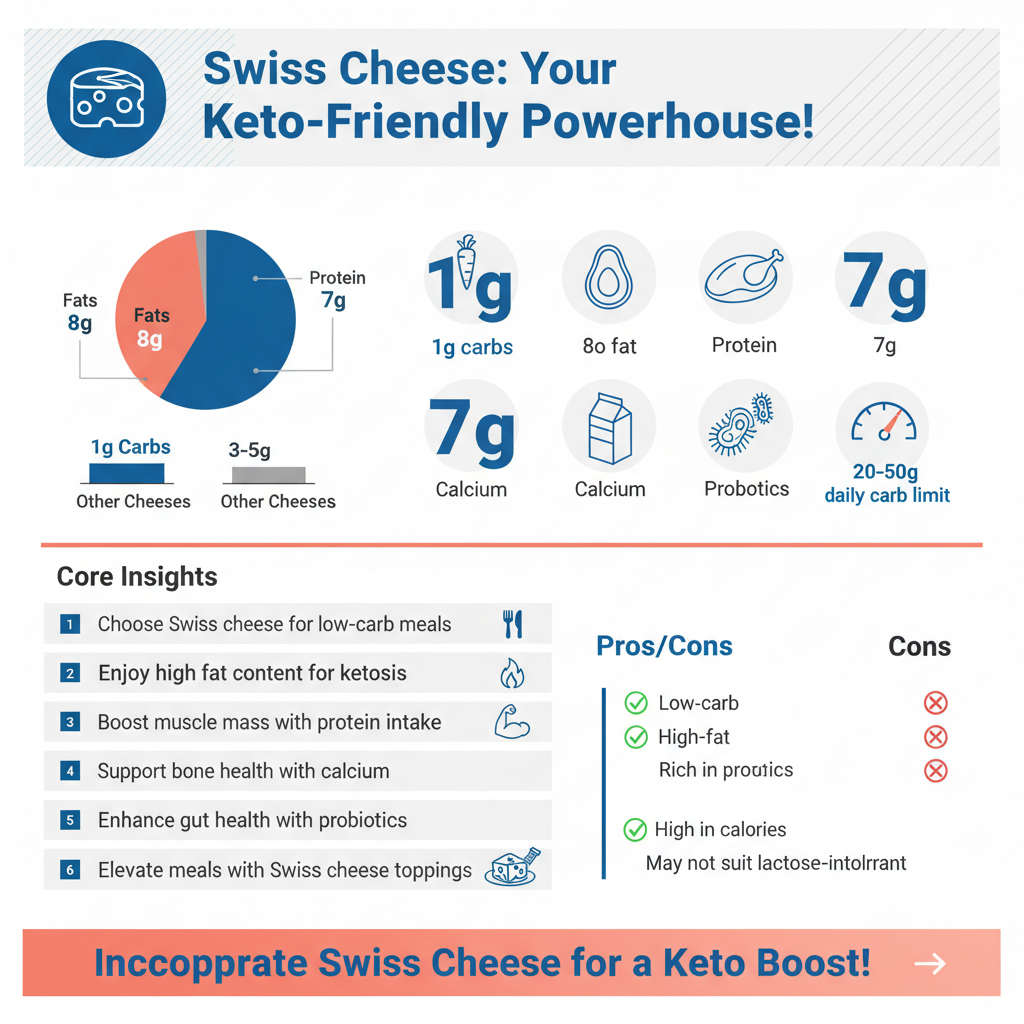

Swiss cheese is not just a low-carb delight; it also boasts several health benefits that align with a holistic approach to nutrition. One of the most notable benefits is its rich calcium content, which supports bone health and helps prevent osteoporosis. Calcium is vital for maintaining strong bones and teeth, and incorporating Swiss cheese into your diet can help you meet your daily calcium needs.
Moreover, Swiss cheese contains probiotics, beneficial bacteria that can enhance gut health. Probiotics are known to improve digestion and promote a healthy microbiome, which can be particularly beneficial in a high-fat diet like keto, where digestive health is paramount. By supporting gut health, Swiss cheese may also aid in reducing inflammation and improving overall immunity.
How to Incorporate Swiss Cheese in a Keto Diet
Incorporating Swiss cheese into your keto diet can be both simple and enjoyable. One of the easiest ways to enjoy Swiss cheese is as a topping on salads or burgers. The nutty flavor and creamy texture of Swiss cheese can elevate a simple salad, providing a satisfying crunch and flavor enhancement. For burgers, consider melting Swiss cheese on top of a juicy beef patty to create a decadent, keto-friendly meal.
Another creative option is to create keto-friendly sandwiches using lettuce wraps instead of traditional bread. Simply layer slices of Swiss cheese with your favorite deli meats and vegetables, and you have a low-carb meal that is both filling and flavorful. Additionally, Swiss cheese can be grated and added to casseroles, omelets, or frittatas, providing an extra layer of flavor and nutrition.
Swiss Cheese vs. Other Cheeses on Keto
When considering cheese options for a ketogenic diet, it’s helpful to compare Swiss cheese with other popular varieties such as cheddar and mozzarella. Swiss cheese contains approximately 1 gram of carbs per ounce, while cheddar may have around 0.4 grams and mozzarella about 1 gram. Although all these cheeses are relatively low in carbs, Swiss cheese stands out with its distinct taste and texture, which can provide variety in your meals.
Furthermore, cheddar cheese tends to be sharper and saltier, making it ideal for bold flavor profiles, while mozzarella is often used in Italian dishes for its melting qualities. Swiss cheese, with its mild and slightly nutty flavor, is versatile and can be used in both savory and sweet dishes. This makes Swiss cheese an excellent option for those looking to diversify their keto meal plans without compromising on taste.
Potential Concerns with Swiss Cheese
While Swiss cheese offers numerous benefits, it’s important to consider potential concerns. One of the main issues some individuals may face is lactose intolerance. Although Swiss cheese is lower in lactose than many other cheeses due to the fermentation process, those with a severe intolerance may still experience discomfort. It’s advisable for lactose-intolerant individuals to monitor their body’s reaction and consult with a healthcare provider if necessary.
Another concern with Swiss cheese, as with any cheese, is the importance of moderation. While it’s low in carbs, Swiss cheese is also calorie-dense, and excessive consumption can lead to an increase in calorie intake that may hinder weight loss goals. Portion control is key; enjoying Swiss cheese in moderation allows you to reap its benefits without overindulging.
Recipes Featuring Swiss Cheese
There are numerous delicious recipes that highlight Swiss cheese’s flavor and versatility in a keto diet. One simple dish is a Swiss cheese omelet, which can be made by whisking together eggs, adding sautéed vegetables, and folding in slices of Swiss cheese until melted. This hearty breakfast option is not only low in carbs but also high in protein and healthy fats.
Another fantastic recipe is stuffed peppers filled with a mixture of ground beef, cauliflower rice, and Swiss cheese. Simply hollow out bell peppers, fill them with the mixture, top with Swiss cheese, and bake until the peppers are tender and the cheese is bubbly. This dish is not only visually appealing but also a great way to pack in nutrients while staying within keto guidelines.
For quick snack ideas, consider pairing Swiss cheese with sliced cucumbers or bell peppers for a refreshing low-carb treat. You can also make Swiss cheese crisps by baking thin slices of cheese in the oven until golden and crunchy—perfect for satisfying cravings without derailing your keto progress.
Swiss cheese is a versatile and delicious option for those on a ketogenic diet. Its low-carb, high-fat profile makes it suitable for a variety of meals, and its unique flavor can enhance numerous dishes. By incorporating Swiss cheese thoughtfully into your meal plans, you can enjoy its benefits while keeping your diet tasty and diverse. We encourage you to explore creative ways to enjoy Swiss cheese and invite you to share your favorite recipes in the comments below!
Frequently Asked Questions
Is Swiss cheese low in carbs and suitable for a keto diet?
Yes, Swiss cheese is low in carbohydrates, making it suitable for a ketogenic diet. Typically, a one-ounce serving of Swiss cheese contains about 1 gram of carbs, which aligns well with the keto diet’s requirement of keeping carbohydrate intake low to maintain ketosis. Additionally, Swiss cheese is high in fat and protein, which is beneficial for those following a high-fat diet.
What are the health benefits of eating Swiss cheese on a keto diet?
Eating Swiss cheese on a keto diet can provide several health benefits. It is a good source of calcium, which supports bone health, and contains probiotics that can aid in digestion. Moreover, its high-fat content can help you feel fuller for longer, reducing cravings and supporting weight management on your keto journey.
How can I incorporate Swiss cheese into my keto meal plan?
There are many delicious ways to incorporate Swiss cheese into your keto meal plan. You can use it in dishes like omelets, salads, or as a topping for low-carb casseroles. Additionally, Swiss cheese works well in keto-friendly sandwiches or wraps using lettuce leaves instead of bread, providing a satisfying flavor while keeping your carb count low.
Which types of Swiss cheese are best for a keto diet?
The best types of Swiss cheese for a keto diet are those that are made from whole milk, such as Emmental or Gruyère, as they typically have higher fat content and fewer carbs. When choosing Swiss cheese, always check the nutrition label for specific carb counts, as some varieties may have added sugars or fillers that can increase their carbohydrate content.
Why is Swiss cheese considered a good option for snacking on keto?
Swiss cheese is considered an excellent option for snacking on keto due to its low carbohydrate content and high-fat profile, which helps keep you in ketosis. It also offers a rich, satisfying flavor that can curb hunger between meals. Pairing Swiss cheese with low-carb vegetables like cucumber or bell peppers can create a healthy, filling snack that complements your keto lifestyle.
References
- Cheese
- https://www.healthline.com/nutrition/keto-diet-foods
- https://www.ncbi.nlm.nih.gov/pmc/articles/PMC7071254/
- A Keto Diet for Beginners: The #1 Ketogenic Guide – Diet Doctor
- USDA
- About Healthy Weight and Growth | Healthy Weight and Growth | CDC
- https://www.eatright.org/health/dietary-guidelines/dietary-guidelines
- https://www.reuters.com/business/healthcare-pharmaceuticals/keto-diet-what-you-need-know-2021-04-14/