
Yes, Spam can fit into a keto diet. It’s high in fat and moderate in protein, making it a great choice to help you maintain ketosis. With around 15-16 grams of fat and only 1 gram of carbs per serving, it aligns well with keto guidelines. However, keep in mind the high sodium content and potential health concerns linked to processed meats. If you want to learn more about incorporating Spam into your keto meals, stick around!
Understanding the Ketogenic Diet
When you’re exploring the ketogenic diet, it’s essential to understand its foundational principles. At its core, the ketogenic diet emphasizes high fat, moderate protein, and very low carbohydrates. This macronutrient ratio encourages your body to enter a state of ketosis, where it burns fat for energy instead of carbs. While this can lead to effective weight loss and improved energy levels, it also comes with dietary restrictions, as you’ll need to avoid many common foods like grains, sugars, and certain fruits. However, understanding these ketogenic principles allows you to make informed choices, granting the freedom to enjoy a variety of delicious, nutrient-dense foods while maintaining your health goals. Embrace the journey, and explore what works best for you!
What Is Spam?

Spam is a canned meat product made primarily from pork shoulder and ham, along with other ingredients like salt, water, and preservatives. Its nutritional profile typically includes a high fat content and protein, making it a unique option for various diets, including keto. Plus, its versatility in cooking allows you to incorporate it into a range of dishes, whether you’re frying it up for breakfast or adding it to casseroles.
Ingredients Breakdown
A closer look at the ingredients in Spam reveals a mixture that often surprises consumers. Typically, Spam contains pork shoulder, ham, salt, water, sugar, and sodium nitrite, which acts as a preservative. This combination creates a unique flavor and texture that many enjoy. However, if you’re following a keto diet, you might find it useful to explore spam alternatives, such as turkey or chicken versions, which can have fewer carbs and different flavor profiles. While Spam can serve as a quick option for keto snacks, it’s crucial to examine its sodium content and ingredients. Balancing your choices with other protein sources like beef jerky or hard-boiled eggs can help maintain variety while adhering to your dietary goals.
Nutritional Profile
Understanding the nutritional profile of Spam is essential, especially if you’re evaluating it as part of your keto diet. While it may seem indulgent, Spam does provide some nutritional benefits. Here are three key points to keep in mind:
- High in Protein: Spam contains about 7 grams of protein per serving, which can help with muscle maintenance.
- Significant Fat Content: With around 15 grams of fat, it fits the high-fat requirement of keto, but be mindful of the saturated fat.
- Low Carbohydrates: Spam has minimal carbs, making it a viable option for those on a strict keto regimen.
However, be aware of potential health implications, such as high sodium levels. Moderation and balance are important when incorporating Spam into your diet.
Cooking Versatility
With its unique combination of flavors and textures, Spam offers impressive cooking versatility that can enhance various dishes. You can experiment with different cooking techniques to create satisfying meals. Whether you fry, bake, or grill it, Spam adapts well to various recipe ideas, making it a convenient pantry staple.
Here’s a quick overview of some popular cooking techniques:
| Cooking Technique | Flavor Profile | Recipe Ideas |
|---|---|---|
| Frying | Crispy and savory | Spam fried rice, sandwiches |
| Baking | Tender and juicy | Spam casserole, quiche |
| Grilling | Smoky and charred | Spam skewers, burgers |
| Sautéing | Rich and flavorful | Spam stir-fry, tacos |
These options showcase Spam’s adaptability, allowing you to enjoy it in multiple ways while sticking to your dietary preferences.
Nutritional Profile of Spam
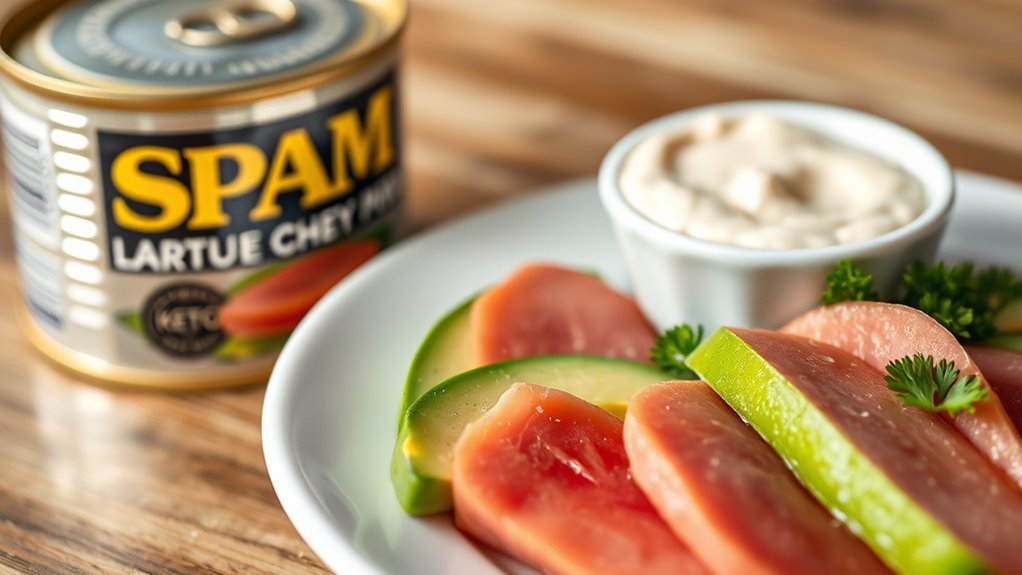
When considering Spam’s nutritional profile, it’s crucial to look at its macronutrient breakdown and ingredients. You’ll find that Spam is primarily made up of protein and fat, with a relatively low carbohydrate content, which may appeal to those following a keto diet. However, examining the ingredients can reveal a mix of preservatives and additives that might raise some concerns.
Macronutrient Breakdown
Although you might think of Spam as an indulgent treat, its macronutrient profile reveals some interesting facts for those following a ketogenic diet. Spam is primarily composed of protein and fat, making it a fitting option for your macronutrient ratios. However, it lacks dietary fiber, which is essential for overall gut health.
Consider these points:
- Spam contains about 7 grams of protein per serving, supporting muscle maintenance.
- With around 16 grams of fat, it can help meet your fat intake on keto.
- The absence of dietary fiber might leave you feeling less satisfied, impacting your overall experience.
Understanding these aspects can help you make informed choices while enjoying your freedom on the ketogenic journey.
Ingredients Analysis
Spam’s nutritional profile is worth examining more closely, especially for those on a ketogenic diet. It’s primarily made from pork shoulder and ham, offering a rich source of protein and fat, which aligns with keto principles. However, it contains preservatives and sodium, raising health implications for some. If you’re seeking Spam alternatives, consider options like turkey or plant-based meats, which may have cleaner ingredient sourcing. While Spam’s culinary uses are versatile—from frying to adding to casseroles—it’s essential to balance enjoyment with nutrition. Ultimately, understanding these factors can empower your dietary choices, allowing you to enjoy flavorful meals while staying true to your keto goals.
Carb Content in Spam
While many processed meats are high in carbohydrates, Spam is an exception that can fit into a ketogenic diet quite well. It contains minimal carbs, making it easy for you to enjoy without jeopardizing your keto goals. When considering carb sources for your diet, Spam can be a satisfying option for your keto snacks.
Here are three reasons Spam might be a great addition:
- Low Carb Count: Each serving has around 1 gram of carbs, keeping you on track.
- Versatile: You can use it in various recipes, from salads to breakfast dishes.
- Convenient: It’s shelf-stable and easy to prepare, perfect for busy lifestyles.
Embrace the freedom to enjoy Spam while sticking to your keto lifestyle!
Fat and Protein Ratios
When considering Spam in relation to the ketogenic diet, it’s crucial to look at its fat and protein ratios. Spam typically contains a higher fat content compared to protein, which aligns well with keto standards that emphasize fat as the primary energy source. Understanding this nutritional composition can help you decide if Spam fits into your low-carb lifestyle.
Nutritional Composition Overview
To understand whether Spam fits into a keto diet, it’s important to examine its nutritional composition, particularly the ratios of fat to protein. Spam typically contains around 70% fat and 30% protein, creating a high-fat, moderate-protein profile that can appeal to keto followers. However, it’s also essential to take into account its nutrient density and health implications.
- Spam’s high-fat content can help you hit your macro goals.
- The protein level supports muscle maintenance and satiety.
- Excessive sodium and preservatives may raise concerns about long-term health.
While Spam can fit into a keto lifestyle, balancing it with whole foods is significant for overall well-being. Embrace freedom in your choices by staying informed about what you eat!
Comparing With Keto Standards
Although Spam’s nutritional profile aligns closely with keto standards, it’s essential to compare its fat and protein ratios directly with typical keto guidelines. The keto diet emphasizes high fat and moderate protein, so understanding Spam’s positioning can guide your meal planning.
| Food Item | Fat Content (g) | Protein Content (g) |
|---|---|---|
| Spam | 19 | 7 |
| Chicken Thigh | 10 | 26 |
| Avocado | 15 | 2 |
| Tofu | 4 | 8 |
While Spam can serve as a quick option, consider Spam alternatives and other protein sources to meet your dietary preferences. Exploring healthy fats through keto snacks or meat substitutes can enhance your low carb recipes without relying heavily on processed meats.
Ingredients in Spam
Spam is a processed meat product that has sparked curiosity and debate among those following various diets, including the keto diet. When you explore Spam varieties, it’s essential to know the ingredients and their sourcing. Here’s what you should consider:
- Pork and Ham: The primary ingredients, but their quality can vary based on sourcing practices.
- Water: Used for moisture, but it’s vital to check if it’s added for flavor or just to bulk up the product.
- Preservatives: Ingredients like sodium nitrite can be used, which raises questions about long-term health effects.
Understanding these components helps you make informed choices about including Spam in your diet, especially if you’re aiming for keto-friendly options.
Processed Meats and Keto
Processed meats can be a contentious topic for those following the keto diet, as they often contain high levels of fats and proteins that fit within keto guidelines. While you might enjoy the convenience and flavor of these meats, it’s essential to take into account the health concerns associated with them. Studies have linked processed meats to an increased risk of certain diseases, including heart disease and cancer. Moderation is key—relying solely on processed options can lead to nutrient deficiencies. Instead, aim to incorporate a variety of whole, unprocessed foods into your diet. This way, you can enjoy the benefits of keto while maintaining a balanced approach to your overall health and well-being. Make informed choices that align with your lifestyle.
How to Incorporate Spam Into a Keto Diet
When you’re looking for quick and satisfying meal options on a keto diet, incorporating Spam can be a convenient choice. With its high fat content and low carbs, it fits well into your meal prep. Here are three Spam recipes to contemplate:
- Spam Breakfast Scramble: Cook diced Spam with eggs and low-carb veggies for a hearty breakfast.
- Spam Lettuce Wraps: Slice Spam and wrap it in lettuce with avocado and cheese for a rejuvenating lunch.
- Spam Cauliflower Fried Rice: Substitute rice with cauliflower and stir-fry with Spam for a delicious dinner.
These options not only save time but also add variety to your meals, allowing you to enjoy the freedom of a keto lifestyle without sacrificing flavor.
Alternatives to Spam for Keto
If you’re looking for alternatives to Spam that still align with your keto goals, there are plenty of options that offer similar benefits. Consider keto friendly meats like turkey, chicken, or pork, which can provide protein without the added sugars found in processed foods. Another excellent option is beef jerky, as long as you choose a low carb alternative free from fillers. For a plant-based choice, tempeh or tofu can fit into your meal plan while keeping carbs low. Additionally, you can experiment with canned tuna or salmon, which are both nutritious and versatile. These alternatives not only keep your meals interesting but also support your keto lifestyle without compromising on taste or nutrition.
Final Thoughts on Spam and Keto Compatibility
While exploring alternatives to Spam can help you stay aligned with your keto goals, it’s important to contemplate Spam itself and its compatibility with the diet. Here are some health considerations to keep in mind:
- High sodium content: Regular consumption can lead to health issues, particularly if you’re watching your blood pressure.
- Processed ingredients: Spam contains preservatives and additives that may not align with your dietary preferences for whole foods.
- Moderation is key: If you love Spam, enjoying it occasionally can provide freedom without derailing your keto journey.
Ultimately, while Spam can fit into a keto diet, balancing it with healthier options can enhance your overall well-being. Embrace choices that align with your health goals and dietary preferences.
Frequently Asked Questions about Spam and Keto Diet
1. Is Spam considered keto-friendly?
Yes, Spam can be considered keto-friendly as it is high in fat and low in carbohydrates. A typical serving of Spam contains around 7 grams of carbohydrates, which fits into the daily carb limits of a ketogenic diet. However, it’s important to check the specific nutritional information as different varieties may have varying carb counts.
2. What are the nutritional contents of Spam?
Spam typically contains pork, salt, water, and sugar, along with other preservatives. A standard serving (about 2 ounces) provides approximately 180 calories, 16 grams of fat, 7 grams of protein, and 1 gram of carbohydrates. It’s important to note that while Spam is high in fat, it also contains sodium, so portion control is recommended.
3. Can Spam fit into a balanced keto meal plan?
Yes, Spam can be incorporated into a balanced keto meal plan, but it should be balanced with other nutrient-dense foods. Pairing Spam with non-starchy vegetables, healthy fats, and low-carb sides can create a nutritious meal. However, due to its high sodium content, it’s advisable to consume Spam in moderation.
4. Are there any health concerns associated with eating Spam on a keto diet?
While Spam can be enjoyed on a keto diet, there are health considerations to keep in mind. Spam is processed meat, which can be high in sodium and preservatives. Regular consumption of processed meats has been linked to health issues such as heart disease. Therefore, it’s best to limit intake and incorporate fresh, whole foods into your diet whenever possible.
5. What are some keto-friendly recipes using Spam?
There are several keto-friendly recipes that include Spam, such as Spam fried rice made with cauliflower rice, Spam and cheese omelets, or Spam stir-fry with low-carb vegetables. These recipes can enhance the flavor and nutritional profile of your meals while keeping them aligned with keto dietary guidelines.
References
- https://www.healthline.com/nutrition/keto-diet-foods#processed-meats
- https://www.ncbi.nlm.nih.gov/pmc/articles/PMC6520897/
- https://www.webmd.com/diet/what-is-the-keto-diet
- https://www.verywellfit.com/keto-diet-foods-5189007
- https://www.diabetes.org/nutrition/healthy-foods/keto-diet
- https://www.cdc.gov/healthyweight/healthy_eating/index.html