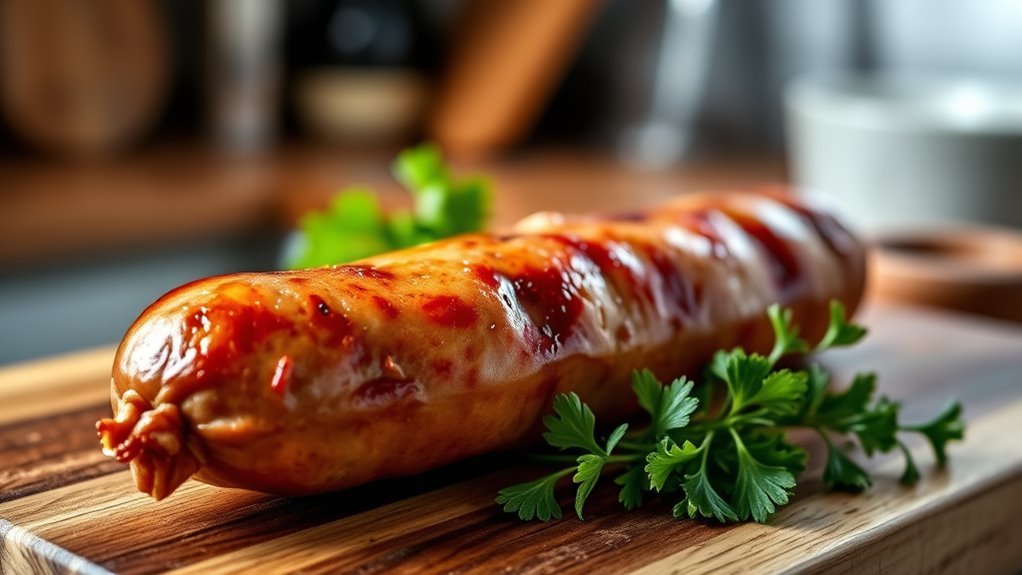

Yes, sausage can fit into your ketogenic diet nicely. Many varieties are high in fat and low in carbohydrates, making them flavorful choices for meals. However, it’s important to check labels for added sugars and fillers that could increase carb counts. Opt for quality sausages with minimal ingredients. By incorporating different types of sausage in recipes, you can keep your meals interesting while staying on track with your keto goals. There’s more to explore on this topic!
Understanding the Ketogenic Diet
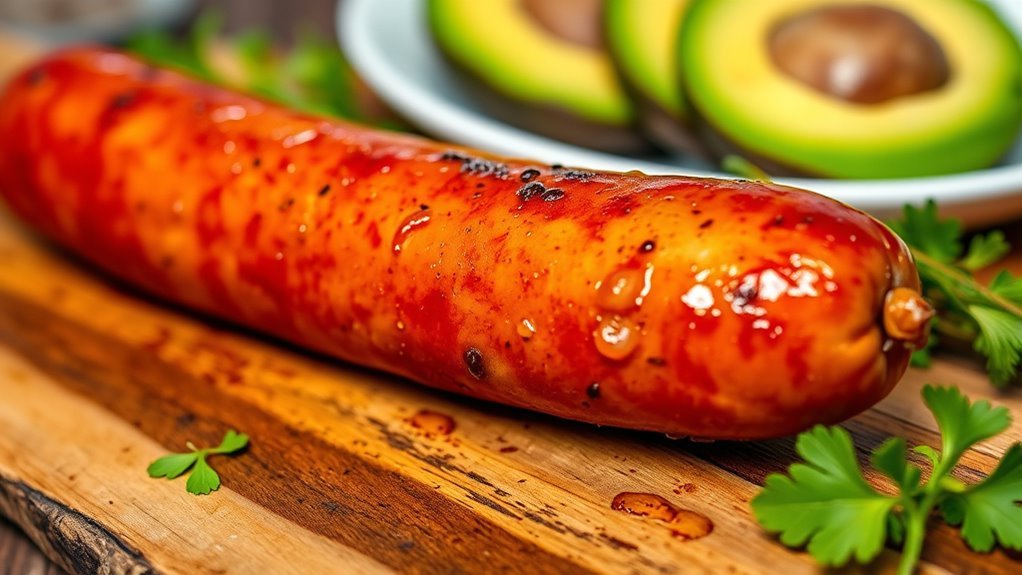
While many diets focus on calorie counting or macronutrient balance, the ketogenic diet specifically emphasizes a high-fat, low-carbohydrate approach to induce a state of ketosis. This process allows your body to burn fat for fuel instead of carbohydrates, promoting weight loss and potential health benefits. To adhere to ketogenic principles, you’ll generally aim for macro ratios around 70-75% fats, 20-25% protein, and only 5-10% carbohydrates. This shift in nutrient intake can help stabilize blood sugar levels and reduce cravings, offering you the freedom to enjoy a variety of flavorful foods. Understanding these macro ratios is essential for successfully maneuvering the ketogenic lifestyle, ensuring you maintain ketosis while enjoying meals that satisfy your cravings.
Types of Sausage and Their Ingredients
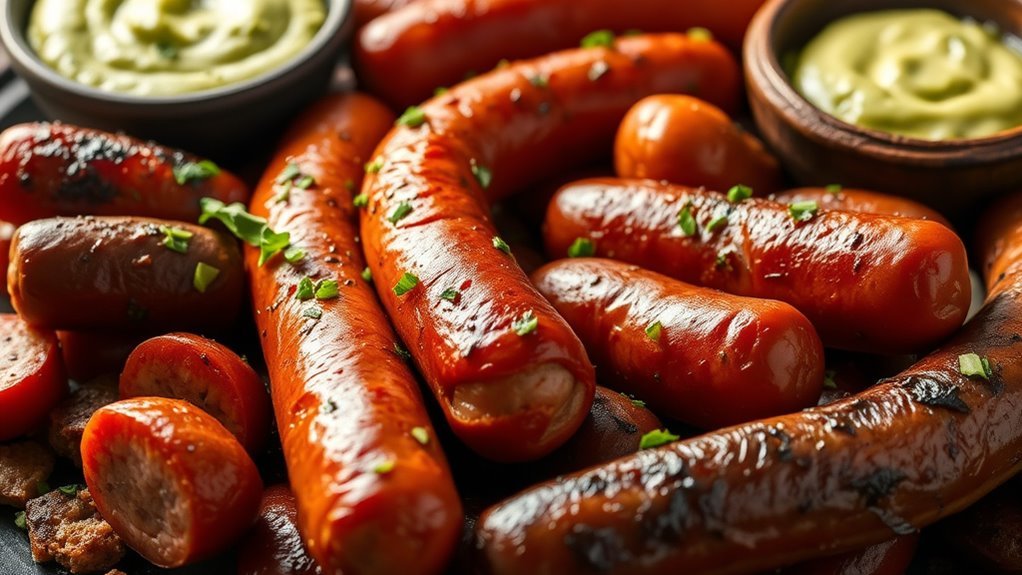
When it comes to sausage, you’ll find a diverse array of types, each with unique ingredients and flavor profiles. Popular types of sausages include Italian, bratwurst, chorizo, and breakfast sausage. Each of these contains different sausage ingredients, often based on regional traditions. For instance, Italian sausage typically features fennel and garlic, while chorizo is spiced with paprika and chili. Breakfast sausage often combines pork with sage and black pepper. Understanding these variations can help you choose options that align with your dietary preferences. If you’re exploring the keto diet, pay attention to the ingredients list, as some sausages may include fillers or sugars that aren’t keto-friendly. Enjoying sausage can be satisfying and flavorful when you select wisely!
Nutritional Breakdown of Common Sausages
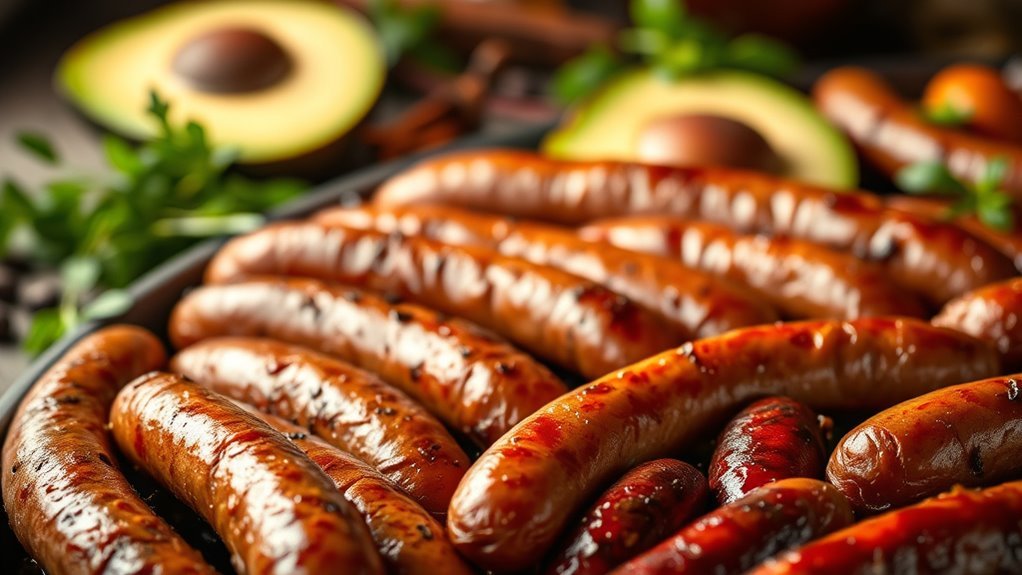
Understanding the nutritional breakdown of common sausages is essential for anyone following a keto diet. Different sausage varieties can vary greatly in their nutritional value. For instance, pork sausage typically contains around 20 grams of fat and 15 grams of protein per serving, making it a solid keto-friendly choice. Chicken or turkey sausages often have lower fat content, around 10 grams, but may include added fillers that can increase carbs. Beef sausages generally provide a higher protein content, approximately 18 grams per serving. When choosing sausages, pay attention to labels, as some brands add sugars or starches. By being mindful of these factors, you can enjoy various sausage options while staying aligned with your keto goals.
How to Incorporate Sausage Into a Keto Meal Plan
Incorporating sausage into your keto meal plan can be both delicious and satisfying, as long as you choose wisely. Start by exploring various sausage recipes that fit your dietary needs, such as zucchini boats stuffed with Italian sausage or a hearty sausage and kale soup. These recipes can easily be part of your meal prep routine, allowing you to whip up easily reheatable dishes for the week ahead. You can also slice sausage into your favorite stir-fries or frittatas, adding flavor and protein without the carbs. Remember, variety is key; try different types of sausage, like chorizo or kielbasa, to keep things exciting. Embrace the freedom to experiment and find combinations that keep you on track with your keto lifestyle.
Tips for Choosing Keto-Friendly Sausages
Selecting the right sausages is essential for sticking to your keto diet while still enjoying flavorful meals. To help you make informed choices, consider these tips:
Selecting the right sausages is crucial for maintaining a keto diet while savoring delicious meals.
- Check ingredient labels: Look for minimal ingredients with no added sugars or high-carb fillers.
- Choose quality sausage brands: Opt for brands that prioritize natural ingredients and grass-fed meats; they often provide better nutrition.
- Watch out for carb counts: Some sausages may contain hidden carbs from flavorings or binders, so always verify the nutrition facts.
1. Is sausage considered keto-friendly?
Yes, sausage can be considered keto-friendly, as it is typically low in carbohydrates and high in fats, aligning with the macronutrient ratios of a ketogenic diet. However, it is essential to check the ingredient list, as some sausages may contain added sugars or fillers that can increase carbohydrate content.
2. What types of sausage are best for a keto diet?
The best types of sausage for a keto diet include those that are made from meats like pork, beef, or chicken without added sugars or fillers. Options such as Italian sausage, bratwurst, and breakfast sausage can be great choices. Always opt for varieties that are labeled as sugar-free or have minimal ingredients.
3. Are there any sausages to avoid on a keto diet?
Yes, some sausages should be avoided on a keto diet. Sausages that contain high levels of added sugars, such as certain types of breakfast sausages, or those made with grain fillers like breadcrumbs can increase carbohydrate content significantly. Always read labels and avoid those with more than 1-2 grams of carbs per serving.
4. How can I incorporate sausage into my keto meals?
Sausage can be incorporated into keto meals in various ways. You can use it in breakfast scrambles with eggs, add it to vegetable stir-fries, or include it in casseroles. Additionally, sausage can be grilled or baked and served alongside leafy greens or low-carb vegetables for a satisfying meal.
5. Is homemade sausage a better option for keto?
Homemade sausage can be a better option for a keto diet, as you have full control over the ingredients. By making sausage at home, you can avoid unnecessary fillers and sugars, ensuring that it fits perfectly within your keto macronutrient goals. Plus, it allows for customization of flavors and spices according to your preference.
References
- https://www.healthline.com/nutrition/what-is-the-keto-diet
- https://www.ncbi.nlm.nih.gov/pmc/articles/PMC6462259/
- https://www.ketogenicdiet.org/what-is-the-ketogenic-diet/
- https://www.webmd.com/diet/what-is-the-ketogenic-diet
- https://www.cdc.gov/healthyweight/assessing/bmi/adult_bmi/english_bmi_calculator/bmi_calculator.html
- https://www.mayoclinic.org/healthy-lifestyle/nutrition-and-healthy-eating/expert-answers/keto-diet/faq-20460661
- https://www.verywellfit.com/what-is-the-keto-diet-5197256
- https://www.nutrition.org.uk/healthyliving/basics/what-is-the-keto-diet.html