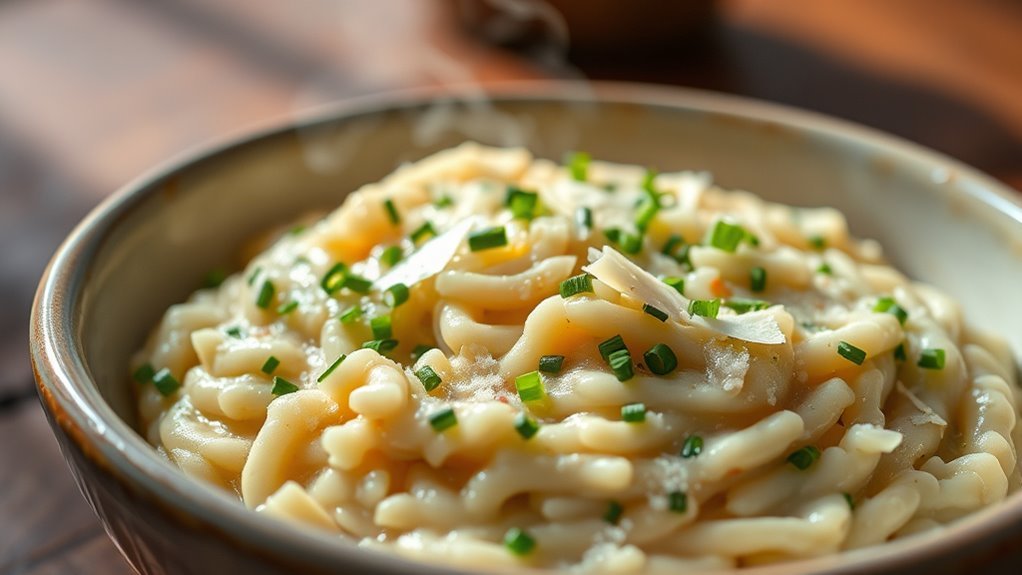

Risotto, made with Arborio rice, isn’t keto-friendly due to its high carb content. A typical serving has about 75g of carbohydrates, which can disrupt ketosis. However, you can enjoy a creamy risotto experience by using low-carb alternatives like cauliflower rice or shirataki rice. These substitutes maintain the dish’s texture while reducing carbs. Plus, adding fresh herbs and cheese can enhance flavor without extra carbs. There’s more to discover about creating delicious keto risotto options.
Understanding Traditional Risotto Ingredients
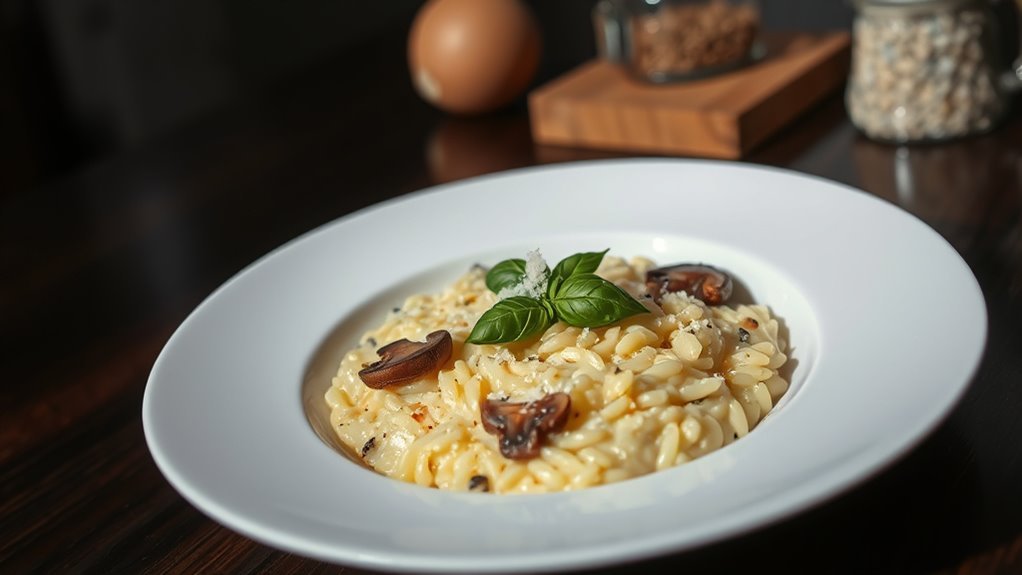
When you think of traditional risotto, creamy texture and rich flavors likely come to mind. This dish, originating in Northern Italy, relies heavily on specific ingredients and traditional preparation methods. Arborio rice, with its high starch content, is a staple, providing that signature creaminess when cooked slowly. You’ll also find broth, typically chicken or vegetable, which enhances the dish’s depth of flavor. Regional variations abound; for instance, risotto alla Milanese features saffron, while risotto al Nero di Seppia incorporates cuttlefish ink for a striking color and taste. Each variation reflects local ingredients and cultural influences, allowing you to experience a unique culinary journey. Understanding these elements can deepen your appreciation of this beloved dish.
Carb Content of Arborio Rice
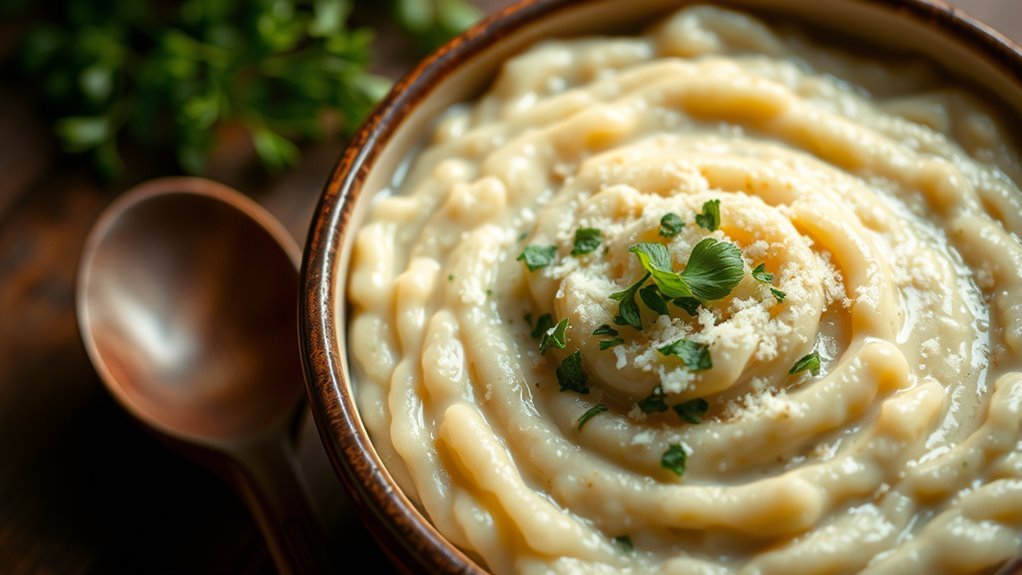
Arborio rice is the cornerstone of traditional risotto, but its carbohydrate content raises questions for those following a ketogenic diet. Understanding the nutritional profile of arborio rice is essential for making informed dietary choices.
Here’s a quick overview of its carb content:
| Nutrient | Amount per 100g | Percentage Daily Value* |
|---|---|---|
| Carbohydrates | 75g | 25% |
| Protein | 7g | 14% |
| Fat | 0.5g | 1% |
As you can see, arborio rice is mainly made up of carbohydrates, which can be a significant concern for those limiting their carb intake. If you’re on a keto journey, you’ll want to evaluate alternatives that better fit your dietary needs.
Low-Carb Alternatives to Arborio Rice
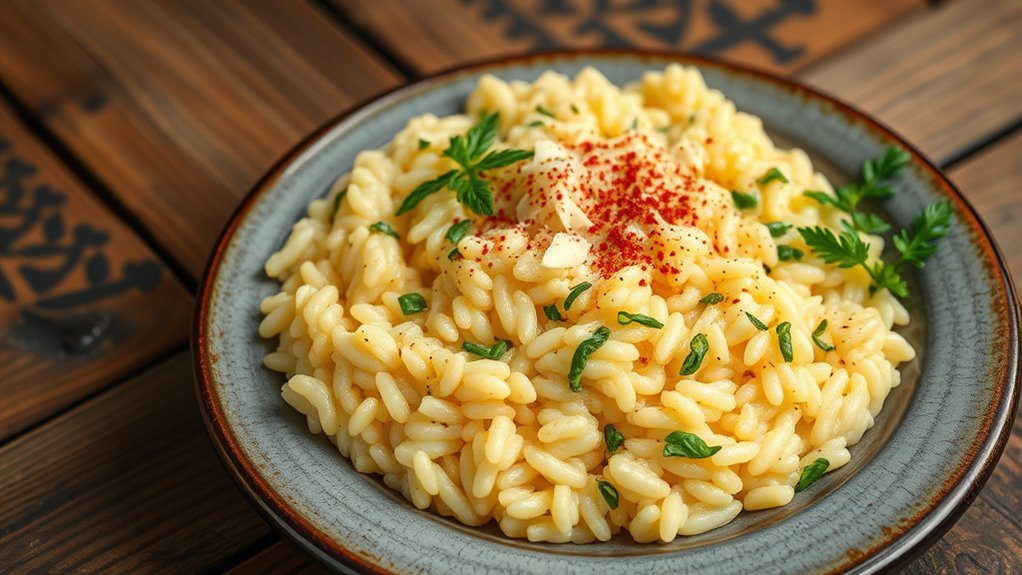
If you’re looking for low-carb alternatives to Arborio rice for your risotto, cauliflower rice and Shirataki rice are excellent options. Cauliflower rice provides a similar texture while notably reducing carbohydrate intake, and Shirataki rice, made from konjac, offers a virtually carb-free choice. Both substitutes can help you enjoy a creamy risotto experience without the added carbs.
Cauliflower Rice Option
A popular low-carb alternative to Arborio rice is cauliflower rice, which has gained traction among those following a ketogenic diet. This versatile ingredient boasts numerous cauliflower benefits, such as being low in calories and high in fiber, making it an excellent choice for maintaining ketosis. When you prepare a risotto using cauliflower rice, you can enjoy the creamy texture and rich flavors typical of traditional risotto without the carbs. The keto versatility of cauliflower allows it to absorb flavors well, making it easy to customize your dish with various herbs, cheeses, and proteins. By opting for cauliflower rice, you can indulge in a delicious meal that aligns with your dietary goals while enjoying the full flavors of risotto.
Shirataki Rice Substitute
While many keto dieters seek alternatives to traditional grains, Shirataki rice emerges as a compelling substitute for Arborio rice in risotto recipes. Made from konjac yam, Shirataki rice offers significant shirataki benefits, primarily its low carbohydrate content, making it ideal for your keto lifestyle. Plus, it’s virtually calorie-free, allowing you to enjoy creamy dishes without guilt.
For shirataki preparation, rinse the rice thoroughly to remove any odor, then simply heat it in a pan. Combine it with your favorite broth and ingredients to create a delicious risotto-style dish. It may not mimic the exact texture of Arborio rice, but its ability to absorb flavors makes it a worthy alternative, granting you the freedom to enjoy risotto while staying true to your dietary goals.
Enhancing Flavor in Keto Risotto
To elevate the flavor profile of keto risotto, incorporating a variety of low-carb ingredients and seasonings can make a significant difference. Fresh herbs and spices, such as basil, thyme, and garlic, not only add depth but also enhance the overall taste without adding carbs. Experimenting with different combinations can lead to exciting flavor profiles that satisfy your palate. Additionally, cheese toppings are essential in keto risotto; options like Parmesan, mozzarella, or goat cheese can provide creaminess and richness while keeping your dish keto-friendly. Balancing these elements allows you to enjoy a flavorful risotto that aligns with your dietary preferences, giving you the freedom to indulge without compromising your goals.
Creative Keto Risotto Recipes
Creating keto risotto can be both enjoyable and innovative, as you can experiment with various low-carb ingredients to craft unique dishes. Consider using cauliflower rice as a base—it’s versatile and absorbs flavors beautifully. For added depth, incorporate sautéed mushrooms, garlic, or spinach. You can enhance the flavor further by adding keto-friendly cheeses like Parmesan or cream cheese.
Don’t forget about herbs and spices; fresh basil, thyme, or a pinch of nutmeg can elevate your risotto. For protein, mix in grilled chicken, shrimp, or even cooked bacon for a savory twist. By using these keto ingredients and flavor enhancements, you’ll be able to create a satisfying meal that aligns with your dietary preferences while enjoying culinary creativity.
Tips for Making the Perfect Keto Risotto
To create a delicious keto risotto, start by substituting traditional rice with cauliflower rice, which greatly lowers the carb content. Additionally, using a high-fat broth can enhance flavor while keeping your dish in line with keto principles. These simple adjustments can help you achieve a creamy and satisfying risotto without compromising your dietary goals.
Choose Cauliflower Rice
While traditional risotto relies on arborio rice to achieve its creamy texture, opting for cauliflower rice can make this dish keto-friendly without sacrificing flavor. Cauliflower benefits include being low in carbs and packed with nutrients, making it an ideal substitute.
To perfect your keto risotto, consider these cooking techniques:
- Grate or pulse cauliflower into rice-sized pieces for a uniform texture.
- Sauté it lightly before adding broth to enhance flavor and moisture absorption.
- Stir continuously while adding broth gradually to mimic the creamy consistency of traditional risotto.
Use High-Fat Broth
Cauliflower rice serves as a fantastic base for a keto-friendly risotto, but the choice of broth can elevate the dish’s flavor and nutritional profile. Opting for a high-fat broth, such as bone broth or a creamy stock, provides essential nutrients while enhancing the richness of your dish. The broth benefits are significant; it not only adds depth of flavor but also contributes healthy fats, keeping your meal in line with keto guidelines. When making your risotto, incorporate these high fat options to guarantee a satisfying, creamy texture. This approach not only aligns with your dietary goals but also allows you to enjoy a delicious, guilt-free meal that feels indulgent, providing you with the freedom to relish each bite.
Frequently Asked Questions
Can I Use Cauliflower Rice Instead of Arborio Rice?
Yes, you can use cauliflower rice instead of arborio rice. Cauliflower rice offers numerous benefits, including fewer carbs and higher fiber content, making it a great rice alternative for those looking to reduce their carb intake. It also absorbs flavors well, allowing you to create delicious dishes similar to traditional risotto. By using cauliflower, you maintain a lighter meal while still enjoying the creamy texture that risotto is known for.
What Cheese Is Best for Keto Risotto?
For keto risotto, parmesan is a top choice due to its low carb content and rich flavor. However, you might consider alternatives like pecorino Romano or aged Gouda for variety. These cheese types not only enhance creaminess but also add unique tastes to your dish. Always check the labels to verify they fit your dietary needs, as some cheeses may contain hidden carbs. Enjoy experimenting with these options to find your favorite!
How Can I Make Risotto Creamy Without Dairy?
You can make risotto creamy without dairy by using nutritional alternatives like cashew cream or coconut milk. These plant-based options provide a rich texture while keeping your dish light and healthy. To enhance the creaminess, blend soaked cashews with water until smooth, or use canned coconut milk for a tropical twist. Experimenting with vegetable broth can also add depth, making your risotto both flavorful and satisfying, allowing you to enjoy it guilt-free.
Is Risotto Suitable for Meal Prep?
Yes, risotto’s quite suitable for meal prep! Its creamy texture and rich flavors hold up well when stored. For ideal storage, let it cool before transferring to airtight containers. Refrigerate for up to three days, or freeze for longer preservation. The benefits of meal prep include saving time and ensuring you have nutritious meals ready to go. Just reheat gently, and you’ll enjoy a delicious meal without sacrificing quality or taste!
What Are Common Toppings for Keto Risotto?
For keto risotto, common toppings include bacon bits and sautéed mushrooms. Bacon adds a savory crunch, while sautéed mushrooms provide umami flavor and additional nutrients. You can also consider incorporating grated Parmesan for richness or fresh herbs like parsley for a burst of freshness. These toppings not only enhance the dish’s taste but also align with keto principles, ensuring you enjoy a satisfying meal without compromising your dietary goals.
1. Is traditional risotto keto-friendly?
Traditional risotto is made primarily from Arborio rice, which is high in carbohydrates. Since a ketogenic diet restricts carbohydrate intake to promote ketosis, traditional risotto is not considered keto-friendly. A single serving can contain about 40 grams of carbs, which exceeds the daily carb limit for most people on a keto diet.
2. Are there keto-friendly alternatives to risotto?
Yes! There are several alternatives to traditional risotto that are keto-friendly. Cauliflower rice is a popular substitute; it has a similar texture and can absorb flavors well. Other options include using shredded zucchini or konjac rice, both of which are low in carbs and can be prepared in a similar fashion to risotto.
3. Can I make a low-carb risotto using cauliflower rice?
Absolutely! To make a low-carb risotto using cauliflower rice, start by sautéing garlic and onions in olive oil or butter. Then, add riced cauliflower and cook until tender. Gradually stir in low-sodium broth, and finish with Parmesan cheese and herbs for flavor. This method creates a creamy, delicious dish that fits well within a keto diet.
4. What toppings or ingredients can I add to keto risotto?
When making keto risotto, you can enhance the flavor and nutritional profile by adding various toppings and ingredients. Consider using sautéed mushrooms, spinach, asparagus, or cooked chicken for added protein. You can also incorporate healthy fats like cream, butter, or olive oil to create a richer taste while keeping it keto-friendly.
5. How can I ensure my keto risotto is creamy like traditional risotto?
To achieve a creamy texture in your keto risotto, it’s essential to cook the cauliflower rice properly. Start by cooking it gently with broth, allowing it to absorb the liquid slowly. Adding cream or cream cheese towards the end of cooking can also enhance creaminess. Stirring in grated cheese, such as Parmesan or mozzarella, will not only add flavor but also contribute to a smooth texture.
References
- https://www.healthline.com/nutrition/ketogenic-diet-foods
- https://www.ncbi.nlm.nih.gov/pmc/articles/PMC6467132/
- https://www.medicalnewstoday.com/articles/323577
- https://www.webmd.com/diet/what-is-the-keto-diet
- https://www.verywellfit.com/the-keto-diet-5195031
- https://www.eatright.org/health/wellness/healthy-eating/the-ketogenic-diet
- https://www.cdc.gov/healthyweight/assessing/bmi/adult_bmi/english_bmi_calculator/weight_calculator.html
- https://www.nutrition.org.uk/healthyliving/healthyeating/low-carb-diets.html
- https://www.diabetes.org/nutrition/what-is-a-keto-diet