

Yes, red wine can fit into a keto diet if you choose dry varieties, which generally have lower sugar content. A typical 5-ounce serving has about 3-4 grams of carbs, making it manageable within your carb limits. However, sweet wines have higher sugar levels, which can disrupt ketosis. Moderation is important, so keeping to one or two servings helps maintain your keto goals. Learn more about which types of red wines to enjoy and how they fit into your lifestyle.
Understanding the Carbohydrate Content of Red Wine
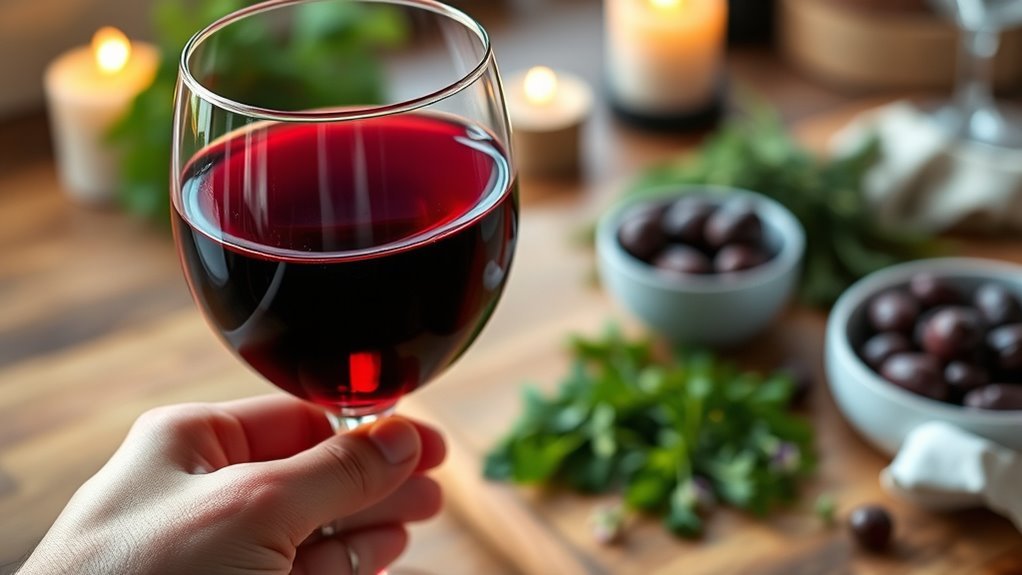
When it comes to enjoying a glass of red wine on a keto diet, understanding its carbohydrate content is essential. The fermentation process converts sugars in grape juice into alcohol, but not all sugars are fully transformed. This leaves residual sugar levels in the final product, which contribute to the wine’s carbohydrate content. Generally, dry red wines contain about 3-4 grams of carbs per 5-ounce serving, making them a more suitable choice for a keto lifestyle. Conversely, sweet wines can have considerably higher sugar levels, which may disrupt your carb limits. By selecting low-sugar options and monitoring your intake, you can enjoy red wine while staying within your dietary goals, offering a sense of freedom without compromising your keto journey.
How Red Wine Affects Ketosis

While enjoying red wine in moderation can be compatible with a keto diet, it’s important to understand how it impacts ketosis. The main concern is the sugar content, which can affect your ketosis. When you consume red wine, your body prioritizes wine metabolism over fat burning, potentially disrupting your ketosis impact. However, moderate consumption typically doesn’t introduce enough carbs to kick you out of ketosis, especially if you choose dry varieties. Your individual response may vary, so monitoring your ketone levels can help you gauge how red wine affects your body. Embracing a balanced approach allows you to enjoy wine while maintaining your keto lifestyle, giving you the freedom to indulge without compromising your goals.
Choosing the Right Type of Red Wine

Selecting the right type of red wine can greatly influence your experience on a keto diet. If you’re looking to keep your carb intake low, focus on dry red wines, as they generally contain fewer sugars. Full-bodied options, like Cabernet Sauvignon and Malbec, often have richer flavors and can pair well with hearty meals, enhancing your dining experience without compromising your keto goals. On the other hand, light-bodied choices, such as Pinot Noir or Gamay, provide a rejuvenating alternative, especially for lighter fare. Always check the labels for residual sugar content, ensuring you stay within your carb limits. By being mindful of your selection, you can enjoy red wine while maintaining the freedom of your keto lifestyle.
Recommended Serving Sizes for Keto
Understanding the right serving sizes for red wine on a keto diet is essential for staying within your carb limits. Typically, a standard serving size of red wine is about 5 ounces, which contains roughly 3-4 grams of carbs. If you’re keen on enjoying wine, keeping track of your wine measurements is vital. You might consider limiting yourself to one or two servings to maintain your keto goals. It’s also helpful to check the specific wine’s carb content, as this can vary. Remember, moderation is key. By sticking to recommended serving sizes, you can savor red wine without derailing your dietary plans, giving you the freedom to enjoy your lifestyle while still adhering to keto principles.
Tips for Enjoying Red Wine on a Keto Diet
Staying within your carb limits doesn’t mean you have to forgo enjoying red wine entirely. You can savor a glass while sticking to your keto goals by following these tips:
- Choose dry red wines, which typically have lower sugar content.
- Pay attention to the serving size; stick to about 5 ounces.
- Pair your wine with keto-friendly snacks like cheese, olives, or nuts to enhance your experience.
- Explore wine alternatives, such as low-carb wines or even keto-friendly cocktails, if you’re looking for variety.
Potential Health Benefits of Red Wine on Keto
When you’re enjoying red wine on a keto diet, you might be curious about its potential health benefits. Research suggests that red wine contains antioxidants, like resveratrol, which can support heart health by improving cholesterol levels and reducing inflammation. Balancing your wine intake with a keto lifestyle could offer you these advantages while still keeping your carb count in check.
Antioxidant Properties
Although many people think of red wine primarily as a social beverage, its antioxidant properties can offer potential health benefits, especially for those following a keto diet. The polyphenol compounds found in red wine, like resveratrol, contribute to these antioxidant benefits. These compounds help combat oxidative stress in your body, which can be beneficial for overall health.
Here are some key antioxidant benefits of red wine on a keto diet:
- May reduce inflammation
- Supports cellular health
- Enhances skin health
- Improves gut microbiota balance
Incorporating moderate amounts of red wine into your keto lifestyle can provide these advantages, as long as you stay mindful of your overall carb intake. Enjoy the freedom to indulge while reaping the benefits!
Heart Health Benefits
While many people enjoy red wine for its taste and social aspects, it also offers potential heart health benefits that align well with a keto diet. Research suggests that moderate red wine consumption can reduce the risk of heart disease due to its rich polyphenol content, especially resveratrol. This compound helps improve endothelial function, thereby promoting healthy blood pressure levels. Additionally, the antioxidants in red wine combat oxidative stress, further supporting cardiovascular health. However, moderation is key; excessive consumption can counteract these benefits and lead to negative health effects. By enjoying red wine mindfully, you can savor its flavor while potentially enhancing your heart health on a keto lifestyle.
1. Is red wine keto-friendly?
Yes, red wine can be considered keto-friendly in moderation. Most red wines are low in carbohydrates, typically containing around 3-4 grams of net carbs per 5-ounce serving. However, it is important to choose dry red wines, as sweet wines tend to have higher sugar content, which can kick you out of ketosis.
2. How much red wine can I drink on a keto diet?
On a keto diet, it is generally safe to consume 1-2 glasses of dry red wine occasionally. However, it is crucial to monitor your overall carbohydrate intake for the day to ensure you stay within your limits. Keeping track of how your body reacts to wine can help you maintain ketosis.
3. What are the best types of red wine for a keto diet?
The best types of red wine for a keto diet include dry varieties such as Cabernet Sauvignon, Merlot, Pinot Noir, and Zinfandel. These wines generally have lower sugar content compared to sweeter wines like Port or dessert wines. Always check the label for carbohydrate content when possible.
4. Can red wine affect ketosis?
Drinking red wine can affect ketosis, particularly if consumed in large quantities or if you choose sweeter wines. Alcohol metabolism can temporarily halt fat burning, and excessive consumption may lead to increased carbohydrate intake, which could potentially knock you out of ketosis. Moderation is key.
5. Are there any health benefits to drinking red wine on a keto diet?
Moderate consumption of red wine has been associated with several health benefits, including improved heart health due to antioxidants like resveratrol. For those on a keto diet, the lower sugar content of dry red wine can make it a more suitable alcoholic choice compared to higher-carb beverages. However, it is important to balance intake with your overall health goals and dietary restrictions.
References
- https://www.healthline.com/nutrition/red-wine-keto
- https://www.webmd.com/diet/obesity/news/20210817/is-red-wine-keto-friendly
- https://www.medicalnewstoday.com/articles/325482
- https://www.ncbi.nlm.nih.gov/pmc/articles/PMC6520897/
- https://www.livescience.com/what-is-keto-diet.html
- https://www.bbcgoodfood.com/howto/guide/what-keto-diet