

Pizza can be keto-friendly, but it largely depends on the ingredients and how it’s prepared. Traditional pizza with a wheat crust is high in carbs and not suitable for a ketogenic diet. However, by using alternative crusts and toppings, you can enjoy a delicious pizza while staying within your carb limits. In this article, we’ll explore the options available for those on a keto diet who crave pizza.
Understanding the Keto Diet
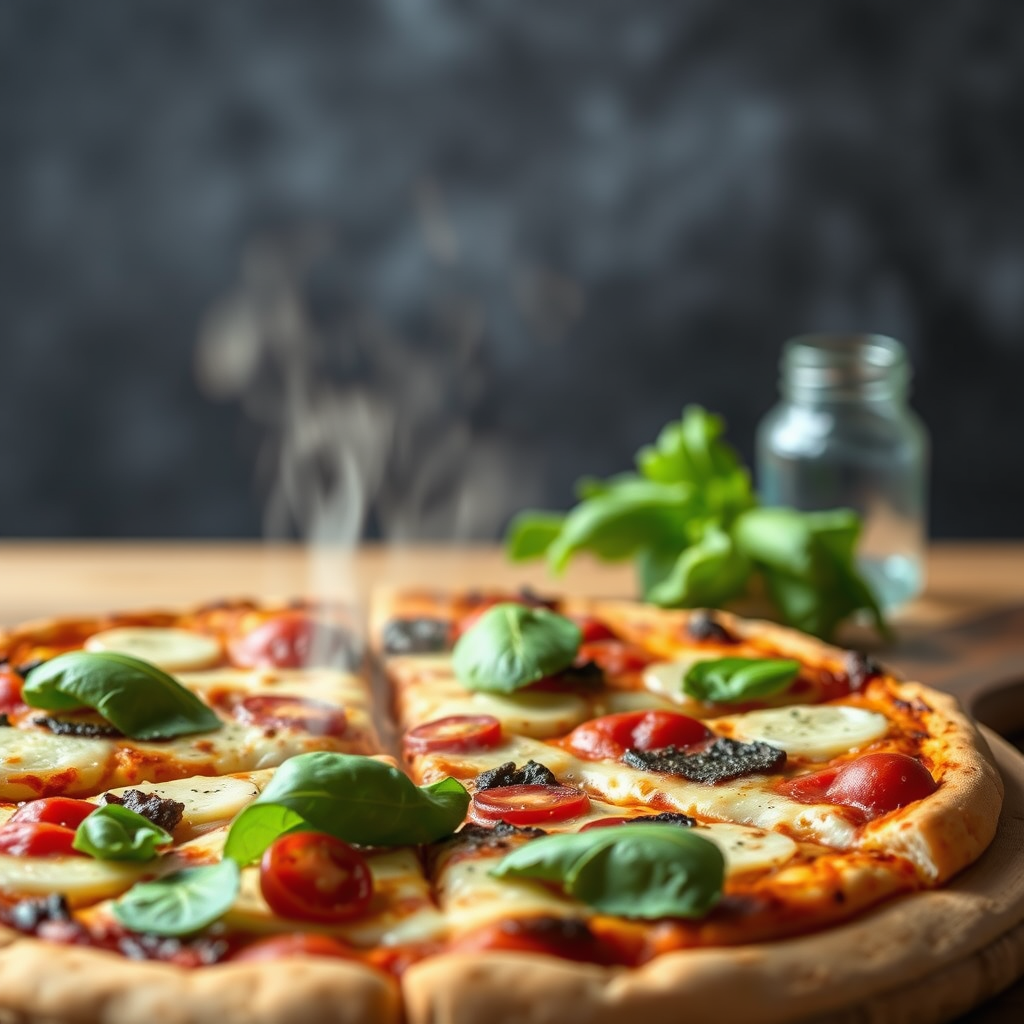
The ketogenic diet, commonly known as the keto diet, is a high-fat, low-carbohydrate eating plan designed to induce a metabolic state called ketosis. During ketosis, the body becomes efficient at burning fat for energy instead of carbohydrates. To achieve this state, individuals typically limit their carbohydrate intake to between 20 and 50 grams per day. This significant reduction in carbs forces the body to switch to burning fat for fuel, resulting in weight loss and other health benefits. Understanding these principles is essential for making informed pizza choices, ensuring that any indulgence aligns with your dietary goals.
Carb Counts in Traditional Pizza
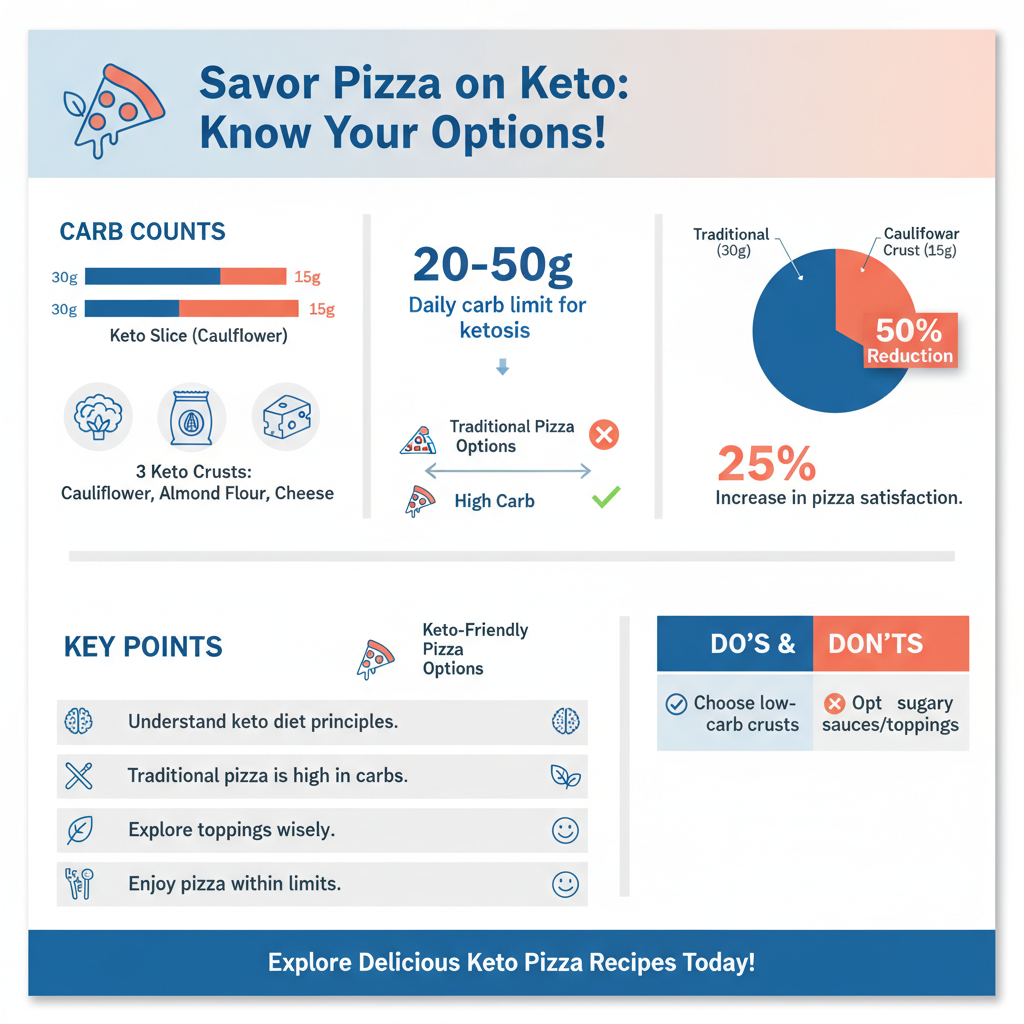
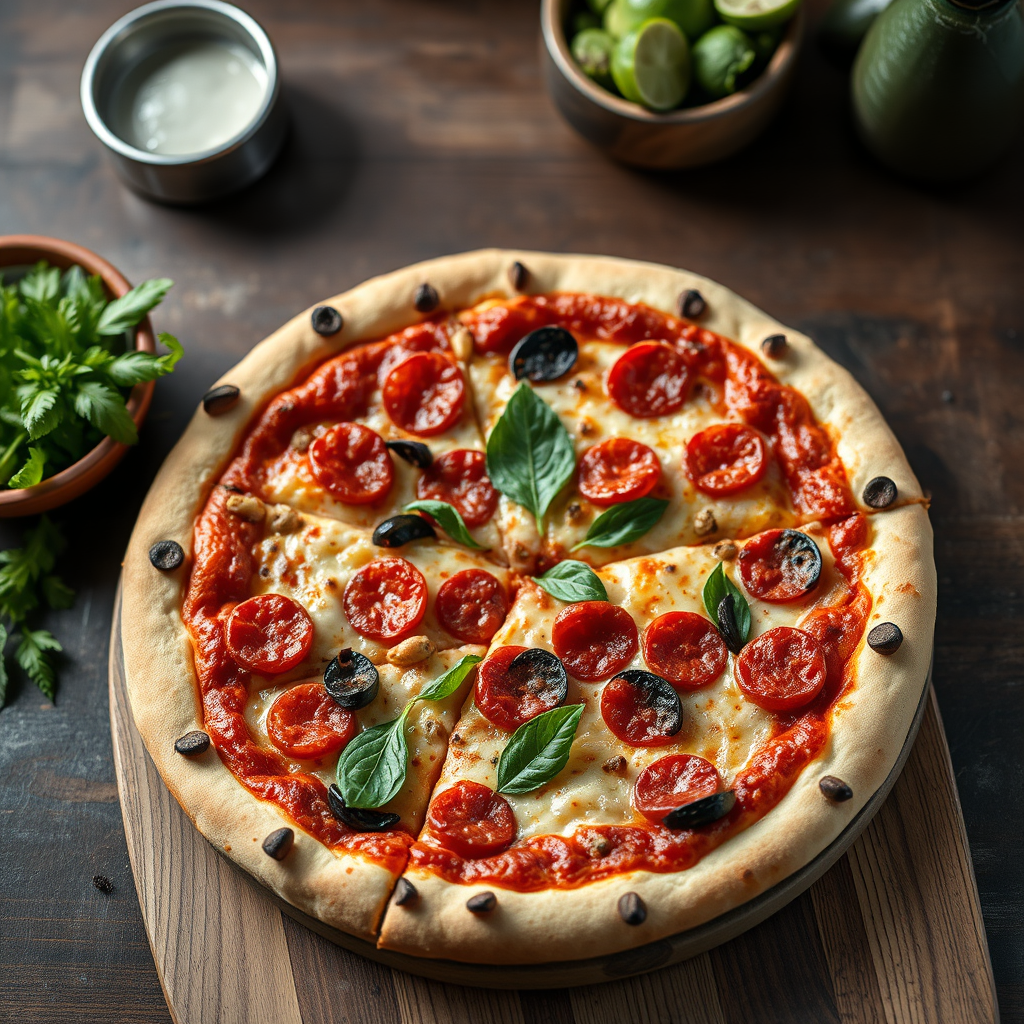
When considering traditional pizza, the carb count is a crucial factor. Most pizza crusts are made from wheat flour, which is notoriously high in carbohydrates. For instance, a single slice of regular pizza can contain upwards of 30 grams of carbs, depending on the thickness of the crust and the toppings used. This high carb content makes traditional pizza unsuitable for a keto diet, where the goal is to maintain a low daily carb intake. Furthermore, many popular pizza toppings, such as sweet sauces or sugary marinades, can contribute additional carbs, complicating matters further for those trying to adhere to a ketogenic lifestyle.
Keto-Friendly Pizza Crust Alternatives
Fortunately, there are several keto-friendly alternatives to traditional pizza crusts that allow individuals to enjoy their favorite dish without exceeding their carb limits. Cauliflower crust has gained popularity as a low-carb substitute. Made from finely grated cauliflower, this crust is not only lower in carbs but also adds a unique flavor and texture to the pizza. Another option is almond flour crust, which combines almond flour with cheese and eggs to create a dough-like consistency that holds up well under toppings. Additionally, cheese-based crusts, such as those made with mozzarella cheese and cream cheese, are excellent choices for those seeking a high-fat, low-carb pizza experience. Many simple recipes for making homemade keto pizza crusts are widely available online, allowing you to customize your pizza while controlling the ingredients.
Choosing Toppings Wisely
The toppings you choose for your pizza play a significant role in keeping your meal keto-friendly. Ideal toppings include a variety of meats, such as pepperoni, sausage, chicken, or bacon, as well as non-starchy vegetables like bell peppers, spinach, and mushrooms. Full-fat cheeses, such as mozzarella, cheddar, or goat cheese, not only enhance flavor but also contribute to the high-fat requirement of a keto diet. However, it is crucial to avoid high-carb toppings like pineapple, corn, and certain sauces that contain sugar. Instead, focus on healthy fats and proteins to maintain a balanced ketogenic lifestyle while enjoying the flavors you love.
Popular Keto Pizza Recipes
If you’re looking to satisfy your pizza cravings while adhering to a keto diet, numerous recipes cater to low-carb needs. A popular choice is cauliflower crust pizza, which can be made by blending cauliflower, cheese, and eggs, then baking it until golden. Another favorite is fathead dough pizza, which uses a combination of mozzarella cheese, cream cheese, almond flour, and eggs to create a versatile crust. Both recipes are easy to follow and require minimal ingredients, making them accessible for even novice cooks. Don’t hesitate to experiment with different toppings, such as pesto, olives, or arugula, to personalize your pizza experience and keep it exciting.
Tips for Ordering Keto Pizza
For those who prefer to order pizza rather than make it from scratch, many pizzerias now recognize the demand for low-carb options and offer alternatives like cauliflower crust or other keto-friendly choices. When ordering, always check the nutritional information if available and customize your order to meet your dietary needs. For instance, request extra cheese instead of traditional sauces or ask for a thin crust option if available. Don’t hesitate to ask the staff for recommendations on how to make your pizza keto-friendly, as many are eager to accommodate dietary preferences.
In summary, pizza can indeed fit into a keto lifestyle when you choose the right ingredients and alternatives. By opting for low-carb crusts and mindful toppings, you can satisfy your pizza cravings without compromising your dietary goals. Explore different recipes and options available to you, and enjoy a delicious slice of pizza on your keto journey!
Frequently Asked Questions
Is traditional pizza keto-friendly?
Traditional pizza is generally not keto-friendly due to its high carbohydrate content from the crust, which is usually made from wheat flour. A single slice can contain upwards of 30 grams of carbs, exceeding the daily carb limit for most keto dieters. However, you can modify your pizza by choosing a low-carb or cauliflower crust, or opting for a pizza with no crust at all, which can make it suitable for a ketogenic diet.
What are some keto-friendly pizza toppings?
When following a keto diet, it’s best to opt for toppings that are low in carbs and high in healthy fats. Ideal choices include meats like pepperoni, sausage, and chicken, as well as cheeses such as mozzarella, cheddar, and goat cheese. Non-starchy vegetables like spinach, mushrooms, and bell peppers can also enhance flavor without significantly increasing carb counts. Avoid high-carb toppings like pineapple or sweet sauces.
How can I make a keto pizza at home?
Making a keto pizza at home is simple and allows you to control the ingredients. Start with a low-carb crust made from almond flour, coconut flour, or cauliflower. Then, add a sugar-free pizza sauce, plenty of cheese, and your choice of keto-friendly toppings. Baking it at a high temperature ensures a crispy finish. This way, you can enjoy a delicious pizza while sticking to your ketogenic lifestyle.
Why is pizza often considered non-keto?
Pizza is often deemed non-keto primarily because of its high carbohydrate content, mainly from the crust. Most traditional pizza crusts are made from refined wheat flour, which can lead to a significant spike in blood sugar levels, contradicting the principles of a ketogenic diet that focuses on low carbohydrate intake. Understanding the nutritional makeup of pizza helps dieters make informed choices about modifications or alternatives.
Which restaurants offer keto-friendly pizza options?
Many restaurants now cater to keto dieters by offering low-carb pizza options. Popular chains like Blaze Pizza and MOD Pizza allow for customizable crusts, including cauliflower or keto-friendly alternatives. Additionally, local pizzerias may offer low-carb crusts or allow for creative substitutions. Always check the nutritional information and ingredient lists to ensure the pizza meets your specific dietary needs.
References
- Ketogenic diet
- https://www.healthline.com/nutrition/keto-diet-foods
- https://www.webmd.com/diet/what-is-the-keto-diet
- https://www.ncbi.nlm.nih.gov/pmc/articles/PMC6072181/
- https://www.mayoclinic.org/healthy-lifestyle/nutrition-and-healthy-eating/expert-answers/keto-diet/faq-20433857
- https://www.cdc.gov/healthyweight/healthy_eating/index.html