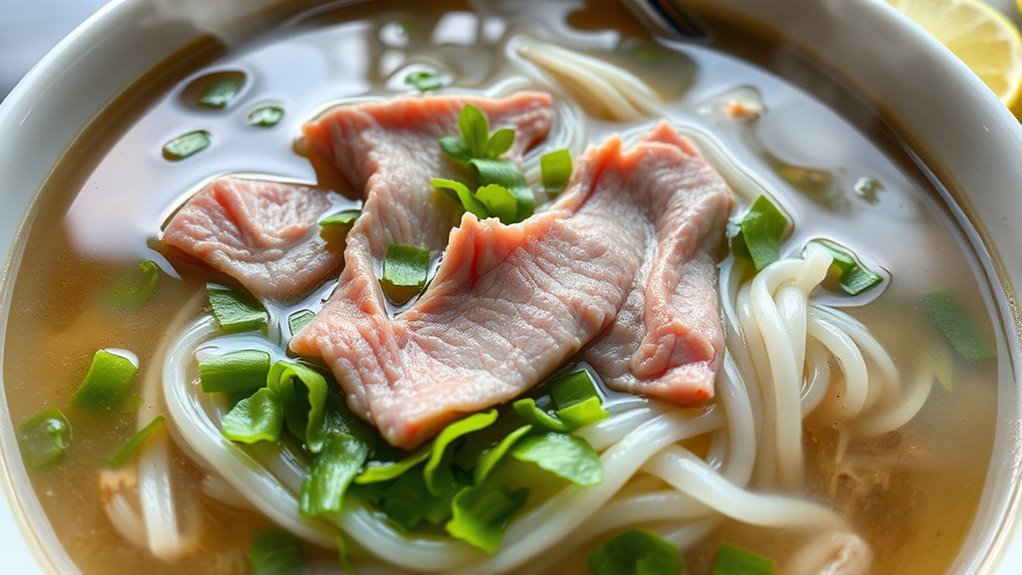

Pho isn’t keto-friendly in its traditional form due to high-carb rice noodles. A typical serving contains around 40 grams of carbs, which can easily exceed your daily limits on a keto diet. However, you can make a keto-compatible version by using low-carb noodle substitutes like shirataki or zucchini noodles. Flavorful enhancements like fresh herbs and spices can elevate your dish. You’ll discover more tips on how to enjoy pho while sticking to keto guidelines.
Understanding Keto Diet Principles
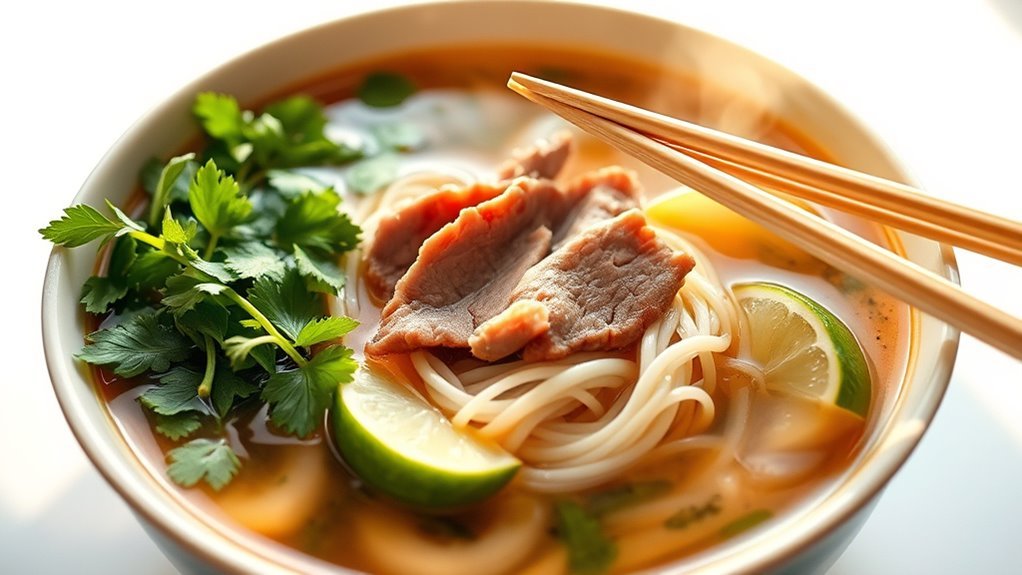
When you consider the keto diet, it’s essential to understand its core principles, as they guide your food choices and overall lifestyle. The keto diet primarily focuses on high-fat, moderate-protein, and low-carbohydrate intake, which shifts your body into a state of ketosis. In this state, your body burns fat for fuel instead of carbohydrates. While this diet offers freedom from traditional dietary restrictions, it does require careful planning to guarantee you’re meeting your macronutrient goals. You’ll need to be mindful of hidden carbs in foods you might not expect. Balancing your meals with healthy fats like avocados and olive oil can help you stay on track while enjoying the benefits of the keto lifestyle without feeling deprived.
Traditional Ingredients in Pho
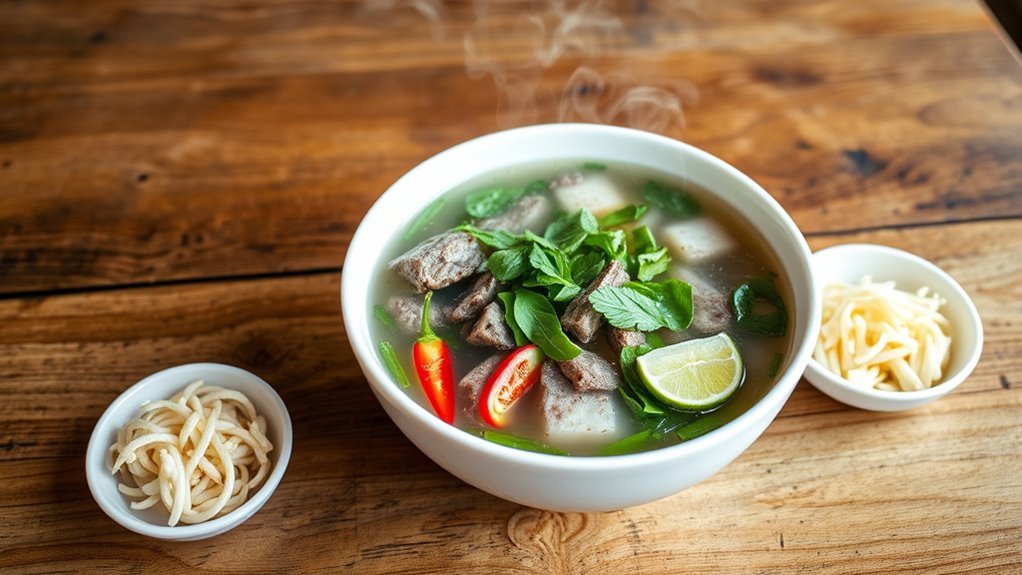
When you think about pho, it’s crucial to reflect on its traditional ingredients. Commonly used components include rice noodles, various proteins, and a rich broth that can vary in flavor and composition. Understanding these elements will help you evaluate how they fit into a keto-friendly diet.
Common Pho Ingredients
Pho, a beloved Vietnamese noodle soup, is characterized by its rich flavors and aromatic broth. The classic broth, simmered from beef or chicken bones, forms the foundation of this dish, with variations that may include spices like star anise and cinnamon. When it comes to pho toppings, you’ll often find fresh herbs like cilantro or basil, bean sprouts, lime wedges, and sliced chili peppers. These toppings not only enhance the flavor but also add a freshness that balances the broth’s richness. Some enjoy adding hoisin or sriracha for an extra kick. Understanding these common ingredients helps you appreciate the complexity and depth of pho while also considering how they fit into your dietary preferences.
Noodle Variations Explained
Although many love pho for its flavorful broth and fresh toppings, the noodles are an essential component that can greatly affect its suitability for various diets, including the ketogenic diet. Traditional pho typically features rice noodles, which come with distinct noodle types and textures that play a key role in the dish’s overall experience. Here are three popular noodle types:
- Bánh phở: Flat rice noodles that absorb flavors well, providing a soft texture.
- Bánh hỏi: Thin rice vermicelli that offers a delicate, chewy bite.
- Bún: Round rice noodles with a slightly firm texture that adds a satisfying chew.
These noodle variations not only enhance the dish but also influence its carb content, making it essential to take into account when following a keto lifestyle.
Broth Composition Insights
While the noodles in pho are often the focus, the broth is arguably considered its heart, providing depth and flavor that can greatly impact its keto-friendliness. Traditional pho broth types—beef, chicken, or seafood—each offer unique broth benefits. Beef broth, for instance, is rich in collagen and nutrients, making it a hearty option. Chicken broth tends to be lighter but still delivers a savory punch. If you’re looking to keep your meal keto-friendly, opting for a broth without added sugars or starches is essential. You can enjoy the aromatic spices like star anise and cloves without the carbs. By choosing your broth wisely, you can savor the essence of pho while staying true to your dietary goals.
The Carbohydrate Count of Rice Noodles
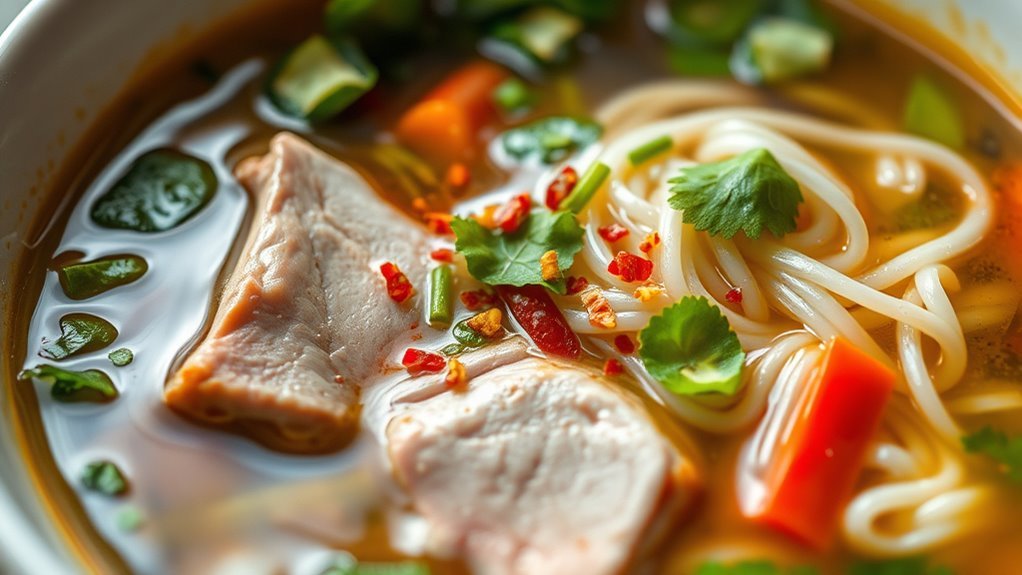
When it comes to rice noodles, their carbohydrate content can greatly impact your keto diet. Typically, a serving contains around 40 grams of carbs, which may not fit your daily limit. Fortunately, there are alternative options you can consider that are lower in carbs and still delicious.
Rice Noodle Composition
If you’re contemplating incorporating pho into a keto diet, it’s essential to understand the carbohydrate composition of rice noodles, as they are a staple ingredient in this traditional dish. Different rice noodle types can vary in carb content, impacting your noodle health. Here are three key points to reflect on:
- High Carb Count: Standard rice noodles are rich in carbohydrates, often exceeding 40 grams per serving.
- Gluten-Free Options: While many rice noodle types are gluten-free, they still pack a carb punch.
- Alternatives Exist: Explore low-carb noodle substitutes like zucchini noodles or shirataki.
Understanding these aspects can empower you to make informed choices about pho without feeling restricted in your diet. Embrace the freedom to enjoy your meals while staying aligned with your keto goals!
Carb Content Comparison
To effectively compare the carbohydrate content of various rice noodles, it’s essential to look at the specific types often used in pho. Understanding the carb sources lets you make informed decisions when enjoying this beloved dish. Here’s a quick comparison of common noodle types:
| Noodle Type | Serving Size (g) | Carbs (g) |
|---|---|---|
| Rice Vermicelli | 100 | 25 |
| Flat Rice Noodles | 100 | 30 |
| Instant Rice Noodles | 85 | 40 |
| Brown Rice Noodles | 100 | 35 |
As you can see, carb content varies considerably among noodle types. If you’re aiming for a low-carb lifestyle, knowing these numbers can help you savor pho while staying within your limits.
Alternatives to Rice Noodles
While rice noodles are a staple in traditional pho, there are several alternatives that can considerably lower the carbohydrate content of the dish. You can enjoy pho without sacrificing flavor by trying these options:
- Shirataki noodles: Virtually zero carbs, made from konjac yam.
- Zucchini noodles: Fresh, low-calorie, and packed with nutrients.
- Kelp noodles: Low in carbs and rich in minerals.
Other great choices include spaghetti squash and vegetable spirals, which add unique textures and flavors to your meal. Even tofu noodles can be a satisfying, low-carb alternative. By experimenting with these substitutes, you can savor a delicious, keto-friendly pho while enjoying the freedom to indulge in your favorite flavors without the carbs weighing you down.
Keto-Friendly Alternatives to Rice Noodles
Finding keto-friendly alternatives to rice noodles can enhance your pho experience without derailing your low-carb diet. Consider using zucchini noodles, which are low in carbs and add a fresh, crunchy texture to your dish. They’re easy to prepare—just spiralize your zucchini and lightly sauté it before adding to your pho. Another excellent option is shirataki noodles, made from konjac yam. These noodles are virtually calorie-free and provide a chewy texture that mimics traditional rice noodles. Both options allow you to enjoy a satisfying bowl of pho while keeping your carb intake in check. Embracing these alternatives can help you maintain the flavors and experience of pho without compromising your dietary goals.
How to Make Pho Keto-Compatible
If you’re looking to enjoy a delicious bowl of pho without compromising your keto diet, there are several simple adjustments you can make. Start by using a rich keto broth made from bone broth or beef stock, which is low in carbs and high in flavor. Then, choose low carb toppings to complement your dish. Here are three suggestions:
- Zucchini noodles – a perfect noodle alternative that keeps your carb count low.
- Sliced beef or chicken – packed with protein and essential nutrients.
- Fresh herbs like basil and cilantro – they add freshness without extra carbs.
With these adjustments, you can savor your pho while staying true to your keto lifestyle and enjoying the freedom of delicious flavors!
Flavor Enhancements for Keto Pho
To elevate the flavors of your keto pho, consider incorporating a variety of herbs and spices that not only enhance taste but also align with your dietary goals. Spice adjustments can make a significant impact, allowing you to enjoy rich flavor infusions without compromising your keto journey. Here’s a handy table to guide you:
| Herb/Spice | Flavor Profile | Keto Benefits |
|---|---|---|
| Star Anise | Sweet, licorice-like | Rich in antioxidants |
| Cilantro | Fresh, citrusy | Low-calorie, flavorful |
| Ginger | Spicy, warm | Aids digestion |
Experiment with these additions to create a personalized bowl of pho that satisfies your cravings while keeping you on track with your keto lifestyle. Enjoy the freedom of flavor!
Tips for Ordering Pho at Restaurants
When you’re at a restaurant, how can you guarantee your pho remains keto-friendly? With some smart ordering strategies, you can enjoy this delicious dish without derailing your diet. Here are three essential restaurant tips:
- Choose the right broth: Opt for beef or chicken broth; avoid sugary, pre-made versions that may contain hidden carbs.
- Skip the noodles: Ask for extra veggies instead of rice noodles to keep your carb count low while still enjoying the flavors.
- Load up on protein: Request additional meat like brisket or chicken to help you feel full and satisfied.
Sample Keto Pho Recipe
A delicious keto-friendly pho can be made right at home, allowing you to enjoy this comforting dish without the added carbs. Start with a rich keto broth, simmering beef bones for hours to extract flavors. For protein options, add sliced beef, chicken, or tofu for variety. Top it off with fresh herbs like basil and cilantro, along with sliced jalapeños for a kick.
| Ingredient | Amount | Notes |
|---|---|---|
| Beef Bones | 2 lbs | For a rich, flavorful broth |
| Protein Option | 1 lb | Beef, chicken, or tofu |
| Herbs | To taste | Basil, cilantro, jalapeños |
This way, you’ll savor every bite without compromising your keto goals!
Frequently Asked Questions
Can I Use Zucchini Noodles in My Pho?
Absolutely, you can use zucchini noodles in your pho! Imagine a bowl of savory broth cradling those vibrant green spirals, offering a fresh twist. Zucchini noodles bring fantastic benefits, like being low in carbs and high in nutrients, making them great noodle alternatives. They soak up the flavors of the broth beautifully, giving you that satisfying experience while keeping your meal light. Enjoy the freedom to customize your pho however you like!
What Broth Options Are Best for Keto Pho?
For keto pho, rich bone broth is your best bet. It’s packed with nutrients and healthy fats, enhancing flavor profiles while keeping carbs low. You can also experiment with beef or chicken broth, which can add depth to your dish. Just avoid any pre-made broths with added sugars. By choosing the right broth types, you’ll maintain the integrity of your keto diet while enjoying a delicious, aromatic pho experience.
Is There a Vegetarian Keto Pho Recipe?
Yes, you can make a vegetarian keto pho! Start with a rich vegetable broth and add vegetarian protein sources like tofu or tempeh. For keto-friendly toppings, consider using fresh herbs, bean sprouts, and sliced mushrooms. Incorporating zucchini noodles or shirataki noodles can keep it low in carbs. This way, you can enjoy a delicious bowl of pho that’s both satisfying and aligned with your keto lifestyle, all while embracing a plant-based approach.
Can I Add More Fat to My Keto Pho?
Absolutely, you can add more fat to your keto pho! Incorporating fat sources like coconut oil, butter, or bone marrow can enhance flavor and increase the broth thickness. Just be mindful of your overall macros to maintain ketosis. More fat not only boosts richness but also adds to the satisfaction of your meal. Experiment with different fats to find your perfect balance while enjoying the freedom that keto cooking offers!
How Can I Store Leftover Keto Pho?
Storing leftover keto pho is like tucking away a warm blanket for a chilly night. To keep it fresh, store the broth and toppings separately in airtight containers. Refrigerate the broth for up to four days and the toppings for two. When you’re ready to enjoy, reheat the broth gently on the stove, adding the toppings just before serving. This way, you preserve the flavors and textures, keeping your meal delightful and satisfying.
Frequently Asked Questions about Pho and the Keto Diet
1. Is Pho keto-friendly?
Pho can be keto-friendly if you make some adjustments. Traditional pho noodles are made from rice, which are high in carbohydrates. To make it keto-friendly, consider substituting the rice noodles with zucchini noodles, shirataki noodles, or simply skip the noodles altogether and focus on the broth and protein, such as beef or chicken.
2. What are the main ingredients in Pho?
Pho typically consists of a flavorful broth made from beef or chicken bones, herbs, spices, and often includes rice noodles, a variety of meats, and fresh vegetables. The traditional recipe involves ingredients that are not inherently keto-friendly due to the high carbohydrate content of rice noodles.
3. How can I make Pho keto-friendly at home?
To make a keto-friendly version of Pho at home, start by preparing the broth using beef or chicken bones, and add plenty of spices such as star anise, cinnamon, and cloves. Instead of rice noodles, use low-carb alternatives like spiralized zucchini or shirataki noodles. Load up on protein and vegetables such as bean sprouts, basil, cilantro, and lime for flavor and nutrition without the carbs.
4. Are there any restaurants that offer keto-friendly Pho?
Many Vietnamese restaurants may not have explicitly labeled keto-friendly options, but you can often request substitutions. Ask for the broth without noodles or for a low-carb noodle option if available. Some restaurants may also be willing to customize your order based on dietary preferences, so don’t hesitate to inquire about modifications.
5. What should I watch out for when eating Pho on a keto diet?
When eating Pho on a keto diet, be cautious of the portion size and the ingredients in the broth. Some broths may have added sugars or high-carb sauces. Additionally, avoid the rice noodles and limit any added toppings that may contain carbs, such as hoisin sauce or sriracha. Always focus on the protein and vegetables to keep your meal low in carbohydrates.
References
- https://www.healthline.com/nutrition/what-is-keto-diet
- https://www.webmd.com/diet/obesity/what-is-keto-diet
- https://www.eatright.org/health/wellness/healthy-eating/the-ketogenic-diet
- https://www.ncbi.nlm.nih.gov/pmc/articles/PMC8593015/
- https://www.nutrition.gov/topics/whats-in-food/food-safety-keto-diet
- https://www.thekitchn.com/what-is-pho-229919
- https://www.cdc.gov/healthyweight/healthy_eating/index.html