
Traditional pasta isn’t keto-friendly because it’s high in carbohydrates, which can disrupt your ketosis. A standard serving typically contains around 40 grams of carbohydrates, exceeding the recommended daily limit of 20-50 grams on a keto diet. However, there are plenty of low-carb alternatives like zoodles and cauliflower pasta that can satisfy your cravings without derailing your progress. If you’re curious about how to enjoy pasta dishes while staying on track with keto, there are plenty of creative options to explore.
Understanding the Keto Diet and Carbohydrate Limits

When you start on a ketogenic (keto) diet, it’s essential to understand the role of carbohydrates and how they impact your body’s metabolism. The keto principles emphasize reducing your carb intake to enter a state of ketosis, where your body burns fat for fuel instead of glucose. This means you’ll need to focus on carbohydrate counting, aiming for typically under 20-50 grams of net carbs per day, depending on your individual needs. By limiting carbs, you encourage your body to utilize stored fat for energy, providing a sense of freedom as you explore new meal options. Understanding these limits is vital for successfully managing your keto journey, allowing you to enjoy the benefits while still feeling liberated in your food choices.
Traditional Pasta and Its Carb Content

Understanding the carbohydrate limits of the keto diet naturally brings traditional pasta into focus. Most pasta types, like spaghetti and penne, are primarily made from wheat, making them high in carbs. A standard serving can contain around 40 grams of carbohydrates, which can easily exceed your daily limit on keto. When considering carb sources, it’s important to recognize that these numbers can vary with different pasta forms, such as whole wheat or egg noodles. If you’re on a strict keto path, consuming traditional pasta might hinder your progress. Instead, it’s vital to evaluate your options and be mindful of portion sizes if you wish to incorporate any pasta-like dishes while adhering to your dietary goals.
Keto-Friendly Pasta Alternatives

Are you searching for pasta alternatives that fit within your keto lifestyle? You’re in luck! There are several delicious options that can satisfy your cravings without the carbs. Here are a few keto-friendly choices:
Discover tasty pasta alternatives that align with your keto lifestyle, allowing you to enjoy satisfying meals without the carbs.
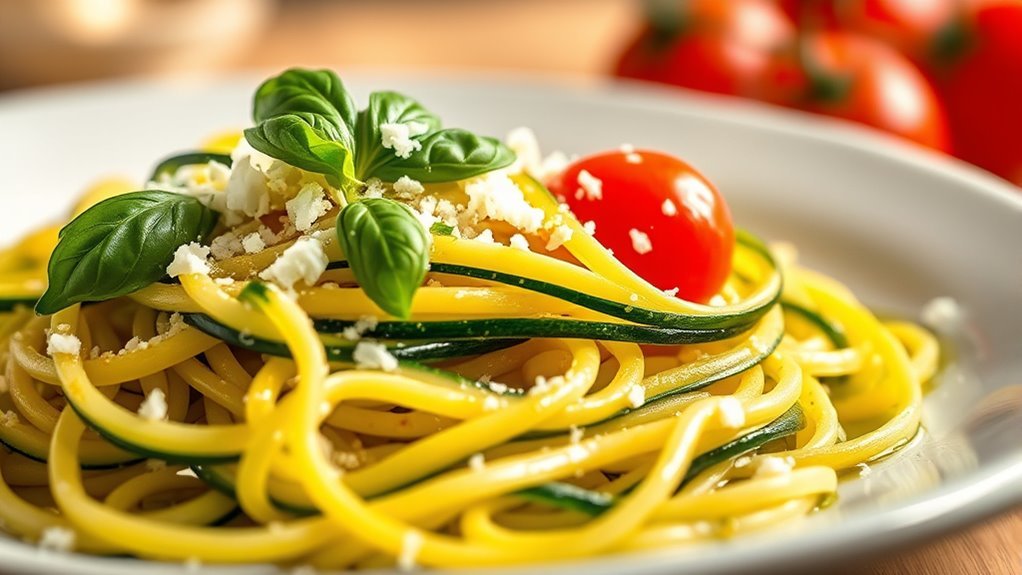
- Zucchini noodles: Also known as “zoodles,” they’re low in carbs and can be used in various dishes.
- Cauliflower rice: A versatile alternative that can serve as a base for sauces and toppings, mimicking traditional rice dishes.
- Konjac noodles: Made from the konjac plant, these noodles are virtually carb-free and have a unique texture.
While chickpea pasta is higher in carbs, it can still be enjoyed in moderation. These alternatives allow you the freedom to indulge in pasta-like experiences while staying true to your keto goals.
Creative Ways to Enjoy Pasta Dishes on Keto
Exploring keto-friendly pasta alternatives opens up a world of creative possibilities for enjoying pasta dishes without the carbs. You can plunge into zoodle recipes, where spiralized zucchini takes center stage, providing a light and nutritious base for your favorite sauces. Toss zoodles with pesto or marinara for a satisfying meal that won’t derail your keto goals. Alternatively, try cauliflower pasta, a fantastic option that mimics traditional pasta’s texture. You can make it from scratch or find pre-made versions at your local store. Combine it with sautéed veggies, cheese, and spices for a hearty dish. With these alternatives, you can relish the flavors of pasta while staying committed to your keto lifestyle, enjoying each bite guilt-free.
Tips for Staying on Track With Keto Pasta Choices
While it’s easy to get carried away with delicious keto pasta alternatives, staying on track requires mindful choices. Here are some tips to help you maintain your keto journey:
Staying on track with keto pasta alternatives requires mindful choices and careful planning.
- Prioritize keto meal prep: Plan and prepare your meals in advance to avoid impulsive choices.
- Practice portion control: Use measuring tools or visual cues to guarantee you’re not overeating, even with low-carb pasta options.
- Stay informed: Read labels and research different keto pasta varieties to make better choices for your diet.
Frequently Asked Questions
Can I Eat Pasta on a Cheat Day While Keto?
On a cheat day, you might be tempted to indulge in pasta, but consider this: studies show that 70% of people on a keto diet find success by using cheat day strategies wisely. Instead, explore pasta alternatives like zucchini noodles or shirataki noodles to satisfy cravings without derailing your progress. Enjoy the freedom to treat yourself, but remember that your choices can impact your overall results. Balance is key!
Are There Gluten-Free Keto Pasta Options Available?
Yes, there are gluten-free keto pasta options available! You can find alternatives made from ingredients like zucchini, cauliflower, or even shirataki noodles. These gluten-free alternatives not only fit your keto lifestyle but also allow you to enjoy low carb recipes without sacrificing flavor. Many brands offer these options, making it easier than ever to indulge your pasta cravings while staying on track. Just be sure to check the labels for carb content!
How Do I Store Leftover Keto Pasta Dishes?
Imagine savoring a delicious meal, only to have leftovers waiting for you to enjoy later. For the best storage of your leftover keto pasta dishes, use airtight containers to keep them fresh. Refrigerate promptly and consume within three to five days. When you’re ready to indulge again, reheating tips include using a microwave or stovetop, adding a splash of water to avoid dryness. This way, you can relish that taste of freedom all over again!
Can I Combine Keto Pasta With Non-Keto Ingredients?
You can definitely combine keto pasta with non-keto ingredients, but it’s important to be mindful of your carb intake. Keto pasta combinations can enhance flavor and texture, but adding high-carb sauces or ingredients can push you out of ketosis. If you’re craving a richer meal, consider moderation or finding low-carb alternatives to non-keto ingredients. Ultimately, balance is key, allowing you to enjoy your meals without straying too far from your dietary goals.
What Sauces Pair Well With Keto Pasta?
Did you know that 60% of people enjoy experimenting with sauce combinations when cooking? When it comes to keto pasta, you’ve got plenty of options. Consider a rich Alfredo for a creamy flavor profile or a zesty marinara for a fresh twist. Pesto adds a vibrant touch, while a garlic butter sauce can elevate your dish. Each of these sauces not only complements keto pasta but also lets you explore delicious, low-carb culinary freedom!
Frequently Asked Questions about Pasta and Keto
1. Is pasta allowed on a keto diet?
Traditional pasta is typically made from wheat, which is high in carbohydrates. Since the ketogenic diet focuses on low-carb intake (usually around 20-50 grams of carbs per day), traditional pasta is generally not allowed. However, there are low-carb alternatives available, such as zucchini noodles, spaghetti squash, and shirataki noodles, which can be enjoyed on a keto diet.
2. What are some keto-friendly pasta alternatives?
Keto-friendly pasta alternatives include:
- Zucchini Noodles (Zoodles): Spiralized zucchini serves as a fresh and low-carb substitute.
- Shirataki Noodles: Made from konjac yam, these noodles are very low in calories and carbs.
- Spaghetti Squash: When cooked, the flesh of this squash can be shredded into strands that resemble spaghetti.
- Palmini Noodles: Made from hearts of palm, these are low in carbs and have a texture similar to traditional pasta.
These alternatives can be used in various pasta dishes while keeping your carb intake low.
3. Can you eat low-carb pasta on a keto diet?
Yes, you can eat low-carb pasta on a keto diet, provided it fits within your daily carbohydrate allowance. Many brands offer pasta made from alternative ingredients like almond flour, coconut flour, or fiber-rich ingredients that have significantly fewer carbs than traditional pasta. Always check the nutrition label to ensure it aligns with your keto goals.
4. How can I incorporate pasta into my keto meal plan?
To incorporate pasta into your keto meal plan, start by choosing one of the keto-friendly alternatives mentioned earlier. Here are some ideas:
- Use zucchini noodles in a stir-fry with low-carb vegetables and protein.
- Prepare spaghetti squash with a homemade marinara sauce and meatballs.
- Try shirataki noodles in a creamy Alfredo sauce with chicken or shrimp.
- Experiment with palmini noodles in cold salads or as a base for your favorite sauces.
Always keep an eye on the overall carb count of your meal to stay within your limits.
5. What should I watch out for when choosing keto pasta alternatives?
When choosing keto pasta alternatives, consider the following:
- Carbohydrate Content: Always check the total carbs and net carbs (total carbs minus fiber) to ensure it fits your diet.
- Ingredient Quality: Look for products with minimal ingredients and avoid those with added sugars or unhealthy fillers.
- Serving Size: Be mindful of serving sizes, as it can be easy to consume more carbs than intended.
- Personal Tolerance: Some people may experience digestive issues with certain alternatives (like shirataki noodles), so it’s best to try them in moderation.
By being mindful of these factors, you can enjoy pasta on your keto diet without compromising your health goals.
References
- https://www.wisewell.com/blogs/news/is-pasta-keto-friendly
- https://www.healthline.com/nutrition/keto-diet-foods
- https://www.ncbi.nlm.nih.gov/pmc/articles/PMC6520691/
- https://www.medicalnewstoday.com/articles/325095
- https://www.eatright.org/health/wellness/preventing-illness/what-is-the-keto-diet
- https://www.webmd.com/diet/what-is-the-keto-diet
- https://www.hcplive.com/view/the-ketogenic-diet-what-you-need-to-know
- https://www.ketogenic.com/keto-diet-explained
- https://www.cdc.gov/healthyweight/healthy_eating/index.html