Orange juice isn’t keto-friendly due to its high carbohydrate content, containing about 26 grams per cup. This amount can easily exceed your daily carb limits, disrupting ketosis. While it offers some health benefits, like vitamin C, the natural sugars in orange juice can hinder fat burning. If you’re on a ketogenic diet, consider alternatives like unsweetened almond milk or infused sparkling water instead. Discovering more about suitable options can help you stay on track with your keto goals.
Understanding the Ketogenic Diet

While you may have heard a lot about the ketogenic diet, understanding its core principles is vital before incorporating any foods, like orange juice, into your meal plan. The ketogenic diet primarily focuses on minimizing carbohydrate intake while increasing healthy fats, leading your body into a state of ketosis. This metabolic state allows your body to burn fat for energy instead of carbs. It’s important to note that there are various diet variations within the ketogenic framework, such as targeted or cyclical ketogenic diets, which may allow for some carb intake at specific times. Familiarizing yourself with these ketogenic principles can empower you to make informed choices, giving you the freedom to navigate your diet while potentially achieving your health goals. Additionally, understanding nutrient-dense vegetables is crucial for maintaining overall health on a keto plan.
Nutritional Profile of Orange Juice

In the context of the ketogenic diet, understanding the nutritional profile of orange juice is important for making informed choices. Orange juice offers several benefits, primarily due to its rich vitamin content. It’s an excellent source of vitamin C, which supports your immune system and promotes skin health. Additionally, you’ll find small amounts of B vitamins, essential for energy metabolism. While it provides hydration, the natural sugars present may be a concern for those strictly adhering to keto guidelines. However, the antioxidants in orange juice can contribute to overall health, making it a nutritious choice if consumed in moderation. Being aware of these factors helps you navigate your dietary preferences while still enjoying the invigorating taste of orange juice.
Carbohydrate Content and Its Impact
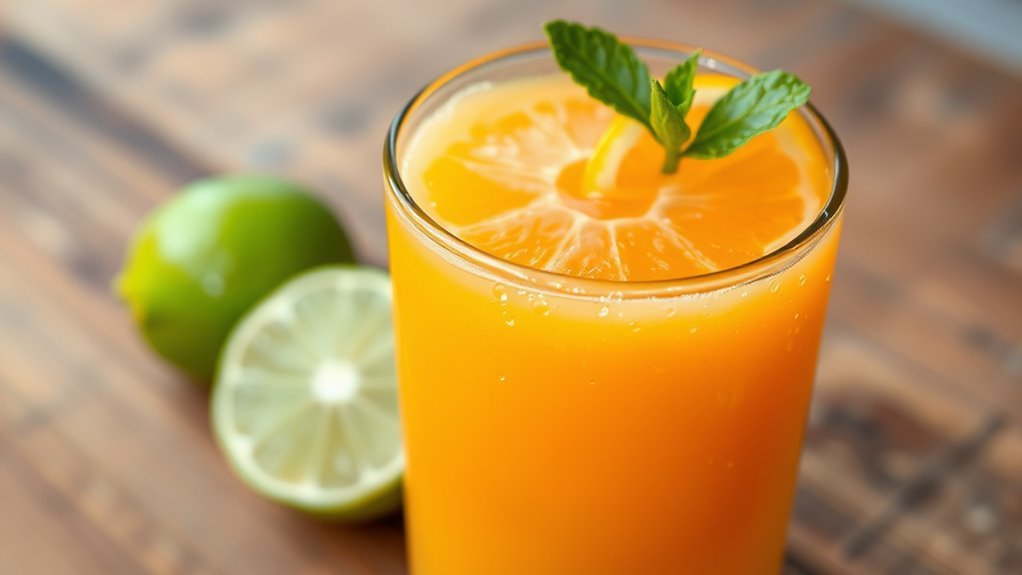
One cup of orange juice contains about 26 grams of carbohydrates, primarily from natural sugars. For those following a keto diet, this amount can greatly impact your daily carbohydrate allowance. If you’re looking for lower-carb beverage options, consider exploring juice alternatives like unsweetened almond milk or coconut water, which typically contain fewer carbohydrates. While orange juice does offer some vitamins and minerals, it’s essential to weigh these benefits against its carbohydrate sources. Staying mindful of your intake can help you maintain your desired state of ketosis. Ultimately, if you cherish the taste of orange juice, moderation is key, or you might want to explore those lower-carb alternatives that align better with your dietary goals. Additionally, remember that the keto diet emphasizes reducing carbs to improve fat burning for fuel, aiding in weight loss.
Effects of Sugar on Ketosis
When you’re on a ketogenic diet, understanding how sugar affects ketosis is essential. Consuming sugar can trigger an insulin response that may push your body out of its fat-burning state. It’s important to keep track of your carbohydrate limits to maintain ketosis effectively. Limiting carbs to 20-50 grams daily is crucial for achieving and sustaining ketosis.
Sugar’s Impact on Ketosis
Although sugar is a common source of energy for the body, its impact on ketosis can be significant, particularly for those following a ketogenic diet. When you consume sugar, your body prioritizes sugar metabolism for energy, which can halt ketosis maintenance. This process occurs because high sugar intake raises blood glucose levels, prompting your body to turn to glucose instead of fat as its primary energy source. For those seeking to maintain ketosis, even small amounts of sugar can disrupt their state of fat-burning. By understanding how sugar affects your body’s energy processes, you can make more informed choices about your diet. Ultimately, staying mindful of sugar consumption is key to achieving and maintaining ketosis effectively. Monitoring carb intake is essential to maintain ketosis and achieve dietary goals, as energy fluctuations can occur with cane sugar intake.
Insulin Response to Sugar
Understanding how your body responds to sugar is essential for anyone trying to maintain ketosis. When you consume sugar, your body triggers an insulin response, leading to elevated insulin levels. This can disrupt your state of ketosis, as insulin plays a significant role in sugar metabolism. If you frequently consume high-sugar foods, you may develop insulin resistance, making it harder for your body to efficiently use stored fat for energy. This resistance can sabotage your keto goals, as your body will prefer burning glucose over fat. To stay in ketosis, it’s important to monitor your sugar intake and understand how it affects your overall metabolic process. The carbohydrate content in foods like orange juice can significantly impact your ability to maintain ketosis. Balancing your diet can empower you to achieve the freedom you seek in your health journey.
Carbohydrate Limits for Ketosis
To maintain ketosis, it is crucial to keep your carbohydrate intake within specific limits, as excessive carbs can greatly impact your body’s ability to burn fat for fuel. This means practicing carb counting while also enjoying keto flexibility. Typically, you’ll want to aim for about 20-50 grams of net carbs per day.
Consider these factors for effective carb management:
- Fiber-rich veggies: They nourish without spiking insulin.
- Low-sugar fruits: Choose berries over citrus for a sweet treat.
- Healthy fats: They help you feel full and satisfied.
- Mindful snacking: Opt for nuts or cheese instead of high-carb options. Additionally, it’s important to prioritize low-carb fruits to stay within your daily carb limits.
Alternatives to Orange Juice on Keto
While orange juice might be a staple for many, it’s not the best choice for those following a keto diet due to its high sugar content. Fortunately, there are several delicious alternatives that can fit into your low-carb lifestyle. Consider unsweetened almond milk or coconut milk as creamy, low-carb bases for your smoothies. You might also enjoy sparkling water infused with lemon or lime for a rejuvenating, keto-friendly beverage. Low carb juices made from greens or cucumbers can provide hydration without the sugar spike. These keto beverages not only keep your carb count low but also offer a variety of flavors to keep your palate satisfied. Embrace these alternatives and enjoy your journey on the keto diet! Additionally, opting for unsweetened versions of these alternatives ensures you maintain your keto goals effectively.
Incorporating Orange Juice in Moderation
If you’re craving a taste of orange juice while on a keto diet, incorporating it in moderation can be a viable option. The key is to enjoy the orange juice benefits without jeopardizing your carb intake. Here’s how you can do it:
- Savor a small glass as a revitalizing morning boost.
- Mix it with water or sparkling water for a lighter drink.
- Pair it with high-fat foods to balance blood sugar levels.
- Use it in salad dressings for a citrusy twist.
Personalizing Your Keto Journey
Personalizing your keto journey means understanding your individual carb tolerance and how it aligns with your nutritional goals. It’s crucial to reflect on not just the science behind keto, but also your flavor preferences and what keeps you satisfied. By tailoring your approach, you can create a sustainable plan that works for you. Additionally, being aware of carbohydrate content in foods like fruits can help you make informed choices that fit within your keto guidelines.
Individual Carb Tolerance
Understanding your individual carb tolerance is essential for successfully maneuvering a ketogenic diet. Everyone’s body reacts differently to carbs, so adopting an individualized approach is vital. Factors like carb sensitivity will influence how much you can enjoy while staying in ketosis. Consider these elements to help gauge your tolerance:
- Personal energy levels after meals
- Frequency and intensity of cravings
- Changes in weight or body composition
- Overall mood and mental clarity
Additionally, maintaining awareness of personal metabolic differences can aid in fine-tuning your carb intake for optimal results.
Nutritional Goals Alignment
As you begin your keto journey, aligning your nutritional goals with your personal health needs is essential for long-term success. Emphasizing nutritional balance while considering your dietary preferences can help you thrive on this lifestyle. Start by evaluating what your body needs, whether it’s weight loss, improved energy, or better metabolic health. It’s important to be mindful of sugar content and carbohydrate counts in foods like mandarin oranges to ensure you stay within your daily carb limits.
Here’s a simple table to guide you:
| Nutritional Aspect | Keto-Friendly Options | Non-Keto Options |
|---|---|---|
| Carbohydrates | Leafy greens | Orange juice |
| Fats | Avocados | Processed oils |
| Proteins | Grass-fed meats | Sugary snacks |
Flavor and Preference
Finding foods that align with your keto goals while still satisfying your taste buds is key to maintaining this lifestyle. When it comes to flavor, understanding your taste preferences can help you make choices that feel enjoyable and sustainable. If you love citrus flavors, consider alternatives that keep you within your carb limits, like:
- Fresh lemon or lime juice in water
- Infused sparkling water with orange zest
- Low-carb smoothies featuring avocado and a splash of citrus
- Herbal teas with a hint of lemon
These options can provide that invigorating zing without derailing your diet. Embracing flavors you love not only enhances your meals but also empowers you to stick to your keto journey while enjoying the freedom of choice.
Frequently Asked Questions
Can I Have Orange Juice on Cheat Days?
You can enjoy orange juice on cheat days, but it’s wise to contemplate how it fits into your overall goals. Juice alternatives, like low-carb smoothies or flavored sparkling water, might be better choices if you’re watching your carb intake. Cheat day contemplations should include moderation and balance, so if you do indulge in orange juice, keep the portion small. Remember, enjoying treats is part of a healthy mindset, but staying mindful is key.
What Brands Offer Keto-Friendly Orange Juice Options?
You’ll find that traditional orange juice isn’t usually keto-friendly due to its high carb content. However, some brands offer low carb alternatives, like unsweetened orange-flavored drinks or citrus-infused water. When making nutritional comparisons, look for options with fewer than 5 grams of carbs per serving. Brands like Zevia and True Lemon provide invigorating choices that fit a keto lifestyle, giving you the freedom to enjoy a citrus taste without derailing your diet.
How Much Orange Juice Can I Drink on Keto?
Picture a sunlit morning, the aroma of fresh oranges wafting through the air. You can enjoy a small glass of keto orange juice, but moderation’s key. A typical serving packs around 26 grams of carbs, which can quickly derail your low-carb goals. Instead, consider low carb alternatives like sparkling water with a splash of orange or using orange zest in recipes. Staying informed helps you savor flavors while keeping your keto journey on track!
Does Freshly Squeezed Orange Juice Have Different Effects?
Freshly squeezed orange juice does have different effects compared to store-bought varieties. While it retains fresh juice benefits like vitamins and antioxidants, its sugar content is still significant. If you’re watching your carb intake, it’s essential to take into account those natural sugars. Opting for smaller portions can help you enjoy the taste and benefits without derailing your goals. Balance is key, so savor it in moderation while staying mindful of your overall intake.
Can I Mix Orange Juice With Keto-Friendly Beverages?
You can mix orange juice with keto-friendly beverages, but do so in moderation. Consider using low carb mixers to keep your drink aligned with your keto goals. For example, mixing a splash of orange juice with sparkling water can create a revitalizing base for keto cocktails. Just remember that orange juice is higher in carbs, so balance it with low-carb options to maintain your desired macronutrient levels without sacrificing flavor.