

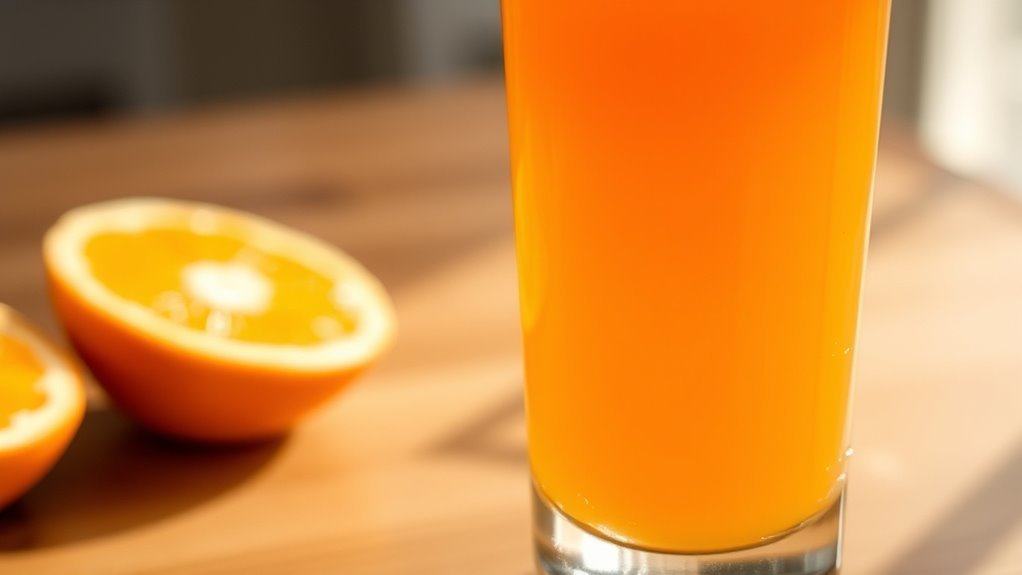
Orange juice isn’t considered keto-friendly due to its high carbohydrate content. One cup contains about 26 grams of carbs, which can disrupt your state of ketosis. The glycemic index of orange juice is also relatively high, potentially causing blood sugar spikes. While it does offer health benefits like vitamin C and potassium, it’s best to opt for lower-carb alternatives if you’re following a strict keto diet. Want to find out more about those alternatives? Keep exploring!
Understanding the Keto Diet
When you’re exploring the keto diet, it’s important to understand its fundamental principles. The keto basics revolve around considerably reducing carbohydrate intake while increasing fat consumption. This shift pushes your body into a state of ketosis, where it burns fat for fuel instead of carbs. However, diet misconceptions abound—many believe keto is solely about eating bacon and cheese. In reality, a well-rounded keto diet includes healthy fats, lean proteins, and low-carb vegetables. It’s essential to focus on nutrient-dense foods to maintain overall health. Understanding these principles can empower you to make informed choices, ensuring you enjoy the freedom this lifestyle offers while avoiding pitfalls associated with misinformation. Embrace the journey with knowledge and balance!
Nutritional Profile of Orange Juice

Orange juice is often celebrated for its invigorating taste and vibrant color, but its nutritional profile deserves a closer look, especially for those on a keto diet. When you consider juice extraction, it’s important to note that the process can strip away some fiber, concentrating the sugars. While orange juice is rich in vitamin content, particularly vitamin C and folate, those on a keto diet should weigh these benefits against the potential carb load. A serving provides a good amount of antioxidants, supporting your overall health. However, you’ll want to be mindful of portion sizes, as the natural sugars in orange juice can impact your carb intake. Balancing enjoyment with dietary goals is key to your freedom in food choices.
Carbohydrate Content and Keto Limits

Understanding the carbohydrate content of orange juice is essential for anyone adhering to a keto diet. Typically, one cup of orange juice contains around 26 grams of carbohydrates, which is considerably higher than the carbohydrate limits recommended by keto guidelines. Most keto diets suggest limiting daily carbs to 20-50 grams, making it challenging to incorporate orange juice without exceeding those limits. While it’s tempting to enjoy the revitalizing taste, you’ll want to contemplate alternatives that align better with your keto lifestyle. Low-carb options like sparkling water or unsweetened tea can satisfy your thirst without derailing your progress. Ultimately, maintaining awareness of carbohydrate content is key to enjoying your freedom on a keto journey while staying within your limits.
Glycemic Index of Orange Juice
The glycemic index (GI) measures how quickly foods raise your blood sugar levels. When it comes to orange juice, its relatively high GI indicates that it can cause a rapid increase in blood sugar, which may not align with a ketogenic diet’s goals. Understanding this impact is essential for making informed choices about including orange juice in your diet.
Glycemic Index Explained
When evaluating the glycemic index (GI) of foods, it’s vital to recognize how they can impact blood sugar levels. Orange juice has a relatively high GI, which means it can cause a notable glycemic response. Here are some key points to take into account:
- High Sugar Content: Orange juice contains natural sugars that can spike blood sugar quickly.
- Insulin Sensitivity: Frequent consumption may affect your insulin sensitivity over time.
- Portion Control: Smaller servings can help mitigate blood sugar spikes.
- Whole Fruits vs. Juice: Whole fruits typically have a lower GI due to fiber, which slows sugar absorption.
Understanding the GI of orange juice is essential for making informed dietary choices, especially if you’re following a keto lifestyle.
Impact on Blood Sugar
While many enjoy the invigorating taste of orange juice, it’s important to recognize its potential impact on blood sugar levels due to its high glycemic index. Consuming orange juice can lead to significant blood sugar spikes, which may not align with a keto lifestyle focused on low-carb intake. The natural sugars in orange juice prompt a swift insulin response, triggering the body to store excess glucose as fat. If you’re monitoring your blood sugar or are sensitive to insulin fluctuations, it’s wise to approach orange juice with caution. Alternatives like low-carb beverages or whole fruits can provide a more balanced option without the quick rise in blood glucose. Ultimately, understanding these effects empowers you to make informed dietary choices.
Impact on Ketosis
Although orange juice is often celebrated for its vitamin C content, its impact on ketosis can be quite significant. If you’re aiming to maintain a metabolic state conducive to ketosis, you should consider the following ketosis effects of orange juice:
- High Sugar Content: Orange juice is rich in natural sugars, which can spike your blood glucose levels.
- Insulin Response: The sugar can trigger an insulin response, potentially disrupting ketosis.
- Carbohydrate Count: A single cup can contain around 26 grams of carbohydrates, making it challenging to stay within keto limits.
- Nutritional Alternatives: Consider low-carb options like coconut water or homemade citrus-infused water for hydration without the sugar overload.
In short, while orange juice offers benefits, it may derail your keto journey.
Portion Control and Moderation
Since orange juice can easily disrupt your ketosis goals, practicing portion control and moderation is essential for those on a keto diet. To enjoy orange juice without derailing your efforts, consider limiting your portion sizes. A small serving, like a quarter cup, can provide a burst of flavor without overwhelming your carb intake. Mindful consumption is key; savor the juice slowly to appreciate its taste while staying aware of your carb limits. Balancing your enjoyment of orange juice with your dietary goals allows for a more flexible and satisfying experience. Remember, it’s not just about cutting out foods; it’s about finding ways to incorporate them wisely, so you can maintain your freedom while pursuing a ketogenic lifestyle.
Health Benefits of Orange Juice
Orange juice is packed with essential nutrients, making it a dense source of vitamins and minerals your body needs. It’s especially rich in vitamin C, which can help support your immune system and keep you feeling your best. However, it’s important to enjoy it in moderation to balance its benefits with its natural sugars.
Nutrient Density Overview
When considering the health benefits of orange juice, it’s essential to examine its nutrient density, as this beverage is packed with vitamins and minerals that can contribute to overall wellness. The high vitamin C content in orange juice supports nutrient absorption, making it a great vitamin source. Here are some key nutrients you’ll find:
- Vitamin C – Boosts collagen production and acts as an antioxidant.
- Potassium – Essential for heart health and maintaining fluid balance.
- Folate – Important for cell division and overall growth.
- Thiamine (Vitamin B1) – Supports energy metabolism and nerve function.
Incorporating orange juice into your diet can enhance your nutritional intake while offering a revitalizing taste.
Immune System Support
While many people seek ways to boost their immune system, incorporating orange juice into your diet can be a delicious and effective strategy. Rich in vitamin C, orange juice plays an important role in supporting immune function. This potent antioxidant helps protect your cells from damage and enhances the production of white blood cells, which are crucial for fighting off infections. Studies show that adequate vitamin C intake can reduce the duration and severity of colds. While orange juice offers significant benefits, it’s important to enjoy it in moderation to maintain a balanced diet. By embracing this invigorating beverage, you can not only enjoy its taste but also fortify your body’s defenses naturally.
Keto-Friendly Alternatives to Orange Juice
If you’re following a keto diet and craving a invigorating beverage, there are several tasty alternatives to traditional orange juice that won’t derail your low-carb goals. Here are some options to take into account:
- Keto Smoothies: Blend spinach, avocado, and unsweetened almond milk for a creamy, nutritious drink.
- Coconut Water: Opt for unsweetened coconut water, which offers hydration with fewer carbs.
- Lemonade: Use fresh lemon juice, water, and a keto-friendly sweetener for a invigorating drink.
- Herbal Tea: Brew some herbal tea and serve it iced for a flavorful, low-carb alternative.
These low carb beverages not only satisfy your cravings but also align with your keto lifestyle, keeping you invigorated without compromising your dietary goals.
Frequently Asked Questions
Can I Drink Orange Juice While Intermittent Fasting?
You shouldn’t drink orange juice while intermittent fasting, as it contains sugar that can break your fast. Instead, consider juice alternatives like herbal teas or black coffee, which won’t interfere with the fasting benefits. These options can help maintain your fasting state while still providing you with flavor. Staying hydrated with water is also essential during this time, so explore different ways to enjoy your fasting period without compromising its effectiveness.
Does Orange Juice Affect Weight Loss on a Keto Diet?
Yes, orange juice can affect weight loss on a keto diet. It’s high in natural sugars and carbohydrates, which can kick you out of ketosis. Instead, you might consider juice alternatives like unsweetened almond milk or coconut water, which have lower carbs. Balancing your intake with these options can help you maintain your keto weight goals while still enjoying flavorful beverages. Always keep an eye on your overall carb consumption for the best results!
Are There Any Keto-Friendly Orange Juice Brands?
You won’t find many keto-friendly orange juice brands; it’s like searching for a needle in a haystack. Most juice is packed with sugar, making it hard to fit into a keto lifestyle. Instead, consider keto alternatives like low-carb juice substitutes, such as almond or coconut milk smoothies. These options can give you that invigorating taste without the carbs. Staying informed helps you enjoy your diet while still feeling free to explore flavors.
How Does Orange Juice Compare to Other Fruit Juices on Keto?
Orange juice typically has a higher sugar content compared to other fruit juices, making it less suitable for a keto diet. While it does offer some nutritional value, like vitamin C, the carbohydrate count can spike your daily intake quickly. Other juices, like berry-based ones, often contain lower sugar levels, providing better options for keto followers. If you’re looking for freedom in your diet, prioritizing lower-sugar alternatives can help maintain ketosis.
Can I Mix Orange Juice With Alcohol on Keto?
You can mix orange juice with alcohol on keto, but tread carefully; it’s like dancing on a tightrope. While keto cocktails can be crafted with low-carb spirits, orange juice is high in sugar, potentially throwing you off balance. Consider alcohol alternatives like sparkling water or diet mixers instead, which keep the festivity alive without the carb burden. Enjoy your drinks, but remember moderation is key to maintaining your keto journey’s freedom.
Is orange juice keto-friendly?
Orange juice is generally not considered keto-friendly due to its high carbohydrate content. A typical serving of orange juice (about 8 ounces) contains around 26 grams of carbohydrates, which is significantly higher than the daily carb limit for a ketogenic diet, typically set around 20-50 grams. Therefore, consuming orange juice could easily exceed your carbohydrate allowance and hinder your ability to maintain ketosis.
What are the carbohydrate contents of orange juice?
On average, an 8-ounce serving of orange juice contains approximately 26 grams of carbohydrates, including about 21 grams of natural sugars. This carbohydrate load is primarily from fructose, which can spike insulin levels and is not compatible with the goals of a ketogenic diet, where low carb intake is crucial to maintain ketosis.
Are there any low-carb alternatives to orange juice for keto diets?
Yes, there are several low-carb alternatives to orange juice that can fit into a keto diet. You can consider options like unsweetened almond milk, coconut water in small amounts, or even homemade citrus-infused water for a hint of flavor without the carbs. Additionally, low-carb smoothie recipes using spinach, avocado, or berries can provide a satisfying drink without exceeding your carb limit.
Can I drink orange juice in moderation on a keto diet?
While it’s theoretically possible to consume orange juice in moderation, it is generally not advisable for those strictly following a keto diet. Even small amounts can quickly add up and disrupt ketosis. If you choose to include orange juice, consider limiting your intake to a very small serving and be mindful of your total daily carbohydrate consumption to ensure it doesn’t exceed your keto limits.
What should I look for when choosing a beverage on a keto diet?
When selecting beverages on a keto diet, look for options that are low in carbohydrates and sugar. Ideally, opt for drinks that have 0-1 grams of net carbs per serving. Water, herbal teas, black coffee, and sparkling water are great choices. Always check nutrition labels for hidden sugars and carbohydrate content to ensure they align with your dietary goals.
References
- https://www.healthline.com/nutrition/orange-juice-keto
- https://www.dietdoctor.com/low-carb/foods/orange-juice
- https://www.ncbi.nlm.nih.gov/pmc/articles/PMC6520796/
- https://www.webmd.com/diet/obesity/what-is-the-keto-diet
- https://www.verywellfit.com/how-to-follow-the-keto-diet-4863909
- https://www.cdc.gov/healthyweight/healthy_eating/fruits.html
- https://www.hsph.harvard.edu/nutritionsource/healthy-drinks/