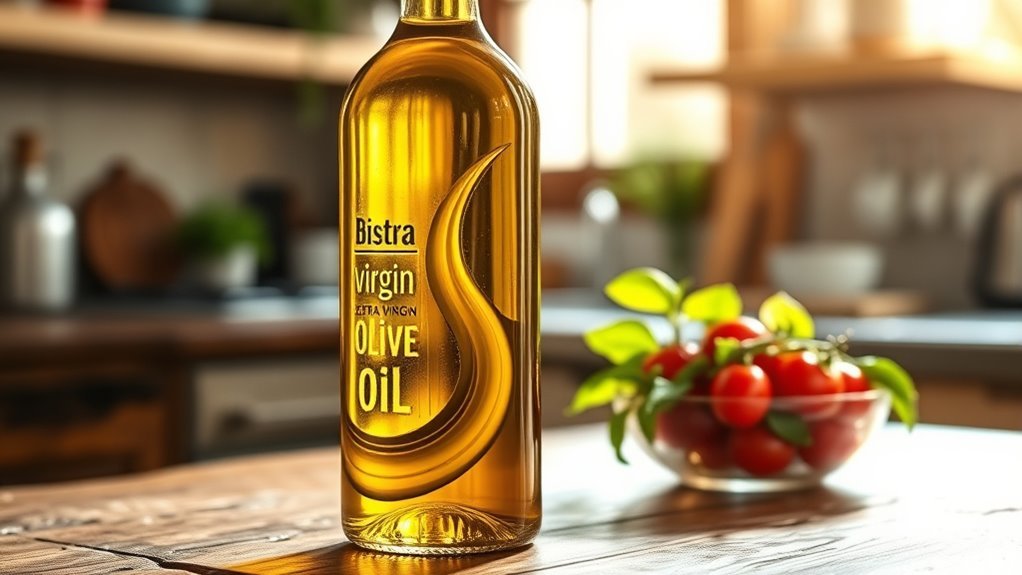

Yes, olive oil is keto-friendly. It’s rich in healthy monounsaturated fats, low in carbs, and can help you maintain ketosis. Its antioxidants also support heart health and may aid in weight management. You can use extra virgin olive oil for dressings or drizzling, while refined olive oil is great for high-heat cooking. Just be mindful of portion sizes to avoid excess calories. If you want to learn more about incorporating olive oil into your keto diet, keep exploring!
Understanding the Ketogenic Diet
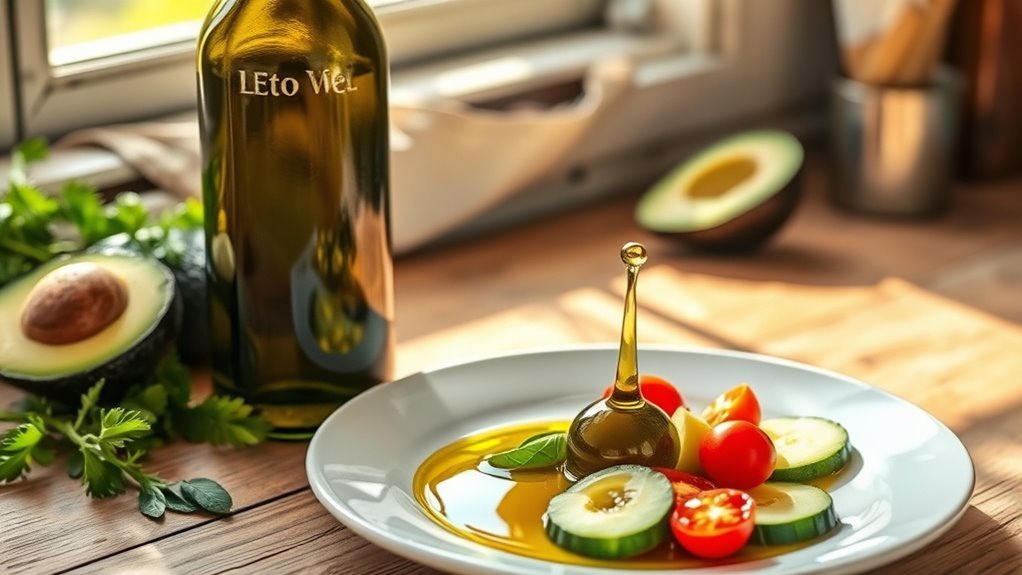
Although the ketogenic diet may seem restrictive at first glance, it’s fundamentally a high-fat, low-carbohydrate eating plan designed to shift your body into a state of ketosis. By adhering to ketogenic principles, you’ll limit your daily carbohydrate intake, typically to around 20-50 grams, which encourages your body to burn fat for fuel instead of glucose. This shift can lead to enhanced energy levels and mental clarity, providing a sense of freedom from the constant hunger often associated with high-carb diets. With carb restrictions in place, the focus is on healthy fats and moderate proteins, allowing for a wide variety of food choices. Ultimately, the ketogenic diet can empower you to take control of your nutrition and wellbeing.
Nutritional Profile of Olive Oil
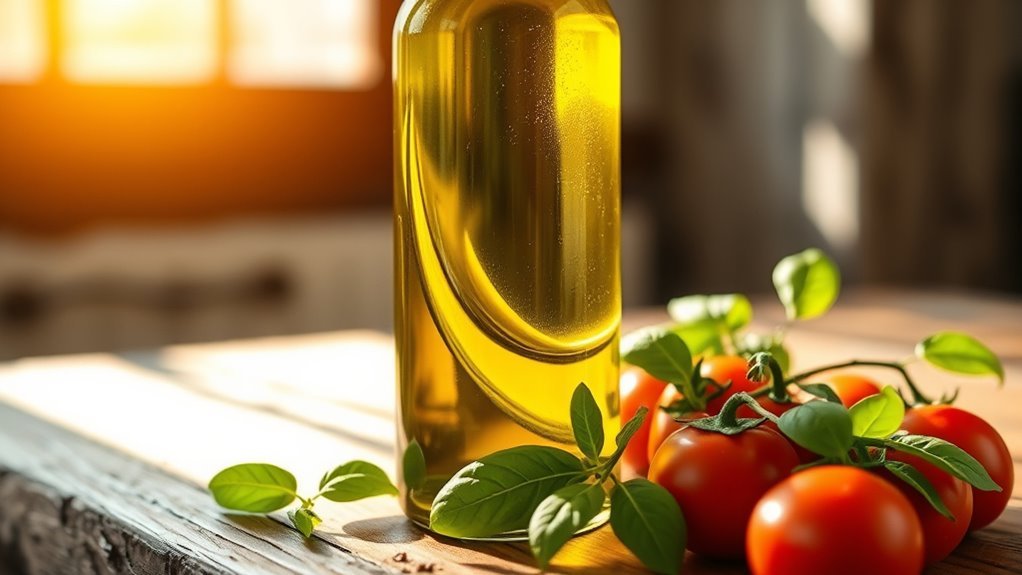
When considering the nutritional profile of olive oil, you’ll find that it’s packed with beneficial components that align well with ketogenic principles. Its nutrient composition is primarily fat, with about 14% saturated fat, 73% monounsaturated fat, and a small portion of polyunsaturated fat. This high monounsaturated fat content, especially oleic acid, is particularly favorable on a keto diet. Olive oil also contains omega fatty acids, which are essential for heart health and overall well-being. Importantly, it’s low in carbohydrates, making it a perfect choice for those seeking to maintain ketosis. With its rich flavor and versatility, olive oil not only serves as a healthy fat source but also enhances your meals while supporting a keto lifestyle.
Health Benefits of Olive Oil
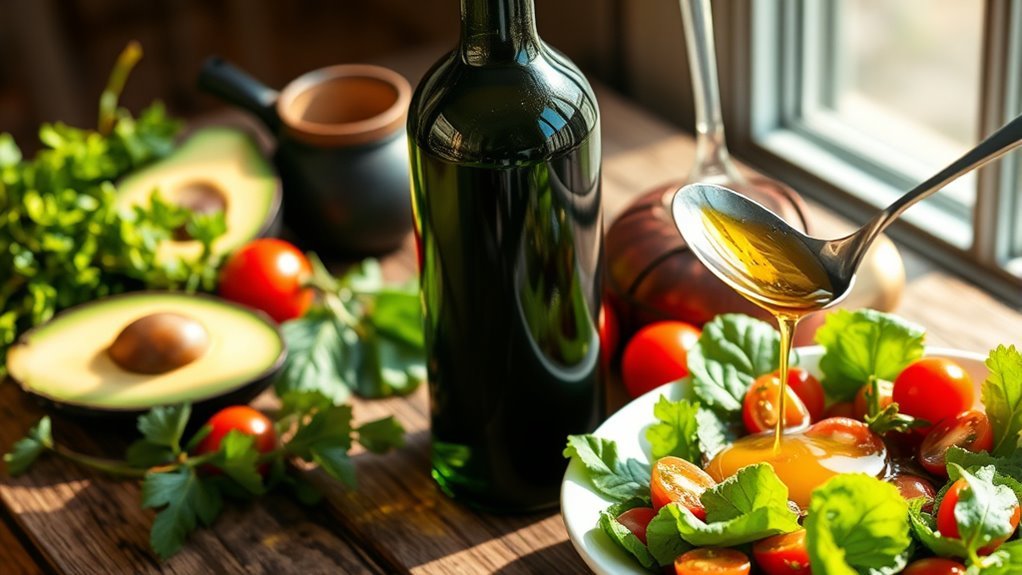
Olive oil is more than just a tasty addition to your meals; it offers a range of health benefits that can enhance your well-being. Rich in monounsaturated fats, it supports heart health by improving cholesterol levels and reducing inflammation. Studies show that the antioxidants in olive oil, like oleocanthal, may protect against chronic diseases, including certain cancers and neurodegenerative disorders. Incorporating olive oil into your diet can also aid in weight management, as it promotes satiety and helps maintain stable blood sugar levels. Plus, its anti-inflammatory properties can boost your overall immune system. So, when you choose olive oil, you’re not just enjoying flavor; you’re making a choice for better health. Embrace these benefits and enjoy the freedom of a healthier lifestyle.
Types of Olive Oil and Their Uses
When it comes to olive oil, understanding the differences between extra virgin and refined olive oil can greatly impact your cooking and health. Extra virgin olive oil is cold-pressed and retains its natural flavors and nutrients, making it ideal for dressings and drizzling. On the other hand, refined olive oil has a higher smoke point and is better suited for high-heat cooking applications.
Extra Virgin Olive Oil
Although many people recognize olive oil as a staple in Mediterranean diets, not all olive oils are created equal. Extra virgin olive oil (EVOO) stands out for its quality and health benefits. When choosing EVOO, consider these important factors:
- Cold-pressed: This method preserves nutrients and flavor.
- Polyphenols: High levels of these antioxidants contribute to heart health.
- Flavor profile: Look for a robust taste, indicating freshness.
- Certification: Check for quality seals to verify authenticity.
Using extra virgin olive oil in your diet can enhance not just your meals but also your health. It’s versatile, perfect for dressings, drizzling, or cooking. Embrace this oil’s freedom to elevate your keto lifestyle!
Refined Olive Oil
While extra virgin olive oil is often celebrated for its rich flavor and health benefits, refined olive oil serves a different purpose in the kitchen. You’ll find that refined olive oil has a higher smoke point, making it ideal for high-heat cooking methods like frying or sautéing. Its neutral flavor allows it to blend seamlessly into various dishes without overpowering other ingredients. The refined benefits include a longer shelf life and increased stability, which can be advantageous for those who cook frequently. However, it is essential to recognize that some nutrients found in extra virgin olive oil may be diminished during the refining process. Ultimately, understanding the refined uses of olive oil can help you make informed choices for your cooking needs.
How Olive Oil Fits Into a Keto Diet
Olive oil is a fantastic choice for those following a keto diet, as it’s rich in healthy fats that can help you maintain your macronutrient balance. Its keto compatibility makes it an ideal addition to your meals. Here are some reasons why olive oil should be part of your keto lifestyle:
- High in Monounsaturated Fats: Supports heart health and can improve cholesterol levels.
- Low in Carbs: Fits perfectly within the low-carb requirements of keto.
- Antioxidant Properties: Contains antioxidants that can help reduce inflammation.
- Versatile Use: Ideal for dressings, marinades, and even drizzling over dishes.
Incorporating olive oil into your meals not only enhances flavor but also supports your keto journey effectively.
Cooking With Olive Oil on a Keto Diet
Cooking with olive oil on a keto diet can offer numerous health benefits, thanks to its heart-healthy fats and antioxidants. Using the right cooking techniques can enhance your meals while preserving the oil’s nutritional value. Plus, knowing how to pair olive oil with various flavors can elevate your dishes and keep your keto journey enjoyable.
Health Benefits of Olive Oil
When it comes to healthy fats in a keto diet, olive oil stands out for its numerous health benefits. Its rich antioxidant properties contribute to an array of positive effects on your body. Here are four key health benefits you can enjoy by incorporating olive oil into your diet:
- Heart Health: Olive oil can help lower bad cholesterol levels, reducing the risk of heart disease.
- Anti-Inflammatory: The oleocanthal in olive oil may reduce inflammation, benefiting overall health.
- Cognitive Function: Some studies suggest that it may protect against cognitive decline.
- Weight Management: Healthy fats like olive oil can promote satiety, helping you maintain a healthy weight on keto.
Embracing olive oil not only enhances flavor but also supports your wellness journey.
Best Cooking Techniques
There are several effective techniques for incorporating olive oil into your keto cooking routine. One popular method is sautéing vegetables, which enhances their flavors while keeping them low-carb. You can also use olive oil for roasting meats, resulting in tender, juicy dishes.
Here’s a quick reference table for your cooking techniques:
| Technique | Best For | Benefits |
|---|---|---|
| Sautéing | Vegetables | Quick cooking, flavor boost |
| Roasting | Meats | Tender texture, rich flavor |
| Dressing | Salads | Healthy fats, added flavor |
| Baking | Keto-friendly dishes | Moisture retention, flavor enhancement |
Flavor Pairing Suggestions
Although olive oil is a versatile ingredient on its own, pairing it with complementary flavors can elevate your dishes on a keto diet. Here are some flavor profiles and herb combinations to contemplate for taste enhancements:
- Garlic and rosemary – This combo adds depth to roasted vegetables or meats.
- Lemon zest and dill – Perfect for drizzling over grilled fish or salads.
- Balsamic vinegar and thyme – A great choice for salad dressings or marinades, enhancing the richness of olive oil.
- Red pepper flakes and oregano – Ideal for spicing up sauces or sautéed greens, providing a kick.
These seasoning options not only complement olive oil but also broaden its culinary uses, making each meal a delightful experience. Enjoy experimenting with these recipe suggestions!
Recommended Serving Sizes
To maintain a balanced keto diet while incorporating olive oil, understanding recommended serving sizes is essential. A typical serving suggestion is about one to two tablespoons per meal. This amount provides healthy fats while supporting your daily macronutrient goals. Portion control is vital; using too much olive oil can lead to excessive calorie intake, which might hinder your progress. Consider using olive oil as a dressing or for sautéing vegetables to enhance flavor without overdoing it. You can also blend it into smoothies for added richness. By keeping your servings in check, you’ll enjoy the benefits of olive oil without compromising your keto lifestyle. Remember, moderation is key to achieving your health goals while maintaining freedom in your choices.
Potential Concerns and Considerations
While olive oil is a staple in many keto diets, it’s important to be aware of potential concerns and considerations. Here are some potential risks related to olive oil consumption:
- Quality Variability: Not all olive oils are created equal; some may be mixed with lower-quality oils.
- Caloric Density: Olive oil is high in calories, which can lead to overeating if not measured properly.
- Oxidation: When heated, olive oil can oxidize, potentially creating harmful compounds.
- Allergies: Some individuals may have allergies or intolerances to olives, affecting their ability to enjoy this healthy fat.
Understanding these factors can help you make informed choices about incorporating olive oil into your keto lifestyle. Stay aware, and enjoy the benefits responsibly!
Frequently Asked Questions about Olive Oil and Keto
1. Is olive oil suitable for a keto diet?
Yes, olive oil is highly suitable for a keto diet. It is a source of healthy fats, primarily monounsaturated fats, which are encouraged on a ketogenic diet. Olive oil is low in carbohydrates and can help you meet your daily fat intake goals while providing various health benefits.
2. What are the health benefits of using olive oil on keto?
Olive oil offers numerous health benefits, especially when included in a keto diet. It is rich in antioxidants and anti-inflammatory compounds, which can help reduce the risk of chronic diseases. Additionally, the monounsaturated fats in olive oil may improve heart health, support weight management, and enhance nutrient absorption.
3. Can I use olive oil for cooking on a keto diet?
Yes, olive oil can be used for cooking on a keto diet. However, it is important to consider the smoke point of olive oil. Extra virgin olive oil has a lower smoke point than refined olive oil, so it’s best for low to medium-heat cooking. For high-heat cooking, choose refined olive oil or other high smoke point oils, though extra virgin olive oil is excellent for dressings, drizzling, and dipping.
4. How much olive oil should I consume on a keto diet?
The amount of olive oil you should consume on a keto diet can vary based on individual dietary needs and calorie goals. Generally, incorporating 1-3 tablespoons of olive oil daily can help you meet your fat intake while providing health benefits. It is advisable to monitor your overall fat intake to ensure it aligns with your specific keto goals.
5. Are there any downsides to using olive oil on a keto diet?
While olive oil is generally safe and healthy for most people on a keto diet, excessive consumption can lead to an imbalance in omega-6 fatty acids, especially if your diet lacks other sources of healthy fats. Additionally, some individuals may be allergic to olives or may experience digestive issues with high-fat consumption. It is always best to consult with a healthcare provider for personalized dietary advice.
References
- https://www.healthline.com/nutrition/olive-oil-and-keto
- https://www.medicalnewstoday.com/articles/olive-oil-keto-diet
- https://www.ncbi.nlm.nih.gov/pmc/articles/PMC7020670/
- https://www.ncbi.nlm.nih.gov/pmc/articles/PMC7320522/
- https://www.verywellfit.com/what-is-keto-diet-4119083
- https://www.washingtonpost.com/food/2020/01/29/keto-diet-fad-or-future/
- https://www.sciencedirect.com/science/article/abs/pii/S2212267215000241