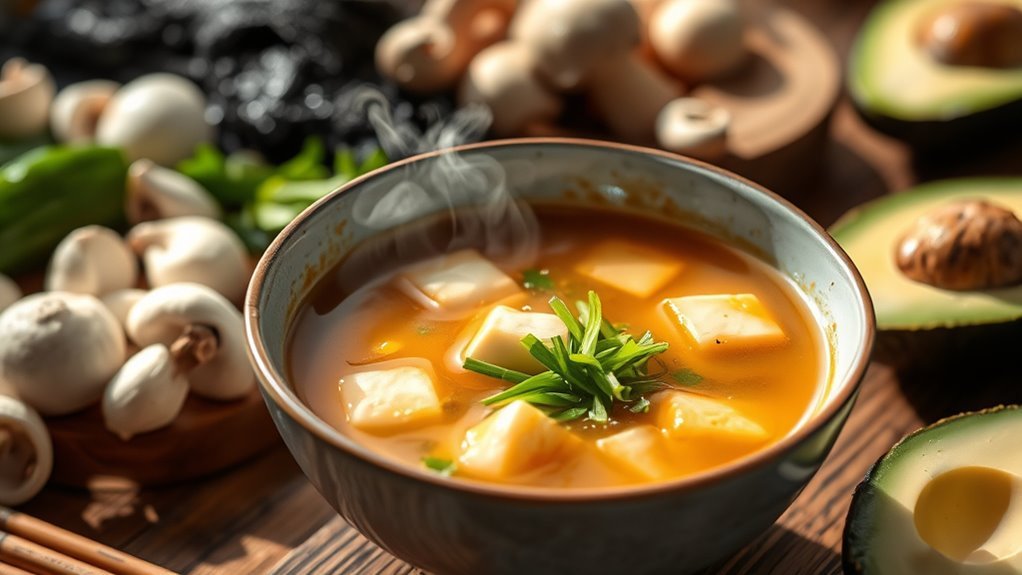

Yes, miso can be keto-friendly when used in moderation. It’s a low-carb seasoning that adds umami flavor without greatly increasing your carb intake. While it does contain sodium, the health benefits and probiotics from fermentation can support gut health. Remember to control portions—start with a teaspoon to keep your sodium in check. If you’re curious about the different types of miso and how to cook with it on a keto diet, there’s more to explore.
What Is Miso?
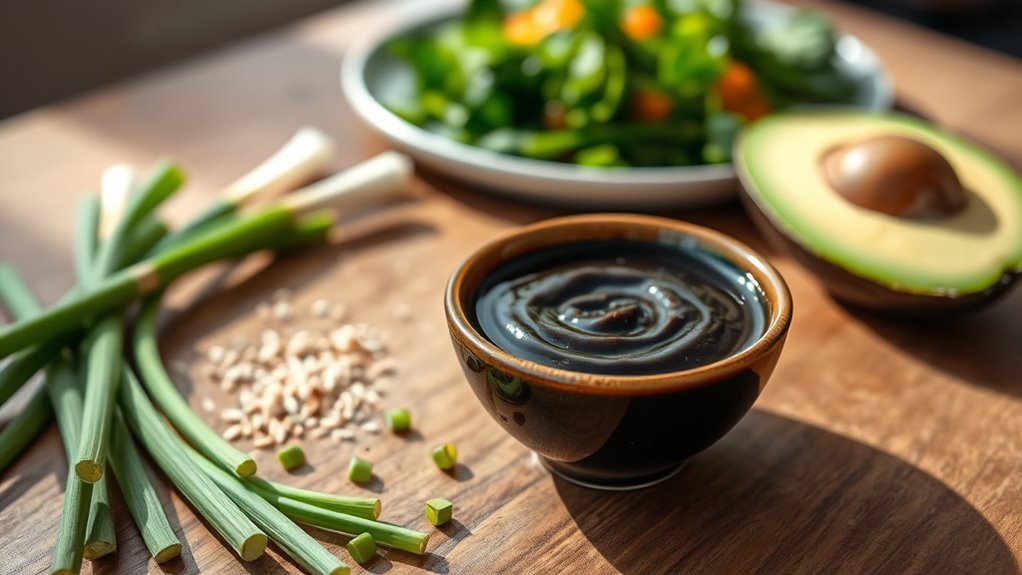
Miso, a traditional Japanese seasoning, is made by fermenting soybeans with salt and a specific type of mold called koji. This age-old practice dates back over a thousand years, with roots in ancient China before spreading to Japan. You’ll find that miso comes in various types, each with unique flavors and textures, like white (shiro), yellow (shinshu), and red (aka) miso. Each variety reflects the region’s climate and local ingredients, offering you a diverse array of culinary options. Whether you’re crafting a comforting soup or enhancing a marinade, understanding miso’s rich history and its different varieties can help you appreciate this versatile ingredient. By exploring miso, you’re not just cooking; you’re partaking in a cultural heritage that celebrates fermentation and flavor.
Nutritional Profile of Miso
When considering miso’s nutritional profile, you’ll find it’s primarily composed of carbohydrates, protein, and fats, making it a unique addition to various diets. The fermentation process not only enhances its flavor but also offers probiotics that can benefit gut health. However, it’s important to keep an eye on its sodium content, especially if you’re monitoring your salt intake.
Macronutrient Breakdown
The nutritional profile of miso reveals a unique combination of macronutrients that can fit into various dietary plans, including keto. Depending on the miso varieties you choose, you’ll find a balanced mix of proteins, fats, and carbohydrates. Here’s a quick breakdown:
- Protein: Miso is a decent source, supporting muscle maintenance.
- Fat: Generally low in fat, but some varieties may have healthy fats.
- Carbohydrates: Contains some carbs, but in moderation, it can fit into a keto diet.
- Fiber: Provides dietary fiber, aiding digestion.
- Sodium: Often high in sodium, so keep an eye on your intake.
For ideal freshness, proper miso storage is essential. Choose what suits your taste and dietary goals!
Fermentation Benefits
While many foods benefit from fermentation, miso stands out due to its rich array of probiotics and nutrients. The fermentation process enhances miso’s nutritional profile, making it a powerhouse for digestive health. These probiotics, which are beneficial bacteria, can help restore and maintain a healthy gut microbiome. This, in turn, can improve your overall digestive health, alleviating issues like bloating and constipation. Additionally, miso is packed with essential vitamins and minerals, including B vitamins, vitamin K, and zinc, which support various bodily functions. Incorporating miso into your diet not only introduces unique flavors to your meals but also offers notable probiotic benefits. This makes it a fantastic addition to a balanced, health-conscious lifestyle, especially for those seeking keto-friendly options.
Sodium Content Considerations
Although miso offers numerous health benefits, it’s essential to take into account its sodium content, especially for those on a keto diet. High sodium levels can have a significant sodium impact on your health, leading to potential health risks. Here are some considerations:
- Miso typically contains 600-800 mg of sodium per tablespoon.
- Excess sodium can contribute to high blood pressure.
- It may cause water retention, affecting weight loss goals.
- Those with kidney issues should limit sodium intake.
- Balance miso consumption with low-sodium foods to mitigate risks.
Being aware of miso’s sodium content can help you enjoy its benefits while maintaining a keto-friendly lifestyle. Always listen to your body and consult with a healthcare professional if you’re unsure.
Carbohydrate Content in Miso
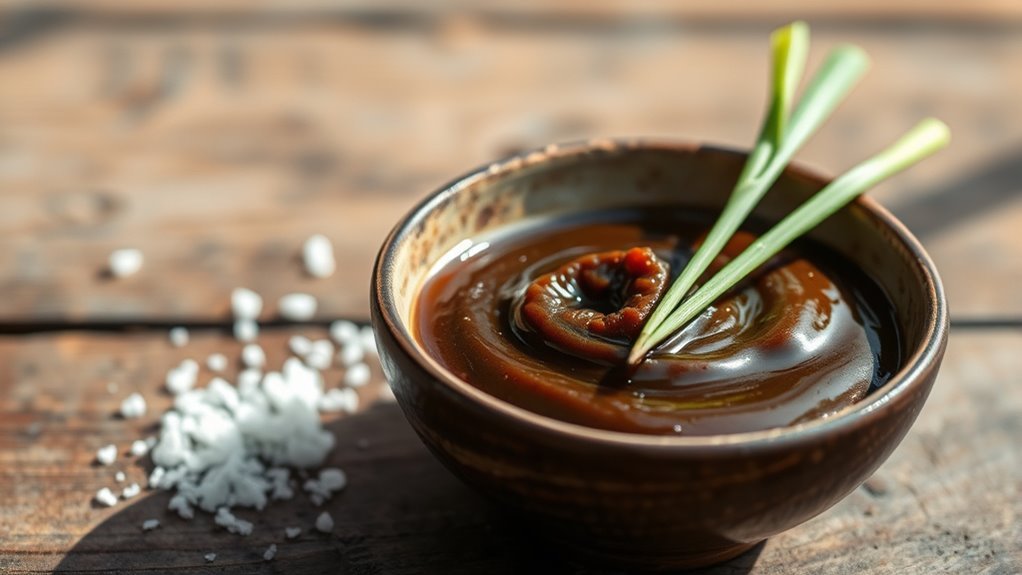
When considering miso in your diet, it’s important to look at its carbohydrate content and how it fits into your overall nutritional goals. A typical serving of miso contains a moderate amount of carbs, which can vary based on the type and brand. By comparing these values and considering serving sizes, you can better understand how miso might align with your keto lifestyle.
Miso Nutritional Breakdown
Miso, a fermented soybean paste, is often praised for its rich umami flavor and nutritional benefits. Originating in ancient China and later embraced by Japan, miso comes in various types, each with distinct flavors and nutritional profiles. When considering its carbohydrate content, it’s essential to understand these aspects:
- Miso Varieties: Different types like white, yellow, and red miso have varying carb levels.
- Fermentation Process: This impacts the digestibility of carbohydrates.
- Serving Size: Affects total carb intake.
- Nutritional Density: Miso is rich in protein, vitamins, and minerals.
- Health Benefits: It may support gut health due to probiotics.
Carb Count Comparison
While exploring the carbohydrate content of miso, it’s essential to highlight that different varieties can considerably impact your overall carb intake. Here’s a quick comparison of common miso types:
| Miso Variety | Carbs (per 1 tbsp) | Keto Substitutions |
|---|---|---|
| White Miso | 3.2g | Almond butter, tahini |
| Yellow Miso | 2.3g | Sunflower seed butter |
| Red Miso | 2.5g | Coconut aminos |
| Barley Miso | 4.0g | Nutritional yeast |
| Brown Rice Miso | 3.8g | Soy sauce |
When choosing miso varieties, consider their carb counts, especially if you’re making keto substitutions. By being mindful of these differences, you can enjoy miso while adhering to your dietary goals.
Serving Size Impact
Understanding the impact of serving sizes is key to accurately evaluating the carbohydrate content in miso. The calorie impact of miso largely depends on how much you use. Here’s what to keep in mind:
- Common serving size: Typically, one tablespoon (about 18 grams) of miso.
- Carbohydrate content: Approximately 1-2 grams per tablespoon.
- Sodium levels: Can be high, affecting overall health.
- Nutritional balance: Miso offers probiotics and protein, enhancing its value.
- Portion control: Adjusting your serving size can help manage carb intake effectively.
Health Benefits of Miso
Although it may seem like a simple condiment, miso offers a range of health benefits that can enhance your diet. One of its standout features is its probiotic properties, which support your digestive health. By promoting a healthy gut microbiome, miso may help improve digestion and boost your immune system.
| Health Benefit | Description |
|---|---|
| Probiotic Properties | Supports gut health and digestion |
| Nutrient-Rich | Packed with vitamins and minerals |
| Antioxidant Effects | Reduces oxidative stress |
| Heart Health | May help lower cholesterol levels |
| Bone Health | Contains essential nutrients for bones |
Incorporating miso into your meals can be an enjoyable way to reap these health benefits while adding flavor to your dishes.
How Miso Fits Into a Keto Diet
Miso can be a flavorful addition to your keto diet, especially since it’s low in carbohydrates and high in nutrients. Incorporating miso into your meals can enhance your culinary experience and keep your carb intake in check.
Here are some ways miso fits into your keto plan:
- Low-Carb Base: Miso contains minimal carbs, making it perfect for keto.
- Umami Flavor: It adds depth to dishes, reducing the need for high-carb ingredients.
- Versatile Miso Varieties: Use different types to suit your taste and recipes.
- Easy Keto Recipes: Miso can be added to soups, dressings, and marinades effortlessly.
- Nutrient-Dense: Rich in vitamins and minerals, it supports your overall health.
Enjoy the freedom to explore creative dishes while staying in ketosis!
Different Types of Miso
When you’re exploring the world of miso, you’ll find that it comes in several distinct varieties, each offering unique flavors and uses. The most common types include white (shiro), yellow (shinshu), and red (aka) miso. White miso is milder and sweeter, often used in dressings, whereas red miso has a bolder, saltier taste, perfect for hearty soups. Yellow miso sits between the two, making it versatile for various dishes. Regional miso differences also play a significant role; for instance, Kyoto’s sweet white miso contrasts with the savory, robust styles found in Nagoya. Understanding these different miso varieties can help you select the right one for your culinary creations, enhancing your meals with depth and flavor.
Cooking With Miso on Keto
If you’re looking to incorporate miso into your keto diet, you’ll be pleased to know it can be both flavorful and compatible with low-carb eating. Miso adds depth to various dishes, especially keto soups. Here are some ideas to get you started:
- Miso soup: A classic choice, just add low-carb veggies and tofu.
- Marinades: Mix miso with olive oil and herbs for a keto-friendly marinade.
- Dressing: Combine miso with vinegar and sesame oil for a zesty salad dressing.
- Stir-fry: Use miso as a base for a low-carb stir-fry sauce with your favorite veggies.
- Dips: Blend miso with cream cheese for a savory dip.
These miso recipes will keep your meals exciting while staying within your keto goals!
Portion Control and Miso
While incorporating miso into your keto diet can enhance flavor, it’s essential to be mindful of portion sizes. Miso is relatively high in sodium and can contribute to your daily carb intake if used excessively. A tablespoon of miso contains about 1 gram of carbs, which can add up quickly, especially if you’re using it in multiple dishes. Practicing mindful eating helps you enjoy its rich taste without overindulging. Aim for small portions, perhaps starting with one teaspoon, and adjust based on your dietary needs. By doing so, you’ll still reap the benefits of miso’s probiotic qualities while maintaining your keto goals. Balancing flavor with moderation is key to enjoying your meals without compromising your lifestyle.
Alternative Seasonings for Keto Diets
Although miso adds depth to dishes, there are plenty of alternative seasonings that can keep your meals flavorful while adhering to keto guidelines. Exploring herb alternatives and spice blends can elevate your cooking without compromising your diet. Here are some excellent options:
- Garlic powder: A versatile flavor enhancer with zero carbs.
- Oregano: Rich in antioxidants and perfect for Mediterranean dishes.
- Cumin: Adds warmth and complexity, great for stews and marinades.
- Nutritional yeast: Provides a cheesy, umami flavor without the carbs.
- Smoked paprika: Delivers a rich, smoky flavor, enhancing meats and veggies.
These alternatives can help you maintain a vibrant diet while respecting your keto lifestyle, offering both flavor and freedom in your cooking.
Frequently Asked Questions
Can Miso Cause Digestive Issues on a Keto Diet?
Miso can affect digestive health for some, especially if you’re sensitive to fermented foods. Its fermentation process introduces beneficial probiotics, which can aid digestion but may also cause bloating or discomfort for those unaccustomed to it. If you’re on a keto diet, it’s important to listen to your body. Start with small amounts and monitor how you feel. Everyone’s tolerance varies, so finding your balance is key for enjoying miso without issues.
Is Miso Suitable for Dairy-Free or Vegan Diets?
Miso’s like a flavorful secret weapon in your cooking arsenal. It’s naturally vegan and dairy-free, making it a perfect fit for those diets. If you’re looking for miso alternatives, consider tahini or nutritional yeast for a similar umami kick. You can easily incorporate miso into vegan recipes, enhancing soups, dressings, or marinades. Just make sure you check the ingredients, as some varieties can contain additives that may not align with your dietary needs.
How Long Does Miso Last Once Opened?
Once you’ve opened miso, its storage is key to maintaining freshness. Typically, opened miso can last about three months in the fridge if kept sealed tightly. However, its flavor and quality might diminish over time. If you notice any discoloration or off smells, it’s best to discard it. Remember, proper storage can help you enjoy miso’s rich umami flavor longer, so keep it cool and tightly sealed after use!
Can Children Consume Miso Safely?
Imagine your child savoring a warm bowl of miso soup, the rich umami flavors dancing on their palate. Miso can be safe for kids, packed with miso nutrition like protein and probiotics. However, keep an eye out for miso allergies; some children might react to soy. Always start with small amounts and watch for any adverse effects. Consulting a pediatrician’s advice can help guarantee your child’s dietary freedom remains healthy and enjoyable.
Are There Specific Brands of Miso Recommended for Keto?
When looking for keto-friendly miso varieties, you’ll want to choose brands that are lower in carbohydrates. Some recommended brands include Miso Master and Hikari Miso, which offer options with fewer sugars and carbs. Always check the nutrition labels, as some miso can contain added sugars. Enjoying miso in moderation can add flavor to your meals while keeping your keto goals in mind. Remember, balance is key in any diet!
Frequently Asked Questions about Miso and Keto Diet
1. Is miso considered keto-friendly?
Yes, miso can be considered keto-friendly when consumed in moderation. Miso is a fermented soybean paste that is rich in umami flavor and contains a low amount of carbohydrates. A typical serving (about one tablespoon) has around 2-3 grams of carbs, making it suitable for a ketogenic diet, which typically restricts daily carb intake to around 20-50 grams.
2. What are the nutritional benefits of miso?
Miso is not only low in carbs but also offers several health benefits. It is a good source of protein, vitamins (especially B vitamins), and minerals like zinc and copper. Additionally, due to the fermentation process, miso contains probiotics that can support gut health. However, be mindful of its sodium content, which can be high, depending on the type of miso.
3. How can I incorporate miso into my keto diet?
Miso can be incorporated into your keto diet in various ways. You can use it as a base for soups, salad dressings, marinades, or sauces. Try adding it to broth for a flavorful soup, mixing it with olive oil for a dressing, or using it as a marinade for meats and vegetables. Just be sure to account for the carbs in your overall daily intake.
4. Are there different types of miso, and do they all fit into a keto diet?
Yes, there are several types of miso, including white (shiro), yellow (shinshu), and red (aka) miso. Generally, white miso is the sweetest and has a lower salt content, while red miso is saltier and richer in flavor. All types can fit into a keto diet, but it’s essential to check the nutrition labels, as some varieties may have added sugars or higher carb content.
5. Can I use miso paste as a substitute for other condiments on a keto diet?
Miso paste can be a great substitute for various condiments due to its rich flavor profile. It can replace soy sauce, enhancing dishes with umami without the additional carbs found in some sauces. However, when substituting, consider the saltiness of miso and adjust the amount accordingly to maintain the desired taste in your dishes.
References
- https://en.wikipedia.org/wiki/Miso
- https://www.healthline.com/nutrition/miso
- https://www.ncbi.nlm.nih.gov/pmc/articles/PMC7086375/
- https://www.webmd.com/diet/what-is-miso
- https://www.thespruceeats.com/what-is-miso-5075512
- https://www.medicalnewstoday.com/articles/miso-nutrition-facts
- https://ods.od.nih.gov/factsheets/SoyIsoflavones-HealthProfessional/