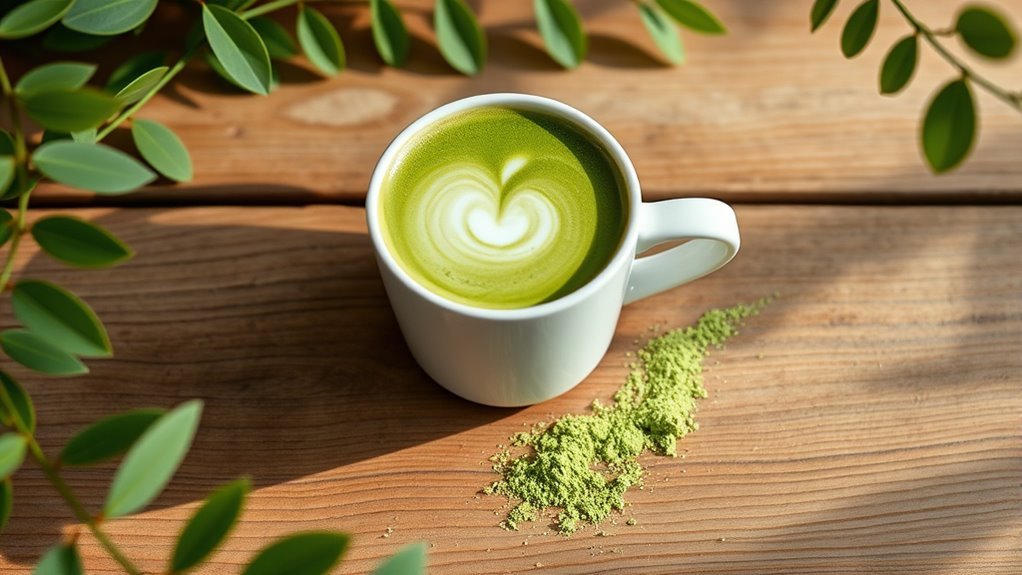

Yes, matcha is keto-friendly! With only about 1 gram of carbs per teaspoon, it fits easily into your daily carb allowance. Matcha is packed with antioxidants and can boost your metabolism while providing stable energy. Its unique compounds also enhance focus and mental clarity, making it a smart choice for those on a ketogenic diet. Plus, there are many delicious ways to incorporate matcha into your meals, so keep exploring for more great ideas!
Understanding Matcha’s Nutritional Profile
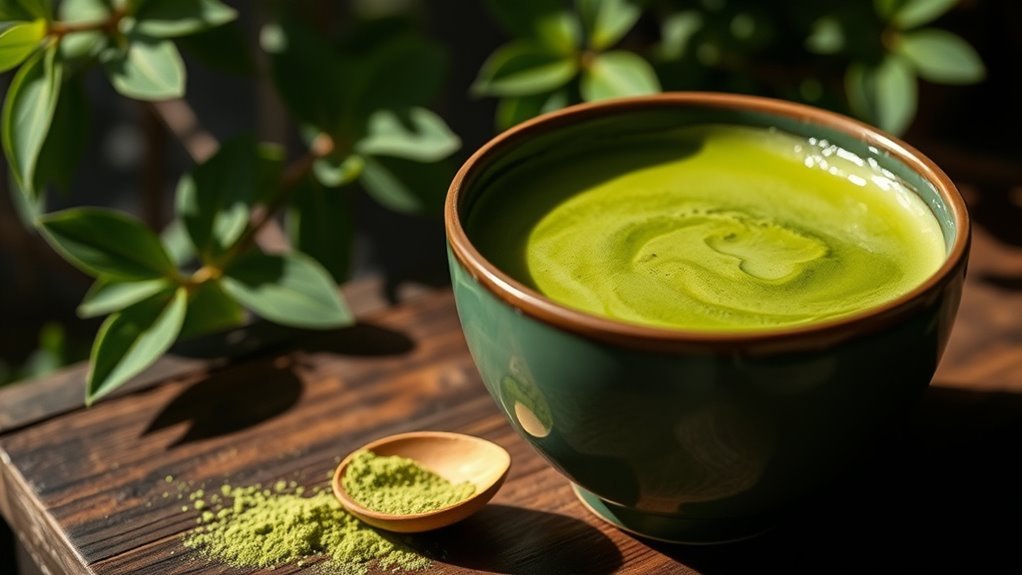
Matcha, a finely ground powder made from specially grown green tea leaves, offers a unique nutritional profile that can impact your dietary choices. It’s packed with matcha antioxidants, which can combat oxidative stress and promote overall health. These antioxidants, particularly catechins, are more abundant in matcha than in regular green tea. Additionally, matcha contains caffeine, providing a gentle energy boost without the jitters associated with coffee. This combination can enhance focus and alertness, making it a popular choice for those seeking clarity in their day. Understanding matcha’s nutritional benefits can empower you to make informed dietary decisions that align with your lifestyle goals, giving you the freedom to enjoy its unique flavor and health advantages.
Health Benefits of Matcha on a Ketogenic Diet
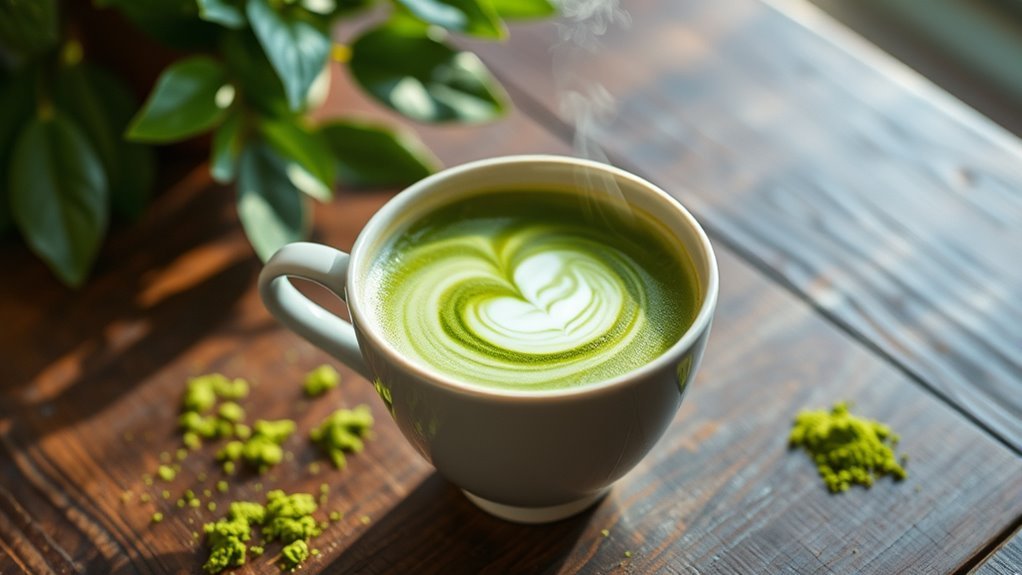
Incorporating matcha into a ketogenic diet can offer several health benefits that align well with the diet’s goals. Here are some key advantages:
- Rich in Matcha Antioxidants: Matcha is packed with antioxidants, which can help combat oxidative stress and inflammation, supporting overall health.
- Boosts Metabolism: The unique compounds in matcha can enhance your metabolism, making it easier to burn fat while in ketosis.
- Improves Mental Clarity: Matcha contains L-theanine, which promotes focus and mental clarity, essential for maintaining productivity on a keto diet.
- Supports Energy Levels: Unlike high-sugar energy drinks, matcha provides a stable energy boost without the crash, helping you stay active and engaged.
Adding matcha to your routine can be a delicious way to enhance your ketogenic lifestyle.
How Matcha Fits Into Your Daily Carb Allowance
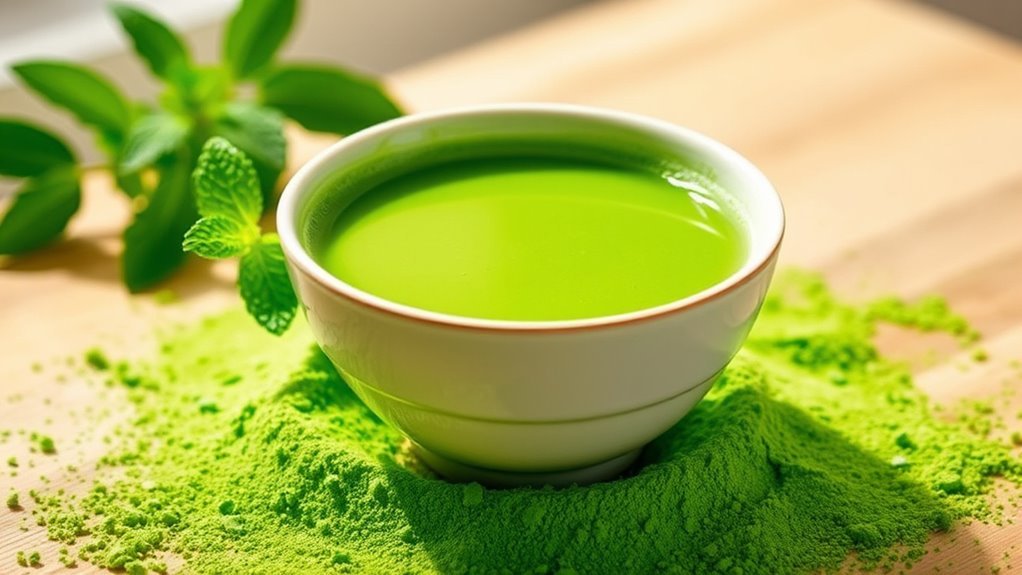
While managing your daily carb allowance on a ketogenic diet, it’s essential to understand how matcha can fit into your nutritional framework. Matcha contains about 1 gram of carbs per teaspoon, making it an excellent choice for carb counting. You can easily incorporate matcha into your daily intake without jeopardizing your keto goals. Due to its rich antioxidant profile and potential health benefits, it can serve as a flavorful alternative to sugary beverages. Just be mindful of what you combine with matcha; sweeteners and milk can add extra carbs. By keeping your portions in check and measuring ingredients carefully, you can enjoy the freedom of matcha while staying within your carb limits. It’s all about balance!
Delicious Keto-Friendly Matcha Recipes
Finding ways to enjoy matcha while adhering to a ketogenic diet can be both fun and rewarding. You can create delicious recipes that keep your carb count low while savoring the unique flavor of matcha. Here are some tasty ideas:
- Matcha Smoothies: Blend unsweetened almond milk, avocado, and a scoop of matcha for a creamy, nutrient-packed drink.
- Matcha Desserts: Whip up keto-friendly matcha cheesecake using almond flour and cream cheese for a rich treat.
- Matcha Fat Bombs: Combine coconut oil, matcha, and a low-carb sweetener for a quick energy boost.
- Matcha Chia Pudding: Mix chia seeds with coconut milk and matcha for a satisfying breakfast or snack.
These recipes let you enjoy matcha while staying true to your keto lifestyle!
Tips for Choosing the Best Matcha for Keto
How do you choose the best matcha to fit your keto lifestyle? Start by considering matcha quality and caffeine content. Look for vibrant green, finely ground matcha from reputable sources, as this indicates higher quality. Confirm it’s ceremonial grade for the best flavor and nutrients.
Here’s a quick comparison to guide you:
| Type of Matcha | Quality Level | Caffeine Content |
|---|---|---|
| Ceremonial | High | Moderate to High |
| Premium | Moderate | Moderate |
| Culinary | Lower | Low to Moderate |
Frequently Asked Questions about Matcha and Keto
1. Is matcha compatible with a keto diet?
Yes, matcha is compatible with a keto diet. It is low in carbohydrates, containing only about 1 gram of carbs per serving. As a source of antioxidants and caffeine, matcha can support energy levels and mental focus, which are beneficial for those following a ketogenic lifestyle.
2. Does matcha contain sugar or carbs?
Pure matcha powder does not contain any added sugar and has minimal carbohydrates. A typical serving of matcha (about 1 teaspoon or 2 grams) contains approximately 1 gram of carbohydrates, making it a suitable option for those adhering to a keto diet.
3. How should I prepare matcha for a keto diet?
To prepare matcha for a keto diet, mix 1-2 teaspoons of matcha powder with hot water (not boiling) to create a traditional tea. For a creamier version, you can add unsweetened almond milk or coconut milk and a keto-friendly sweetener, such as stevia or erythritol. Avoid using regular sugar or high-carb creamers to keep it keto-friendly.
4. Are there any health benefits of matcha on a keto diet?
Yes, matcha offers several health benefits that can complement a keto diet. It is rich in antioxidants, particularly catechins, which can enhance fat oxidation and support weight loss. Additionally, the caffeine and L-theanine in matcha can improve focus and energy levels, making it easier to maintain an active lifestyle while on a ketogenic diet.
5. Are there any potential drawbacks to consuming matcha on a keto diet?
While matcha is generally safe for most people, excessive consumption can lead to caffeine-related side effects such as jitteriness or insomnia. Additionally, some individuals may be sensitive to the compounds in green tea. It’s important to consume matcha in moderation and consult a healthcare provider if you have any concerns, especially if you are pregnant, nursing, or have a medical condition.
References
- https://www.ncbi.nlm.nih.gov/pmc/articles/PMC6520692/
- https://www.healthline.com/nutrition/matcha-green-tea
- https://www.webmd.com/diet/obesity/matcha-what-is-it
- https://www.hopkinsmedicine.org/health/wellness-and-prevention/the-health-benefits-of-matcha
- https://www.cdc.gov/healthyweight/assessing/bmi/adult_bmi/english_bmi_calculator/bmi_calculator.html
- https://www.ncbi.nlm.nih.gov/pmc/articles/PMC6832435/