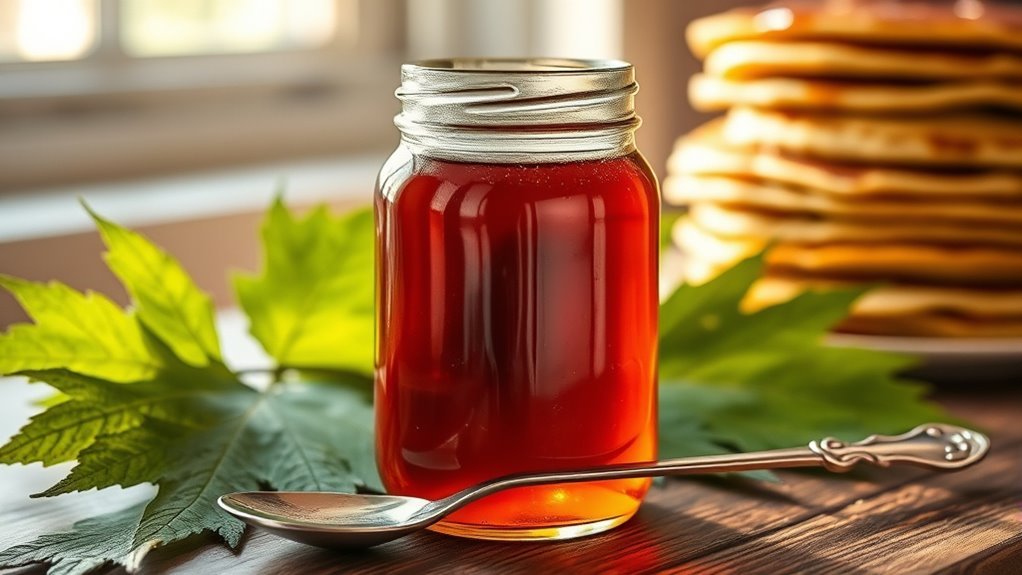

Maple syrup isn’t keto-friendly due to its high carbohydrate content, containing about 13.5 grams of carbs per tablespoon. Consuming it can quickly disrupt ketosis and spike blood sugar levels, leading to fatigue or cravings. While it does offer some vitamins and antioxidants, it’s best to use low-carb alternatives like monk fruit or erythritol instead. To better understand how you can maintain your keto lifestyle while still enjoying sweet flavors, you might want to explore more options available.
Understanding the Keto Diet
When you’re diving into the keto diet, it’s essential to understand its core principles. The keto basics revolve around drastically reducing carbohydrate intake while increasing fats, which shifts your body into a state of ketosis. This metabolic state allows your body to burn fat for fuel instead of glucose. However, it comes with dietary restrictions; you’ll need to avoid high-carb foods like grains, sugars, and certain fruits. Instead, focus on low-carb vegetables, healthy fats, and moderate protein sources. This approach can lead to weight loss and improved energy levels for many people. Remember, the diet isn’t one-size-fits-all, so it’s vital to listen to your body and adjust as needed to find what works best for you.
Nutritional Profile of Maple Syrup
When considering maple syrup’s nutritional profile, it’s essential to look at its carbohydrate content, which is primarily made up of sugars. Understanding the types of sugars present, as well as the vitamins and minerals it offers, can help you make informed choices. This analysis will clarify how maple syrup fits into your overall dietary needs.
Carbohydrate Content Analysis
Although many people enjoy the rich flavor of maple syrup, it’s vital to understand its carbohydrate content, especially for those following a ketogenic diet. Maple syrup contains about 13.5 grams of carbohydrates per tablespoon, primarily from natural sugars. This high carbohydrate content can quickly add up, making it challenging to stay within the daily carb limits of a keto lifestyle. Unlike some carbohydrate sources, maple syrup offers minimal dietary fiber, which means it won’t help offset the carb load. If you’re looking to maintain ketosis, it’s essential to be mindful of your intake. Consider using maple syrup sparingly or exploring alternative sweeteners that align better with your dietary goals while still allowing you to enjoy your food.
Sugar Types Comparison
While maple syrup is often celebrated for its natural sweetness, it is important to compare its nutritional profile with other sweeteners to make informed choices, especially on a keto diet. Here’s a sweetener comparison that highlights some key sugar types:
- Maple Syrup: Contains about 13 grams of carbs per tablespoon, primarily from sucrose, and offers some antioxidants.
- Honey: Similar in carbs, but with a higher glycemic index, which can spike blood sugar levels more than maple syrup.
- Agave Nectar: Has a lower glycemic index, but is high in fructose, which may lead to metabolic issues when consumed excessively.
Understanding these differences can help you decide which sweetener aligns best with your dietary goals and lifestyle preferences.
Vitamins and Minerals Present
Maple syrup isn’t just a sweet treat; it also contains a variety of vitamins and minerals that can contribute to your overall nutrition. With a nutrient density that includes manganese, zinc, and calcium, it can offer several health benefits when consumed in moderation. Manganese plays an essential role in metabolism and bone formation, while zinc supports immune function. Additionally, maple syrup contains antioxidants, which may help reduce oxidative stress in your body. Although it’s still a sugar and should be enjoyed sparingly, incorporating it into a balanced diet can provide a flavorful way to enhance your nutrient intake. So, if you’re looking for a natural sweetener with some nutritional perks, maple syrup might just be the right choice for you.
Carbohydrate Content in Maple Syrup
When considering whether maple syrup fits into a keto diet, it is vital to examine its carbohydrate content. A standard serving of maple syrup typically contains about 13.4 grams of carbs per tablespoon, which can quickly add up in your daily intake.
Here are some key points to keep in mind:
- High Sugar Content: Maple syrup is high in sugar, making it challenging for keto dieters to stay within their carb limits.
- Keto-Friendly Alternatives: You might want to explore maple syrup substitutes like erythritol or monk fruit sweetener for your keto-friendly recipes.
- Moderation is Key: If you choose to indulge, do so sparingly to avoid exceeding your carbohydrate goals.
Finding balance is essential for enjoying your favorite flavors while maintaining your keto lifestyle.
How Maple Syrup Affects Blood Sugar Levels
Although many people enjoy the sweet taste of maple syrup, its impact on blood sugar levels can be significant, especially for those following a keto diet. When you consume maple syrup, its high sugar content can cause a rapid spike in blood sugar. This triggers an insulin response, as your body works to manage the influx of glucose. For individuals sensitive to sugar fluctuations, this can lead to feelings of fatigue or cravings shortly after consumption. While it may be tempting to indulge, you should consider how maple syrup fits into your overall dietary goals. If maintaining stable blood sugar levels is a priority, opting for low-carb alternatives might be a better choice. Balancing enjoyment and health is key.
The Role of Ketosis in Weight Loss
Managing blood sugar levels is a fundamental aspect of many dietary strategies, especially for those aiming for weight loss. Understanding ketosis can help you navigate this journey more effectively. Here are three key points to remember:
Managing blood sugar is crucial for weight loss, and understanding ketosis can greatly enhance your dietary approach.
- Ketosis Benefits: It encourages your body to burn fat for energy instead of carbohydrates, which can lead to weight loss.
- Satiation: Being in ketosis often reduces appetite, making it easier to maintain a calorie deficit.
- Ketosis Misconceptions: Some believe ketosis is harmful or unsustainable, but for many, it can be a safe and effective way to manage weight long-term.
Comparing Maple Syrup to Other Sweeteners
There are several sweeteners available on the market, each with its unique characteristics and health implications. When making sweetener comparisons, consider maple syrup alternatives like agave nectar, honey, and stevia. Maple syrup offers a distinct flavor and contains antioxidants, but it’s high in sugars, which might not align with your keto goals. Agave is sweeter but has a higher fructose content, raising concerns about its impact on blood sugar. Honey, while natural, is still sugar-rich. Stevia, a zero-calorie option, is a popular choice for those seeking to limit carbs. Ultimately, your choice depends on your dietary needs and taste preferences. Evaluating these alternatives helps you find a sweetener that fits your lifestyle while maintaining the freedom to enjoy your food.
Low-Carb Alternatives to Maple Syrup
Many people on a keto diet seek low-carb alternatives to traditional sweeteners like maple syrup. If you’re looking for keto-friendly sweeteners, here are three options to evaluate:
Keto dieters often seek low-carb sweeteners to replace traditional options like maple syrup.
- Monk Fruit Sweetener: This natural sweetener has zero calories and carbs, making it an excellent low-carb syrup substitute.
- Erythritol: A sugar alcohol with about 70% of the sweetness of sugar and negligible carbs, erythritol can mimic the texture of syrup in recipes.
- Allulose: A rare sugar that’s low in carbs and calories, allulose has a taste and texture similar to sugar, making it a great alternative for sweetening.
These low-carb syrups not only help maintain your keto lifestyle but also allow you to enjoy sweetness without the guilt.
Tips for Sweetening Keto-Friendly Recipes
When it comes to sweetening your keto-friendly recipes, there are plenty of low-carb sweetener options to contemplate. Popular choices like erythritol, stevia, and monk fruit can provide the sweetness you crave without spiking your blood sugar. Additionally, exploring natural sweetening alternatives like cinnamon or vanilla extract can enhance flavors without adding carbs.
Low-Carb Sweetener Options
While you might think that cutting carbs means giving up sweetness altogether, there are plenty of low-carb sweetener options that can enhance your keto-friendly recipes without derailing your diet. Here are three great choices:
- Stevia: A natural, zero-calorie sweetener that’s much sweeter than sugar, making it a little goes a long way.
- Erythritol: A popular sugar alcohol that contains almost no calories and has minimal impact on blood sugar levels.
- Monk Fruit Sweetener: Derived from monk fruit, this low carb sweetener is also calorie-free and adds a pleasant sweetness.
When choosing low carb sweeteners, always read labels to avoid added sugars and unnecessary carbs. Embrace these options to keep enjoying sweetness on your keto journey!
Natural Sweetening Alternatives
If you’re looking to sweeten your keto-friendly recipes without compromising your dietary goals, there are several natural alternatives worth considering. Natural sweeteners like stevia and monk fruit extract are popular sugar substitutes that provide sweetness without the carbs. These options can help satisfy your sweet cravings while keeping your blood sugar stable. Erythritol is another great choice, as it has minimal calories and won’t spike insulin levels. You can also consider allulose, which mimics sugar’s taste and texture but has a negligible impact on your glycemic index. When choosing natural sweeteners, always check labels to avoid hidden carbs. With these alternatives, you can enjoy delicious flavors in your keto meals while staying on track with your health goals.
Moderation and Portion Control on Keto
Although the keto diet emphasizes low carbohydrate intake, moderation and portion control remain essential for achieving and maintaining your health goals. Embracing mindful eating and developing strong keto lifestyle habits can help you enjoy a variety of foods without derailing your progress. Here are three tips to keep in mind:
- Measure Portions: Use a food scale or measuring cups to guarantee you’re consuming appropriate serving sizes.
- Listen to Your Body: Pay attention to hunger cues and eat slowly to avoid overeating.
- Plan Your Meals: Prepare balanced meals in advance to help you stay on track and make better choices.
Final Thoughts on Maple Syrup and Keto
When it comes to incorporating maple syrup into a keto diet, the key lies in understanding its carbohydrate content and how it fits into your overall macronutrient goals. While it does offer some health benefits, like antioxidants and minerals, its high sugar content can quickly derail your ketosis. If you’re craving sweetness, consider using low-carb sweetener substitutes like stevia or erythritol, which won’t impact your carb intake as much. Ultimately, it’s about balance. If you choose to indulge in maple syrup, do so sparingly, and keep track of your macros to guarantee you stay within your limits. Enjoying the freedom to flavor your meals is possible while remaining mindful of your keto journey.
Frequently Asked Questions about Maple Syrup and Keto Diet
1. Is maple syrup keto-friendly?
Maple syrup is not considered keto-friendly due to its high carbohydrate content. A single tablespoon of pure maple syrup contains approximately 13.4 grams of carbohydrates, which can quickly add up and potentially kick you out of ketosis. If you’re following a strict ketogenic diet, it’s best to limit or avoid maple syrup altogether.
2. What are the alternatives to maple syrup for a keto diet?
There are several keto-friendly alternatives to maple syrup, including sugar-free syrups made with erythritol or stevia, which have minimal to no carbs. Other options include natural nut butters, coconut cream, or homemade keto-friendly syrup recipes that use low-carb sweeteners. These alternatives provide similar flavors without the high carb content.
3. Can I use maple syrup in moderation on a keto diet?
While some people may choose to use maple syrup in moderation, it’s essential to be very cautious. If you do include it, consider limiting yourself to a very small amount and account for the carbs in your daily intake. This approach can work for individuals who are more flexible with their keto diet and are willing to monitor their carbohydrate consumption closely.
4. What impact does maple syrup have on ketosis?
Maple syrup can significantly impact ketosis because it contains high levels of sugars that can raise blood glucose levels. Consuming maple syrup can lead to an increase in insulin production, which may interrupt the state of ketosis. For those strictly adhering to a ketogenic diet, it’s crucial to avoid foods that can spike insulin and blood sugar levels, including maple syrup.
5. Are there any health benefits of maple syrup?
Maple syrup does contain some beneficial nutrients, including antioxidants, vitamins, and minerals such as manganese and zinc. However, these benefits are often overshadowed by its high sugar content. While it can be a healthier sweetener compared to refined sugar, its use should be limited, particularly for those on a keto diet. If you’re looking for health benefits, consider using maple syrup sparingly, combined with a balanced diet.
References
- https://www.healthline.com/nutrition/keto-diet-foods#sweeteners
- https://www.ncbi.nlm.nih.gov/pmc/articles/PMC6519467/
- https://www.webmd.com/diet/what-to-know-about-keto-diet
- https://www.verywellfit.com/keto-diet-foods-5181428
- https://www.heart.org/en/news/2021/10/15/what-you-need-to-know-about-the-keto-diet
- https://www.mayoclinic.org/healthy-lifestyle/nutrition-and-healthy-eating/expert-answers/keto-diet/faq-20460388
- https://www.cdc.gov/healthyweight/assessing/bmi/adult_bmi/index.html
- https://www.nutrition.gov/topics/whats-food/nutrition-basics
- https://www.sciencedirect.com/science/article/pii/S0169534718301991