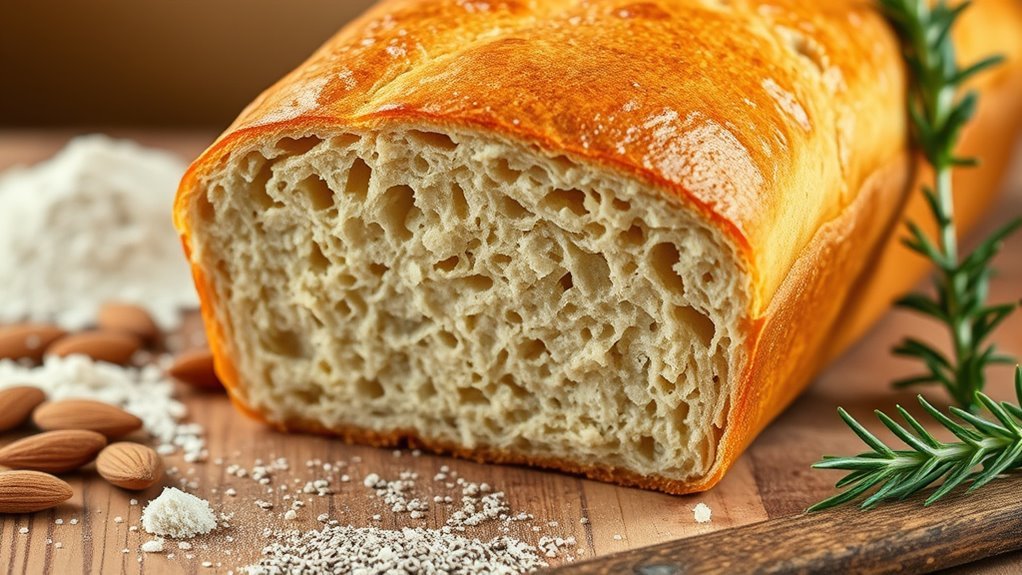

Keto bread can be a healthy choice if you’re looking to cut back on carbs. It’s often made from low-carb ingredients like almond and coconut flour, which offer healthy fats and higher protein levels compared to traditional bread. However, it can be calorie-dense and lower in fiber, so it’s important to be mindful of portion sizes and ingredients. Understanding the balance of nutrients is key, and there’s more to explore about how keto bread fits into your diet.
Understanding the Ingredients in Keto Bread

When you explore the world of keto bread, it’s important to understand its ingredients, as they play a crucial role in both flavor and nutritional value. Two common bases are almond flour and coconut flour. Almond flour, made from ground almonds, is low in carbs and high in healthy fats, making it a popular choice for keto enthusiasts. It adds a nutty flavor and moist texture to your bread. On the other hand, coconut flour is more absorbent and requires additional liquid in recipes. It’s rich in fiber and provides a slightly sweet taste. By knowing these ingredients, you’re empowered to make informed choices that align with your dietary goals, ensuring that your keto bread remains both delicious and satisfying. Additionally, ingredient ratios are crucial for achieving the desired texture and consistency in your baking.
Nutritional Comparison: Keto Bread vs. Traditional Bread
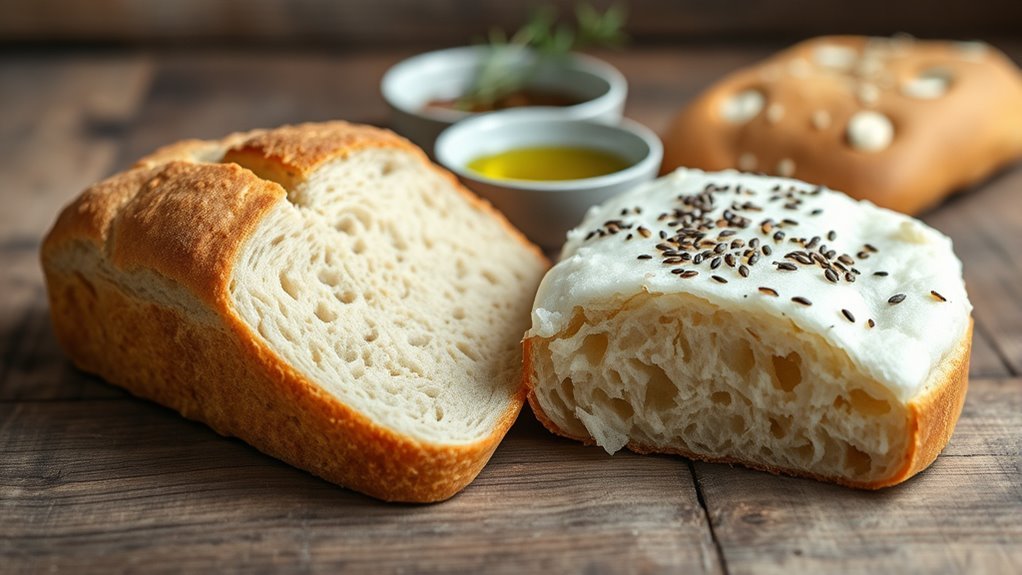
While many people enjoy traditional bread for its comforting texture and taste, a nutritional comparison reveals significant differences between keto bread and its conventional counterpart. Traditional bread ingredients often include wheat flour, which is high in carbohydrates. In contrast, keto bread types typically use almond flour or coconut flour, resulting in lower carb content. This shift can make a big difference for those monitoring their carbohydrate intake. Additionally, keto bread is generally higher in healthy fats and protein, supporting a balanced diet for those following a ketogenic lifestyle. However, it’s essential to scrutinize the nutritional labels, as not all keto bread is created equal. Ultimately, your choice should align with your personal health goals and dietary preferences. Furthermore, the higher fiber content in keto bread can contribute to improved digestive health.
Health Benefits of Incorporating Keto Bread
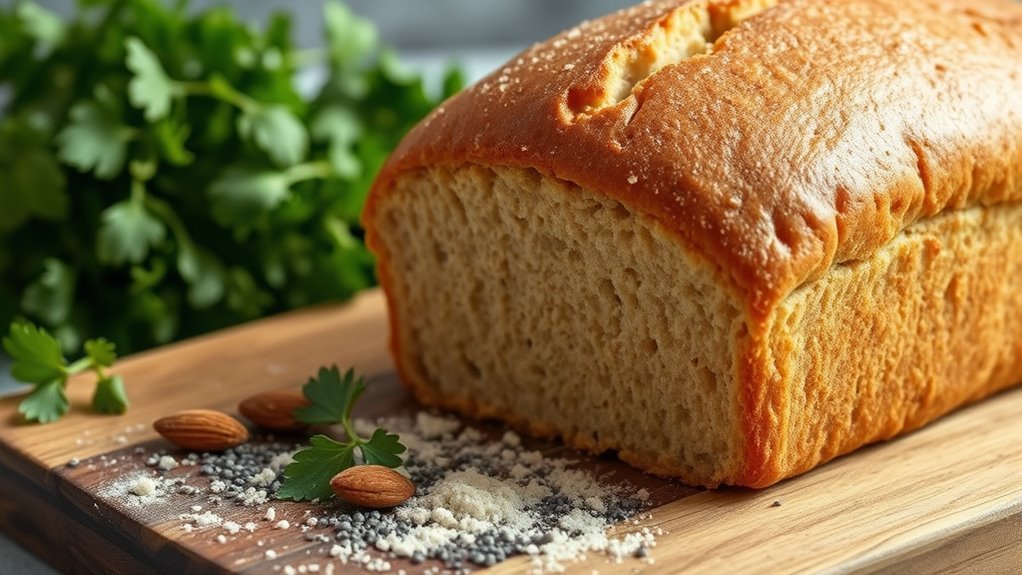
Keto bread offers several health benefits that align well with a low-carb lifestyle. One of the main keto bread benefits is its potential to help you control blood sugar levels, making it a great option for those managing diabetes or insulin resistance. With considerably fewer carbohydrates than traditional bread, it serves as a satisfying low carb alternative, allowing you to enjoy your favorite meals without the carb-heavy guilt. Additionally, keto bread is often higher in healthy fats and fiber, which can promote satiety and support digestive health. By incorporating keto bread into your diet, you can indulge in delicious options while adhering to your low-carb goals. This balance can provide you with more freedom in your meal choices without compromising your health. Moreover, using low-carb vegetables in your meals can further enhance the nutritional profile while keeping the carbohydrate count low.
Potential Drawbacks of Keto Bread
Although keto bread can be a tasty alternative for those following a low-carb diet, it’s crucial to be aware of its potential drawbacks. One concern is the caloric content; many varieties can be calorie-dense, which might hinder weight loss efforts if consumed in excess. Additionally, while some keto breads are made with alternative flours and ingredients, they often have lower fiber levels compared to whole grain breads. This can impact digestion and leave you feeling less satisfied. It’s important to read labels carefully and consider how these factors fit into your overall diet. Balancing your intake of keto bread with other nutrient-rich foods is necessary for maintaining a healthy lifestyle without sacrificing your freedom of choice. Furthermore, incorporating low-carb vegetables into your meals can enhance nutrient intake while supporting your ketogenic lifestyle.
Making Informed Choices: Is Keto Bread Right for You?
How do you know if keto bread is the right choice for your dietary needs? First, consider your keto lifestyle and whether it aligns with your health goals. If you’re aiming to reduce carbs and increase healthy fats, keto bread can be a suitable option. However, pay attention to ingredients—some brands may include fillers that don’t fit your dietary restrictions. It’s important to read labels and choose products that maintain nutritional integrity. Additionally, think about how keto bread fits into your meals. It shouldn’t replace whole foods. Ultimately, listen to your body; if you experience discomfort or negative reactions, it may not be the right fit. Making informed choices empowers you to enjoy freedom in your diet while prioritizing your health. Moreover, utilizing keto flour options like almond flour or coconut flour can enhance the nutritional profile of your homemade keto bread.
Frequently Asked Questions
Can I Make Keto Bread at Home Easily?
Absolutely, you can make keto bread at home easily! Coincidentally, many people find it’s a fun way to experiment with keto bread recipes. Just remember some keto baking tips: use almond flour or coconut flour as a base, and incorporate eggs for structure. With a few simple ingredients, you can whip up delicious bread that fits your lifestyle. So, roll up your sleeves and enjoy the freedom of baking your own keto-friendly bread!
Is Keto Bread Suitable for Diabetics?
Yes, keto bread can be suitable for diabetics. Its low-carb content helps with blood sugar management, making it a better option than traditional bread. You’ll benefit from fewer spikes in blood sugar levels, allowing for more freedom in your diet. However, it’s essential to check the ingredients, as some recipes might include additives that can affect your health. Always consult with a healthcare professional to confirm it fits your individual dietary needs.
How Long Does Keto Bread Last?
Keto bread typically lasts about 4 to 7 days at room temperature, but its shelf life can be extended with proper storage. To maximize freshness, keep it in an airtight container or resealable bag. You can also freeze keto bread for up to 3 months; just make sure to slice it before freezing for easier use. Following these storage tips helps you enjoy your keto bread without worrying about spoilage.
Can I Freeze Keto Bread?
Yes, you can freeze keto bread! To preserve its freshness, use proper freezing methods, like wrapping individual slices in plastic wrap and placing them in an airtight freezer bag. This way, you can easily grab a slice whenever you want. For best results, consume it within three months. When you’re ready to enjoy it, just thaw it in the fridge or toast it directly from frozen. Follow these storage tips, and you’ll maintain its quality!
Are There Gluten-Free Options for Keto Bread?
Absolutely, you can find gluten-free options for keto bread! Many brands use gluten substitutes like almond flour or coconut flour, which not only keep the carbs low but also maintain good nutritional value. It’s like finding a treasure chest of flavors, giving you the freedom to enjoy bread without the guilt. Just check labels and choose wisely to guarantee you’re getting the best balance of taste and health benefits. Enjoy your baking adventure!
References
- https://www.healthline.com/nutrition/keto-bread
- https://www.ncbi.nlm.nih.gov/pmc/articles/PMC6838420/
- https://www.webmd.com/diet/what-is-keto-diet
- https://www.eatright.org/health/wellness/preventing-illness/keto-diet-what-to-know
- https://www.apa.org/news/press/releases/stress/2021/06/keto-diet
- https://www.hhs.gov/fitness/resource-center/healthy-eating/keto-diet.html
- https://www.medicalnewstoday.com/articles/what-is-keto-bread
- https://www.nutrition.gov/topics/nutrition-101/keto-diet-and-health
- https://www.cdc.gov/healthyweight/healthy_eating/dietary_guidelines.html