

Keto bread can be a low-carb alternative to traditional options, but whether it’s bad for you depends on your individual health needs and the ingredients used. It often contains nut flours and sweeteners that may raise cholesterol or blood sugar levels for some people. While it offers potential benefits, such as lower carbs and added nutrients, overconsumption or reliance on it can lead to issues like nutrient deficiencies. There’s more to evaluate about its long-term effects on health.
Understanding Keto Bread: What Is It Made Of?

When you think about keto bread, you might wonder what sets it apart from traditional bread. The primary difference lies in its ingredients, which typically include almond flour, coconut flour, or flaxseed meal instead of wheat. These alternatives offer lower carbohydrate content, making keto bread a popular choice for those on low-carb diets. The keto bread benefits include a reduced impact on blood sugar levels and a higher fat content, aligning with ketogenic principles. Additionally, many people appreciate the variety of keto bread alternatives available, from cloud bread to almond flour-based loaves, providing options for different tastes and dietary needs. By incorporating these alternatives, you can enjoy bread-like experiences without compromising your low-carb lifestyle. Moreover, using almond flour in keto bread provides essential nutrients while keeping carb intake low.
Common Ingredients in Keto Bread
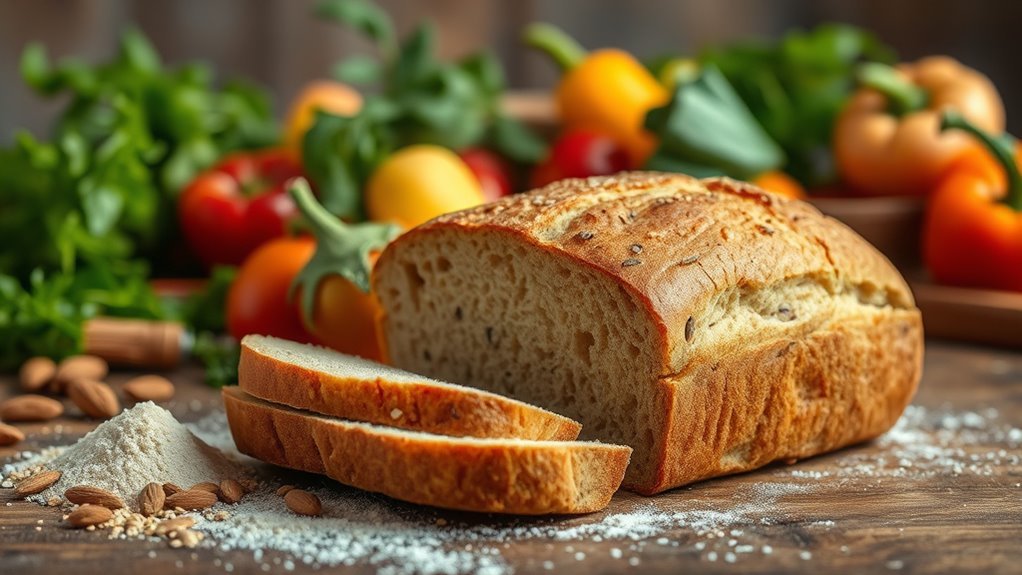
When you explore keto bread, you’ll find it typically includes nut flours and seeds, which provide healthy fats and protein while keeping carbs low. Sweeteners and flavorings are often added to enhance taste without spiking blood sugar levels. Additionally, binding agents are essential for achieving the right texture, making these breads more enjoyable and satisfying. Understanding ingredient ratios is crucial for creating successful keto bread recipes.
Nut Flours and Seeds
Nut flours and seeds play an essential role in the composition of keto bread, offering both flavor and nutritional benefits. These ingredients serve as great alternatives to traditional flours, providing low-carb options without sacrificing taste. Here are some key ingredient sources and their nutritional benefits:
- Almond flour: High in healthy fats and vitamin E.
- Coconut flour: Rich in fiber and helps with digestion.
- Flaxseed meal: Packed with omega-3 fatty acids and antioxidants.
- Chia seeds: Loaded with fiber, they aid in satiety.
- Sunflower seeds: A great source of protein and vitamin B6.
Additionally, incorporating cream cheese into keto bread can enhance its texture and flavor while maintaining low carbohydrate content.
Sweeteners and Flavorings
While many people associate keto diets with savory flavors, sweeteners and flavorings are essential components of keto bread that contribute to its overall taste and enjoyment. You’ll often find natural sweeteners like stevia, erythritol, and monk fruit, which can enhance flavor without spiking your blood sugar. These options allow you to indulge your sweet tooth while maintaining ketosis. However, some manufacturers may use artificial flavorings to mimic traditional bread’s taste, which can be a concern for health-conscious individuals. It’s important to read labels carefully, as not all sweeteners are created equal. Considering what works best for your body and taste preferences can empower you to make informed choices and enjoy the freedom of a keto lifestyle. Additionally, opting for low-carb natural sweeteners can help ensure you stay within your daily carb limit.
Binding Agents Used
Although you might not think about it, binding agents play an essential role in the texture and structure of keto bread. These ingredients not only help hold everything together but also provide binding benefits that enhance the overall quality of the bread. If you’re exploring alternative binders for your keto creations, consider the following options:
- Almond flour
- Coconut flour
- Psyllium husk
- Flaxseed meal
- Chia seeds
These alternative binders can improve moisture retention and give your bread a satisfying chewiness. While traditional bread relies on gluten, keto bread uses these options to achieve a similar effect without compromising your dietary goals. Additionally, using keto flour options like almond flour or coconut flour can significantly impact the taste and texture of your bread. So, don’t overlook the importance of binding agents in your keto baking journey!
Nutritional Breakdown of Keto Bread

When evaluating keto bread, it’s essential to look at its ingredients and nutritional value, especially its carbohydrate content. You’ll want to understand how these factors can impact your health and fit into your dietary goals. Let’s break down what you need to know about the nutritional profile of keto bread. Additionally, it’s important to consider low-carb milk options that can complement your meals while adhering to a ketogenic lifestyle.
Ingredients and Nutritional Value
Keto bread often features ingredients that differ greatly from traditional bread, which can impact its nutritional profile. By using alternative ingredients, you can enjoy a lower-carb option that aligns with your dietary goals. Here are some common ingredient alternatives found in keto bread:
- Almond flour: A popular low-carb substitute rich in healthy fats.
- Coconut flour: Another alternative that’s high in fiber and absorbs moisture well.
- Psyllium husk: Offers a bread-like texture while adding fiber.
- Eggs: Provide protein and act as a binding agent.
- Cheese: Adds flavor and fat, enhancing texture.
These ingredient alternatives can help you maintain a keto lifestyle while still enjoying the pleasure of bread. Additionally, many keto breads, like Zea bread, are specifically designed to support a low-carb diet.
Carbohydrate Content Analysis
While many people turn to keto bread as a low-carb alternative, it’s vital to understand its carbohydrate content to guarantee it fits within your dietary goals. Keto bread often contains alternative options like almond flour or coconut flour instead of traditional wheat. These ingredients greatly lower the overall carbohydrate count. Typically, a slice of keto bread can have anywhere from 1 to 5 grams of net carbs, depending on the brand and recipe. However, it’s important to look at the carbohydrate sources, as some may include added fibers or sweeteners that could affect your net carb intake. By knowing the nutritional breakdown, you can make informed decisions that align with your lifestyle and dietary preferences. Additionally, incorporating low-carb vegetables can further enhance your meals while maintaining ketosis.
Health Impact Overview
Although many people enjoy keto bread for its low-carb benefits, it’s essential to examine its nutritional profile to fully understand its health implications. While it fits nicely into the keto diet, there are potential health risks you’ll want to take into account:
- High in Saturated Fats: Some recipes use coconut oil or butter, which may raise cholesterol levels.
- Low Fiber Content: Many keto breads lack sufficient fiber, impacting digestion.
- Nutrient Deficiency: Reduced variety in your diet might lead to deficiencies in essential vitamins and minerals.
- Additives and Preservatives: Store-bought options can contain unhealthy additives.
- Blood Sugar Spikes: Certain ingredients may still affect blood sugar levels, contrary to the keto diet’s goals.
Additionally, it’s important to consider that while keto bread may be low in carbs, it can still lead to nutrient deficiencies if not balanced with a variety of whole foods. Understanding these factors can help you make informed choices about incorporating keto bread into your lifestyle.
The Benefits of Keto Bread
If you’re looking for a low-carb alternative to traditional bread, keto bread offers several benefits that may align with your dietary goals. It supports the keto diet by keeping your carb intake low while providing satisfying flavor profiles. Many people appreciate the health benefits, such as improved blood sugar control and weight management. You can experiment with different baking techniques and ingredient substitutions, allowing for recipe variations that cater to your taste preferences. Plus, keto bread fits well into meal planning, especially for those with dietary restrictions. Additionally, incorporating healthy fats into your keto bread recipes can enhance flavor and provide essential nutrients.
| Benefit | Description |
|---|---|
| Low in Carbs | Helps maintain ketosis |
| High in Fiber | Supports digestive health |
| Gluten-Free Options | Great for those with gluten intolerances |
| Versatile Recipes | Adaptable to various flavors |
| Quick to Prepare | Saves time in meal planning |
Potential Drawbacks of Keto Bread
While keto bread can be a tasty alternative, it’s important to contemplate its potential drawbacks. You might find that some options lack essential nutrients, leading to a nutritional imbalance. Additionally, the quality of ingredients and their effects on digestive health can vary greatly, so it’s vital to choose wisely.
Nutritional Imbalance Concerns
When considering the potential drawbacks of keto bread, it’s important to recognize that it may contribute to nutritional imbalances. While it can be a tasty alternative for those on a ketogenic diet, relying solely on keto bread might lead to nutrient deficiencies. A balanced diet is vital for overall health, and here are some concerns to keep in mind:
- Limited fiber intake, which can affect digestion
- Low levels of vitamins and minerals, especially if made with refined ingredients
- Imbalance of macronutrients, potentially lacking essential fats or proteins
- Reduced variety in food choices, leading to boredom or cravings
- Risk of overconsumption due to perceived healthiness, which may hinder dietary balance
Being mindful of these factors can help you maintain a healthier, more balanced diet.
Ingredient Quality Issues
Relying on keto bread can lead to not just nutritional imbalances but also concerns about ingredient quality. Many commercially produced keto breads may use low-quality ingredients, which can affect not just taste but also your health. Ingredient sourcing is vital; some brands might opt for cheaper, less nutritious options to cut costs, sacrificing the bread’s overall quality. Without proper quality control, you might find hidden additives or preservatives that aren’t in line with your dietary goals. Even if a loaf is labeled as “keto-friendly,” it’s important to scrutinize the ingredient list. Prioritizing high-quality, whole ingredients can help guarantee that your keto lifestyle remains both enjoyable and beneficial, empowering you to make choices that align with your health objectives.
Digestive Health Effects
Although keto bread can be a convenient alternative for low-carb diets, it may come with digestive health concerns that shouldn’t be overlooked. Many keto bread options might be low in fiber, which is essential for a healthy gut microbiome. Here are some potential drawbacks to keep in mind:
- Reduced fiber intake can lead to constipation.
- Some keto bread may contain artificial ingredients that irritate the gut.
- A lack of diverse carbohydrates might negatively affect your gut microbiome.
- Overconsumption can lead to gastrointestinal discomfort.
- Nutrient deficiencies may arise from relying solely on keto products.
Being aware of these factors can help you make informed choices. Balancing your diet is vital for maintaining digestive health while enjoying the benefits of a low-carb lifestyle.
Comparing Keto Bread to Traditional Bread
While keto bread offers a low-carb alternative to traditional bread, it’s essential to evaluate the differences in their ingredients and nutritional profiles. Understanding these distinctions can help you make informed choices about your diet.
| Type | Carbohydrates (per slice) | Fiber (per slice) |
|---|---|---|
| Keto Bread | 1-3g | 5-7g |
| Whole Wheat Bread | 12-15g | 2-3g |
| White Bread | 13-15g | 0.5-1g |
| Gluten-Free Bread | 15-20g | 1-2g |
Keto bread alternatives typically contain almond flour or coconut flour, while traditional bread often includes wheat flour. This traditional bread comparison highlights that keto options can be beneficial for those watching their carb intake without sacrificing too much fiber.
Impact on Weight Loss and Maintenance
When considering the impact of keto bread on weight loss and maintenance, it’s important to recognize how its low carbohydrate content can help you manage your calorie intake. Incorporating keto bread into your diet may support your weight loss strategies, but there are some maintenance challenges to keep in mind:
- Low carb options can still be calorie-dense.
- Watch for added sugars or unhealthy fats in commercial products.
- Portion control remains essential for sustaining weight loss.
- Balance your diet with plenty of whole foods.
- Monitor your overall macronutrient ratios to maintain ketosis.
Keto Bread and Blood Sugar Levels
Keto bread can have a positive impact on blood sugar levels, particularly for those managing diabetes or insulin resistance. Unlike traditional bread, which is high in carbs, keto bread typically contains low-carb ingredients, such as almond flour or coconut flour. This reduction in carbohydrates means it may lead to less insulin spike after meals, helping you maintain steadier blood sugar levels.
Moreover, many keto bread recipes incorporate fiber-rich ingredients, which can further aid in stabilizing blood sugar. However, it’s important to read labels carefully, as some store-bought options may contain hidden sugars. Ultimately, if you’re looking for a bread alternative that aligns with your lifestyle while keeping blood sugar in check, keto bread might be a viable option for you.
Long-Term Health Effects of Consuming Keto Bread
The long-term health effects of consuming keto bread can vary depending on individual dietary habits and the overall balance of nutrients in your diet. While keto bread can be a satisfying alternative, consider the following points for long-term sustainability:
- It may lead to nutrient deficiencies if not paired with a variety of whole foods.
- High fat content could impact heart health, depending on the types of fats consumed.
- Some keto bread alternatives may contain additives that aren’t beneficial in the long run.
- Individual responses to gluten-free or low-carb options can vary greatly.
- Regularly consuming keto bread could affect gut health if fiber intake is insufficient.
Balancing your diet with diverse nutrients is key to maintaining health over time.
Making Informed Choices: Is Keto Bread Right for You?
Are you considering whether keto bread fits into your diet? Understanding its role is vital for making informed choices. The keto lifestyle offers benefits like weight loss and improved energy levels, but it’s important to weigh these against potential health risks. Keto bread often contains low-carb ingredients like almond flour or coconut flour, which can be healthier than traditional bread. However, some varieties may include additives that aren’t ideal for everyone. If you’re sensitive to gluten or certain ingredients, this could impact your well-being. It’s important to assess your individual health needs and dietary goals. Consulting a healthcare professional can help you determine if keto bread complements your lifestyle, empowering you to make choices that align with your personal health journey.
Frequently Asked Questions
Can Keto Bread Cause Digestive Issues for Some People?
Yes, keto bread can cause digestive issues for some people. The keto ingredients often used, like almond flour or psyllium husk, can affect digestion differently. Some individuals may find the high fiber content leads to bloating or discomfort, especially if their bodies aren’t used to it. It’s important to listen to your body and adjust your intake accordingly. Experimenting with different recipes can help you find what works best for you.
Is Keto Bread Suitable for Individuals With Gluten Intolerance?
Yes, keto bread can be suitable for individuals with gluten intolerance, but it depends on the ingredients used. Many recipes use gluten substitutes like almond flour or coconut flour, which are naturally gluten-free. You should always check labels or make your own to guarantee no gluten-containing ingredients are included. With the right keto ingredients, you can enjoy bread while maintaining your dietary needs and freedom from gluten. Always listen to your body’s responses!
How Does Keto Bread Affect Cholesterol Levels?
You might think keto bread’s high-fat content raises your cholesterol, but it can actually have a positive cholesterol impact. When you choose healthy dietary fats, like those from nuts or avocados, it can boost your HDL (good cholesterol) while lowering LDL (bad cholesterol). Plus, many studies show that low-carb diets can improve overall heart health. So, if you’re mindful of your fat sources, keto bread can fit into a heart-healthy lifestyle.
Can You Eat Keto Bread Every Day?
Yes, you can eat keto bread every day, but it’s important to take into account its nutritional content. While it’s lower in carbs, it can still be high in fats and calories. Daily consumption should be balanced with other nutrient-rich foods to guarantee you’re getting adequate vitamins and minerals. Pay attention to how your body responds, and adjust your intake if you notice any negative effects. Moderation and variety are key to a healthy diet.
Is Homemade Keto Bread Healthier Than Store-Bought Options?
Homemade keto bread can often be healthier than store-bought options. A study found that 70% of commercial keto breads contain preservatives and additives you might want to avoid. By using homemade ingredients, you can control the quality and customize the nutrition. In a nutritional comparison, you’ll likely find fewer carbs and healthier fats in your homemade version. So, if you value freedom in your diet, making it yourself can be a great choice!
References
- https://www.ncbi.nlm.nih.gov/pmc/articles/PMC6520670/
- https://www.health.harvard.edu/staying-healthy/the-ketogenic-diet
- https://www.cdc.gov/healthyweight/assessing/bmi/adult_bmi/index.html
- https://www.webmd.com/diet/obesity/ss/slideshow-keto-diet-overview
- https://www.mdpi.com/2072-6643/11/8/1855
- https://www.ncbi.nlm.nih.gov/pmc/articles/PMC5991678/
- https://www.hopkinsmedicine.org/health/wellness-and-prevention/the-keto-diet-explained
- https://www.uptodate.com/contents/the-ketogenic-diet-for-obesity-and-metabolic-syndrome
- https://www.eatright.org/health/wellness/healthy-lifestyle/the-ketogenic-diet-what-you-need-to-know