

Yes, kefir can fit into your keto diet if you consume it mindfully. It offers beneficial probiotics along with essential nutrients and a relatively low carbohydrate content compared to other dairy products. Whole milk kefir has about 11 grams of carbs per cup, while water kefir has only 4. Keep an eye on serving sizes and sugar content to stay on track. Discover more about how to incorporate kefir and its health benefits for your keto journey.
Understanding the Basics of Kefir

Kefir, a tangy fermented beverage, offers a unique combination of flavor and health benefits. This drink is created through kefir fermentation, where milk or water is combined with kefir grains, allowing beneficial bacteria and yeast to thrive. You might appreciate that these microbial communities contribute greatly to its probiotic benefits, promoting gut health and enhancing digestion. Studies suggest that regular consumption of kefir can improve your immune system and reduce inflammation, giving you more freedom to enjoy life without the discomfort of digestive issues. Plus, its versatility means you can incorporate it into smoothies, dressings, or enjoy it plain. By understanding kefir’s fundamentals, you’re better positioned to make informed choices about incorporating this healthful drink into your lifestyle.
Nutritional Profile of Kefir

When considering kefir, it’s crucial to look at its nutritional profile, which includes its macronutrient breakdown along with key vitamins and minerals. You’ll find that kefir is rich in protein and beneficial fats, while also providing a variety of micronutrients that contribute to overall health. Understanding these components can help you determine how kefir fits into your dietary needs, especially on a keto diet.
Macronutrient Breakdown
The nutritional profile of kefir is quite intriguing, especially for those following a ketogenic diet. This fermented beverage typically contains around 10 grams of carbs per cup, which can vary slightly based on the fermentation process. While it’s not carb-free, the probiotics in kefir may help support gut health, potentially making it a beneficial addition to your diet. You’ll find about 8 grams of protein and 4-5 grams of fat per serving, offering a decent macronutrient balance. The presence of healthy fats can enhance satiety, which is essential for keto dieters. Overall, kefir provides a unique combination of nutrients and probiotic benefits, making it worth considering for your keto-friendly options while keeping carb intake in check.
Vitamins and Minerals
While incorporating kefir into your diet, you’ll find it not only offers a unique taste but also a variety of essential vitamins and minerals. It’s rich in B vitamins, particularly B12, which supports energy production and red blood cell formation. The presence of vitamin K2 aids in calcium absorption, promoting bone health. Kefir is also a source of minerals like magnesium and phosphorus, vital for maintaining mineral balance in your body. These nutrients work together to enhance vitamin absorption, making kefir a valuable addition to your keto-friendly meals. By including kefir, you can enjoy not just its creamy texture but also the nutritional benefits that support your overall health journey.
Carb Content in Kefir: What You Need to Know
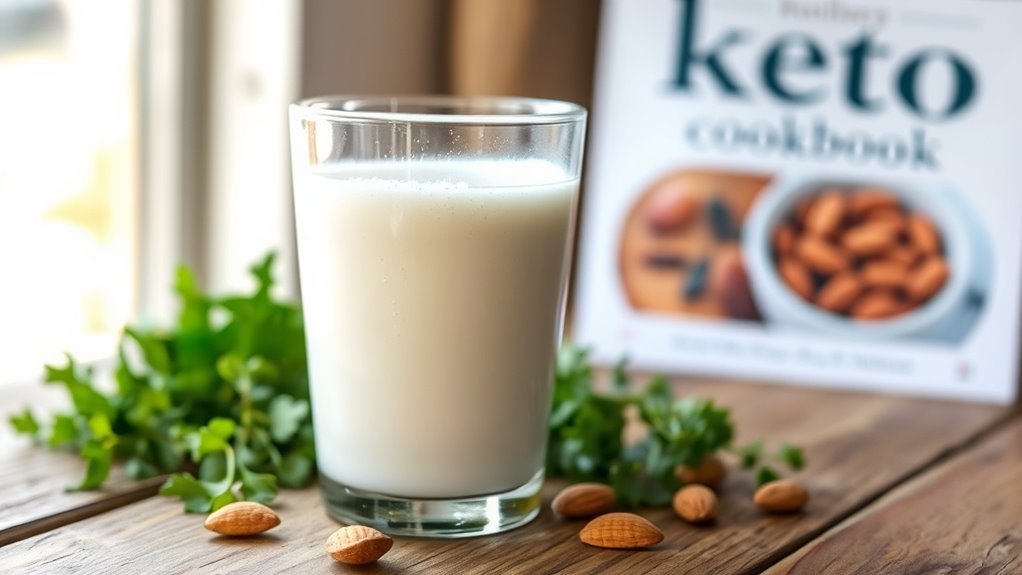
How many carbs are in kefir, and what does that mean for your keto journey? Kefir, a product of kefir fermentation, can be a great low-carb option, but its carb content varies. Generally, a cup contains around 9-11 grams of carbs, which may affect your daily intake on a strict keto diet.
Here’s a quick comparison of kefir varieties:
| Kefir Type | Carbs per Cup |
|---|---|
| Whole Milk Kefir | 11 grams |
| Low-Fat Kefir | 9 grams |
| Coconut Kefir | 8 grams |
| Water Kefir | 4 grams |
When considering kefir, think about how it fits into your overall carb allowance. It can be enjoyed in moderation while maintaining low carb options on your keto journey.
Health Benefits of Kefir on a Keto Diet
Kefir isn’t just a low-carb beverage; it also offers several health benefits that can complement your keto diet. One of the main kefir benefits is its ability to enhance keto digestion. The probiotics in kefir can help maintain a healthy gut microbiome, which is vital when you’re consuming higher fat and lower carb foods. Improved digestion can lead to better nutrient absorption and reduced bloating, making your keto journey more enjoyable. Additionally, kefir is rich in vitamins and minerals, providing essential nutrients that might be lacking in a strict keto diet. Incorporating kefir can also support immune function, helping you stay healthy while you pursue your dietary goals. Enjoying kefir can truly be a liberating addition to your keto lifestyle.
Types of Kefir: Which Is Best for Keto?
What types of kefir are best suited for a keto diet? When choosing from various kefir varieties, look for those with lower carbohydrate content. Water kefir, for example, tends to have fewer carbs compared to traditional dairy kefir. However, if you prefer the creamy texture of dairy, opt for full-fat versions, which can be more satisfying and keto-friendly. Both types offer probiotic benefits, enhancing gut health and supporting digestion, essential on a low-carb diet. Ultimately, it’s about finding the type that aligns with your personal preferences while keeping carb intake in check. By exploring different kefir varieties, you’ll discover options that fit seamlessly into your keto lifestyle without sacrificing flavor or health benefits.
How to Incorporate Kefir Into Your Keto Meal Plan
While finding ways to include kefir in your keto meal plan, consider its versatility as a nutritional powerhouse. You can use kefir as a base for smoothies, blending it with low-carb fruits like berries for a delicious treat. Try kefir recipes that incorporate it into salad dressings or as a marinade for meats, enhancing flavor while keeping your carb count down. For meal pairing, enjoy your kefir alongside keto-friendly snacks, such as nuts or cheese, to keep your energy levels steady throughout the day. You can also add it to soups for a creamy texture without the carbs. By creatively incorporating kefir, you can enjoy its health benefits while staying aligned with your keto goals.
Alternatives to Kefir for a Keto Lifestyle
If you’re looking for alternatives to kefir that fit within a keto lifestyle, several options can provide similar benefits without the higher carbohydrate content. Coconut yogurt is a great choice, as it’s low in carbs and offers probiotics that support gut health. Just make sure to choose unsweetened varieties to keep those carbs in check.
Another option is almond milk, which is low in calories and carbs while being versatile for smoothies or baking. When selecting almond milk, opt for unsweetened versions to avoid added sugars. These alternatives not only align with your keto goals but also offer a creamy texture and flavor that can enhance your meals while keeping your diet enjoyable and satisfying.
Final Thoughts on Kefir and Keto Compatibility
When considering kefir in a keto diet, it’s important to look at its nutritional profile and carbohydrate content, as these factors can greatly impact your daily macros. While kefir offers probiotics and some essential nutrients, there are also alternative options that might align better with your keto goals. Balancing these factors will help you make an informed decision for your dietary needs.
Nutritional Profile Overview
Kefir, a fermented dairy product, offers a unique blend of nutrients that can influence its compatibility with a ketogenic diet. With its low carbohydrate content, typically around 6-7 grams per cup, it could fit into your keto lifestyle, especially if you’re careful with portion sizes. The kefir fermentation process enhances its probiotic benefits, promoting gut health and aiding digestion. This can be particularly valuable when you’re altering your diet. While it provides essential vitamins and minerals, balancing your overall macronutrient intake is vital. If you want to enjoy kefir on keto, consider how it fits into your daily carb limit. Ultimately, moderation is key, and understanding your body’s response will help you make informed choices.
Alternatives to Consider
While kefir can be a nutritious addition to a ketogenic diet, exploring alternatives might be necessary for those who want to minimize carbohydrate intake further or have sensitivities to dairy. Here are some options to take into account:
- Coconut yogurt: A creamy, low-carb alternative rich in healthy fats.
- Almond milk: A versatile, low-calorie base for smoothies and snacks.
- Greek yogurt: Higher in protein and lower in carbs compared to regular yogurt, but opt for unsweetened versions.
- Nut-based kefir: A dairy-free option that offers probiotic benefits without the carbs.
These alternatives can help you maintain your keto lifestyle while accommodating dietary preferences and restrictions. Always check labels for hidden sugars or carbs to verify they align with your goals.
Is kefir keto-friendly?
Yes, kefir can be considered keto-friendly, especially when you choose unsweetened varieties. Traditional kefir is low in carbohydrates, making it suitable for a ketogenic diet. A typical serving of plain, unsweetened kefir contains about 6-10 grams of carbohydrates, depending on the brand and fermentation process. However, it’s important to monitor your portion sizes and check the nutritional label for specific carbohydrate content.
What is kefir made of?
Kefir is a fermented drink made primarily from milk (dairy or non-dairy) and kefir grains, which are a combination of bacteria and yeast. The fermentation process transforms lactose (milk sugar) into lactic acid, giving kefir its characteristic tangy flavor. For those on a keto diet, non-dairy alternatives such as coconut or almond milk can be used to make kefir, but be sure to check the carb content of those alternatives as well.
How does kefir fit into a ketogenic diet?
Kefir can be a nutritious addition to a ketogenic diet as it is rich in probiotics, vitamins, and minerals. It can help support gut health, which is essential for overall wellness, especially when consuming a high-fat diet. To incorporate kefir into your keto meals, consider using it in smoothies, salad dressings, or as a base for soups. Just be mindful of the total carbohydrate intake throughout the day to remain within your keto limits.
Can I drink flavored kefir on keto?
Flavored kefir often contains added sugars, which can significantly increase the carbohydrate content. Therefore, it’s advisable to avoid flavored kefir if you are strictly following a ketogenic diet. If you enjoy the taste of flavored beverages, consider adding natural flavors yourself, such as berries or a splash of vanilla extract, to plain kefir in moderation, ensuring you still stay within your carb limits.
How much kefir can I consume on a keto diet?
The amount of kefir you can consume on a keto diet largely depends on your individual carbohydrate allowance. Generally, a serving size of about ½ cup to 1 cup of plain, unsweetened kefir is reasonable for most people, providing 3-5 grams of net carbs. It is essential to track your overall daily carbohydrate intake to ensure that your total doesn’t exceed your keto goals. It’s always a good idea to start with a smaller amount if you are unsure how it will affect your ketosis.
References
- https://www.healthline.com/nutrition/kefir-keto
- https://www.ncbi.nlm.nih.gov/pmc/articles/PMC6838276/
- https://www.wellnessmama.com/601386/kefir-keto/
- https://www.clevelandclinic.org/health/articles/what-is-kefir
- https://www.medicalnewstoday.com/articles/325233
- https://www.webmd.com/diet/ss/slideshow-keto-diet-overview
- https://www.ketodietapp.com/Blog/post/Is-Kefir-Keto-Friendly
- https://www.sciencedirect.com/science/article/pii/S2212670919300093