Honey isn’t considered keto-friendly because of its high carb content. Just one tablespoon contains about 17 grams of carbs, which can quickly exceed your daily limit on a ketogenic diet. While honey offers some health benefits and antioxidants, its sugar can lead to blood sugar spikes, making it tricky for those in ketosis. If you’re curious about how to manage sweeteners on keto, there’s more useful information to explore.
Understanding the Ketogenic Diet

When you explore the ketogenic diet, you’ll find it’s a high-fat, low-carbohydrate eating plan designed to shift your body into a state of ketosis, where it primarily burns fat for fuel instead of carbohydrates. Understanding the ketogenic principles is vital for success. By drastically reducing carb intake, your body adapts, leading to fat adaptation, which optimizes energy utilization. This metabolic shift can enhance mental clarity and stabilize energy levels. However, it’s important to focus on healthy fats and maintain nutrient balance to avoid potential deficiencies. Additionally, individual responses to the diet can vary, so listening to your body is significant. Embracing this lifestyle can offer freedom from traditional dietary constraints, empowering you to take charge of your health.
Nutritional Profile of Honey

When considering honey’s nutritional profile, it is crucial to look at its caloric content and sugar composition. One tablespoon of honey contains about 64 calories, mainly from sugars like fructose and glucose. Understanding these details can help you make informed choices about including honey in your diet, especially if you’re following a ketogenic lifestyle.
Caloric Content Overview
Honey, often celebrated for its natural sweetness and potential health benefits, has a caloric profile that’s vital for those following a keto diet. Its caloric density can impact your energy balance, making moderation essential. Here’s a quick overview of honey’s caloric content:
| Serving Size | Calories | Carbohydrates |
|---|---|---|
| 1 teaspoon | 21 | 5.8 g |
| 1 tablespoon | 64 | 17.3 g |
| 100 grams | 304 | 82.4 g |
| 1 cup | 1,024 | 274 g |
As you can see, honey packs a punch regarding calories and carbs, which might not align with your keto goals. Keeping these figures in mind can help you make informed choices.
Sugar Composition Breakdown
While many people enjoy honey for its flavor, it’s important to understand its sugar composition, especially if you’re mindful of your carbohydrate intake on a keto diet. Honey primarily consists of two sugar types: fructose and glucose. The fructose content in honey can be quite high, often making up about 38% of its composition, while glucose accounts for around 31%. This balance gives honey its sweetness but also contributes to its carbohydrate load. For those following a strict keto lifestyle, even small amounts of honey may disrupt ketosis due to its high sugar content. Knowing these details can empower you to make informed choices about incorporating honey into your diet without compromising your goals.
Carbohydrate Content and Its Impact on Ketosis
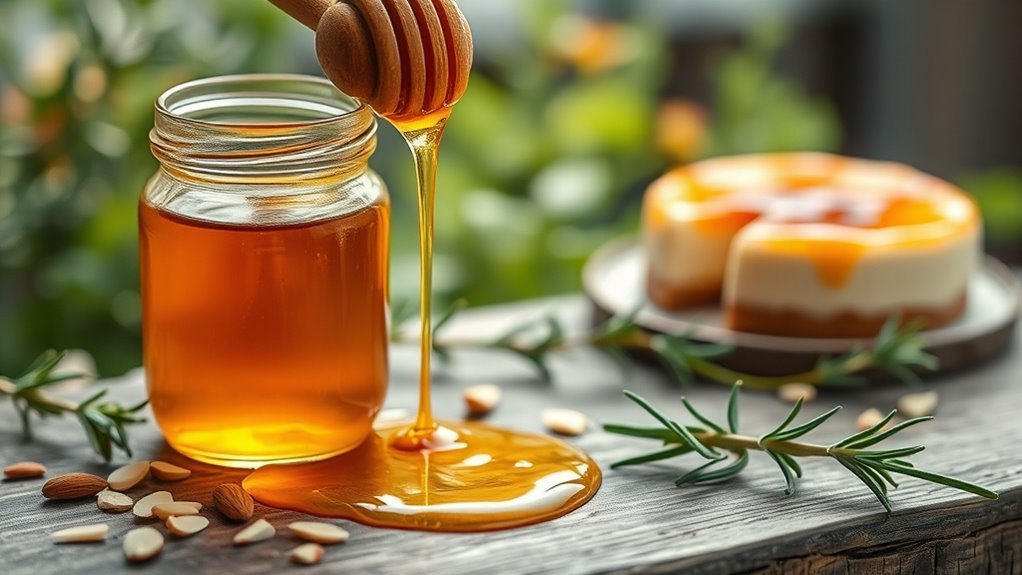
Understanding the carbohydrate content of honey is vital if you’re considering its role in a ketogenic diet. Honey contains about 17 grams of carbs per tablespoon, which can greatly impact your daily carb allowance. If you’re carb counting, this amount might push you over your limit, potentially disrupting ketosis. The ketosis effects can be sensitive to even slight increases in carb intake, as your body shifts back to glucose for energy instead of burning fat. While honey may have some health benefits, its high sugar content makes it a tricky addition to your diet. If you want to maintain ketosis, it’s important to weigh the pros and cons of including honey and monitor your carb intake carefully.
Health Benefits of Honey
Honey isn’t just a sweetener; it offers a range of health benefits that can be quite impressive. It’s packed with nutrients and antioxidants, which can support your overall well-being, while also serving as a natural energy source. Understanding these aspects can help you appreciate honey beyond its taste, especially when considering its role in your diet.
Nutritional Profile Overview
Although often viewed as a sweetener, honey offers a unique nutritional profile that can provide various health benefits. Different honey varieties, like Manuka and wildflower, possess distinct compositions of vitamins, minerals, and antioxidants. In nutritional comparisons, honey typically contains carbohydrates, primarily in the form of sugars, which can serve as a quick energy source. It also includes trace amounts of nutrients such as B vitamins, vitamin C, and essential minerals like calcium and potassium. While honey isn’t low in calories, its natural properties can support digestive health and offer a soothing effect for sore throats. Understanding these benefits can help you make informed choices about incorporating honey into your diet, especially if you’re seeking a more natural sweetener.
Antioxidant Properties Explained
How can a natural sweetener also be a powerful ally in your health journey? Honey boasts impressive antioxidant benefits thanks to its rich blend of natural compounds. These compounds can help combat oxidative stress, potentially reducing the risk of chronic diseases.
| Antioxidant Compound | Source | Potential Benefit |
|---|---|---|
| Flavonoids | Fruits, Honey | Heart health support |
| Phenolic acids | Honey | Anti-inflammatory effects |
| Enzymes | Honey | Enhanced immune function |
Incorporating honey into your diet may offer these health perks while satisfying your sweet tooth. Just remember, moderation is key, especially if you’re following a keto lifestyle.
Natural Energy Source
When you’re looking for a natural energy boost, honey can be an excellent choice due to its unique composition of carbohydrates. This natural sweetener contains a mix of glucose and fructose, providing quick energy that your body can readily absorb. Unlike processed sugars, honey offers a more balanced energy release, reducing the risk of crashes. Studies suggest that athletes often use honey as a source of energy during endurance activities, highlighting its effectiveness. Plus, its antioxidants can enhance overall health. While honey does contain carbohydrates, incorporating it in moderation can align with a balanced lifestyle. So, if you need a quick energy lift, a spoonful of honey might just be what you’re after. Remember to enjoy it mindfully!
Using Honey in Moderation
While honey can be a natural sweetener, using it in moderation is key for those following a keto diet. It’s important to remember that honey, despite its benefits, contains sugars that can impact your carb intake. To maintain that keto balance, consider limiting your honey consumption to small amounts, perhaps a teaspoon here and there. This way, you can enjoy its flavor and potential health benefits without derailing your diet. Keeping track of your overall carbohydrate consumption is essential, so think of honey as an occasional treat rather than a staple. By practicing honey moderation, you can still feel free to indulge while staying committed to your keto lifestyle. Enjoying life’s sweet moments doesn’t have to mean compromising your goals!
Alternatives to Honey on a Keto Diet
If you’re looking for sweet alternatives to honey while sticking to a keto diet, you’re in luck—there are several options that can satisfy your cravings without compromising your carbohydrate goals. Popular sugar substitutes like stevia, erythritol, and monk fruit are great keto sweeteners that provide sweetness without the carbs. Stevia is derived from a plant and has zero calories, making it a favorite for many. Erythritol, a sugar alcohol, is low in calories and doesn’t affect blood sugar levels. Monk fruit extract is another natural option, offering a sweet taste without added sugars. These alternatives can be used in recipes, beverages, or just as a sweetener for your favorite snacks, giving you the freedom to enjoy sweetness on your keto journey.
Final Thoughts on Honey and Keto
Understanding the role of honey in a keto diet is important, especially since sweeteners can greatly impact your carbohydrate intake. While honey offers some health benefits, its high sugar content makes it challenging to fit into strict keto guidelines. Here are some key points to evaluate:
Understanding honey’s impact on a keto diet is crucial due to its high sugar content and carbohydrate count.
- Carbohydrate Count: Honey can quickly use up your daily carb allowance, making it less ideal for keto.
- Honey Substitutes: Explore alternatives like stevia, erythritol, or monk fruit for a lower-carb option.
- Moderation: If you choose to indulge, do so sparingly to maintain ketosis.
Ultimately, being mindful of your choices will help you enjoy the freedom of a keto lifestyle while still savoring sweetness.
Frequently Asked Questions
1. Is honey keto-friendly?
Honey is generally not considered keto-friendly due to its high sugar content. While it contains natural sugars that can be healthier than refined sugars, it still has a significant number of carbohydrates, which can disrupt ketosis. A typical serving of honey has about 17 grams of carbs per tablespoon, making it difficult to fit into a strict ketogenic diet where daily carb intake is usually limited to 20-50 grams.
2. Can I use honey in moderation on a keto diet?
While some people may choose to use honey in very small amounts, it’s essential to be cautious. If you can manage your total carb intake and still stay within your ketone-producing range, a teaspoon of honey might be acceptable for some individuals. However, this should be approached with caution, as it can easily lead to exceeding your carb limit and knocking you out of ketosis.
3. What are some keto-friendly alternatives to honey?
There are several keto-friendly alternatives to honey that you can consider. Popular options include stevia, erythritol, monk fruit sweetener, and allulose. These sweeteners provide sweetness without the significant carbohydrate content found in honey, making them suitable for a ketogenic diet. Always check the labels for any added ingredients that may contain carbs.
4. How does honey affect blood sugar levels?
Honey can cause a spike in blood sugar levels due to its high glycemic index, which varies between 45 to 64 depending on the type. This can be particularly concerning for individuals with insulin sensitivity or diabetes. For those on a keto diet, maintaining steady blood sugar levels is crucial, and consuming honey may lead to fluctuations that could hinder ketosis.
5. Are there any health benefits of honey even if it’s not keto-friendly?
Yes, honey has several health benefits, even though it may not fit into a ketogenic diet. It possesses natural antibacterial and antioxidant properties, which can help support the immune system. Additionally, honey can soothe coughs and sore throats. However, these benefits should be weighed against its high sugar content, especially for those managing their carbohydrate intake.
References
- https://www.healthline.com/nutrition/honey-keto-friendly
- https://www.ncbi.nlm.nih.gov/pmc/articles/PMC3611628/
- https://www.verywellfit.com/is-honey-keto-friendly-5187476
- https://www.webmd.com/diet/obesity/honey-and-keto-diet
- https://www.washingtonpost.com/food/2021/03/08/honey-keto-diet/
- https://www.clevelandclinic.org/health/articles/what-is-the-keto-diet
- https://www.sciencedirect.com/science/article/pii/S2212267218300048