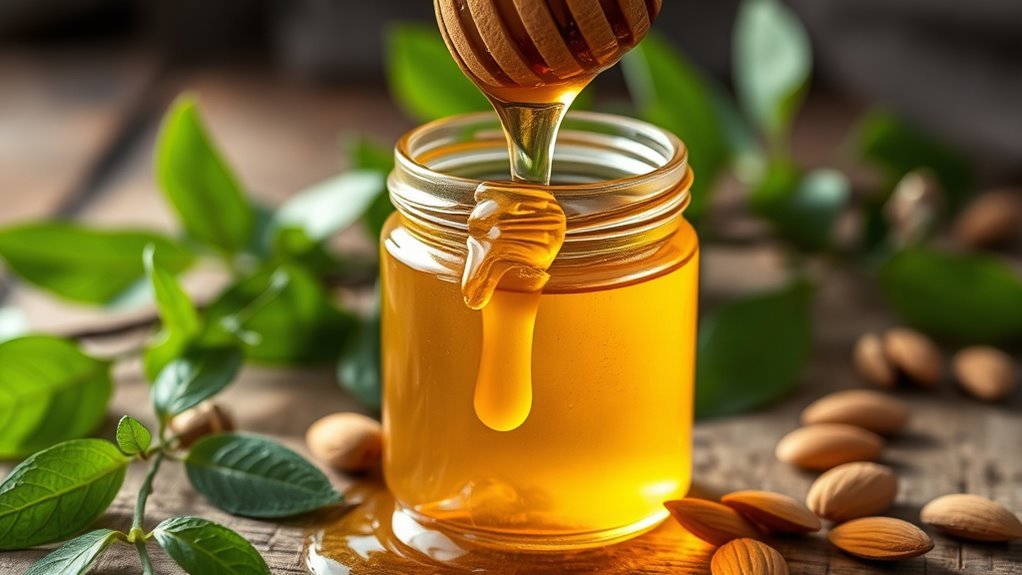

Honey isn’t keto-friendly due to its high carbohydrate content. With about 17 grams of carbs per tablespoon, it can quickly exceed your daily limit on a ketogenic diet. While it offers some health benefits, moderation is essential if you’re hoping to maintain ketosis. Instead, consider using low-carb sweeteners like stevia or erythritol to satisfy your cravings without derailing your nutritional goals. Discover more alternatives and tips to keep your meals deliciously keto-compliant.
Understanding the Ketogenic Diet
When you commence a ketogenic diet, you’re fundamentally shifting your body’s primary fuel source from carbohydrates to fats. This transformation relies on key ketogenic principles, which emphasize low carbohydrate intake and increased consumption of dietary fats. By drastically reducing carbs, your body enters a state of ketosis, where it becomes efficient at burning fat for energy. This approach not only supports weight loss but can also enhance mental clarity and energy levels. To succeed, it’s essential to choose healthy fats, such as avocados, olive oil, and nuts, while avoiding processed and unhealthy options. Ultimately, embracing this lifestyle can liberate you from sugar cravings and promote a more balanced approach to eating, allowing you to enjoy food without guilt. Additionally, understanding the importance of hydration during dietary changes can significantly support your overall health and adaptation to the keto diet.
Nutritional Profile of Honey
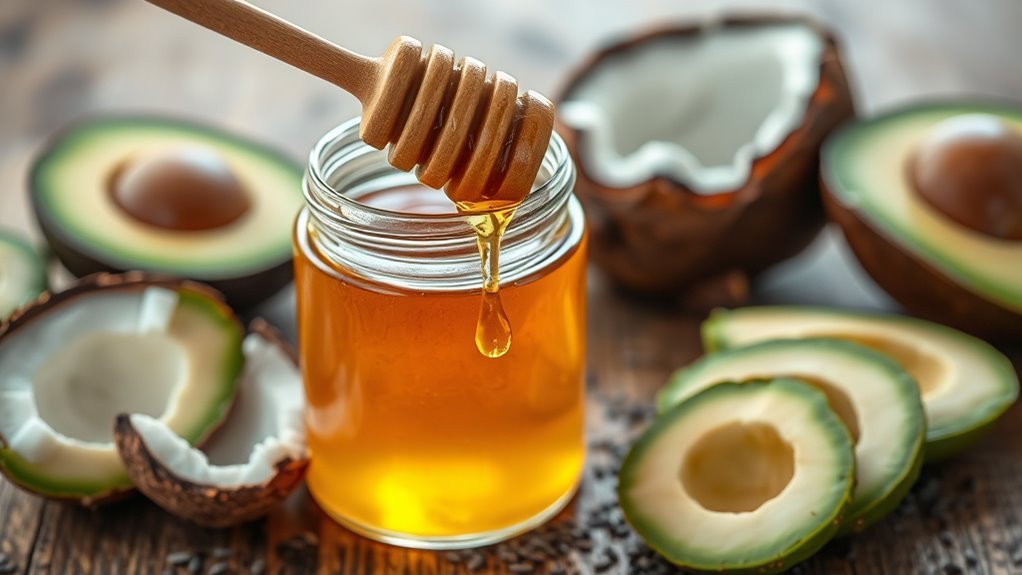
When considering honey’s nutritional profile, it’s important to look at its carbohydrate content, which is primarily made up of sugars. Each tablespoon of honey contains about 64 calories, providing a quick source of energy, but it lacks significant amounts of vitamins and minerals. Understanding these aspects can help you make more informed choices about including honey in your diet.
Carbohydrates in Honey
Honey is often praised for its natural sweetness, but its carbohydrate content is a critical factor to evaluate, especially for those following a ketogenic diet. One tablespoon of honey contains about 17 grams of carbohydrates, primarily in the form of sugars like fructose and glucose. This high carbohydrate level can quickly exceed your daily limit on a keto diet. If you’re seeking sweetness without the carbs, you might consider honey alternatives like stevia or erythritol, which are low in carbs and can satisfy your sweet tooth without disrupting ketosis. While honey has beneficial properties, it’s essential to be mindful of its carbohydrate impact and explore keto sweeteners to maintain your dietary goals while enjoying sweetness in moderation. Additionally, understanding the nutritional profile of honey can help you make informed choices about your diet.
Calories and Energy Content
The caloric content of honey plays a significant role in its overall nutritional profile, especially for those monitoring their energy intake. With roughly 64 calories per tablespoon, honey exhibits a high caloric density compared to some other natural sweeteners. If you’re considering honey as an energy source, it’s important to remember that while it provides quick energy, its high sugar content can impact your daily calorie goals, particularly in a keto diet. This means that, despite its natural origins, moderation is key. Balancing your intake with other energy sources, like healthy fats and proteins, can help you maintain your desired energy levels without compromising your nutritional objectives. Enjoy honey wisely to savor its benefits while staying aligned with your dietary needs.
Vitamins and Minerals Present
Although often overlooked as a mere sweetener, honey contains a variety of vitamins and minerals that contribute to its nutritional profile. It offers some vitamin sources and mineral benefits that can enhance your diet. Here’s a quick look at what honey provides:
| Vitamins & Minerals | Benefits |
|---|---|
| Vitamin C | Boosts immunity |
| B Vitamins | Energy metabolism |
| Calcium | Supports bone health |
| Magnesium | Aids muscle function |
| Potassium | Regulates fluids |
While honey isn’t a primary source of these nutrients, incorporating it can add a touch of sweetness alongside some health benefits. Just be mindful of your overall sugar intake if you’re following a keto lifestyle.
Carbohydrate Content and Its Implications

When considering a ketogenic diet, understanding the carbohydrate content in honey is essential. Honey types vary in their sugar composition, typically containing around 17 grams of carbohydrates per tablespoon. This high carb content can easily exceed your daily limit on a keto diet, which usually caps at 20-50 grams. While honey offers natural sweetness, it may not align with your low-carb goals. If you’re looking for sweetener alternatives, options like stevia, erythritol, or monk fruit can provide sweetness without the carb load. It’s vital to evaluate how honey fits into your overall dietary framework to maintain the desired state of ketosis. Coconut sugar can also disrupt ketosis due to its carbohydrate content, making it crucial to assess any sweetener’s impact on your diet. Balancing freedom in your diet with carb intake can lead to more informed choices.
Health Benefits of Honey
While honey may not be the best choice for a ketogenic diet due to its high carbohydrate content, it does offer several health benefits that can be valuable in other dietary contexts. As a natural sweetener, honey boasts impressive antioxidant properties, helping to combat oxidative stress in your body. It can also soothe sore throats and improve digestion. Here’s a quick overview of its benefits:
| Health Benefit | Description |
|---|---|
| Antioxidant Properties | Fights oxidative stress and inflammation |
| Natural Sweetener | Provides a healthier alternative to refined sugar |
| Soothing Effects | Eases coughs and throat irritation |
Incorporating honey into your diet occasionally can enhance your health, provided you’re mindful of its sugar content. Enjoy the sweetness!
Honey’s Impact on Ketosis
If you’re following a ketogenic diet, it’s important to understand how honey can impact ketosis. Honey is high in natural sugars, which can raise your blood glucose levels and potentially kick you out of ketosis. This shift may hinder your body’s ability to burn fat for fuel, leading to unwanted ketosis effects. While honey does have some health benefits, its carbohydrate content poses a challenge for strict keto followers. If you’re craving sweetness, consider honey substitutes like stevia or erythritol, which won’t disrupt your ketosis. Additionally, being aware of your carbohydrate intake is essential to maintaining ketosis. By being mindful of your choices, you can enjoy your diet while still feeling free to indulge in flavors you love. Balancing your preferences with your goals is key to maintaining a successful ketogenic lifestyle.
Alternatives to Honey on a Keto Diet
For those on a ketogenic diet seeking sweetness without the drawbacks of honey, several alternatives can satisfy your cravings without affecting your ketosis. Sugar substitutes like stevia and erythritol are popular low carb sweeteners that can provide that desired sweetness without the carbs. Stevia, a plant-based option, is calorie-free and has no impact on blood sugar levels. Erythritol, a sugar alcohol, contains minimal calories and is less likely to cause digestive issues compared to other sweeteners. Monk fruit is another excellent choice, offering a sweet flavor with zero calories and carbs. When using these low carb sweeteners, you can enjoy your favorite recipes while staying true to your keto lifestyle, ensuring you maintain your freedom to indulge. Additionally, it’s important to remember that tracking daily carb intake can help you stay within the recommended limits for maintaining ketosis.
Incorporating Honey in Moderation
When it comes to incorporating honey into your keto diet, moderation is key. Honey offers potential health benefits, but its sugar content means you’ll want to be mindful of your portions. You can enhance the flavors of your dishes with just a small amount, striking a balance between taste and staying within your carb limits. Additionally, keep in mind that honey contains natural sugars which can impact your overall carbohydrate intake.
Health Benefits of Honey
Although honey is often viewed as a sweet treat, incorporating it in moderation can offer several health benefits. This natural remedy is packed with antioxidants, which can help combat oxidative stress in your body. Some studies suggest that honey may soothe coughs and improve digestive health, thanks to its prebiotic properties. Additionally, it can enhance wound healing when applied topically due to its antibacterial qualities. While it’s essential to remember that honey is still a form of sugar, using it sparingly can provide you with a flavorful alternative to refined sugars. Moreover, it’s important to be mindful of carbohydrate intake to maintain your ketogenic goals. So, if you’re seeking a way to sweeten your life while reaping potential health benefits, consider adding a little honey to your diet thoughtfully.
Portion Control Strategies
While it’s tempting to indulge in honey’s sweetness, mastering portion control is key to enjoying its benefits without overdoing it. Start by understanding appropriate portion sizes; a teaspoon or two can be a satisfying way to sweeten your meals. Practicing mindful eating will help you savor honey’s flavor while keeping track of your intake. Consider measuring out your honey rather than pouring straight from the jar, which can lead to overconsumption. Pair honey with high-fiber foods to balance its sugars and maintain stable energy levels. Remember, moderation is essential; enjoy honey as an occasional treat rather than a staple. With these strategies, you can enjoy honey’s delightful taste while staying aligned with your keto goals.
Flavor Enhancements in Dishes
Incorporating honey into your dishes can elevate flavors considerably, provided you use it thoughtfully. Its unique sweetness can enhance various flavor profiles, making it a versatile ingredient. Try pairing honey with savory elements, like roasted vegetables or grilled meats, to create a delightful contrast. It works beautifully with tangy ingredients like lemon or vinegar, providing balance in dressings or marinades.
When you’re baking, consider adding honey to your dough or batters; it’ll not only sweeten but also contribute moisture. Just remember, moderation is key—too much can overpower other flavors. By experimenting with ingredient pairings, you’ll discover how honey can transform your meals while still adhering to your keto goals. Enjoy the freedom of flavor exploration!
Frequently Asked Questions
Can I Use Honey in Keto Baking Recipes?
You can’t use honey in keto baking recipes if you’re aiming to stay within your carb limits. Honey’s high sugar content makes it a poor choice for a keto diet. Instead, consider keto substitutes like erythritol, stevia, or almond flour to keep your baked goods low in carbs while still delicious. These baking alternatives can help you maintain your desired lifestyle without sacrificing flavor or texture, letting you enjoy treats guilt-free.
What Types of Honey Are Best for Keto?
When considering honey types for keto, opt for raw or local varieties, as they retain more nutrients and potential health benefits. However, keep in mind that honey is high in carbs. If you’re looking for alternatives, consider erythritol or stevia, which have minimal impact on blood sugar. Balancing your sweetener choices is key to enjoying freedom in your diet while maintaining your health goals. Always check the nutritional info to stay informed!
How Does Honey Affect Blood Sugar Levels?
When you indulge in honey, it can send your blood sugar levels soaring like a kite on a windy day. This sweet nectar triggers an insulin response, which helps lower those levels but can lead to a crash afterward. While natural and tasty, honey’s high glycemic index means you should enjoy it in moderation, especially if you’re aiming for balanced blood sugar. Staying informed helps you navigate your choices with freedom and awareness.
Is Raw Honey Different From Processed Honey on Keto?
Yes, raw honey is different from processed honey on keto. Raw honey retains more nutrients and beneficial enzymes, which can support overall health. Its natural properties might provide some benefits, like antioxidants, that processed honey lacks. However, both types can spike your blood sugar, so moderation is key. Processed honey often has added sugars and fewer nutrients, making it a less favorable choice for those seeking a more natural option. Choose wisely!
Can I Consume Honey During a Keto Cheat Day?
If you want to indulge on a keto cheat day, honey can be tempting, but it’s a double-edged sword. While it’s natural and delicious, it’s also high in sugar, which can kick you out of ketosis. Instead, consider keto alternatives or sugar substitutes like stevia or erythritol. They allow you to satisfy your sweet tooth without derailing your progress. Just remember, moderation is key, even on those cheat days!
References
- https://www.healthline.com/nutrition/honey-and-keto-diet
- https://www.ncbi.nlm.nih.gov/pmc/articles/PMC5561659/
- https://www.thekitchn.com/can-you-eat-honey-on-keto-22926594
- https://www.verywellfit.com/honey-and-the-keto-diet-4784308
- https://www.medicalnewstoday.com/articles/323610
- https://www.webmd.com/diet/obesity/honey-keto-diet
- https://www.ncbi.nlm.nih.gov/pmc/articles/PMC6425017/