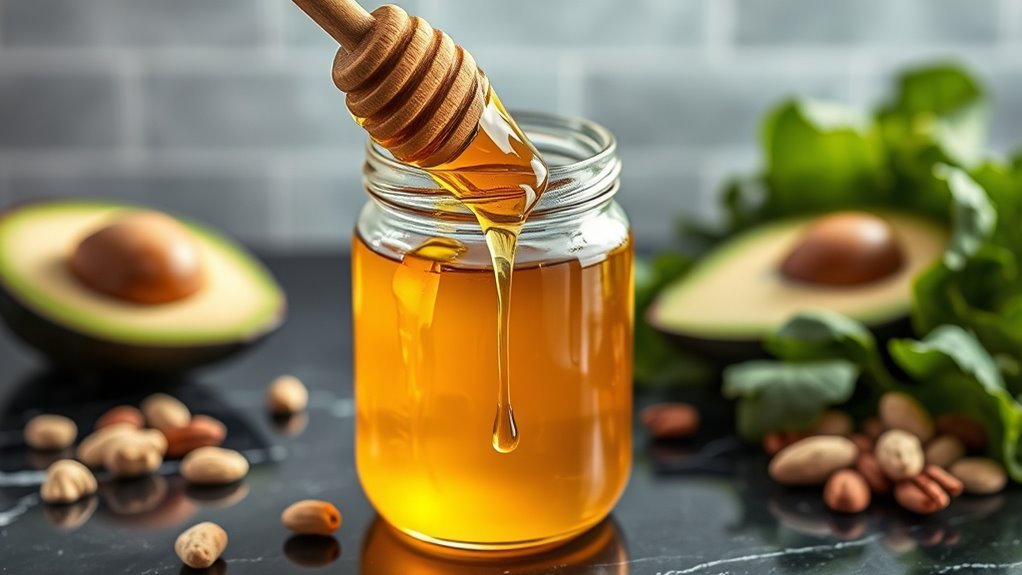

Honey isn’t considered keto-friendly due to its high carbohydrate content, which can disrupt ketosis. Just one tablespoon contains about 17 grams of carbs, potentially exceeding your daily limit. While honey does offer some health benefits, like antioxidants, it’s crucial to prioritize moderation. If you choose to include it, balance your intake with your overall carb goals. There are also keto-friendly alternatives to explore that can satisfy your sweet cravings without breaking your diet.
Understanding the Ketogenic Diet
When you immerse yourself in the ketogenic diet, you’ll find it’s more than just a trend; it’s a structured eating plan that greatly alters your body’s metabolism. The ketogenic principles focus on low carbohydrate intake, high healthy fats, and moderate protein consumption. This shift forces your body into a state of ketosis, where it starts using fat as its primary energy source instead of glucose. As you adapt, known as fat adaptation, your body becomes more efficient at burning fat for fuel, which can enhance your energy levels and mental clarity. Many people appreciate the sense of freedom this diet provides, as it allows for a variety of delicious, satisfying foods while promoting weight loss and improved health markers.
Nutritional Profile of Honey
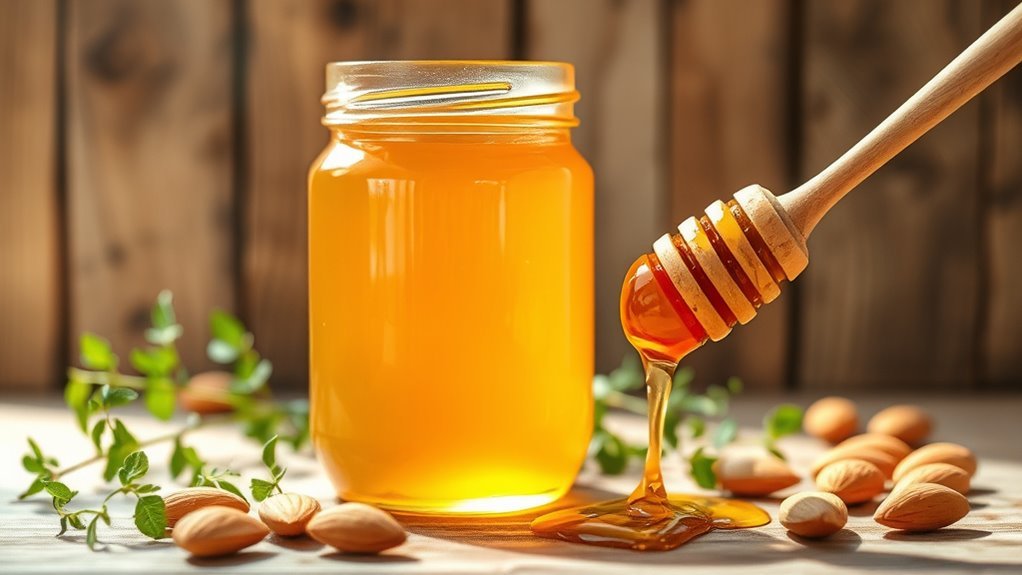
Honey, often celebrated for its natural sweetness, has a nutritional profile that’s primarily composed of sugars. Its honey composition varies but typically includes fructose, glucose, and small amounts of other sugars. This means that its sugar content can be quite high, with approximately 17 grams of sugar per tablespoon. While honey does offer trace vitamins, minerals, and antioxidants, these nutrients are present in minimal amounts compared to the overall caloric and sugar contributions. If you’re considering honey as a sweetener, it’s essential to be mindful of its high sugar levels, especially if you’re aiming for a low-carb or ketogenic lifestyle. Understanding its nutritional profile can help you make informed choices while enjoying this natural sweetener.
Carbohydrate Content in Honey

Although it’s often regarded as a natural alternative to refined sugars, the carbohydrate content in honey can pose a challenge for those following a ketogenic diet. Honey contains about 17 grams of carbohydrates per tablespoon, primarily from natural sugar sources like fructose and glucose. This high carbohydrate count can quickly add up, potentially exceeding your daily limit on a keto plan. Additionally, honey’s glycemic index is higher than many other sweeteners, meaning it can spike your blood sugar levels. If you’re aiming for ketosis, it’s important to be mindful of how much honey you consume. While it can be enjoyed in moderation, balancing your intake with other low-carb options is essential to maintain your desired ketogenic state.
The Role of Sweeteners in a Keto Diet
When following a keto diet, understanding the role of sweeteners is essential for maintaining ketosis. You’ll want to explore natural sweeteners and their impact on your carb limits, as well as how sugar alternatives stack up against each other. This knowledge can help you make informed choices that align with your dietary goals.
Natural Sweeteners Overview
As you explore a ketogenic diet, understanding the role of natural sweeteners becomes essential for maintaining your carb limits while still satisfying your sweet tooth. Natural sweeteners offer several benefits, including lower glycemic indexes than traditional sugars, which can help you avoid blood sugar spikes. When you consider a sugar substitutes overview, options like stevia, erythritol, and monk fruit emerge as popular choices. These sweeteners can provide the sweetness you crave without derailing your keto goals. Incorporating them wisely into your meals can enhance flavors without the guilt associated with sugar. Remember, while these sweeteners can be beneficial, moderation is key to guarantee you stay aligned with your dietary objectives. Enjoy the freedom to indulge without compromising your health!
Impact on Ketosis
Understanding the impact of sweeteners on ketosis is essential for anyone following a ketogenic diet, since these alternatives can affect your body’s ability to maintain a state of fat-burning. Honey consumption, while natural, can lead to increased carbohydrate intake, potentially disrupting ketosis effects. Even small amounts may spike your blood sugar, making it challenging to stay in the fat-burning zone. If you’re looking for sweeteners that won’t sabotage your progress, consider low-carb options like stevia or erythritol. These can satisfy your sweet tooth without the risk of knocking you out of ketosis. Ultimately, it’s about making informed choices that align with your goals, allowing you to enjoy food while still embracing the freedom of a ketogenic lifestyle.
Sugar Alternatives Comparison
Choosing the right sugar alternative can make a significant difference in maintaining a ketogenic diet. Many sugar substitutes, like erythritol, stevia, and monk fruit, are popular due to their low calorie count and minimal impact on blood sugar levels. Erythritol, for instance, contains about 0.24 calories per gram, while stevia is virtually calorie-free. These alternatives allow you to satisfy your sweet tooth without derailing your keto goals. However, not all sugar substitutes are created equal; some may cause digestive issues or have a lingering aftertaste. It’s important to experiment and find what works best for you. With the right choice, you can enjoy freedom in your diet while staying true to your ketogenic lifestyle.
Honey’s Health Benefits
When considering honey’s health benefits, it’s important to look at its nutritional composition and antioxidant properties. You’ll find that honey contains vitamins, minerals, and beneficial compounds that can support your overall well-being. Additionally, its antioxidants help combat oxidative stress, potentially reducing the risk of chronic diseases.
Nutritional Composition Overview
Honey, often touted for its natural sweetness, offers a unique nutritional profile that sets it apart from other sweeteners. When considering honey varieties, you’ll find differences in flavor and nutrient content, which can enhance your culinary experience. Most honey has a moderate glycemic index, typically ranging from 45 to 64. This means it can raise your blood sugar levels more slowly than refined sugars, making it a preferable choice for those mindful of their carbohydrate intake. However, moderation is key, especially on a keto diet. While honey does provide some vitamins and minerals, it’s still primarily composed of sugars. Understanding its nutritional composition allows you to make informed choices that align with your dietary goals.
Antioxidant Properties Explained
The antioxidant properties of honey are one of its standout health benefits, offering potential protective effects against oxidative stress. These antioxidant benefits come from various honey compounds, including flavonoids and phenolic acids. Incorporating honey into your diet can help combat free radicals, which may reduce the risk of chronic diseases.
| Antioxidant Compounds | Health Benefits |
|---|---|
| Flavonoids | Reduce inflammation |
| Phenolic Acids | Protect against cell damage |
| Enzymes | Enhance overall health |
Can Honey Be Consumed in Moderation?
Can honey really fit into a keto diet, even in moderation? Yes, it can, but you’ll need to be mindful of your overall carb intake. Honey is a natural sweetener, rich in antioxidants, but it also contains sugars that can impact ketosis. Here’s how to approach honey moderation within your keto lifestyle:
- Limit your intake to small amounts, such as a teaspoon.
- Use it sparingly in recipes or as a flavor enhancer.
- Monitor your daily carb allowance to guarantee you stay within your goals.
Keto-Friendly Alternatives to Honey
While incorporating honey into a keto diet requires careful moderation, there are plenty of keto-friendly alternatives that can satisfy your sweet tooth without derailing your carb goals. Here are some great honey substitutes and keto syrups to evaluate:
| Honey Substitute | Notes |
|---|---|
| Erythritol | Zero calories, great for baking |
| Monk Fruit | Natural, low-carb sweetener |
| Stevia | Highly concentrated, no carbs |
| Allulose | Low-calorie, mimics sugar well |
| Coconut Nectar | Lower in carbs than honey |
These alternatives can help you enjoy sweetness while sticking to your ketogenic lifestyle. Experiment with these options and find what works best for you, allowing for that freedom to indulge without guilt!
Impact of Honey on Ketosis
Although honey offers natural sweetness and potential health benefits, its impact on ketosis can be significant due to its carbohydrate content. When considering honey’s role in your keto lifestyle, keep in mind how it affects honey metabolism and overall ketosis effects:
Honey may provide natural sweetness, but its carbohydrate content can significantly disrupt ketosis. Consider its effects on your keto diet carefully.
- Carbohydrate load: A single tablespoon of honey contains about 17 grams of carbs, which can quickly hinder ketosis.
- Insulin response: Honey can spike your insulin levels, potentially breaking your state of ketosis.
- Energy source: While it provides quick energy, the carbs can distract from fat-burning goals.
If you’re committed to maintaining ketosis, balancing your intake of honey with your daily carb limit is essential. Ultimately, understanding these factors can help you make informed choices about using honey in your diet.
Personalizing Your Keto Journey
How do you make your keto journey truly your own? Start by embracing keto meal planning that aligns with your personal taste preferences. This isn’t just about sticking to a strict diet; it’s about finding foods you enjoy that also fit within your carb limits. Experiment with different recipes, and don’t hesitate to swap ingredients that better suit your palate.
Consider incorporating seasonal produce or regional flavors that resonate with you. Flexibility is key—allow yourself to adjust your meal plans as you discover what fuels you best. Remember, the goal is sustainable health and happiness, not perfection. By personalizing your approach, you’ll create a keto lifestyle that feels liberating and enjoyable, making it easier to stick with in the long run.
Final Thoughts on Honey and Keto
As you personalize your keto journey, you might be wondering about the role of honey in your diet. While honey isn’t typically considered keto-friendly due to its high sugar content, it can be enjoyed in moderation if you’re mindful of your overall carb intake.
Consider these points about honey consumption in a keto lifestyle:
- Honey contains antioxidants and potential health benefits, but it’s still a sugar.
- A small amount might fit within your daily carb allowance, depending on your goals.
- Always prioritize whole, low-carb foods for a sustainable keto experience.
Ultimately, the choice is yours. If you love honey, find a way to include it without derailing your progress. Balance and awareness are key in your keto journey.
Is honey keto-friendly?
Honey is generally not considered keto-friendly due to its high carbohydrate content. A typical tablespoon of honey contains about 17 grams of carbs, which can quickly exceed the daily carb limit for those following a ketogenic diet. While honey does have some health benefits, its sugar content makes it unsuitable for strict keto dieters.
Can I use honey in moderation on a keto diet?
If you choose to include honey in your diet, it should be done with caution and moderation. Some people on a flexible keto diet may allow small amounts of honey, especially if they are not strictly limiting carbs. However, it’s essential to track your total carbohydrate intake to ensure you stay within your daily goals.
What are some keto-friendly alternatives to honey?
There are several keto-friendly alternatives to honey that can be used as sweeteners. Options include stevia, erythritol, monk fruit sweetener, and allulose. These sweeteners contain little to no carbs and can be used in various recipes while keeping your carb intake low.
What are the health benefits of honey?
Honey has several health benefits, including its antioxidant properties, potential to soothe sore throats, and its ability to provide quick energy. It also contains vitamins and minerals, such as vitamin C and calcium. However, these benefits come with the trade-off of high sugar content, which is why it should be approached with caution on a keto diet.
Can I have honey if I’m in ketosis?
While it is possible to consume honey and remain in ketosis, it depends on individual tolerance to carbs and how strictly you adhere to your keto diet. If you consume honey, it may temporarily raise your blood sugar levels and kick you out of ketosis, so it’s crucial to monitor your body’s response and adjust accordingly.
References
- https://www.healthline.com/nutrition/honey-and-keto
- https://www.ncbi.nlm.nih.gov/pmc/articles/PMC3611628/
- https://www.webmd.com/diet/obesity/what-is-the-keto-diet
- https://www.medicalnewstoday.com/articles/323195
- https://www.dietdoctor.com/low-carb/honey-keto-diet
- https://www.verywellfit.com/honey-nutrition-facts-and-health-benefits-4115847
- https://www.health.harvard.edu/staying-healthy/the-truth-about-honey
- https://www.ketogenic.com/what-is-keto/the-ketogenic-diet-and-honey/