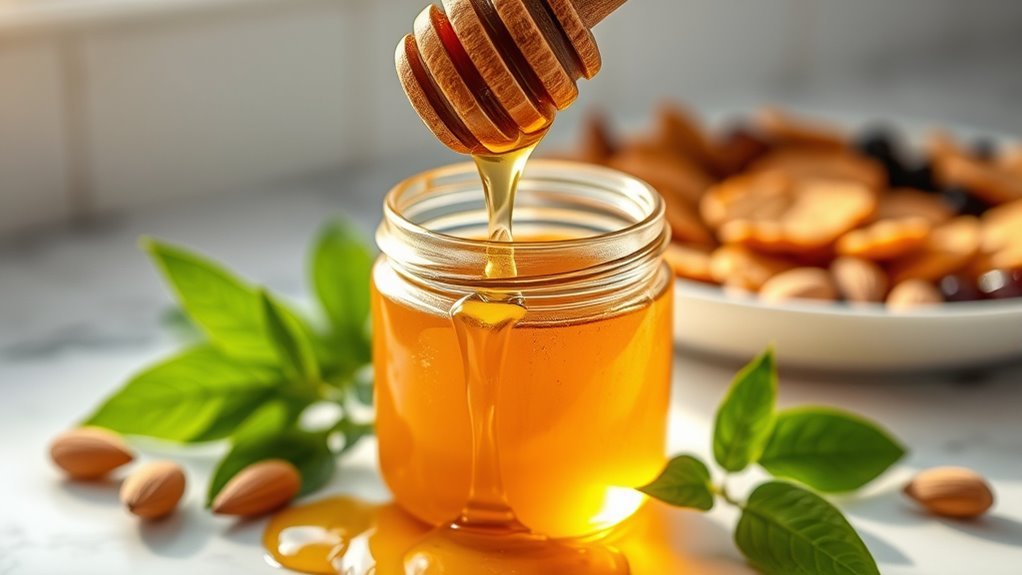

Honey can fit into a ketogenic diet, but you need to use it sparingly due to its high carbohydrate content. A tablespoon contains about 17 grams of carbs, which can quickly add up. Its moderate glycemic index may spike your blood sugar levels, making careful portion control essential. Pairing it with high-fat foods can help balance your macronutrients. If you’re curious about how to incorporate honey or explore healthier alternatives, there’s more to discover.
Understanding the Ketogenic Diet
When you plunge into the ketogenic diet, you’ll find it’s a low-carb, high-fat eating plan designed to shift your body into a state of ketosis. This process encourages your body to burn fat for fuel instead of carbohydrates, aligning with core ketogenic principles. To achieve fat adaptation, you’ll need to drastically reduce your carb intake, typically to about 20-50 grams per day, while increasing healthy fats. This metabolic shift can lead to various benefits, including improved energy levels and weight loss. However, it’s crucial to monitor your protein intake, as too much can kick you out of ketosis. Understanding these fundamentals can empower you to make informed choices, fostering a sense of freedom in your dietary journey.
The Nutritional Profile of Honey
When you look at honey’s nutritional profile, you’ll notice that its carbohydrate content is significant, primarily consisting of sugars like fructose and glucose. Additionally, honey contains small amounts of vitamins and minerals, which can contribute to your overall nutrient intake. Understanding these components is essential, especially when considering how they fit into a ketogenic diet.
Carbohydrate Content Analysis
Although honey is often praised for its natural sweetness and potential health benefits, its carbohydrate content raises concerns for those following a ketogenic diet. Primarily composed of fructose and glucose, honey contains about 17 grams of carbohydrates per tablespoon. This can greatly impact your daily carb limit, especially since keto typically allows for only 20-50 grams daily. While some may consider honey a natural sugar alternative to processed sweeteners, it still acts as a carbohydrate source that could hinder ketosis. If you’re committed to maintaining a state of ketosis, you’ll want to be cautious with honey. Exploring other sugar alternatives may be more aligned with your dietary goals, allowing you to enjoy sweetness without compromising your carb intake.
Vitamins and Minerals Overview
While honey is often considered a natural sweetener, it also offers a range of vitamins and minerals that contribute to its nutritional profile. You’ll find small amounts of essential vitamins like B vitamins, which are vital for energy metabolism, and vitamin C, known for its antioxidant properties. When it comes to minerals, honey provides calcium, potassium, and magnesium, each offering unique benefits such as supporting bone health and regulating blood pressure. While these vitamin sources and mineral benefits are not substantial compared to other foods, they highlight honey’s role beyond just sweetness. If you’re seeking a natural option, honey can complement your diet, but moderation is key, especially on a keto plan.
How Honey Affects Blood Sugar Levels

When considering honey’s impact on your blood sugar levels, it’s crucial to look at its glycemic index, which reflects how quickly it can raise your blood sugar. This rise can trigger an insulin response, affecting your overall metabolic state. Additionally, comparing honey with alternative sweeteners can help you make informed choices that align with your keto goals.
Glycemic Index Overview
How does honey stack up against other sweeteners when it comes to blood sugar levels? To assess its impact, we can look at the glycemic index (GI), which measures how quickly foods raise blood sugar. Honey has a moderate GI, typically ranging from 45 to 64, depending on its type. Here’s how it compares to common honey substitutes:
- Agave Nectar: Higher GI (around 55-75), which can spike blood sugar more quickly.
- Stevia: Low GI (0), having little to no effect on blood sugar levels.
- Maple Syrup: Moderate GI (around 54), similar to honey, but with different nutrient profiles.
Choosing sweeteners wisely is essential for maintaining stable blood sugar levels, especially on a keto diet.
Insulin Response Impact
Although honey is often praised for its natural sweetness and potential health benefits, its impact on insulin response and blood sugar levels is vital to take into account, especially for those following a keto diet. When you consume honey, your body can experience a swift rise in blood sugar due to its high glycemic index. This spike may lead to increased insulin production, which can disrupt insulin regulation. For those aiming to maintain stable blood sugar levels, this response can be counterproductive. While honey contains some nutrients, its carbohydrate content and potential to elevate blood sugar might not align with the goals of a keto lifestyle. As a result, it’s important to weigh these factors before incorporating honey into your diet.
Alternative Sweeteners Comparison
While honey may offer a natural sweetness, its impact on blood sugar levels prompts many to contemplate alternative sweeteners, especially those on a keto diet. Honey is high in carbohydrates, which can disrupt ketosis. So, considering honey alternatives could be beneficial. Here are three sweetener types you might explore:
- Stevia: A zero-calorie option derived from the stevia plant, it doesn’t raise blood sugar levels.
- Erythritol: A sugar alcohol that’s low in calories and has minimal effect on blood glucose.
- Monk Fruit: Another natural sweetener that contains no calories or carbs, making it keto-friendly.
The Role of Carbohydrates in a Keto Diet
Carbohydrates play a pivotal role in a ketogenic diet, primarily by influencing the body’s metabolic state. On a keto diet, your goal is to drastically reduce carbohydrate intake to shift your metabolism into ketosis, where fat becomes the primary energy source. Following keto guidelines, you typically limit carbs to about 20-50 grams per day, focusing on low-carb vegetable sources and avoiding high-sugar options. Not all carbohydrate sources are created equal; prioritizing fiber-rich, non-starchy vegetables can provide essential nutrients without spiking blood sugar levels. Understanding this balance is vital for maintaining ketosis and achieving your health goals. By being mindful of your carbohydrate intake, you can enjoy the freedom that comes with a well-structured ketogenic lifestyle.
Health Benefits of Honey
When you think about natural sweeteners, honey often comes to mind due to its unique flavor and potential health benefits. While it’s not keto-friendly in large amounts, incorporating small quantities can provide advantages. Here are three notable health benefits:
- Antioxidant Properties: Honey contains flavonoids and phenolic acids that help combat oxidative stress in your body.
- Soothing Effects: It’s known to soothe sore throats and coughs, making it a comforting choice during cold seasons.
- Energy Boost: Honey can provide a quick source of energy, thanks to its natural sugars, which may be beneficial before physical activities.
In moderation, this natural sweetener can offer these health benefits, enhancing your wellness journey while enjoying its delicious taste.
Alternatives to Honey for Keto
If you’re following a keto diet and looking for sweet alternatives to honey, there are several options that can satisfy your cravings without derailing your carbohydrate goals. Sugar alternatives like erythritol and stevia are popular low carb sweeteners that provide sweetness without the calories or carbs found in honey. Erythritol, a sugar alcohol, has a minimal impact on blood sugar levels, making it an excellent choice for keto. Stevia, derived from the leaves of the stevia plant, is another zero-calorie option. Monk fruit sweetener is also gaining traction, offering a natural sweetness without carbs. These alternatives can be used in various recipes or beverages, allowing you to enjoy sweetness while maintaining your keto lifestyle.
Tips for Using Honey in Moderation
Although honey is generally high in carbohydrates, it can still be incorporated into a keto diet if used wisely and in moderation. To enjoy the honey benefits while practicing portion control, consider these tips:
Incorporating honey into a keto diet is possible with mindful moderation and portion control.
- Measure Your Serving: Stick to small amounts, like a teaspoon, to keep carbs in check.
- Pair with Fats: Combine honey with fatty foods, such as nuts or cheese, to help balance the macronutrient profile.
- Limit Frequency: Use honey sparingly, perhaps only on special occasions or as a rare treat, to avoid exceeding your carb limits.
Recipes Incorporating Honey on Keto
Incorporating honey into your keto diet doesn’t have to be a challenge, especially when you have some delicious recipes at your fingertips. You can create keto-friendly recipes like honey-sweetened almond flour pancakes or a tangy honey mustard dressing for your salads. For a sweet treat, try making keto chocolate truffles with a hint of honey. If you’re concerned about sugar intake, consider honey substitutes such as stevia or erythritol, which can provide sweetness without the carbs. Remember to use honey sparingly to maintain your carb count. By integrating these recipes, you can enjoy the unique flavor of honey while adhering to your keto lifestyle, giving yourself the freedom to indulge without compromising your goals.
Making Informed Choices for Your Keto Journey
When it comes to steering your keto journey, making informed choices is pivotal to achieving your health goals. To navigate keto cravings effectively and promote mindful eating, consider these strategies:
- Educate Yourself: Understand the nutritional values of foods, focusing on net carbs, to make choices that align with your keto lifestyle.
- Plan Ahead: Prepare meals and snacks that satisfy your cravings while staying within your carb limits. This helps prevent impulsive decisions.
- Listen to Your Body: Tune into hunger cues and recognize when you’re eating out of habit rather than necessity. This fosters a more balanced approach.
Frequently Asked Questions
Can Honey Be Used in Keto Baking Recipes?
You can use honey in keto baking recipes, but it’s not the best option. Honey’s high carb content makes it a poor choice for strict keto diets. Instead, consider keto substitutes like erythritol or stevia, which provide sweetness without the carbs. These baking alternatives allow you to enjoy treats while staying within your carb limit. Experiment with these options to find the right balance for your taste and keto lifestyle.
What Is the Best Type of Honey for Keto?
When it comes to choosing honey for keto, consider raw or organic honey. Raw honey’s natural nutrients and enzymes might appeal to your health-conscious side, while organic honey guarantees purity, free from additives. However, both types contain sugars that can impact your carb count, so moderation’s key. Prioritize quality over quantity, and enjoy a drizzle occasionally to satisfy your sweetness cravings without derailing your dietary goals. Balance is the best approach for your keto journey.
How Much Honey Can I Eat on Keto?
On keto, it’s best to limit honey intake due to its high sugar content. If you’re craving sweetness, consider using honey alternatives like stevia or erythritol, which are keto-friendly sweeteners that won’t spike your blood sugar. You might enjoy a small amount of honey occasionally, but moderation is key. Always track your carb intake to stay within your daily limits, ensuring you maintain that freedom in your diet without compromising your goals.
Does Local Honey Offer Any Keto Benefits?
Local honey doesn’t offer significant keto benefits. While it’s often touted for its natural properties, it still contains sugars that can kick you out of ketosis. You might imagine indulging in a spoonful, thinking it’s a health boost, but those carbs can add up quickly. If you’re committed to keto, it’s wiser to stick with lower-carb sweeteners. Embrace that freedom to choose wisely for your health goals and maintain ketosis effectively.
Can Honey Trigger Cravings on a Keto Diet?
Yes, honey can trigger cravings on a keto diet. When you consume honey, its natural sugars can spike your blood glucose levels, leading to insulin release. This process might prompt cravings for more carbs or sugary foods, disrupting your ketosis. If you’re seeking freedom in your diet, it’s essential to be cautious with honey. Staying mindful of how it affects your cravings can help maintain your keto goals and overall well-being.
Frequently Asked Questions
1. Is honey keto-friendly?
Honey is generally not considered keto-friendly due to its high sugar content. While it does have some health benefits, it contains approximately 17 grams of carbohydrates per tablespoon, which can easily exceed the daily carb limit on a ketogenic diet. Therefore, it’s best to avoid honey or use it sparingly if you’re strictly adhering to a keto lifestyle.
2. What are the potential benefits of honey on a keto diet?
Although honey is not typically recommended on a keto diet, it does offer some potential benefits. Honey has antibacterial and antioxidant properties, which can contribute to overall health. If consumed in very small amounts, some people find it can help with digestion or provide a quick energy boost. However, it’s important to consume it within the context of your overall carbohydrate intake.
3. Are there any alternatives to honey that are keto-friendly?
Yes, there are several keto-friendly alternatives to honey. Popular options include stevia, erythritol, monk fruit sweetener, and allulose. These sweeteners provide sweetness without the high carbohydrate content found in honey, making them suitable for a ketogenic diet. Always check labels for any hidden carbs, especially in processed sweeteners.
4. Can I use honey in moderation while on keto?
If you choose to include honey in your diet, moderation is key. It’s essential to monitor your total daily carbohydrate intake to ensure that you remain within your target range. Using honey occasionally as a flavoring or in recipes may be acceptable for some individuals, but it’s crucial to consider how it fits into your overall meal plan.
5. What should I consider when deciding to include honey in my keto lifestyle?
When considering honey in your keto lifestyle, think about your individual carbohydrate tolerance, weight loss goals, and how often you plan to consume it. Additionally, consider the glycemic index of honey, which can cause a spike in blood sugar levels. If you’re not reaching your goals or experiencing negative effects, it may be best to avoid honey altogether.
References
- https://www.ncbi.nlm.nih.gov/pmc/articles/PMC6831340/
- https://www.healthline.com/nutrition/keto-diet-foods
- https://www.webmd.com/diet/obesity/what-is-the-keto-diet
- https://www.mayoclinic.org/healthy-lifestyle/nutrition-and-healthy-eating/expert-answers/keto-diet/faq-20202542
- https://www.verywellfit.com/the-keto-diet-4154524
- https://www.cdc.gov/healthyweight/assessing/bmi/adult_bmi/index.html
- https://www.nutrition.org.uk/healthyliving/basics/the-keto-diet.html