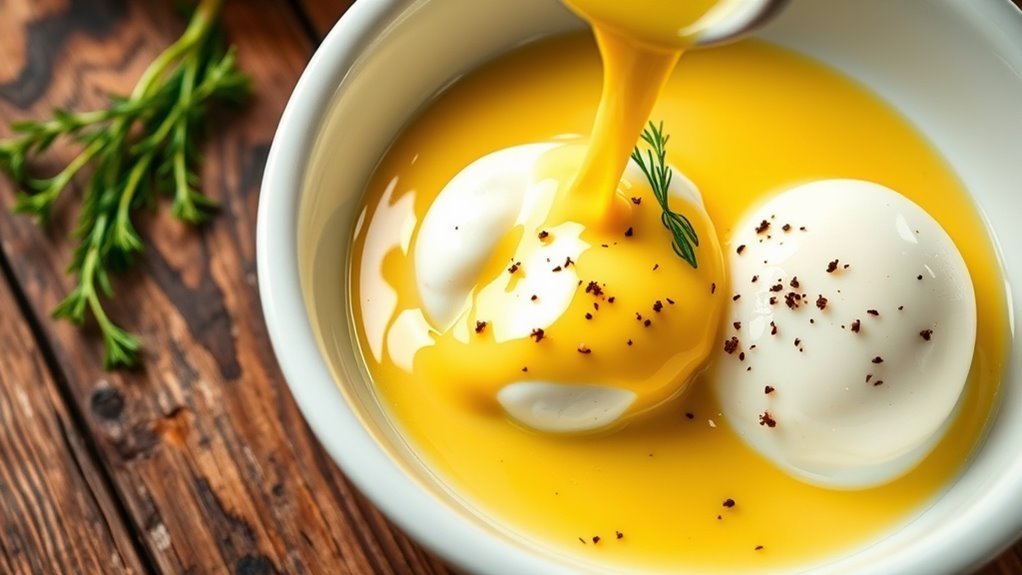

Yes, Hollandaise sauce is keto-friendly. It’s high in healthy fats and low in carbohydrates, typically containing about 1g of carbs per serving. This makes it an excellent choice for low-carb diets. The sauce’s rich flavor enhances various dishes while aligning with your dietary goals. However, portion control is important to manage calorie intake. To maximize its keto benefits, consider modifications using quality ingredients. There’s more to discover about its uses and variations that can elevate your meals.
Understanding Hollandaise Sauce Ingredients
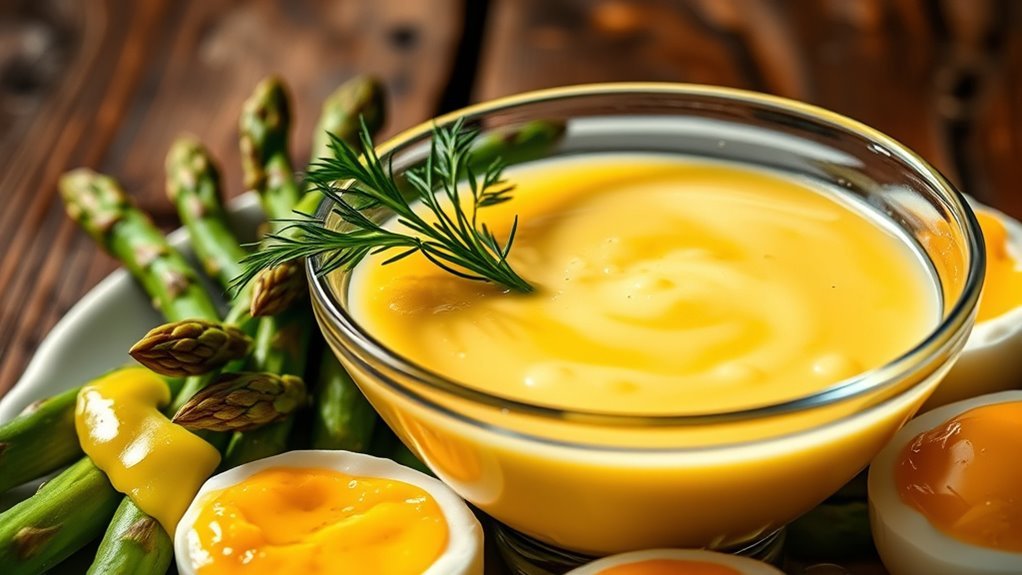
Hollandaise sauce, a classic emulsion, is made primarily from three ingredients: egg yolks, butter, and lemon juice or vinegar. Its history dates back to the 17th century, with origins often attributed to French cuisine. Understanding the ingredients is essential for mastering the culinary techniques involved in making it. The egg yolks provide richness and act as an emulsifier, while butter delivers a velvety texture. The acidity from lemon juice or vinegar balances the sauce, enhancing its flavor profile. Knowing how to incorporate these elements properly can elevate your dishes, allowing you to enjoy the freedom of culinary creativity. Whether drizzled over eggs Benedict or steamed vegetables, Hollandaise sauce remains a staple in kitchens worldwide.
Nutritional Profile of Hollandaise Sauce

When considering the nutritional profile of Hollandaise sauce, it’s crucial to look at its macronutrient breakdown. This rich sauce is primarily made of butter and egg yolks, which greatly influence its fat and calorie content. Understanding how these ingredients impact the overall nutrition can help you determine if it fits into your keto diet.
Macronutrient Breakdown
A rich and creamy delight, Hollandaise sauce boasts a unique nutritional profile that makes it an interesting choice for those following a keto diet. With macronutrient ratios typically favoring fats, a standard serving contains about 10 grams of fat, 1 gram of carbohydrates, and negligible protein. This translates to a high-fat, low-carb option, aligning well with keto principles.
However, keep in mind that sauce variations might alter these ratios slightly. For instance, adding herbs or spices could introduce minimal carbs, but overall, Hollandaise remains a solid keto-friendly choice. By understanding its macronutrient breakdown, you can enjoy this decadent sauce while maintaining your dietary goals without feeling restricted.
Ingredient Impact
While many may not consider the ingredients of Hollandaise sauce, they play an essential role in its nutritional profile. Understanding ingredient sourcing can help you appreciate its impact on a keto diet. Here are three key components:
- Egg Yolks: Rich in healthy fats and nutrients, they provide a creamy texture while being low in carbs.
- Butter: A key fat source, it contributes to the sauce’s richness; opt for grass-fed for added benefits.
- Lemon Juice: Adds flavor without significant carbs, though some variations may incorporate additional ingredients.
Be mindful of sauce variations, as they can alter the nutritional content. When you stick to traditional recipes, Hollandaise can fit nicely into your keto lifestyle, allowing you to enjoy its luxurious flavor without guilt.
Is Hollandaise Sauce Low in Carbs?
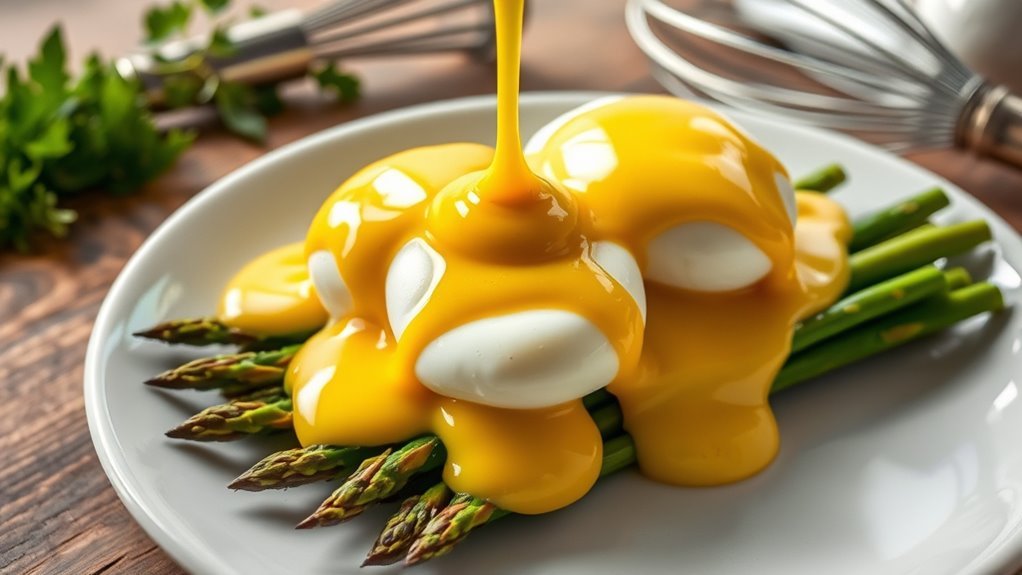
Hollandaise sauce is indeed low in carbs, making it a suitable option for those following a keto diet. With its rich flavor and creamy texture, you can enjoy it without worrying about exceeding your carb limits.
Here’s a quick look at its carb content compared to other sauces:
| Sauce | Carb Content (per tablespoon) |
|---|---|
| Hollandaise Sauce | 0.3g |
| Ketchup | 4g |
| Barbecue Sauce | 3.5g |
| Ranch Dressing | 1g |
| Soy Sauce | 1g |
When considering dietary choices, Hollandaise sauce stands out as a keto-friendly option that fits seamlessly into your low-carb lifestyle. Enjoy its deliciousness without compromising your goals!
The Role of Fats in a Keto Diet
Fats play an essential role in a keto diet, serving as the primary source of energy when carbohydrate intake is considerably reduced. Embracing healthy fats allows you to harness the benefits of fat metabolism, leading to improved fat absorption and energy levels. Here are three key points about fats in a keto diet:
- Fat Types: Focus on healthy fat sources like avocados, nuts, and olive oil to support overall health.
- Fat Functions: Dietary fats help maintain fat balance, ensuring your body can efficiently utilize stored energy.
- Energy Production: By prioritizing fats, you shift your energy production from glucose to ketones, promoting a state of ketosis.
Understanding the role of dietary fats is vital for maximizing your keto experience and achieving your health goals.
Potential Health Benefits of Hollandaise Sauce
If you’re looking to enhance your meals with a rich, creamy sauce, you might be pleased to know that Hollandaise sauce offers several potential health benefits, particularly for those following a keto diet. This sauce is high in healthy fats, which can support heart health and brain health. Its vitamin content, especially vitamins A, D, and E, plays a role in nutrient absorption and overall wellness. Additionally, Hollandaise’s antioxidant properties may provide anti-inflammatory effects, contributing to better digestive support. With its versatility in culinary uses, you can easily elevate various dishes while enjoying these health benefits. Incorporating this sauce into your meals not only satisfies your taste buds but also supports your well-being on your keto journey.
Modifying Hollandaise Sauce for Keto
If you’re looking to modify Hollandaise sauce for a keto diet, you’ll want to contemplate ingredient substitutions that reduce carbs while maintaining flavor. Exploring low-carb thickening options can help achieve that creamy texture without the extra sugars. Additionally, incorporating flavor enhancements can elevate your sauce, ensuring it remains delicious and satisfying.
Ingredient Substitutions for Keto
While traditional Hollandaise sauce is rich in flavor and texture, modifying it for a keto diet involves simple yet effective ingredient substitutions. By making a few adjustments, you can create keto-friendly alternatives that maintain taste without compromising your dietary goals. Here are three easy swaps:
- Butter: Use grass-fed butter for a richer flavor and added nutrients.
- Egg Yolks: Opt for fresh, organic egg yolks for a creamy consistency and healthy fats.
- Lemon Juice: Replace regular lemon juice with fresh-squeezed for a burst of flavor without added sugars.
These sauce variations not only keep your Hollandaise keto-friendly but also enhance its nutritional profile. Enjoy your sauce guilt-free!
Low-Carb Thickening Options
To achieve the desired creamy texture in your keto-friendly Hollandaise sauce, incorporating low-carb thickening options can be essential. You might consider using xanthan gum or guar gum, both of which act as low carb thickeners without adding unnecessary carbs. Just a small amount can greatly improve the sauce’s texture without compromising its flavor. Another option is using cream cheese, which not only thickens but also adds a rich creaminess. If you prefer a more natural approach, pureed cauliflower can work well, providing a smooth consistency while remaining low-carb. These keto-friendly alternatives can help you enjoy a delicious Hollandaise sauce while sticking to your dietary goals, ensuring you don’t feel deprived in your culinary adventures.
Flavor Enhancements for Keto
When you’re crafting a keto-friendly Hollandaise sauce, enhancing its flavor can elevate your dish without adding carbs. Here are some effective ways to modify your sauce:
- Spice Combinations: Consider adding smoked paprika or cayenne for a kick. These spices not only enhance flavor but also provide health benefits.
- Herb Additions: Fresh herbs like dill, tarragon, or chives can bring a vibrant taste to your sauce, complementing the richness of the butter and yolks.
- Acid Balance: A splash of lemon juice or white wine vinegar can brighten the sauce, creating a delightful balance without the carb load.
Delicious Ways to Use Hollandaise Sauce
Hollandaise sauce isn’t just for eggs Benedict; it can elevate a variety of dishes with its creamy, buttery flavor. You can drizzle it over steamed asparagus or roasted Brussels sprouts for a decadent side that complements your keto meal. Consider using it as a dip for grilled shrimp or even as a luxurious topping for a cauliflower steak. For creative pairings, try mixing in herbs like dill or tarragon for sauce variations that brighten the flavor. You can also blend in spicy ingredients, like sriracha, to add a kick. With hollandaise, you’re not just enhancing flavor; you’re giving your dishes an indulgent touch that aligns perfectly with your culinary freedom on a keto diet.
Common Misconceptions About Hollandaise Sauce
Ever wondered why some people shy away from hollandaise sauce? There are several misconceptions clarified that can affect your view of this delicious sauce. Here are three common myths:
- It’s Only for Eggs Benedict: Many think hollandaise is limited to breakfast dishes, but its sauce versatility makes it perfect for vegetables, fish, and meats too.
- It’s Unhealthy: While it’s rich in fats, hollandaise can be part of a balanced diet, especially in moderation.
- It’s Difficult to Make: With the right technique, you can whip up hollandaise easily at home, allowing you to enjoy it guilt-free.
Final Thoughts on Hollandaise Sauce and Keto
While some may hesitate to include hollandaise sauce in their keto diet, it can actually be a delightful addition, provided you use it mindfully. This rich, buttery sauce boasts a high-fat content, aligning well with keto compatibility. When made from scratch, hollandaise is free from sugars and artificial ingredients, making it a wholesome choice for your meals. Just be cautious with portion sizes, as the calories can add up quickly. Pairing it with low-carb vegetables or proteins can enhance your keto experience without derailing your goals. Ultimately, don’t shy away from enjoying hollandaise; instead, embrace it as a flavorful way to enrich your keto lifestyle while savoring that freedom to indulge in delicious food.
Frequently Asked Questions
Can I Use Olive Oil Instead of Butter in Hollandaise Sauce?
You can use olive oil instead of butter in Hollandaise sauce, but it’ll change the sauce’s texture. Olive oil offers health benefits, such as healthy fats and antioxidants, making it a nutritious alternative. However, the sauce might be less creamy and more fluid compared to traditional butter-based versions. If you’re okay with a lighter texture, give it a try; just remember it’ll have a different flavor profile, too! Enjoy experimenting!
How Long Can I Store Homemade Hollandaise Sauce?
You can store homemade Hollandaise sauce in the fridge for about 2 days. Its shelf life is relatively short due to the eggs and butter used. To maximize freshness, keep it in an airtight container and reheat gently before serving. Avoid storing it for longer, as the risk of foodborne illness increases. If you want to enjoy the sauce later, consider making smaller batches to guarantee you’re always getting the best flavor.
Is There a Vegan Alternative to Hollandaise Sauce?
Yes, there are several vegan alternatives to hollandaise sauce that embody the essence of this classic dish. You can whip up a creamy blend using silken tofu, nutritional yeast, and lemon juice, creating a plant-based option that mirrors the texture and flavor. Other vegan substitutes include cashew cream or avocado-based sauces, offering delicious freedom for your meals. These alternatives not only cater to a vegan diet but also provide a rich, satisfying experience.
What Dishes Pair Well With Hollandaise Sauce?
Hollandaise sauce pairs beautifully with various dishes. You can’t go wrong with Eggs Benedict, where poached eggs and Canadian bacon come together perfectly. It also enhances asparagus dishes and steamed vegetables, adding richness. Grilled salmon or crab cakes topped with hollandaise elevate your meal’s flavor. Don’t forget roasted potatoes or breakfast bowls; they soak up the sauce nicely. Each combination creates a delightful culinary experience that highlights the sauce’s creamy, tangy goodness.
Can Hollandaise Sauce Be Frozen for Later Use?
Yes, you can freeze Hollandaise sauce, but it’s like trying to catch smoke with your bare hands; the texture may change. For effective freezing techniques, pour it into ice cube trays for portion control. When you’re ready to use it, thaw using gentle methods like placing it in the fridge overnight or using a warm water bath. Just remember, it might separate, so whisk it back together before serving for the best results.
Frequently Asked Questions about Hollandaise Sauce and Keto
1. Is Hollandaise sauce keto-friendly?
Yes, Hollandaise sauce is considered keto-friendly. It is primarily made from egg yolks, butter, and lemon juice, which are all low in carbohydrates. The high-fat content aligns well with the ketogenic diet’s macronutrient goals, making it a suitable choice for those following a keto lifestyle.
2. What are the main ingredients in Hollandaise sauce?
The main ingredients in traditional Hollandaise sauce include egg yolks, clarified butter, lemon juice, and a pinch of salt. Some variations may include Dijon mustard or cayenne pepper for added flavor, but these ingredients also maintain the sauce’s low carbohydrate profile.
3. How can I make a keto version of Hollandaise sauce?
To make a keto version of Hollandaise sauce, you can follow a simple recipe that includes 3 large egg yolks, 1 tablespoon of lemon juice, and 1/2 cup of melted clarified butter. Whisk the egg yolks and lemon juice together over low heat, gradually adding the melted butter while whisking continuously until the sauce thickens. Season with salt to taste. This recipe adheres to keto principles by keeping the carbohydrate count low.
4. Can I use alternative ingredients in Hollandaise sauce for a keto diet?
Yes, you can substitute certain ingredients to suit your dietary needs while keeping the sauce keto-friendly. For instance, you can use ghee instead of clarified butter for a different flavor and added nutrients. Additionally, if you want a dairy-free option, avocado oil can be used as a substitute for butter, while still maintaining the creamy texture of the sauce.
5. What dishes pair well with keto Hollandaise sauce?
Keto Hollandaise sauce pairs wonderfully with a variety of dishes. It is traditionally served with eggs Benedict, but you can also enjoy it over steamed asparagus, grilled vegetables, or pan-seared salmon. It adds a rich, creamy flavor that complements low-carb meals perfectly, making it an excellent addition to your keto diet.
References
- https://en.wikipedia.org/wiki/Hollandaise_sauce
- https://www.healthline.com/nutrition/hollandaise-sauce-keto
- https://www.ncbi.nlm.nih.gov/pmc/articles/PMC6520976/
- https://www.mayoclinic.org/healthy-lifestyle/nutrition-and-healthy-eating/expert-answers/keto-diet/faq-20419359
- https://www.cdc.gov/nutrition/resources-publications/healthy-eating.html
- https://www.hsph.harvard.edu/nutritionsource/healthy-eating-plate/
- https://www.verywellfit.com/hollandaise-sauce-nutrition-facts-5182294
- https://www.nutrition.gov/
- https://www.foodnetwork.com/recipes/articles/what-is-hollandaise-sauce
- https://www.sciencedirect.com/topics/food-science/hollandaise-sauce