

Yes, feta cheese is keto-friendly! With about 1.2 grams of carbs per ounce, it’s a low-carb, nutrient-rich option. Feta is high in protein and calcium, making it a healthy choice for supporting muscle growth and bone health. However, be mindful of its sodium content, which can affect blood pressure. If you’re curious about how to incorporate feta into your meals effectively, there are plenty of delicious ideas that fit well within a keto diet.
Nutritional Profile of Feta Cheese

When considering the nutritional profile of feta cheese, you’ll find it offers a unique blend of flavors and nutrients that can fit well into a keto diet. Originating from Greece, feta has a rich history and comes in several varieties, including sheep’s milk, goat’s milk, or a blend of both. These origins contribute to its distinct tangy flavor and crumbly texture. Feta is relatively high in protein and calcium while being lower in carbohydrates than many other cheeses. This makes it a great choice for those looking to maintain a low-carb lifestyle. Additionally, it contains beneficial nutrients like vitamin B12 and phosphorus, enhancing its appeal as a versatile ingredient in various keto-friendly dishes. Furthermore, feta cheese is low in carbohydrates, making it an excellent option to incorporate into your meals while adhering to a keto diet.
Carbohydrate Content and Keto Compatibility
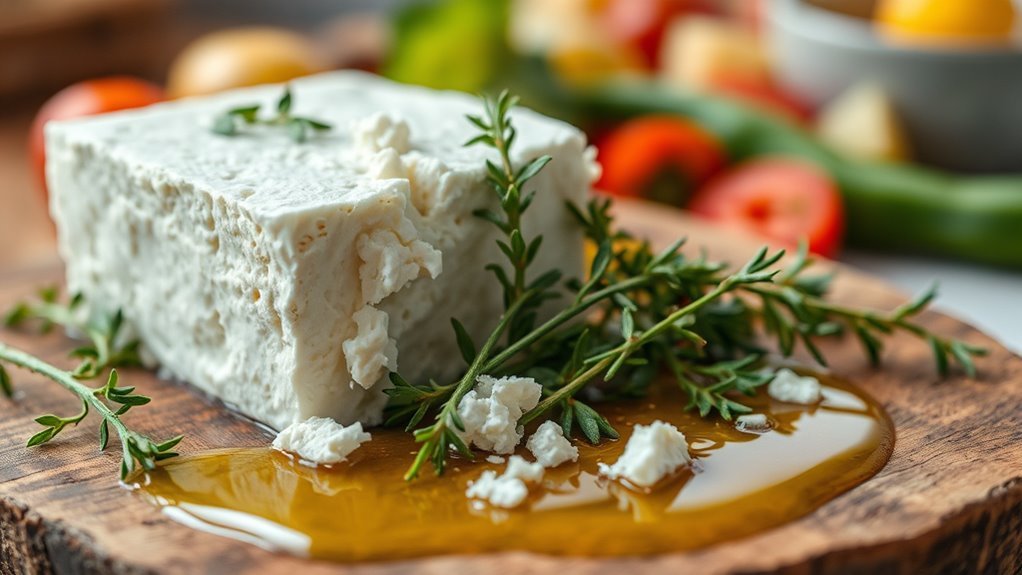
Given feta cheese’s nutritional profile, its carbohydrate content is a key factor for those following a keto diet. With only about 1.2 grams of carbs per ounce, feta is a suitable cheese option for your low-carb lifestyle. When considering carbohydrate sources, it is crucial to balance your intake with keto-friendly foods.
- Feta’s lower carb count compared to many other cheeses makes it a smart choice.
- It’s versatile, pairing well with salads and vegetables.
- Consider keto alternatives like cheddar or goat cheese if you’re looking for variety.
- Always check labels, as some feta brands may have additives that increase carbs.
Incorporating feta can keep your meals flavorful while aligning with your keto goals. Additionally, moderation is key when integrating any dairy product into your diet to maintain your daily carb allowance.
Health Benefits of Feta Cheese

Feta cheese isn’t just a tasty addition to your meals; it also packs a nutritional punch. It’s rich in essential nutrients, offers probiotic benefits that can support gut health, and contains calcium for stronger bones. By incorporating feta into your diet, you can enjoy these health benefits while keeping your meals flavorful.
Nutrient Density Comparison
Nutrient density plays an essential role in determining the health benefits of any food, and feta cheese is no exception. This tangy cheese offers a variety of crucial nutrients that support your overall well-being while fitting into a keto lifestyle.
Consider these nutrient sources and their benefits:
- Calcium: Supports bone health and muscle function.
- Protein: Aids in muscle repair and growth.
- Vitamin B12: Essential for energy production and brain health.
- Phosphorus: Plays a key role in nutrient absorption and cellular function.
Incorporating feta cheese into your diet can enhance nutrient absorption, providing a flavorful way to enjoy the benefits of a highly nutrient-dense food while maintaining your health goals. Additionally, feta cheese is low in carbohydrates, making it a suitable option for those adhering to a ketogenic diet.
Probiotic Properties
Many people don’t realize that feta cheese can be a source of beneficial probiotics, which are live microorganisms that contribute to gut health. These probiotics can help maintain a balanced gut microbiome, potentially enhancing digestion and nutrient absorption. The presence of these probiotics in feta may offer probiotic benefits, such as reducing the risk of gastrointestinal issues like bloating or constipation. Additionally, a healthy gut can influence your overall well-being, including immune function and mental health. While feta cheese isn’t the only source of probiotics, adding it to your diet can be a tasty way to support your gut health without sacrificing flavor. So, if you’re looking for a delicious addition to your meals, feta cheese might be a great choice!
Bone Health Support
While you might think of feta cheese primarily for its flavor, it also plays a significant role in supporting bone health. Feta is rich in calcium, a crucial mineral for maintaining bone density and ensuring proper calcium absorption in your body. Including feta in your diet can help counteract bone loss, especially as you age.
- Provides a good source of calcium.
- Contains phosphorus, which works with calcium for bone strength.
- Offers protein, essential for muscle mass and bone support.
- Is lower in fat compared to other cheeses, making it a heart-healthy choice.
Incorporating feta cheese into your meals not only enhances flavor but also contributes to strong, healthy bones. Additionally, feta cheese is high in calcium, making it an excellent choice for those looking to support their bone health. Enjoy it in moderation for maximum benefits!
How to Incorporate Feta Cheese Into a Keto Diet
Incorporating feta cheese into your keto diet can be both delicious and nutritious. You can whip up revitalizing salad recipes featuring feta, or pair it with low-carb snacks like olives and vegetables for a satisfying treat. These options not only enhance flavor but also help you meet your dietary goals. Additionally, feta cheese is low in carbs (0.4g per serving), making it a great option for maintaining your keto goals.
Feta Salad Recipes
Feta cheese can be a delicious and nutritious addition to your keto diet, especially when paired with fresh, low-carb ingredients in salads. You can create a variety of feta salads that not only satisfy your taste buds but also align with your dietary goals. Drawing on Greek influence, consider these tasty options:
- Mediterranean Feta Salad: Combine cucumbers, cherry tomatoes, olives, and feta with a drizzle of olive oil.
- Spinach and Feta Salad: Toss fresh spinach, avocado, and crumbled feta for a nutrient-packed meal.
- Roasted Vegetable Feta Salad: Mix roasted zucchini, bell peppers, and feta for a hearty dish.
- Cabbage Feta Slaw: Shred cabbage, add feta, and toss with a tangy dressing for a crunchy side.
Incorporating feta cheese into your meals can enhance nutritional balance while keeping your salads keto-friendly! These salads can keep your meals exciting while staying keto-friendly!
Snack Pairing Ideas
When you’re looking for satisfying snacks that fit a keto lifestyle, feta cheese can be a versatile option to include. You can whip up delicious feta dips by blending feta with olive oil, herbs, and spices. These dips pair wonderfully with crunchy veggie pairings like cucumber slices, bell pepper strips, or radishes, all of which keep your carb intake low while providing essential nutrients. For a quick snack, crumble feta over a bowl of olives or mix it into a salad of leafy greens. You can also enjoy feta-stuffed avocados for a creamy, filling treat. By incorporating feta in these ways, you’ll not only satisfy your cravings but also stay aligned with your keto goals. Additionally, feta cheese is low in carbs and high in fat, making it an ideal choice for a keto diet.
Feta Cheese vs. Other Cheeses on Keto
How does feta cheese stack up against other cheeses on a keto diet? Feta’s unique flavors and cheese textures make it a popular choice for those following a keto lifestyle. Compared to other cheeses, it offers a lower calorie count and a moderate fat content, which can fit nicely into your daily macros.
- Feta varieties can include sheep’s, goat’s, or cow’s milk, each providing different taste profiles.
- It tends to be crumbly, making it easy to sprinkle over salads or dishes.
- Feta contains fewer carbs than many other cheeses, making it a favorable option.
- Its strong flavor means a little goes a long way, enhancing your meals without excess calories. Additionally, incorporating balanced dietary fat sources can help you maintain overall health while enjoying feta cheese on your keto journey.
Potential Drawbacks of Feta Cheese
While feta cheese can be a delicious addition to a keto diet, it’s important to contemplate some potential drawbacks. One significant concern is its sodium content; feta is often high in salt, which can lead to increased blood pressure or water retention if consumed excessively. If you’re sensitive to sodium, you’ll want to monitor your intake closely. Additionally, if you have lactose intolerance, feta might pose a challenge. Although it’s lower in lactose than many other cheeses, it still contains enough to trigger symptoms in some individuals. Balancing these factors against your personal health goals is essential for enjoying feta while staying true to your keto lifestyle. Always listen to your body and adjust accordingly. Furthermore, it’s crucial to ensure you’re getting enough key vitamins and minerals to support overall health while on a keto diet.
Recipes Featuring Feta Cheese for Keto Meal Planning
Despite the potential drawbacks of feta cheese, it can be a flavorful and versatile ingredient for your keto meal planning. You can easily incorporate it into various dishes, enhancing taste while keeping carbs low. Here are some delicious recipes to evaluate:
- Feta Dip: Blend feta with olive oil, lemon juice, and herbs for a creamy dip perfect for veggies.
- Feta Wraps: Use lettuce leaves to wrap sliced turkey, cucumber, and feta for a revitalizing meal.
- Mediterranean Salad: Combine feta with olives, tomatoes, and spinach for a quick, nutritious salad.
- Stuffed Peppers: Fill bell peppers with a mixture of feta, ground meat, and spices for a satisfying dish.
Additionally, feta cheese pairs well with low-carb vegetables that can boost your meal’s nutrient profile. These options allow you to enjoy feta while staying committed to your keto lifestyle.
Frequently Asked Questions
Is Feta Cheese Suitable for Lactose Intolerant Individuals on Keto?
Yes, feta cheese can be suitable for lactose intolerant individuals on keto, as it contains lower lactose levels compared to other cheeses. However, if you’re highly sensitive, you might want to explore lactose-free alternatives or other keto cheese options like cheddar or mozzarella. These options can still fit well into your keto diet, allowing you to enjoy cheese without discomfort while keeping your carb intake in check.
Can Feta Cheese Be Part of a Dairy-Free Keto Diet?
Feta cheese isn’t suitable for a dairy-free keto diet, but there are plenty of dairy alternatives you can explore. Options like nutritional yeast, cashew cheese, or almond-based spreads can serve as tasty keto substitutes. They can provide similar flavors and textures without the lactose. It’s essential to check the carb content of these alternatives to guarantee they fit within your keto goals. Embrace the freedom to experiment with various options that align with your dietary needs!
How Long Does Feta Cheese Last After Opening?
Once you open feta cheese, it typically lasts about five to seven days in the fridge, but proper storage can help maintain its freshness. To extend its life, keep it submerged in brine or olive oil, and store it in an airtight container. Always check for signs of spoilage, like an off smell or mold, before using. With these storage tips, you can enjoy your feta for a bit longer!
What Is the Best Type of Feta Cheese for Keto?
The best type of feta cheese for keto is typically full-fat feta. It’s lower in carbs and higher in healthy fats, making it perfect for keto recipes. When you’re looking for alternatives, consider goat cheese or cream cheese, as they also fit well within keto guidelines. These options can provide similar flavors and textures in your favorite dishes, allowing you to enjoy freedom in your meal planning while sticking to your dietary goals.
Is Feta Cheese Gluten-Free?
Yes, feta cheese is gluten-free, making it a suitable choice for those with gluten sensitivities. Most feta varieties, crafted primarily from sheep’s or goat’s milk, contain minimal ingredients. When examining feta nutrition, you’ll find it’s low in carbs and rich in protein, aligning well with many dietary preferences. Just verify you check labels for any additives, as some flavored varieties might introduce gluten. Enjoy feta freely in your meals without worry!
References
- https://www.healthline.com/nutrition/what-is-keto-diet
- https://www.ncbi.nlm.nih.gov/pmc/articles/PMC7033108/
- https://www.wisewell.com/blogs/news/feta-cheese-keto-friendly
- https://www.verywellfit.com/feta-cheese-nutrition-facts-4687958
- https://www.medicalnewstoday.com/articles/324120
- https://www.dietdoctor.com/low-carb/food-list/cheese
- https://www.ketogenic.com/faq/what-cheeses-are-keto-friendly
- https://www.heart.org/en/healthy-living/healthy-eating/eat-smart/nutrition-basics/cheese-and-your-health

