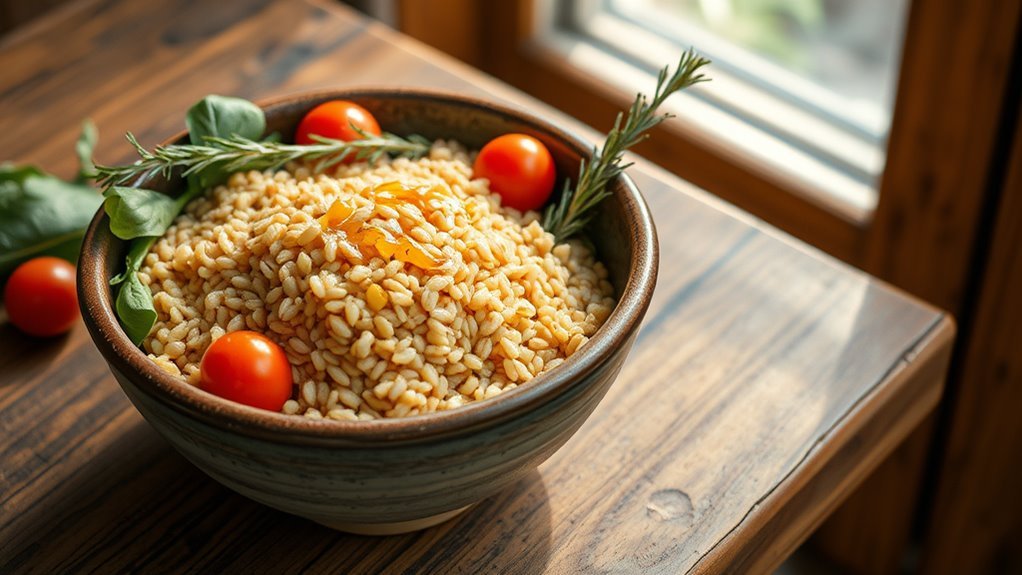

Farro isn’t considered keto-friendly due to its high carbohydrate content, which can disrupt ketosis and hinder fat burning. One cup of cooked farro contains about 34 grams of carbs, which can easily exceed your daily carb allowance on a ketogenic diet. While it offers nutritional benefits like fiber and protein, you’ll want to monitor portion sizes if you choose to incorporate it into a low-carb lifestyle. Discover more about suitable alternatives and meal ideas that fit your dietary goals.
Understanding Farro and Its Nutritional Profile
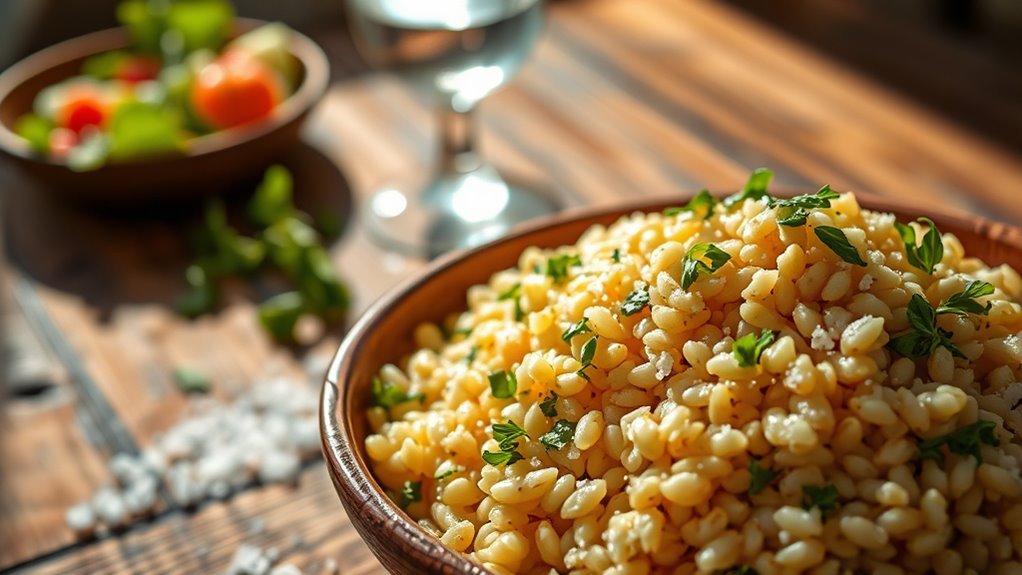
Farro, an ancient grain with a chewy texture and nutty flavor, has gained popularity for its nutritional benefits. Originating in the Fertile Crescent, this grain has been a staple for centuries, providing essential nutrients. Packed with fiber, protein, and various vitamins, farro supports digestive health and helps keep you feeling full longer. Its low glycemic index stabilizes blood sugar levels, making it a smart choice for those seeking balanced nutrition. Additionally, farro’s antioxidants may contribute to reducing inflammation and promoting heart health. Incorporating farro into your diet not only enhances your meals but also connects you to a rich culinary history. Embracing farro means choosing a wholesome, versatile grain that nourishes both body and spirit.
Carb Content of Farro: A Closer Look
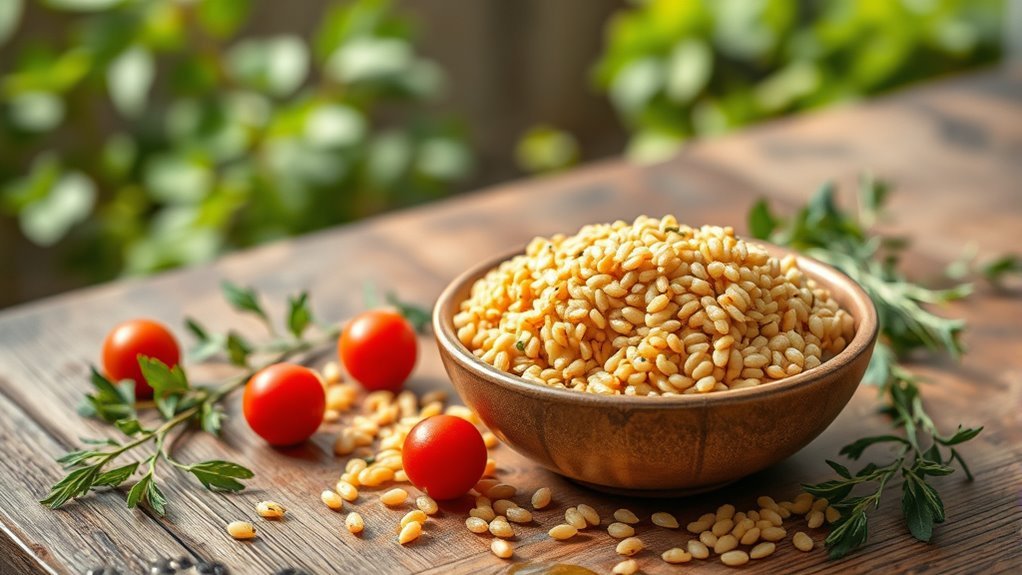
When considering a grain for your diet, it’s essential to examine its carbohydrate content, and farro is no exception. A one-cup serving of cooked farro contains about 34 grams of carbohydrates. While this might seem high, it also offers numerous farro benefits, such as fiber and protein, which can help you feel fuller longer. If you’re looking for creative ways to incorporate farro into your meals, farro recipes abound—think salads, soups, or grain bowls that can enhance your culinary experience. Just keep an eye on portion sizes if you’re mindful of carbs. Ultimately, understanding farro’s carb content allows you to make informed choices that align with your dietary goals while enjoying its unique flavor and texture.
The Impact of Farro on Ketosis
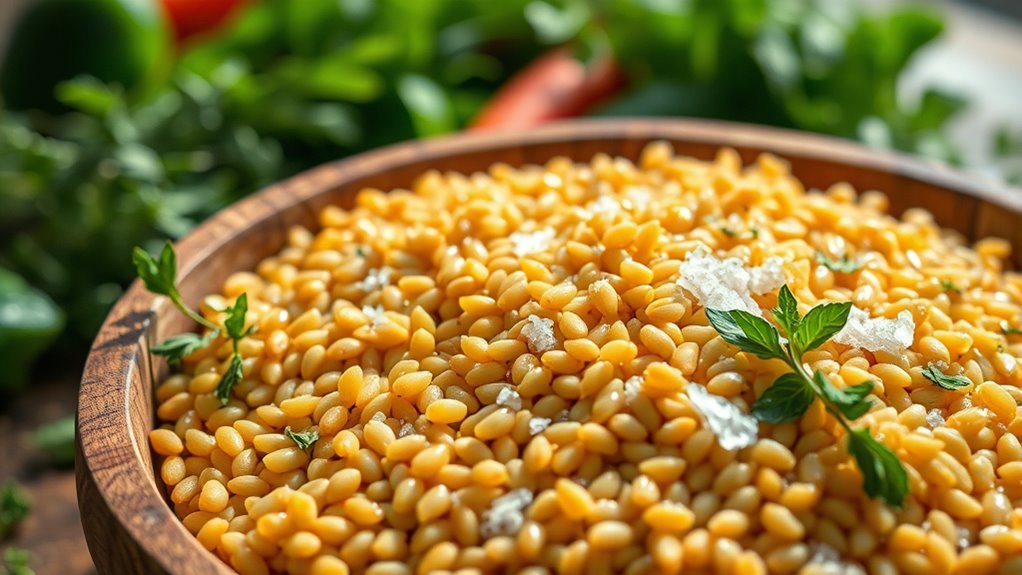
While many people seek to maintain a ketogenic diet to promote fat burning and improve metabolic health, incorporating grains like farro can pose challenges due to their carbohydrate content. Farro digestion can lead to an increase in glucose levels, which may hinder your ability to achieve ketosis. Here’s a quick breakdown of the impact:
| Aspect | Effect on Ketosis |
|---|---|
| Carbohydrate Content | High |
| Fiber Content | Moderate |
| Glycemic Index | Moderate to High |
| Ketosis Effects | Disruptive |
| Alternative Grains | Limited Options |
If you’re aiming for ketosis, it’s essential to monitor how farro fits into your daily carb allowance, as its consumption could slow down your progress.
Alternatives to Farro for a Keto Diet
If you’re looking for alternatives to farro that align with a keto diet, several options can help you maintain your low-carb goals without sacrificing variety. Consider using cauliflower rice, which is low in carbs and versatile for many dishes. Another excellent choice is konjac rice, made from the konjac plant, providing a unique texture while being virtually carb-free. Shredded zucchini or spiralized vegetables can also serve as great low-carb substitutes in salads or stir-fries. For those seeking a grain-like experience, try hemp hearts or chia seeds; they’re packed with healthy fats and protein while keeping your carb count low. These keto grains can enhance your meals, ensuring you enjoy flavorful and satisfying options on your keto journey. Incorporating leafy greens into your meals can further boost nutrition and help reduce overall carb intake.
Incorporating Farro in a Low-Carb Lifestyle
Although farro is not typically considered a staple in low-carb diets due to its higher carbohydrate content, it can still be incorporated thoughtfully into a balanced low-carb lifestyle. You can enjoy farro in moderation, pairing it with low-carb vegetables or proteins to keep your meals satisfying yet nutrient-dense. Consider creating farro recipes that balance flavors and textures, such as a vibrant salad with leafy greens and roasted vegetables. To further enhance your low-carb approach, limit portion sizes of farro and use it as a complement to low carb grains like cauliflower rice or zucchini noodles. This way, you can savor farro’s unique taste while staying aligned with your dietary goals. Enjoy the freedom to experiment and find the right balance!
Frequently Asked Questions
Is Farro Gluten-Free?
No, farro isn’t gluten-free. It’s an ancient grain that contains gluten, making it unsuitable for those with gluten sensitivities or celiac disease. However, farro nutrition offers various benefits, including high fiber and protein content, which can support digestive health and muscle maintenance. If you’re looking for gluten-free alternatives, consider quinoa or rice. These options provide similar benefits without the gluten, offering you more dietary freedom while still being nutritious.
Can I Eat Farro on a Paleo Diet?
You can’t eat farro on a paleo diet as it’s a grain and grains aren’t allowed under paleo guidelines. Instead, consider farro substitutes like cauliflower rice or zucchini noodles, which fit better within the paleo framework. These options provide a similar texture without the carbs, letting you enjoy meals while adhering to your dietary choices. Remember, focusing on whole foods is key to maintaining the paleo lifestyle.
What Dishes Can I Make With Farro?
You can whip up a variety of delicious dishes with farro that’ll tantalize your taste buds. Imagine a revitalizing farro salad, tossed with vibrant veggies and a zesty dressing, perfect for a warm day. Or picture a hearty farro soup, simmered with rich broth and your favorite proteins, warming you from the inside out. The nutty flavor and chewy texture of farro make it an exciting base for endless culinary creations.
How Is Farro Different From Other Grains?
Farro differs from other grains primarily in its nutritional profile and cooking methods. It’s rich in fiber, protein, and essential nutrients, making it a hearty choice. While many grains can be quick-cooking, farro typically requires longer cooking times, especially for whole grain varieties. Its nutty flavor and chewy texture set it apart, allowing you to create diverse dishes. You’ll find it versatile, fitting well in salads, soups, or as a side dish.
Where Can I Buy Farro?
You won’t believe how easy it is to find farro! Many grocery stores, especially health food stores, carry it in their grains section. You can also check online retailers for a wider variety. Once you’ve got it, you’ll want to explore farro recipes that highlight its nutty flavor and impressive farro nutrition, packed with fiber and protein. It’s a versatile ingredient that can elevate any meal, giving you freedom in your cooking!
References
- https://en.wikipedia.org/wiki/Farro
- https://www.healthline.com/nutrition/farro
- https://www.ncbi.nlm.nih.gov/pmc/articles/PMC6516393/
- https://www.nutrition.gov/topics/basic-nutrition/grains
- https://www.verywellfit.com/what-is-farro-4157391
- https://www.jamesbeard.org/recipes/farro
- https://www.medicalnewstoday.com/articles/321236