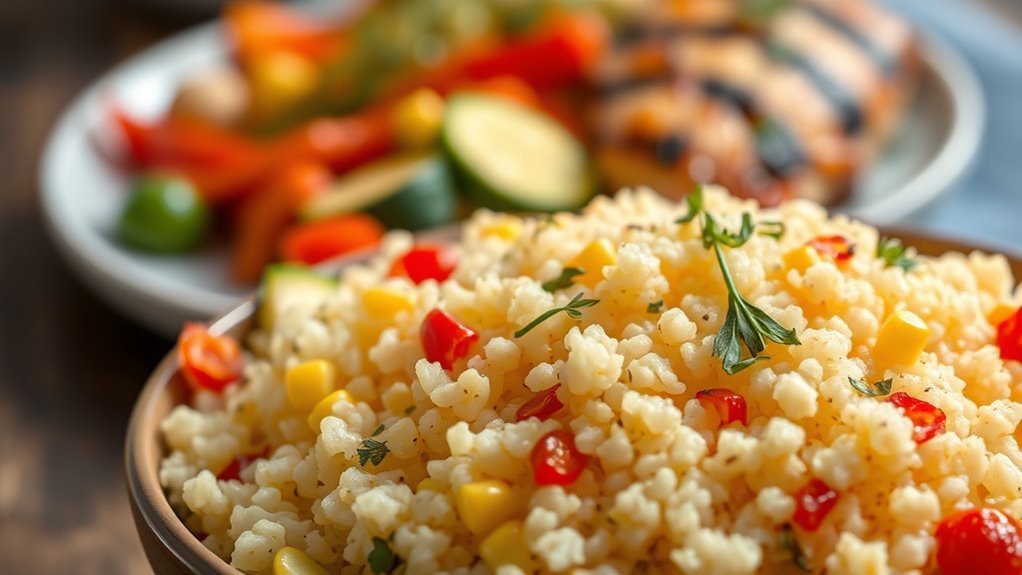

Couscous isn’t considered keto-friendly due to its high carbohydrate content, with around 36 grams per cup. This amount can easily disrupt ketosis, especially since keto dieters typically limit their intake to 20-50 grams of carbs daily. While couscous has some nutritional benefits like protein and vitamins, its carbs make it less suitable for a low-carb diet. However, there are various alternatives and tips for incorporating low-carb options that might work for you.
Understanding Couscous: What Is It?
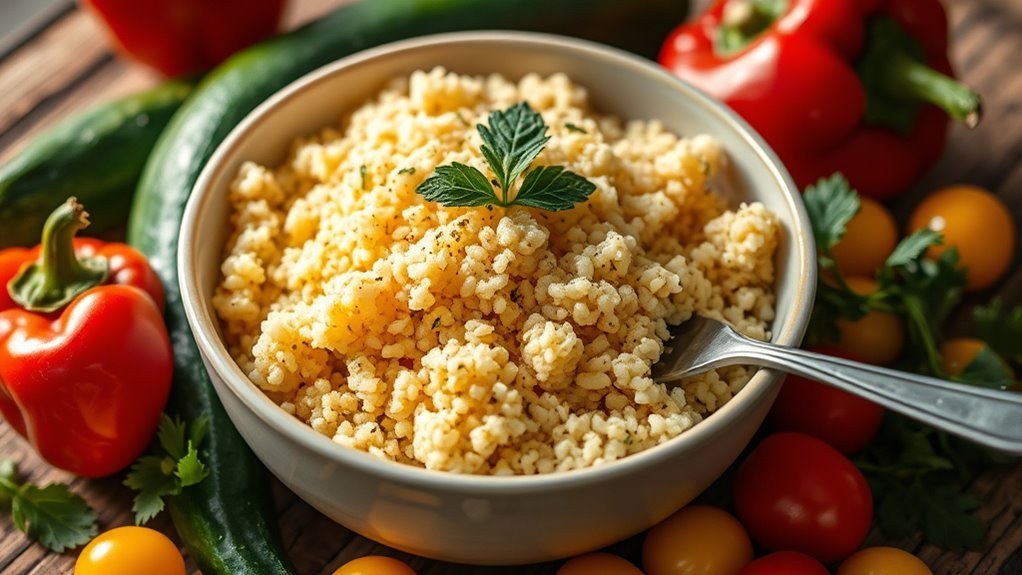
Couscous, often mistaken for a grain, is actually a type of pasta made from semolina flour, originating from North Africa. Its roots trace back to the Berber communities, where it became a staple food due to its versatility and ease of preparation. You can use couscous in various culinary applications, from salads to side dishes, or even as a base for stews. It absorbs flavors well, making it a popular choice in Mediterranean and Middle Eastern cuisines. Additionally, couscous cooks quickly, requiring just boiling water and a short resting period. This makes it an accessible option for those seeking to experiment with different flavors and textures in their meals. Understanding couscous’s origins and culinary uses opens up a world of culinary creativity.
Nutritional Profile of Couscous
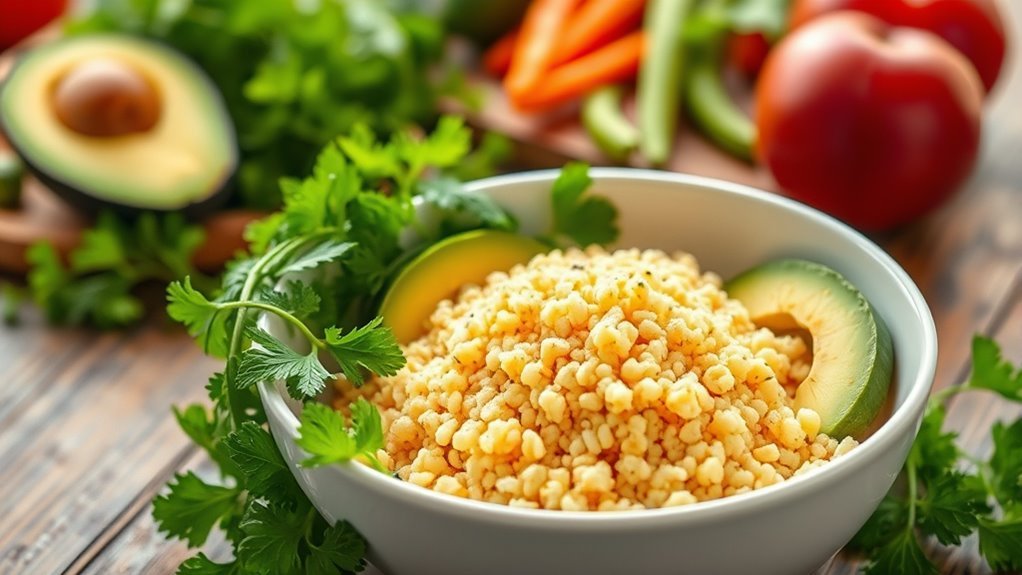
As a pasta made from semolina flour, couscous has a distinct nutritional profile worth examining. It’s relatively low in fat and offers a good source of carbohydrates, providing energy for your daily activities. One of the couscous benefits is its protein content, which can help in muscle repair and growth. Additionally, it contains vitamins and minerals such as B vitamins, iron, and magnesium. However, couscous drawbacks include its high carbohydrate content, making it less suitable for those on a strict low-carb or ketogenic diet. It’s also low in fiber unless you opt for whole grain varieties, which might impact digestion. Understanding these aspects helps you make informed choices about incorporating couscous into your meals.
Carbohydrate Content and Ketosis
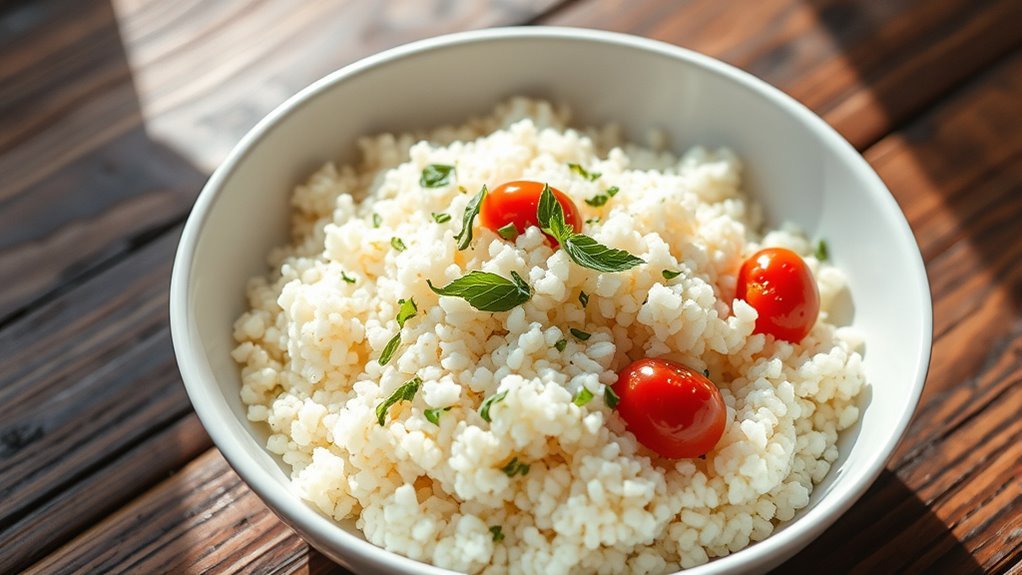
With approximately 36 grams of carbohydrates per cup, couscous can pose a challenge for those aiming to maintain ketosis. When you’re on a keto diet, your daily carbohydrate intake typically ranges from 20 to 50 grams, making couscous’s carbohydrate impact significant. Consuming even a small serving might push you over your limit, hindering ketosis maintenance. This state, where your body burns fat for fuel instead of carbs, requires strict monitoring of carb sources. While couscous is a tasty option, its high carb content can lead to increased blood sugar levels, disrupting your ketogenic journey. Consequently, if you’re committed to staying in ketosis, you’ll need to evaluate alternatives that align better with your low-carb goals.
Keto-Friendly Alternatives to Couscous
While couscous may be a popular choice in many cuisines, there are several keto-friendly alternatives that can help you stay within your carbohydrate limits. Zucchini noodles and spaghetti squash are fantastic substitutes that provide a satisfying texture without the carbs. Cauliflower rice is another excellent option, adding volume and nutrients to your meals. If you’re looking for something more unique, konjac or shirataki noodles are low-carb and can absorb flavors beautifully. For those interested in baking, almond flour and flaxseed meal make great bases for keto-friendly dishes. You can also sprinkle hemp hearts on salads for added nutrition. These alternatives not only keep you on track but also offer delicious ways to enjoy your favorite dishes.
Tips for Incorporating Low-Carb Grains
When you’re looking to incorporate low-carb grains into your meals, consider alternatives like cauliflower rice or shirataki noodles that offer similar textures with fewer carbs. It’s also essential to practice portion control, as even low-carb grains can add up in calories if consumed in large amounts. Balancing these options with plenty of vegetables can help you maintain a nutritious, keto-friendly diet.
Choose Alternative Options
Although shifting to a low-carb diet can seem intimidating, incorporating alternative grains can make the process smoother and more enjoyable. Here are some great options to explore:
- Quinoa: Packed with protein and fiber, quinoa benefits include being a complete protein source, which helps keep you satisfied.
- Cauliflower Rice: A versatile substitute, cauliflower rice can be used in stir-fries or as a base for various dishes, providing a low-carb option.
- Shirataki Noodles: These low-calorie noodles made from konjac root are perfect for pasta dishes without the carbs.
- Zucchini Noodles: Spiralized zucchini offers a fresh, low-carb alternative to traditional pasta, adding nutrients and flavor.
Embrace these alternatives to enjoy delicious meals while staying on track with your low-carb journey.
Portion Control Strategies
Incorporating low-carb grains into your meals can be a rewarding experience, but managing portions is key to staying within your dietary goals. Start by measuring portion sizes with a scale or measuring cups to avoid overindulgence. Aim for a serving around 1/4 to 1/2 cup, depending on your daily carb allowance. Practicing mindful eating can also help—focus on the flavors and textures of your food, which may make you feel satisfied with smaller amounts. Pair low-carb grains with plenty of vegetables and proteins to create balanced meals that are filling without excessive carbs. Remember, it’s about finding a sustainable way to enjoy your meals while respecting your dietary choices. Enjoy the freedom of choice with thoughtful portion control!
Final Thoughts on Couscous and a Keto Diet
When considering couscous on a keto diet, it’s essential to assess its carb content and explore suitable alternatives. You might find low-carb options that fit your meal plan better while still enjoying the flavors you love. Ultimately, if you choose to incorporate couscous, doing so wisely and in moderation can help you maintain your keto goals.
Carb Content Overview
While you may be tempted to include couscous in your meals due to its versatility and flavor, it’s essential to evaluate its carb content, especially on a keto diet. Couscous, which comes in various types like whole wheat and pearl, can offer some health benefits but often contains high carbs that could impact your ketosis. Consider these key points:
- Whole wheat couscous has about 36 grams of carbs per cup.
- Traditional couscous contains around 37 grams per cup.
- Couscous varieties may provide fiber and protein, but not enough for a keto-friendly option.
- Even small servings can disrupt your low-carb goal.
Ultimately, if you’re committed to a keto lifestyle, it’s best to explore alternatives that align better with your dietary needs.
Alternatives to Couscous
If you’re looking for alternatives to couscous that fit within a keto framework, there are several options that can satisfy your cravings without compromising your carb intake. Cauliflower rice is a popular couscous substitute, providing a similar texture and only a fraction of the carbs. Zucchini noodles are another excellent choice, offering a fresh and versatile grain alternative. You might also consider shirataki noodles, made from konjac yam, which are extremely low in calories and carbs. For a nutty flavor, try hemp seeds or flaxseeds as a base for salads and bowls. These couscous substitutes allow you to enjoy meals freely while adhering to your keto lifestyle, making it easier to thrive without sacrificing taste or satisfaction.
Incorporating Couscous Wisely
Though traditional couscous is high in carbs, incorporating it wisely into a keto diet can be achieved with careful planning and moderation. Here are some tips to help you enjoy couscous while staying on track:
- Limit portions: Keep your serving size small to reduce carb intake.
- Pair with low-carb ingredients: Use couscous recipes that include plenty of vegetables and protein to balance your meal.
- Choose whole grain: Opt for whole wheat couscous, which might offer more fiber and nutrients.
- Meal planning: Schedule couscous meals infrequently, allowing for better control over your overall carb consumption.
Frequently Asked Questions
Can I Have Couscous on a Cheat Day?
On a cheat day, you can definitely enjoy couscous, but it’s important to evaluate its carb count. Couscous is a pasta made from wheat, so it’s relatively high in carbohydrates compared to other options. If you’re tracking your intake, just be mindful of how it fits into your overall daily goals. Enjoying it in moderation can satisfy cravings while still allowing you to indulge responsibly on your cheat day.
What Brands Offer Keto-Friendly Couscous Alternatives?
When you’re exploring couscous substitutes, you’ve got some tasty low carb options. Brands like Banza offer chickpea-based couscous, while Palmini presents a heart of palm alternative. Explore brands like Explore Cuisine for their edamame or black bean noodles, which can also serve as great substitutes. Each option gives you the freedom to enjoy a satisfying meal without compromising your dietary goals. Remember to check the nutrition labels for carb counts!
How Does Couscous Affect Blood Sugar Levels?
Couscous has a moderate glycemic index, typically ranging from 60 to 70, which means it can cause blood sugar spikes, particularly if consumed in large amounts. If you’re sensitive to changes in blood sugar, it’s wise to monitor your portion sizes. Pairing couscous with protein or healthy fats can help stabilize your blood sugar levels, allowing you to enjoy it without the drastic ups and downs that some carbohydrates can cause.
Can I Use Couscous in Meal Prepping?
Imagine a pantry filled with neatly stacked containers, each brimming with vibrant, flavorful meals ready to go. You can definitely use couscous in meal prepping! For couscous storage, keep it in an airtight container to maintain its freshness. When prepping, remember to pair it with protein and veggies for a balanced meal. Meal prepping tips include cooking in batches, so you’ve got a delicious, quick option at your fingertips throughout the week.
What Are the Best Spices to Pair With Couscous?
When you’re looking to enhance couscous flavor profiles, consider experimenting with various spice combinations. Cumin adds warmth, while coriander brings a citrusy note. For a kick, try red pepper flakes or smoked paprika. If you prefer a fresh touch, parsley or mint can brighten the dish. Don’t forget garlic and onion powder for depth! Mix and match these spices to find what works best for your taste, making your couscous meals exciting and flavorful.
-
Is couscous keto-friendly?
-
Couscous is not considered keto-friendly due to its high carbohydrate content. A typical serving of couscous can contain around 36 grams of carbs, making it difficult to fit into a strict ketogenic diet, which typically limits daily carb intake to around 20-50 grams. If you’re following a keto diet, it’s advisable to avoid couscous and opt for lower-carb alternatives like cauliflower rice or zucchini noodles.
-
What are some low-carb alternatives to couscous?
-
There are several low-carb alternatives to couscous that can fit well into a ketogenic diet. Some popular options include cauliflower rice, which is made by grating cauliflower into rice-sized pieces, and shirataki noodles, which are made from konjac yam and are very low in carbs. Other alternatives include spiralized zucchini or spaghetti squash, both of which provide a similar texture without the high carb count.
-
Can I occasionally include couscous in a keto diet?
-
While it’s best to avoid couscous on a ketogenic diet due to its high carb content, some individuals on a more flexible low-carb diet might choose to include small portions occasionally. However, this should be done mindfully, taking into account the overall daily carb limit. It’s important to monitor how your body responds and adjust your intake accordingly.
-
What nutritional benefits does couscous offer?
-
Couscous is a source of carbohydrates and provides some nutritional benefits, including protein, fiber, and several vitamins and minerals such as B vitamins, iron, and magnesium. However, due to its high carbohydrate content, these benefits may not outweigh the drawbacks for those following a strict ketogenic diet.
-
How can I replace couscous in my favorite recipes?
-
To replace couscous in recipes, consider using cauliflower rice or other low-carb grains, such as hemp hearts or chia seeds, which can add texture while keeping the dish low in carbs. You can also use quinoa in moderation, as it has a lower glycemic index than couscous, but keep in mind it still contains carbs. Experimenting with spices and cooking techniques can help maintain the flavor profile of your dishes.
References
- https://www.healthline.com/nutrition/keto-diet-foods#grains-and-pasta
- https://www.ncbi.nlm.nih.gov/pmc/articles/PMC6520975/
- https://www.thekitchn.com/couscous-nutrition-229055
- https://www.webmd.com/diet/obesity/what-is-the-keto-diet
- https://www.medicalnewstoday.com/articles/323145
- https://www.eatright.org/food/nutrition/dietary-guidelines/what-is-the-ketogenic-diet
- https://www.hopkinsmedicine.org/health/wellness-and-prevention/the-ketogenic-diet-what-you-need-to-know

