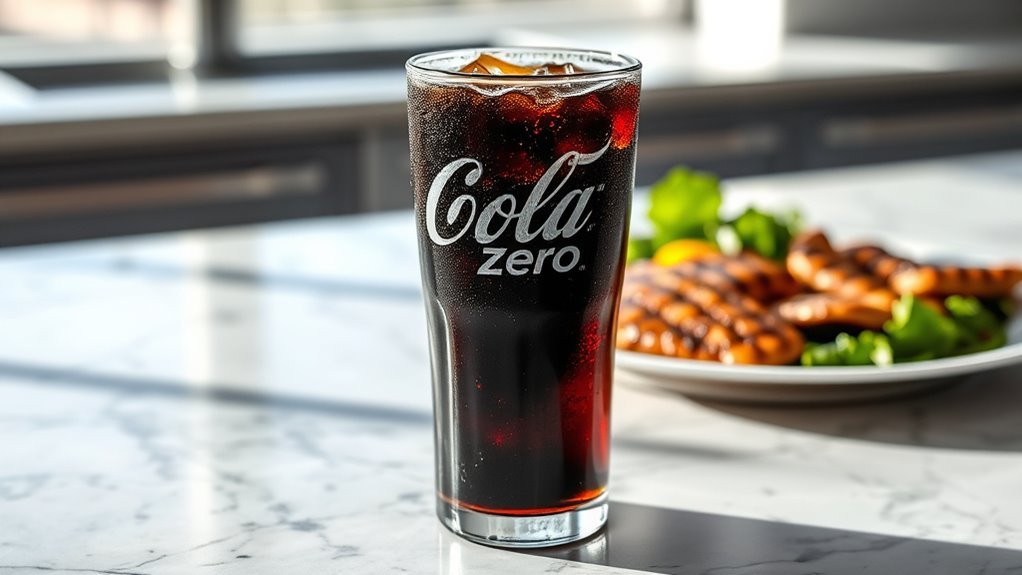

Coke Zero can fit into your keto diet since it has zero sugar and calories. However, it’s important to reflect that artificial sweeteners might affect your insulin response, potentially impacting ketosis. Some people might experience increased cravings after consuming it. Moderation is key, as you assess how your body reacts. If you’re looking for alternative options or want to explore more about managing your keto journey, there’s plenty more to discover.
Understanding the Ingredients in Coke Zero
When you’re considering whether Coke Zero fits into your keto lifestyle, it’s vital to understand its ingredients. Coke Zero contains no sugar, relying on sugar substitutes like aspartame and acesulfame potassium to provide sweetness without adding carbs. These substitutes are generally recognized as safe, but individual tolerance can vary. Additionally, Coke Zero has a caffeine content similar to regular Coke, which can offer a quick energy boost. For those on keto, caffeine may enhance mental clarity, but moderation is key. Knowing how these ingredients affect your body helps you make informed choices. Ultimately, Coke Zero can be a suitable option, but it’s important to listen to your body and make sure it aligns with your overall health goals. However, be mindful of the potential side effects of consuming artificial sweeteners, as they may impact your keto journey differently.
Nutritional Information Breakdown
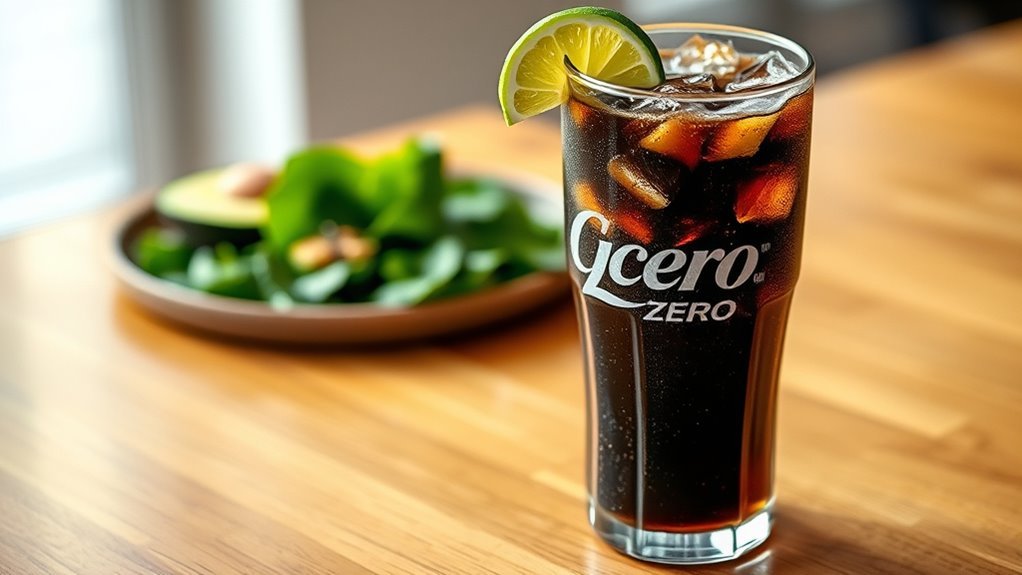
Understanding the ingredients in Coke Zero is just the beginning; looking at its nutritional information can provide further insights into its suitability for a keto diet. Coke Zero contains no calories, no sugars, and no carbs, making it an attractive option for those following a ketogenic lifestyle.
Coke Zero offers zero calories, sugars, and carbs, making it a keto-friendly beverage choice.
Here’s a quick breakdown of its nutritional aspects:
- Caffeine Content: Coke Zero has about 34mg of caffeine per 12oz can, providing a mild energy boost.
- Flavor Profile: Its unique blend of artificial sweeteners mimics the classic cola taste without the carbs.
- Additives: It includes phosphoric acid and potassium benzoate, which are generally recognized as safe for most.
These factors contribute to its appeal, but moderation is key. Additionally, being mindful of low-carb options can help maintain your commitment to a keto diet.
The Concept of Ketosis
Although many people associate the ketogenic diet with weight loss, the underlying concept of ketosis is essential to its effectiveness. Ketosis occurs when your body shifts from using glucose for energy to burning fat, leading to various ketosis benefits, such as improved mental clarity and sustained energy levels. However, achieving and maintaining ketosis can present certain challenges. You might experience fatigue, irritability, or cravings as your body adapts to this new energy source. It’s important to navigate these challenges mindfully, ensuring you’re consuming the right balance of healthy fats and proteins. Understanding ketosis can empower you to make informed choices about your diet, paving the way for a lifestyle that promotes freedom and well-being while adhering to your goals. Additionally, being aware of how alcohol metabolism affects ketosis can help you make better dietary choices.
Can Diet Soda Impact Ketosis?
When considering whether diet soda can impact ketosis, it’s important to look at the effects of artificial sweeteners on your body. Some studies suggest that these sweeteners may trigger an insulin response, which could potentially affect your ketosis state. Additionally, staying hydrated and maintaining electrolyte balance is essential, so you’ll want to assess how diet sodas fit into your overall hydration strategy. Moreover, understanding the role of insulin in ketosis can help you make informed choices about your beverage consumption.
Artificial Sweeteners Effects
Many people on a ketogenic diet wonder if the artificial sweeteners found in diet sodas, like Coke Zero, can disrupt their state of ketosis. While these sweeteners don’t contain carbs, their effects on your body can be complex.
- Some studies suggest artificial sweeteners may influence cravings and appetite.
- Others indicate potential long-term health implications, like gut microbiome changes.
- Individual responses can vary, with some experiencing no negative effects. Moderation is key when incorporating these sweeteners into your diet.
Ultimately, moderation is key. If you enjoy Coke Zero, it may not necessarily kick you out of ketosis, but it’s important to stay mindful of how it affects your overall health and diet. Listening to your body is essential for maintaining your keto lifestyle.
Insulin Response Considerations
The impact of diet sodas like Coke Zero on insulin response is a significant consideration for those following a ketogenic diet. While Coke Zero contains no sugar and minimal calories, its artificial sweeteners may still influence your body’s insulin sensitivity. Some studies suggest that these sweeteners could lead to an increase in insulin levels, potentially affecting glucose levels and disrupting ketosis. However, the evidence isn’t entirely conclusive, and responses can vary from person to person. If you’re keen on maintaining ketosis, it’s wise to monitor how your body reacts to Coke Zero and similar products. Ultimately, understanding your own insulin response is key to making informed choices that align with your health goals while enjoying the freedom of a keto lifestyle. Additionally, it’s important to consider that artificial sweeteners may have long-term effects on appetite and cravings, which can impact your overall dietary success.
Hydration and Electrolytes
While staying hydrated is vital on a ketogenic diet, the role of diet sodas like Coke Zero in your hydration strategy can be a bit complex. While Coke Zero contains no calories or sugar, it also lacks necessary electrolytes. This can impact your electrolyte balance, especially when you’re in ketosis.
Consider these points:
- Caffeine Content: It may act as a diuretic, potentially leading to increased fluid loss.
- Sodium Levels: Diet sodas often have higher sodium, which can affect hydration if consumed excessively.
- Artificial Sweeteners: They can sometimes disrupt gut health, which is important for nutrient absorption.
Ultimately, while Coke Zero can be a revitalizing option, it shouldn’t replace water or electrolyte-rich beverages in your hydration strategies. Additionally, relying solely on artificial sweeteners may lead to cravings that could undermine your ketogenic goals.
Potential Health Effects of Coke Zero
Although Coke Zero is marketed as a zero-calorie alternative to regular soda, its potential health effects warrant careful consideration. While it may seem like a guilt-free choice, some studies suggest that artificial sweeteners could be linked to various health risks, including metabolic issues and gut health concerns. You might find the long-term effects of consuming these sweeteners still unclear, as research is ongoing. Some individuals report cravings or increased appetite after consuming these drinks, which could hinder your dietary goals. Ultimately, it’s crucial to weigh the convenience of Coke Zero against these possible health drawbacks and to listen to your body’s responses. Additionally, it’s worth noting that carbohydrate restriction plays a significant role in maintaining ketosis, so monitoring all food and drink intake is essential. Making informed choices can help you maintain a balanced lifestyle while pursuing your health goals.
Alternatives to Coke Zero on a Keto Diet
For those looking to maintain a keto diet, exploring alternatives to Coke Zero can be beneficial, especially if you’re concerned about the potential health effects of artificial sweeteners. You might want options that still satisfy your craving for flavor without compromising your carb intake. Here are some alternatives to evaluate:
- Sparkling Water: Naturally flavored, it provides hydration without added sugars.
- Unsweetened Iced Tea: Rich in antioxidants and can offer a caffeine boost without artificial sweeteners.
- Keto-Friendly Soft Drinks: Brands like Zevia provide flavor alternatives with natural sweeteners, while still being mindful of caffeine effects. Additionally, consider options that maintain hydration levels to support overall well-being on your keto journey.
These options can keep your tastebuds happy while you navigate your keto journey.
Making Informed Choices While on Keto
When you’re on a keto diet, understanding the guidelines is essential for staying in ketosis. You should pay attention to ingredient breakdowns, as some additives can impact your progress. Making informed choices helps you enjoy your favorite beverages while supporting your dietary goals. Additionally, being aware of low carbohydrate foods can help you choose drinks that align with your keto lifestyle.
Understanding Keto Guidelines
As you commence a ketogenic diet, understanding the guidelines is essential for making informed choices that align with your health goals. The keto principles revolve around minimizing carbohydrates and increasing dietary fats, which helps your body enter a state of ketosis. Here are some key considerations:
- Focus on whole, nutrient-dense foods to maintain health and energy.
- Prioritize healthy fats, such as avocados, nuts, and olive oil, while avoiding trans fats.
- Stay hydrated and monitor your electrolyte intake to prevent imbalances.
Ingredients Breakdown
Understanding the ingredients in products like Coke Zero is essential for making informed choices on a ketogenic diet. This beverage boasts a unique flavor profile, enhanced by artificial sweeteners that don’t spike your blood sugar. While it’s calorie-free, it’s still important to take into account what’s inside.
Here’s a breakdown of key ingredients:
| Ingredient | Purpose | Notes |
|---|---|---|
| Carbonated Water | Base of the drink | Essential for fizziness |
| Artificial Sweeteners | Sweetness without sugar | Zero calories, keto-friendly |
| Caffeine | Flavor enhancement | Moderate caffeine content |
| Flavoring Agents | Taste profile | Adds complexity to flavor |
Being aware of these elements allows you to enjoy Coke Zero while staying aligned with your keto lifestyle.
Impact on Ketosis
While indulging in Coke Zero might seem harmless for those on a ketogenic diet, it’s important to contemplate how it can impact your state of ketosis. Although Coke Zero contains no sugar or calories, its artificial sweeteners may still pose some ketosis implications.
Consider these points:
- Insulin Response: Some studies suggest that artificial sweeteners can trigger insulin release, which may hinder ketosis.
- Cravings: Coke Zero might stimulate cravings for sweet foods, making it harder to stick to your keto plan.
- Individual Variation: Everyone’s body reacts differently; monitor your ketone levels when incorporating it into your diet.
Ultimately, moderation is key. Stay informed and listen to your body to make the best choices for your keto journey.
Frequently Asked Questions
Does Coke Zero Contain Any Calories or Sugar?
Coke Zero has zero calories and no sugar, making it a popular choice for those watching their caloric content. Notably, studies show that about 40% of Americans opt for sugar alternatives like aspartame or acesulfame potassium found in diet sodas. While Coke Zero can satisfy your craving for a fizzy drink, it’s essential to reflect on how these sugar substitutes may affect your overall health and dietary choices. Enjoy it in moderation!
Can I Drink Coke Zero While Fasting?
Yes, you can drink Coke Zero while fasting, as it contains no calories or sugar. However, it’s important to contemplate how artificial sweeteners may affect your fasting benefits. Some studies suggest they could trigger cravings or disrupt your metabolic processes. When making beverage choices during fasting, prioritize water or herbal teas for the best results. Ultimately, it’s about finding what works for you while maintaining the freedom of your fasting journey.
Is Coke Zero Gluten-Free?
Coke Zero is like a invigorating breeze on a hot day—it’s gluten-free. The ingredients in Coke Zero include carbonated water, artificial sweeteners, and flavorings, none of which contain gluten. When it comes to Coke Zero’s nutrition, it’s low in calories and free from gluten-related ingredients, making it a suitable choice for those avoiding gluten. So, you can sip away without worry, enjoying your drink while embracing your freedom from gluten.
What Is the Caffeine Content in Coke Zero?
Coke Zero contains about 34 mg of caffeine per 12 oz can. This moderate caffeine content can provide a boost in energy and focus, but if you’re sensitive to caffeine or looking for alternatives, consider options like herbal teas or caffeine-free sodas. While caffeine can enhance alertness, too much might lead to jitters. Balance is key, so if you enjoy Coke Zero, just be mindful of your overall caffeine intake throughout the day.
Are There Any Artificial Sweeteners in Coke Zero?
Yes, Coke Zero contains artificial sweeteners. Specifically, it uses aspartame and acesulfame potassium to provide a sweet taste without the calories of sugar. These sweeteners are popular in many diet sodas, including Coke Zero, allowing you to enjoy a revitalizing beverage while managing your sugar intake. While some people have concerns about artificial sweeteners, research shows they’re generally recognized as safe when consumed in moderation. So, you can enjoy Coke Zero without guilt!
References
- https://www.healthline.com/nutrition/coke-zero-keto-friendly
- https://www.medicalnewstoday.com/articles/coke-zero-nutrition
- https://www.livescience.com/coke-zero-keto
- https://www.verywellfit.com/coke-zero-and-keto-5111096
- https://www.nutrition.gov/topics/nutrition-101/nutrition-labels-and-you
- https://www.ncbi.nlm.nih.gov/pmc/articles/PMC6469770/
- https://www.webmd.com/diet/obesity/news/20200803/can-drinking-diet-soda-make-you-gain-weight
- https://www.scientificamerican.com/article/are-zero-calorie-sweeteners-bad-for-you/