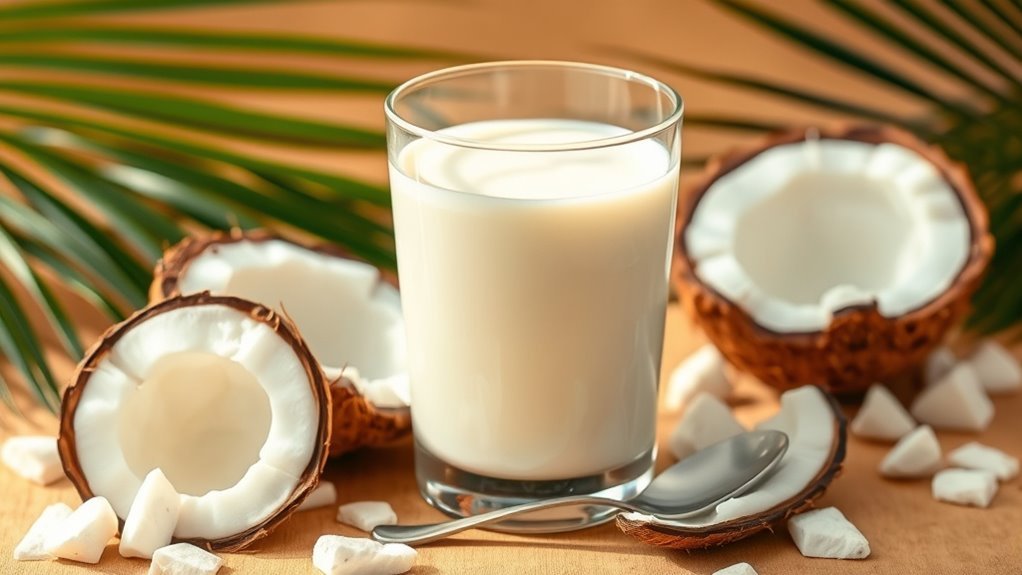

Coconut milk is indeed keto-friendly due to its low carbohydrate content and high levels of healthy fats. It offers quick energy from medium-chain triglycerides (MCTs) while providing a creamy texture to your meals. However, keep an eye on the caloric content and potential added sugars in commercial brands, as these can disrupt your ketosis. With various ways to incorporate it into your diet, there’s plenty to discover about coconut milk’s role in a ketogenic lifestyle.
Nutritional Profile of Coconut Milk

When you consider incorporating coconut milk into your diet, it’s essential to understand its nutritional profile. Coconut milk varieties, such as full-fat and light versions, offer different calorie counts and fat content. A standard serving of full-fat coconut milk provides about 445 calories and 48 grams of fat, primarily saturated. It also contains a small amount of carbohydrates, making it a potential fit for low-carb diets. If you’re looking for coconut milk substitutes, options like almond or soy milk can be lower in calories but may lack the rich flavor and creaminess. Always check labels for added sugars or thickeners that could alter the nutritional value, especially if you’re aiming for a balanced diet while enjoying the freedom of diverse flavors.
Health Benefits of Coconut Milk

Coconut milk is packed with nutrients, offering a rich source of vitamins and minerals that can enhance your overall health. It’s also high in medium-chain triglycerides (MCTs), which may provide a quick energy boost and support weight management. Incorporating coconut milk into your diet can be a delicious way to reap these health benefits while staying aligned with your nutritional goals.
Nutrient Density Overview
Although many people enjoy coconut milk for its creamy texture and unique flavor, it’s also worth noting its impressive nutrient profile. When considering coconut varieties, coconut milk stands out for its health benefits, including vitamins and minerals that support overall well-being. Here’s a nutrient comparison for some common coconut milk options:
| Nutrient | Regular Coconut Milk | Light Coconut Milk | Unsweetened Coconut Milk |
|---|---|---|---|
| Calories | 445 | 150 | 80 |
| Fat (g) | 48 | 15 | 8 |
| Fiber (g) | 5 | 3 | 2 |
This nutrient density makes coconut milk a versatile choice for those seeking flavor and health benefits in their diet, especially in a keto-friendly lifestyle.
MCTs and Energy Boost
If you’re looking for a quick energy boost, incorporating coconut milk into your diet can be a smart choice, thanks to its high concentration of medium-chain triglycerides (MCTs). MCTs are unique fats that your body can quickly convert into energy, providing you with an efficient energy source. Unlike long-chain fatty acids, MCTs don’t require extensive digestion, making them readily available for fuel. This can be particularly beneficial if you’re following a keto lifestyle, as MCT benefits include promoting ketosis and potentially enhancing mental clarity. By using coconut milk, you’re not just adding a creamy texture to your meals; you’re also tapping into a powerful energy source that can help sustain your active, freedom-seeking lifestyle throughout the day.
How Coconut Milk Fits Into a Keto Diet
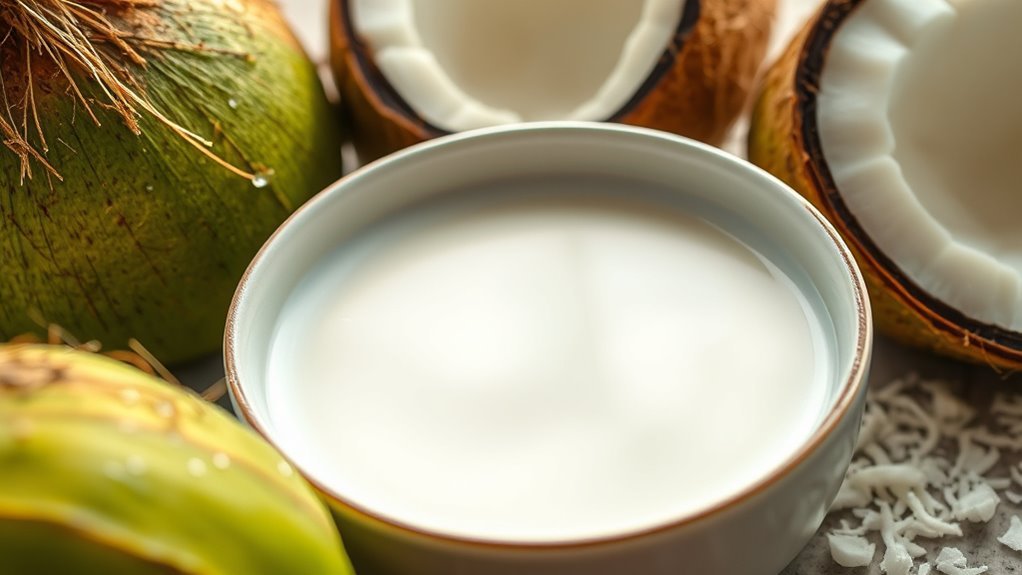
When considering low-carb options for a keto diet, coconut milk stands out as a versatile and nutrient-rich choice. It’s not just a delicious ingredient; it also complements keto friendly recipes beautifully. Here’s how it fits into your keto lifestyle:
- It’s low in carbs, making it a great alternative to dairy milk.
- Rich in healthy fats, it helps maintain your energy levels.
- It adds creaminess to smoothies and soups, enhancing flavors.
- It can be used in various coconut milk alternatives, like coconut cream, for added richness.
Incorporating coconut milk into your meals can support your ketogenic journey while offering variety and satisfaction. Explore the possibilities, and enjoy the freedom that comes with creative cooking!
Potential Drawbacks of Coconut Milk
While coconut milk can be a tasty addition to your keto diet, it does come with some potential drawbacks. Its high caloric content may lead to unintentional weight gain if consumed in excess, and some brands add sugars that can kick you out of ketosis. Additionally, relying too heavily on coconut milk could result in nutrient imbalances, as it’s low in certain essential vitamins and minerals.
High Caloric Content
Coconut milk, often celebrated for its creamy texture and flavor, does come with a high caloric content that might be a concern for those on a strict keto diet. Its caloric density means that even small amounts can add up quickly. To enjoy it without derailing your goals, consider these points:
- Practice portion control to keep calories in check.
- Balance it with lower-calorie foods in your meals.
- Monitor your overall daily caloric intake.
- Choose unsweetened varieties to avoid added sugars.
Added Sugars Risk
For those considering coconut milk on a keto diet, the risk of added sugars cannot be overlooked. Many commercial coconut milk products, especially those labeled as “coconut beverages,” often contain added sugars to enhance flavor. These sugars can greatly increase the carb content, making it harder for you to maintain ketosis. When choosing coconut milk, it’s essential to read labels carefully. Opt for unsweetened varieties to minimize your intake of added sugars. Different coconut varieties can also influence the sugar content; for instance, canned coconut milk typically has fewer additives than cartons. By being vigilant about what you select, you can enjoy coconut milk while remaining aligned with your keto goals.
Nutrient Imbalance Concerns
Although many people enjoy coconut milk for its creamy texture and flavor, it’s important to contemplate potential nutrient imbalances that could arise from its consumption. While it fits well into a keto diet, relying on it too heavily can disrupt your nutrient ratio and overall dietary balance.
Consider these concerns:
- Low protein content: Coconut milk lacks sufficient protein, which might lead to deficiencies.
- High saturated fat: Excessive saturated fat can impact heart health if not balanced with unsaturated fats.
- Limited vitamins and minerals: It doesn’t provide essential nutrients like calcium and vitamin D.
- Caloric density: Overconsumption can lead to unwanted weight gain.
Being mindful of these factors helps you enjoy coconut milk while maintaining a healthy nutrient balance.
Creative Ways to Use Coconut Milk
When you’re looking to add a creamy texture and unique flavor to your dishes, coconut milk offers a versatile option that can enhance both savory and sweet recipes. You can whip up delicious coconut milk smoothies, blending it with your favorite low-carb fruits for a satisfying treat. For a savory touch, consider incorporating coconut milk into soups; it can transform a simple broth into a rich, flavorful dish. You might also use it in curries, where it adds depth and creaminess. Don’t forget about baking; coconut milk can replace dairy in many recipes, making desserts both rich and dairy-free. With its distinct taste, coconut milk allows you to explore creativity in your cooking while keeping it keto-friendly.
Tips for Choosing the Right Coconut Milk
How do you choose the right coconut milk for your keto diet? Start by evaluating your options carefully. Here are some tips to guide you:
- Canned varieties often contain higher fat content, which suits your keto goals.
- Fresh options can provide a lighter flavor, perfect for smoothies or light dishes.
- Check for an organic selection to avoid additives and pesticides.
- Always read ingredient labels to verify there are no hidden sugars or fillers.
When comparing brands, consider their flavor profiles and how they align with your cooking uses. Remember that your dietary preferences matter; select what feels right for you. This way, you can enjoy coconut milk while staying true to your keto lifestyle.
Frequently Asked Questions about Coconut Milk and Keto Diet
1. Is coconut milk low in carbs?
Yes, coconut milk is relatively low in carbohydrates, making it a suitable option for those following a keto diet. A standard serving (about 1 cup) of unsweetened coconut milk contains approximately 6 grams of carbs, of which about 2 grams are fiber, resulting in a net carb count of around 4 grams. This low carb content allows for easy incorporation into various keto recipes.
2. Can coconut milk kick me out of ketosis?
Generally, coconut milk will not kick you out of ketosis if consumed in moderation. The key to maintaining ketosis is to keep your carbohydrate intake low. Since coconut milk is low in net carbs, it can be a keto-friendly option. However, be mindful of the quantity and any additional ingredients that may be added, such as sweeteners or flavorings that could increase carb content.
3. What are the nutritional benefits of coconut milk on a keto diet?
Coconut milk offers several nutritional benefits for those on a keto diet. It is rich in medium-chain triglycerides (MCTs), which are easily digestible fats that can be quickly converted into energy. Additionally, coconut milk contains vitamins C, E, and several B vitamins, along with essential minerals such as magnesium and potassium. These nutrients can support overall health while adhering to a low-carb lifestyle.
4. How can I use coconut milk in my keto recipes?
Coconut milk can be used in various keto recipes to add creaminess and flavor. You can use it in smoothies, soups, curries, and sauces. It also works well as a dairy substitute in baking recipes, providing moisture without adding significant carbs. When using coconut milk, opt for the unsweetened version to avoid unnecessary sugars and carbs.
5. Are there any downsides to consuming coconut milk on a keto diet?
While coconut milk is generally safe and beneficial on a keto diet, there are some downsides to consider. It is calorie-dense, so overconsumption can lead to excessive calorie intake, which may hinder weight loss efforts. Additionally, some people may be allergic to coconut or experience digestive issues with high-fat products. It’s important to monitor your body’s response and adjust your intake as needed.
References
- https://www.healthline.com/nutrition/coconut-milk-keto
- https://www.ncbi.nlm.nih.gov/pmc/articles/PMC6418346/
- https://www.webmd.com/diet/obesity/news/20190917/coconut-milk-healthy-or-not
- https://www.verywellfit.com/what-is-coconut-milk-4177340
- https://www.medicalnewstoday.com/articles/323050
- https://www.cdc.gov/nutrition/index.html