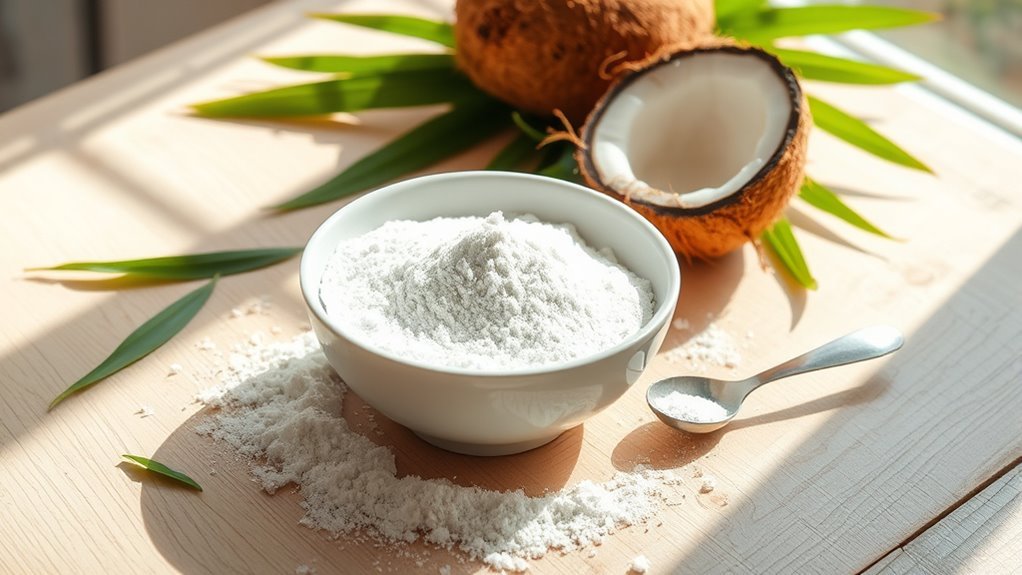

Yes, coconut flour is keto-friendly! It’s low in carbohydrates, offering about 24 grams per 100 grams, which is considerably lower than wheat flour. Plus, it’s high in fiber, aiding digestion and promoting satiety. Coconut flour absorbs moisture, so you’ll need to adjust your recipes accordingly, often using fewer amounts than regular flour. It’s also gluten-free, making it suitable for those with sensitivities. If you want to know more about its benefits and how to use it effectively, just keep exploring!
Nutritional Profile of Coconut Flour
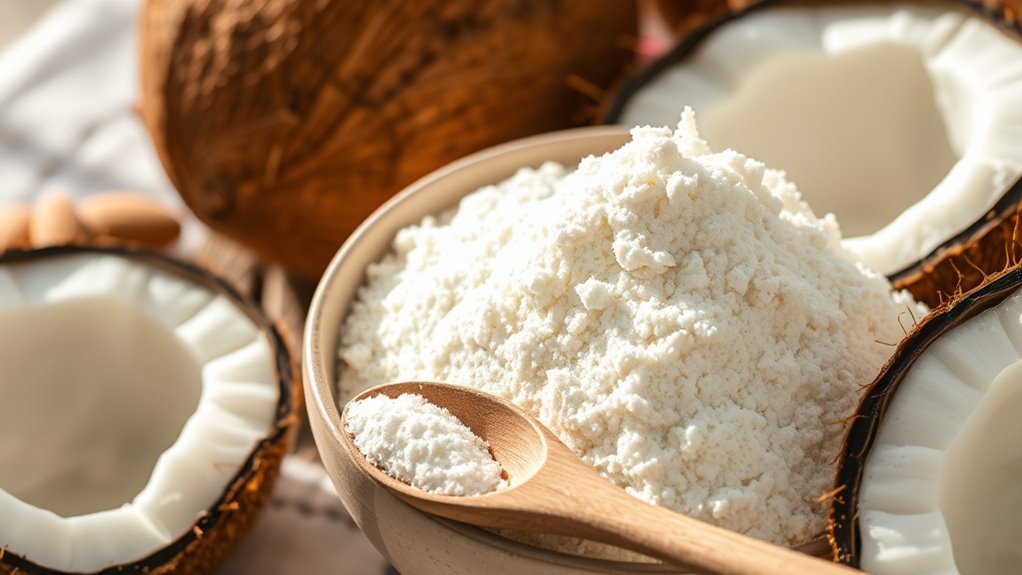
When you’re considering incorporating coconut flour into your diet, it’s important to understand its nutritional profile. Coconut flour is rich in fiber, which can support digestion and promote a feeling of fullness. This high fiber content is one of the key coconut flour benefits, particularly for those looking to maintain stable blood sugar levels. Additionally, it’s lower in carbohydrates compared to many traditional flours, making it a popular choice for ketogenic and gluten-free diets. With regard to coconut flour uses, it can be employed in baking, thickening sauces, and even as a coating for proteins. By understanding these aspects, you can make informed decisions that align with your dietary goals while enjoying the versatility of coconut flour.
Carbohydrate Content Compared to Other Flours

Coconut flour stands out not just for its high fiber content but also for its unique carbohydrate profile. In a carbohydrate comparison, coconut flour offers about 24 grams of carbs per 100 grams, which is lower than traditional flours like wheat, which can contain upwards of 76 grams. Almond flour, another popular flour alternative, has around 20 grams of carbs per 100 grams, making it slightly lower than coconut flour but still a viable option for those on a keto diet. This lower carbohydrate content makes coconut flour a favorable choice for those looking to reduce carb intake while maintaining a satisfying baking experience. By understanding these differences, you can choose the best flour alternatives for your dietary needs.
Fiber Content and Its Benefits
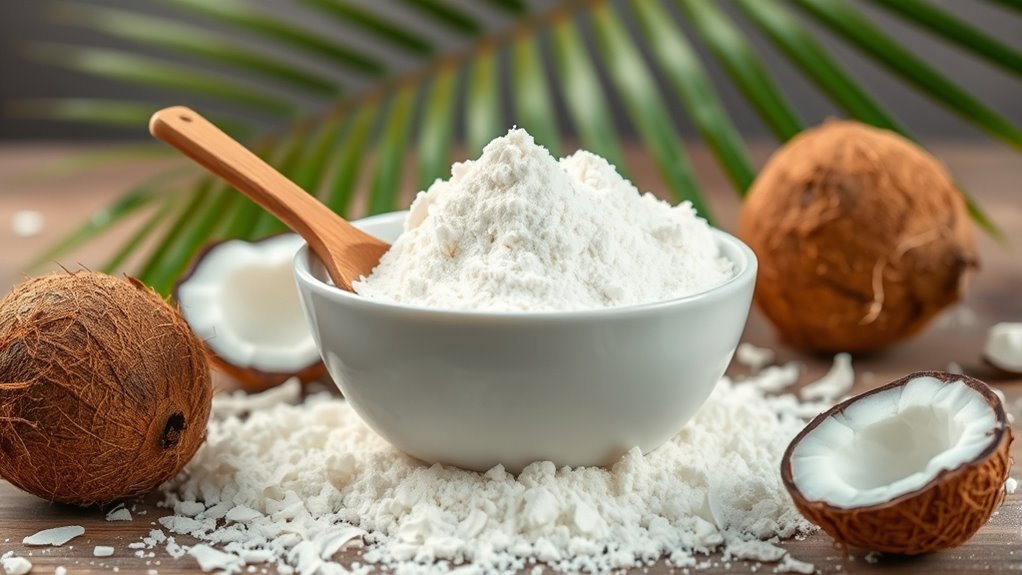
One of the standout features of coconut flour is its impressive fiber content, which can greatly benefit your health. With around 5 grams of fiber per tablespoon, it supports digestive health by promoting regular bowel movements and preventing constipation. This high fiber content can also help you feel fuller for longer, contributing to appetite regulation—a vital aspect of any keto lifestyle. Additionally, fiber benefits extend to blood sugar control, as it can help stabilize glucose levels, reducing spikes and crashes. By incorporating coconut flour into your diet, you’re not just enjoying a versatile ingredient; you’re also making a choice that supports your overall well-being. Embracing these fiber benefits is a step toward achieving your health goals with freedom and ease.
How to Use Coconut Flour in Keto Recipes
When you’re incorporating coconut flour into your keto recipes, it’s important to understand its unique properties. You can use it for baking, but remember that its high fiber content means you’ll need less than you would with traditional flours. Additionally, coconut flour can serve as an effective thickener for soups and sauces, giving your dishes a satisfying texture while keeping them low in carbs.
Baking With Coconut Flour
Baking with coconut flour can be a delightful experience for those following a keto diet. This gluten-free alternative absorbs a significant amount of moisture, so you’ll want to use less of it compared to traditional flours—typically about ¼ to ⅓ cup for every cup of regular flour. Adjusting your liquid ingredients is essential; increase them to achieve the right dough consistency. Incorporating eggs helps bind the ingredients together, enhancing the texture of your baked goods. Popular baking techniques include mixing coconut flour with almond flour for a balanced texture and flavor. Experimenting with different recipes, from pancakes to muffins, can yield delicious results while keeping your carb intake low, allowing you the freedom to enjoy your keto lifestyle.
Thickening Soups and Sauces
If you’re looking to thicken soups and sauces while keeping your keto diet on track, coconut flour can be a great option. It’s a low-carb thickener that can help you achieve the desired soup consistency without compromising your goals. Using coconut flour as a thickening technique is straightforward; just mix it with a bit of water to create a slurry before adding it to your dish. Below is a quick comparison of coconut flour with other thickening options:
| Thickening Agent | Carbs per Tbsp | Flavor Impact | Keto-Friendly |
|---|---|---|---|
| Coconut Flour | 6g | Mild | Yes |
| Almond Flour | 2g | Nutty | Yes |
| Xanthan Gum | 0g | None | Yes |
| Cornstarch | 7g | Neutral | No |
| Arrowroot | 7g | Neutral | No |
Feel free to experiment and find what works best for you!
Potential Downsides of Coconut Flour
While coconut flour can be a great addition to your keto diet, there are some potential downsides to contemplate. Its high fiber content may lead to digestive discomfort for some, and it could affect nutrient absorption if consumed in excess. Additionally, if you have a nut allergy, you might want to be cautious, as coconut can trigger allergic reactions in certain individuals.
High Fiber Content
Although coconut flour is often praised for its high fiber content, this characteristic can also present potential downsides for some individuals. While fiber is essential for digestive health, consuming too much can lead to gastrointestinal discomfort, such as bloating or gas. If you’re not used to a high-fiber diet, suddenly incorporating coconut flour can overwhelm your system. It’s important to gradually increase your fiber intake to allow your digestive system to adjust. Additionally, the high fiber content may affect how your body absorbs certain nutrients. So, while coconut flour can be a great option for adding fiber to your diet, pay attention to how your body responds, and consider balancing it with other low-fiber foods.
Nutrient Absorption Issues
When incorporating coconut flour into your diet, you might encounter some challenges regarding nutrient absorption. This flour is high in fiber, which can be beneficial, but too much fiber can hinder the absorption of certain nutrients. For instance, excess fiber may bind to minerals like calcium, magnesium, and zinc, making it harder for your body to utilize them effectively. Additionally, if you’re not used to high-fiber foods, you could experience digestive discomfort, which could further impact your overall digestive health. Balancing coconut flour with other nutrient-dense foods can help mitigate these issues. By being mindful of your intake and listening to your body, you can enjoy coconut flour while maintaining ideal nutrient absorption and digestive health.
Allergic Reactions Potential
In addition to nutrient absorption challenges, it’s important to contemplate the potential for allergic reactions when incorporating coconut flour into your diet. While coconut allergies are relatively rare, they can occur and may lead to symptoms like hives, digestive issues, or even anaphylaxis in severe cases. If you have a known tree nut allergy, be cautious, as cross reactivity concerns exist. This means your immune system might mistakenly react to coconut flour due to its similarities with other allergens. Always consult with a healthcare professional before introducing new ingredients, especially if you have a history of food allergies. By being mindful and informed, you can enjoy the benefits of coconut flour without compromising your well-being.
Tips for Baking With Coconut Flour
Baking with coconut flour can be a rewarding experience if you understand its unique properties. Since coconut flour is highly absorbent, you’ll need to adjust your substitution ratios. Generally, for every cup of wheat flour, use only 1/4 to 1/3 cup of coconut flour. This means you should also increase the liquid in your recipe, adding more eggs or other wet ingredients to achieve the right texture. When using coconut flour, consider techniques like whisking together dry ingredients separately before combining to guarantee an even mix. Don’t forget to let your batter rest for a few minutes; this helps the flour fully absorb moisture. With these tips, you can enjoy delicious, keto-friendly baked goods without sacrificing flavor or texture.
Frequently Asked Questions about Coconut Flour and Keto
1. Is coconut flour keto-friendly?
Yes, coconut flour is generally considered keto-friendly. It is low in carbohydrates compared to traditional flours, containing about 6 grams of net carbs per 1/4 cup serving. This makes it a suitable alternative for those following a ketogenic diet, as it helps maintain a low carb intake while providing a good source of fiber and healthy fats.
2. How does coconut flour compare to almond flour for a keto diet?
Coconut flour and almond flour are both popular choices for a keto diet, but they have different nutritional profiles. Coconut flour is higher in fiber and lower in protein compared to almond flour. While coconut flour has approximately 6 grams of net carbs per 1/4 cup, almond flour contains around 2 grams of net carbs in the same serving. Therefore, if you’re aiming for very low carb intake, almond flour may be the better choice, but coconut flour can still fit into a balanced keto diet.
3. How can I use coconut flour in keto recipes?
Coconut flour can be used in a variety of keto recipes, including baked goods like cookies, pancakes, and muffins. Due to its high absorbency, you typically need to use less coconut flour than regular flour and increase the liquid content in your recipes. A common ratio is to substitute 1 cup of regular flour with about 1/4 to 1/3 cup of coconut flour, along with an extra egg or additional liquid to ensure the final product has the right texture.
4. Are there any downsides to using coconut flour on a keto diet?
While coconut flour is a great option for many on a keto diet, it does have some downsides. Its high fiber content can cause digestive discomfort in some people, especially if consumed in large quantities. Additionally, coconut flour has a distinct flavor that may not appeal to everyone. It’s also important to balance your diet with other low-carb flours and ingredients to ensure you’re getting a variety of nutrients and flavors.
5. Can I replace all-purpose flour with coconut flour in my recipes?
You cannot directly replace all-purpose flour with coconut flour on a 1:1 basis due to the significant differences in texture and absorbency. Coconut flour is highly absorbent and requires adjustments in liquid and egg content in recipes. As a rule of thumb, if a recipe calls for 1 cup of all-purpose flour, start by using about 1/4 to 1/3 cup of coconut flour and add extra liquids or eggs as necessary to achieve the desired consistency.
References
- https://www.healthline.com/nutrition/coconut-flour-keto
- https://www.ncbi.nlm.nih.gov/pmc/articles/PMC6341232/
- https://www.webmd.com/diet/what-is-coconut-flour
- https://www.bbcgoodfood.com/howto/guide/what-coconut-flour
- https://www.eatright.org/food/nutrition/dietary-restrictions/coconut-flour-nutrition
- https://www.mayoclinic.org/healthy-lifestyle/nutrition-and-healthy-eating/expert-answers/coconut-flour/faq-20057806
- https://www.ncbi.nlm.nih.gov/books/NBK499877/
- https://www.cdc.gov/nutrition/index.html