

Cheese is indeed good for a keto diet, as it is low in carbohydrates and high in fat, making it an ideal food choice for those looking to maintain ketosis. Rich in essential nutrients and versatile in culinary applications, cheese provides both satisfaction and flavor while supporting the dietary goals of keto enthusiasts. In this article, we will explore the benefits of cheese on a keto diet, the types of cheese that are most suitable, and tips for incorporating cheese into your meals.
The Benefits of Cheese on a Keto Diet

Cheese offers multiple benefits that align perfectly with the principles of a keto diet. First and foremost, cheese is high in healthy fats. This characteristic is vital for those seeking to enter or maintain a state of ketosis, where the body burns fat for fuel instead of carbohydrates. The inclusion of cheese can significantly contribute to the daily fat intake required for a successful ketogenic lifestyle, making it easier to meet macronutrient goals.
Additionally, cheese is an excellent source of essential nutrients. It is rich in calcium, which is crucial for bone health, and it provides a good amount of protein, contributing to muscle maintenance and overall satiety. The protein content in cheese can help curb hunger pangs, making it easier to stick to your keto diet by reducing cravings for carb-laden snacks.
Moreover, the variety of cheeses available means that you can enjoy a wide range of flavors and textures, enhancing your meals while staying compliant with your dietary restrictions.
Best Types of Cheese for Keto
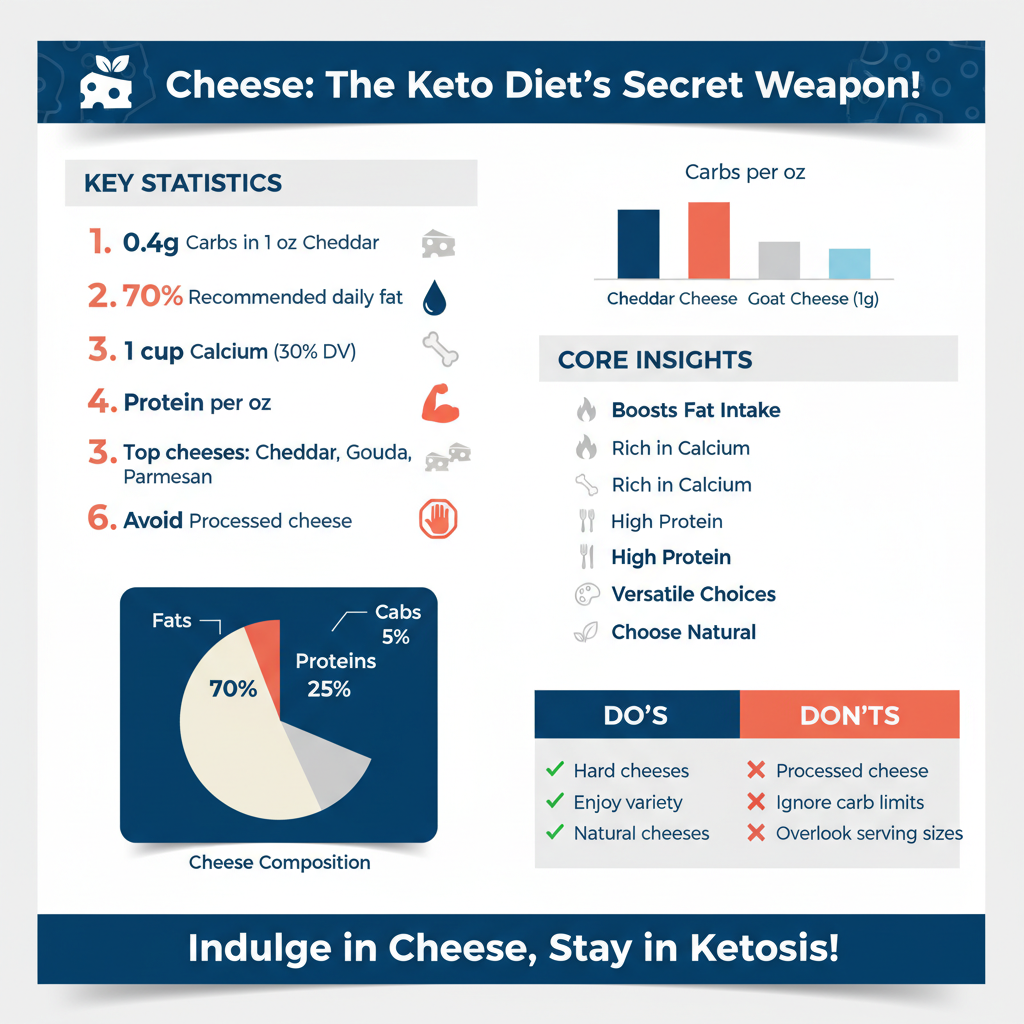

When selecting cheese for a keto diet, not all options are created equal. Hard cheeses, such as cheddar, gouda, and parmesan, are typically lower in carbohydrates than softer varieties. For instance, a typical serving of cheddar cheese contains about 0.4 grams of carbohydrates per ounce, making it an excellent choice for keto dieters.
Cream cheese and goat cheese are also favorable options, providing creamy textures and rich flavors while maintaining low carbohydrate content. Cream cheese can serve as a base for various dips and spreads, enhancing both taste and nutrition in keto meals.
However, it is crucial to avoid processed cheeses, which often contain added sugars and preservatives that can increase carb counts and diminish the health benefits. Always opt for natural cheeses with minimal ingredients to ensure you are making the healthiest choice for your keto diet.
Cheese Serving Sizes and Carb Counts
Monitoring cheese serving sizes is essential for maintaining ketosis effectively. Understanding the carb count in popular cheeses can help you make informed choices. For example, here are some common types of cheese and their approximate carbohydrate content per ounce:
– Cheddar: 0.4 grams
– Parmesan: 0.9 grams
– Mozzarella: 0.6 grams
– Cream cheese: 0.8 grams
– Goat cheese: 0.1 grams
To maintain ketosis, it is recommended to keep cheese servings to about one ounce per meal. This portion size ensures that you can enjoy the flavor and benefits of cheese without exceeding your daily carbohydrate limit.
To measure portions accurately, consider using a food scale or pre-portioned cheese packages. By being mindful of serving sizes, you can incorporate cheese into your meals without jeopardizing your ketogenic goals.
Potential Downsides of Cheese on Keto
While cheese is a beneficial addition to a keto diet, there are some potential downsides to consider. One major concern is lactose intolerance, which affects some individuals and can lead to digestive discomfort when consuming dairy products. If you experience bloating, gas, or other gastrointestinal issues after eating cheese, it may be worthwhile to limit your intake or opt for lactose-free varieties.
Additionally, overconsumption of cheese can lead to digestive issues, such as constipation, especially if one’s overall diet lacks sufficient fiber. Since cheese is low in fiber, it is essential to balance your meals with other keto-friendly fiber sources, such as leafy greens and avocados.
Lastly, the sodium content in some cheeses can be a concern, particularly for individuals monitoring their sodium intake for health reasons. Cheeses like feta and processed cheese products can be quite high in salt. Opting for lower-sodium varieties and consuming cheese in moderation can mitigate this issue.
Creative Ways to Incorporate Cheese into Keto Meals
Incorporating cheese into your keto meals can be both delicious and creative. One simple way to use cheese is in salads; for instance, adding crumbled feta or shredded parmesan can elevate the flavor profile while keeping the dish low in carbohydrates. Cheese can also serve as an excellent topping for keto-friendly dishes, such as zucchini noodles or cauliflower crust pizza.
Another innovative approach is to use cheese as a base for sauces and dips. For example, blending cream cheese with herbs and spices creates a flavorful dip for raw vegetables or keto-friendly crackers. You can also make a rich cheese sauce using heavy cream and cheddar to drizzle over steamed broccoli or cauliflower.
For snack time, consider recipes for keto-friendly snacks featuring cheese, such as cheese crisps made by baking grated cheese until golden and crunchy, or stuffed jalapeños with cream cheese for a spicy treat. These options not only satisfy cravings but also align with keto dietary requirements.
Frequently Asked Questions About Cheese and Keto
Can I eat cheese every day on a keto diet?
Yes, cheese can be consumed daily on a keto diet, provided that you monitor your overall carbohydrate intake and serving sizes to ensure you remain within your dietary goals.
Are there any cheese alternatives for keto diets?
While traditional cheese is generally low in carbs, there are vegan cheese alternatives made from nuts or soy. However, it is essential to check the nutritional labels, as many may contain added sugars or high carbohydrate content.
How does cheese consumption impact weight loss on keto?
Cheese can support weight loss on a keto diet by promoting satiety, which can help reduce overall calorie intake. However, moderation is key, as excessive cheese consumption may lead to unwanted weight gain due to its calorie density.
Cheese is a delicious and versatile food that fits well within a keto diet when chosen wisely. By understanding the types of cheese that are best for your nutritional goals and how to incorporate them into your meals, you can enjoy the rich flavors while staying in ketosis. For personalized meal plans or more tips on keto eating, be sure to explore further resources or consult a nutrition expert.
Frequently Asked Questions
Is cheese good for a keto diet?
Yes, cheese is generally considered good for a keto diet as it is low in carbohydrates and high in fat, making it an ideal choice for those looking to enter ketosis. Varieties like cheddar, mozzarella, and cream cheese can fit well into your daily macros, allowing you to enjoy creamy textures and flavors while staying compliant with your keto goals.
What types of cheese are best for keto?
The best types of cheese for a keto diet include hard cheeses like cheddar, gouda, and parmesan, as well as soft options like cream cheese and goat cheese. These cheeses are typically low in carbs and high in fat, helping you maintain your keto macros while adding flavor to your meals. Always check the nutritional labels, as some cheeses may have added sugars or carbs.
How much cheese can I eat on a keto diet?
The amount of cheese you can eat on a keto diet varies based on your overall carbohydrate allowance, but generally, a moderate serving of 1-2 ounces per meal is recommended. It’s essential to balance cheese with other low-carb foods to ensure you stay within your daily carb limit, which typically ranges from 20-50 grams for effective ketosis.
Why do some people avoid cheese on keto?
Some people avoid cheese on a keto diet due to lactose intolerance, sensitivities to dairy, or concerns about inflammation. Others may find that certain cheeses can stall their weight loss or trigger cravings for more carbohydrates. It’s important to listen to your body and choose cheese types that suit your dietary preferences and health needs.
Can cheese cause weight gain on a keto diet?
While cheese is calorie-dense and can contribute to weight gain if consumed in excess, it can also be a valuable source of healthy fats on a keto diet when eaten in moderation. The key is to monitor portion sizes and ensure that your overall caloric intake aligns with your weight loss or maintenance goals. Individual responses to cheese can vary, so it’s crucial to assess how it affects your body and adjust accordingly.
References
- https://www.healthline.com/nutrition/cheese-and-keto-diet
- https://www.ncbi.nlm.nih.gov/pmc/articles/PMC7070597/
- https://www.webmd.com/diet/obesity/what-is-the-keto-diet
- https://www.usda.gov/media/blog/2020/03/10/what-are-dairy-foods-and-are-they-good-keto
- https://www.dietdoctor.com/low-carb/keto/cheese
- https://www.mayoclinic.org/healthy-lifestyle/nutrition-and-healthy-eating/expert-answers/keto-diet/faq-20458681
- Ketogenic.com | Start, Succeed & Sustain a Keto Diet
- https://www.clevelandclinic.org/health/diet-nutrition/what-is-the-keto-diet
- https://www.nutrition.org.uk/nutrition-topics/dairy-products-and-health.html