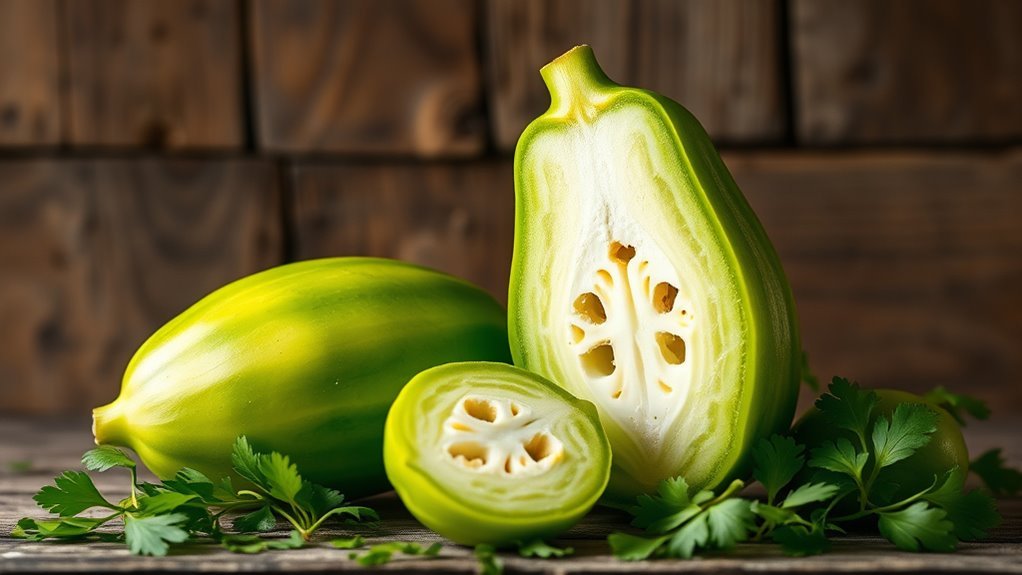

Yes, chayote is keto-friendly, containing only about 4 grams of carbohydrates per 100 grams. It’s low in calories, high in dietary fiber, and packed with essential vitamins, making it a nutritious addition to your meals. Its low glycemic index helps prevent blood sugar spikes, ideal for those managing carb intake. Despite some potential digestive concerns, chayote can enhance your diet in various ways. If you want to explore how to incorporate it effectively, there’s more to discover.
Understanding Chayote: A Nutritional Overview
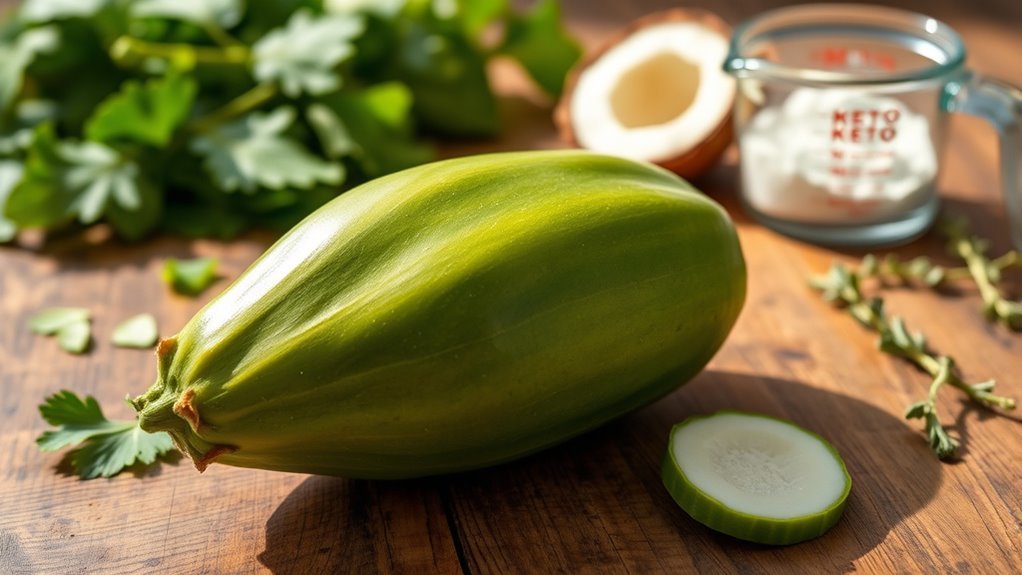
Chayote, often referred to as vegetable pear or mirliton, is a unique squash that offers a variety of nutritional benefits. You might be surprised to learn that there are several chayote varieties, each with distinct flavors and textures. In culinary uses, chayote can be eaten raw in salads, sautéed, or even stuffed. This versatile vegetable is low in calories and packed with vitamins C and B, along with fiber, making it a great addition to a balanced diet. Its mild taste pairs well with many dishes, allowing for creativity in the kitchen. By incorporating chayote into your meals, you’re not only enjoying a delicious ingredient but also boosting your nutritional intake without compromising your health goals.
Carbohydrate Content of Chayote
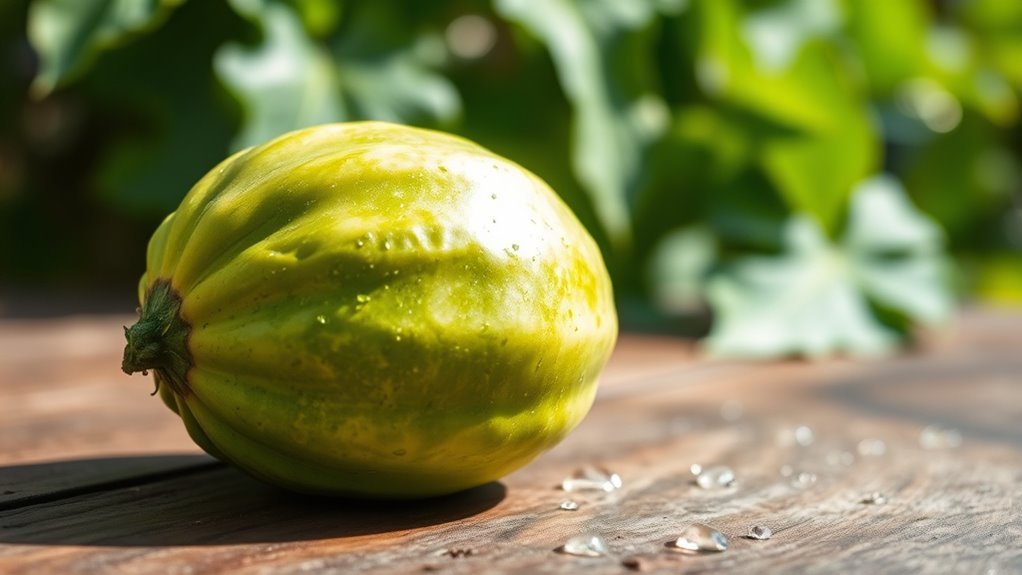
When considering chayote in a keto diet, it’s crucial to look at its carbohydrate content. Chayote has a relatively low carb count, making it a suitable option for those monitoring their carbohydrate intake. By comparing its nutritional profile to other vegetables, you can better understand how it fits into your overall dietary goals.
Chayote Nutritional Profile
Although you may not be familiar with chayote, it’s worth noting that this unique vegetable offers a low carbohydrate content, making it a suitable option for those following a keto diet. With only about 4 grams of carbs per 100 grams, chayote varieties, like the green and white types, can be great additions to your meals. You can enjoy chayote in various cooking methods, such as steaming, sautéing, or even baking. These methods preserve its nutritional benefits while keeping the carb count low. Plus, chayote is rich in vitamins and minerals, enhancing your overall diet. Whether you’re looking to add variety to your keto meals or simply want a healthy veggie, chayote deserves a spot on your plate.
Carb Count Comparison
With just about 4 grams of carbohydrates per 100 grams, chayote stands out as a low-carb vegetable option for those on a keto diet. This makes it an excellent choice if you’re looking for keto substitutions for higher-carb foods. Among various chayote varieties, all exhibit similar low-carb characteristics, allowing you to enjoy their unique flavors without worrying about your carb count. You can easily incorporate chayote into salads, stir-fries, or even soups, providing versatility in your meals. Compared to traditional starchy vegetables like potatoes or corn, chayote offers a revitalizing, low-calorie alternative. If you’re committed to your keto lifestyle, embracing chayote can help you maintain your goals while enjoying delicious, nutritious meals.
Health Benefits of Chayote
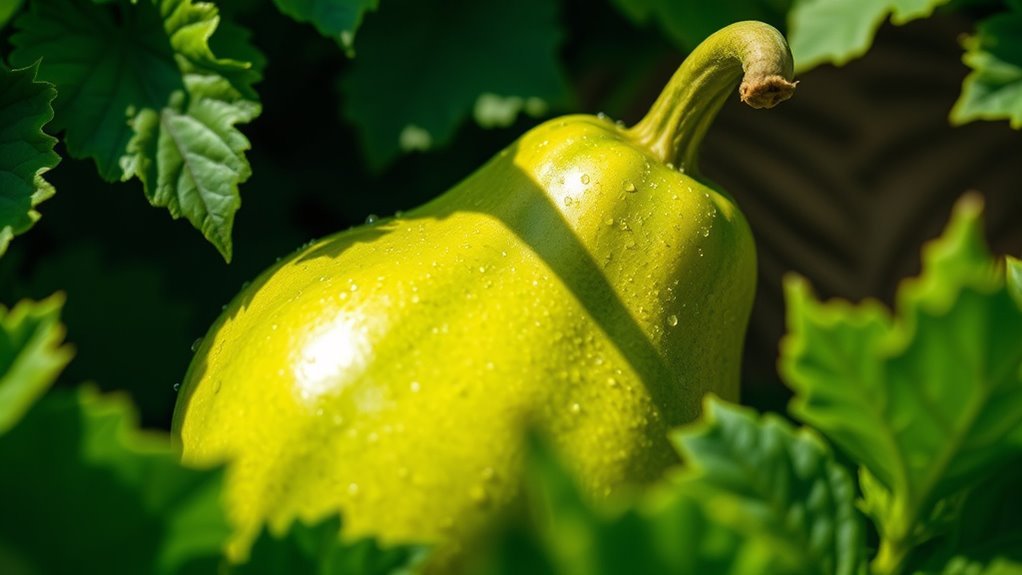
Chayote offers a nutrient-rich profile, making it a great addition to your diet for overall health. Its low-calorie content can aid in weight management, while its antioxidant properties help combat oxidative stress. Incorporating chayote into your meals might provide you with these benefits and enhance your wellness journey.
Nutrient-Rich Profile
When you’re looking for a nutritious addition to your diet, you’ll find that chayote offers an impressive array of health benefits. This versatile vegetable is low in calories yet high in essential nutrients, making it a fantastic option for those seeking keto compatibility. Chayote is rich in vitamins C and B, potassium, and dietary fiber, which can support heart health and improve digestion. The antioxidants found in chayote can help fight inflammation and oxidative stress, promoting overall wellness. Plus, its low carbohydrate content makes it suitable for low-carb diets. Incorporating chayote into your meals not only enhances flavor but also brings numerous chayote benefits to your plate, empowering you to make healthier choices without sacrificing taste.
Weight Management Aid
Although many factors contribute to successful weight management, incorporating chayote into your diet can be a valuable strategy. This versatile vegetable is low in calories yet high in fiber, making it an excellent choice for those aiming for weight loss. The fiber content helps you feel full longer, reducing the likelihood of overeating. Additionally, chayote benefits your overall health by providing essential nutrients while keeping calorie intake in check. Its low glycemic index means it won’t cause spikes in blood sugar, which can help maintain energy levels and curb cravings. By including chayote in your meals, you can enjoy a satisfying, nutritious food that supports your weight management goals while allowing you the freedom to explore diverse flavors and textures.
Antioxidant Properties
Incorporating chayote into your diet not only aids in weight management but also brings a host of health benefits, particularly due to its antioxidant properties. The antioxidant benefits of chayote compounds can help combat oxidative stress, which is linked to various health issues. Here are some notable advantages:
- Cell Protection: Chayote helps protect your cells from damage caused by free radicals.
- Anti-Inflammatory Effects: The compounds in chayote can help reduce inflammation in the body.
- Heart Health: Antioxidants contribute to maintaining healthy blood vessels and cholesterol levels.
- Skin Health: The antioxidants in chayote may promote healthy skin and slow aging.
Including chayote in your meals can be a delicious way to enhance your overall health while enjoying its unique flavor.
Chayote vs. Other Vegetables on Keto
How does chayote stack up against other vegetables when you’re following a keto diet? Chayote benefits include its low carb content and high fiber, making it a great option for keeping your ketosis intact. Compared to other popular keto vegetables, it offers unique advantages.
| Vegetable | Net Carbs (per 100g) |
|---|---|
| Chayote | 4.4g |
| Spinach | 1.4g |
| Broccoli | 4.0g |
| Zucchini | 3.1g |
| Cauliflower | 2.9g |
In vegetable comparisons, chayote provides a versatile, mild flavor, which can complement various dishes. Its nutrient density and low glycemic index make it an excellent addition to your keto lifestyle.
How to Prepare Chayote for Keto Meals
When you’re looking to incorporate chayote into your keto meals, it’s essential to know how to prepare it to maximize its flavor and nutritional benefits. Here are some effective chayote preparation methods:
- Peeling: Remove the skin for a smoother texture, or keep it for added fiber.
- Slicing: Cut into thin slices for salads or stir-fries, enhancing the visual appeal and taste.
- Steaming: Lightly steam chayote to preserve its nutrients while softening its crunch.
- Sautéing: Quickly sauté with olive oil and garlic for a delicious side dish that pairs well with protein.
These methods not only maintain the vegetable’s integrity but also complement keto-friendly pairings like avocado, cheese, or grilled meats, making your meals both nutritious and satisfying.
Delicious Keto Recipes Featuring Chayote
While chayote might not be the first vegetable that comes to mind for keto cooking, it offers a versatile base for numerous delicious recipes. You can easily whip up chayote soup for a comforting meal or a revitalizing chayote salad to complement your dish. Try chayote stir fry for a quick weeknight dinner, or indulge in a cheesy chayote casserole. Craving something crispy? Bake chayote fries or chips for a satisfying snack. For a twist, make chayote tacos or curry, or enjoy a creamy chayote gratin. Don’t forget to blend a chayote smoothie for a nutrient-packed treat!
| Recipe Type | Description |
|---|---|
| Chayote Soup | Warm and comforting |
| Chayote Salad | Fresh and light |
| Chayote Stir Fry | Quick and easy |
Portion Control: Serving Sizes for Chayote
When incorporating chayote into your keto diet, it’s important to evaluate the recommended serving size to maximize benefits. A typical serving of chayote is about one cup, which provides a low-calorie option packed with nutrients. Understanding the nutritional breakdown per serving can help you make informed choices that align with your dietary goals.
Recommended Serving Size
A serving size of chayote typically ranges from half to one cup, depending on your overall dietary goals and preferences. To help you navigate portion guidelines, consider the following recommendations:
- Weight Loss: Aim for half a cup to keep calories in check.
- Maintenance: One cup can be a satisfying addition to meals without excess.
- Active Lifestyle: If you’re more active, you might benefit from larger servings, up to one cup and a half.
- Personal Preference: Adjust based on taste and how you incorporate it into dishes.
Nutritional Breakdown Per Serving
Understanding the nutritional content of chayote can help you make informed decisions about its role in your diet. This versatile vegetable has several health benefits and culinary uses, making it a great addition to your meals.
Here’s a quick nutritional breakdown per serving (1 cup, sliced):
| Nutrient | Amount |
|---|---|
| Calories | 36 |
| Carbohydrates | 8 g |
| Fiber | 3 g |
| Protein | 1 g |
Chayote is low in calories and carbs, making it an excellent choice for those following a keto diet. It’s rich in vitamins and minerals, supporting your overall health. Incorporate chayote into salads, stir-fries, or as a side dish to enjoy its unique flavor and nutritional benefits!
Potential Downsides of Chayote on Keto
While chayote is often touted as a versatile, low-carb vegetable suitable for a ketogenic diet, there are potential downsides to take into account. Here are some considerations:
- Nutritional Limitations: Chayote lacks certain essential nutrients, so relying solely on it could lead to deficiencies.
- Digestive Concerns: Some individuals may experience bloating or gas due to its fiber content, which can be problematic for sensitive stomachs.
- Glycemic Index: Though low in carbs, chayote may still have a higher glycemic index compared to other keto-friendly vegetables.
- Caloric Density: It’s relatively low in calories, which might not be ideal if you’re trying to meet higher caloric needs on keto.
Being aware of these factors can help you make informed choices about including chayote in your diet.
Tips for Incorporating Chayote Into Your Diet
If you’re looking to add chayote to your keto diet, there are several ways to do so that can enhance your meals while keeping your carb intake in check. You can enjoy the chayote benefits by incorporating it into salads, stir-fries, or soups. Try spiralizing chayote for a low-carb alternative to pasta, or roasting it with your favorite herbs for a flavorful side dish. There are plenty of chayote recipes available that highlight its versatility, such as chayote fritters or stuffed chayote. Not only does chayote provide essential nutrients, but its mild flavor allows it to blend seamlessly into various dishes. Experimenting with this unique vegetable can bring excitement to your keto meal plan.
Final Thoughts on Chayote and Keto Compatibility
As you explore the compatibility of chayote with a keto lifestyle, it’s important to recognize how this unique vegetable can fit into your dietary goals. Here are some key points to take into account:
- Low in Carbs: Chayote contains about 4 grams of carbs per 100 grams, making it a suitable choice for keto.
- Nutrient Dense: It’s rich in vitamins C and B6, providing essential nutrients without many calories.
- Versatile: Chayote varieties can be enjoyed raw, sautéed, or in soups, adding variety to your meals.
- Hydration: With a high water content, it helps keep you hydrated while on a low-carb diet.
Incorporating chayote into your meals can enhance your keto lifestyle while keeping it interesting and healthy!
Frequently Asked Questions
Can Chayote Be Eaten Raw on a Keto Diet?
You can definitely eat raw chayote on a keto diet! Raw chayote offers several benefits, including being low in carbs and high in fiber, which can aid digestion. It’s versatile, too; try it in invigorating chayote salad recipes with lime, cilantro, and avocado for a delicious side dish. This way, you enjoy its crisp texture and nutrients while keeping your carb count in check. Embrace the freedom of experimenting with this unique vegetable!
Is Chayote Suitable for Meal Prepping on Keto?
When it comes to meal prepping, think of chayote as a versatile blank canvas. It’s not only low in carbs but also high in water content, making it great for adding to your keto snacks. You can roast, steam, or spiralize it, keeping your meals exciting. Just remember to store it properly to maintain freshness. With chayote in your meal prep arsenal, you can enjoy delicious, satisfying dishes without straying from your keto goals.
How Does Chayote Affect Ketosis?
Chayote’s nutrition profile is low in carbs, making it a great addition to your keto diet. When you consume chayote, its fiber content helps maintain stable blood sugar levels, which can positively impact ketosis. Since it’s low in calories and high in vitamins, incorporating it into your meals won’t disrupt your state of ketosis. Just remember to balance it with other low-carb veggies to keep your macros in check. Enjoy its versatility!
Can I Freeze Chayote for Later Use?
Oh sure, let’s just toss chayote in the freezer and hope it becomes a gourmet dish later! But seriously, you can freeze chayote for later use. Just wash, peel, and slice it, then blanch it briefly before packing it in airtight containers. This freezing method helps preserve its texture and flavor. Proper chayote storage is key, so label those containers with dates. Enjoy your future culinary adventures with this versatile veggie!
What Are Common Flavor Pairings for Chayote?
When exploring chayote flavor, you’ll find it pairs beautifully with various ingredients. Its mild taste complements spices like cumin and chili powder, and it works well with fresh herbs like cilantro and parsley. For delightful chayote recipes, consider combining it with tomatoes, onions, or garlic in stir-fries or salads. You can also enhance its flavor by sautéing it with lemon juice or vinegar, making it a versatile addition to your meals.
Frequently Asked Questions about Chayote and Keto
1. Is chayote suitable for a keto diet?
Yes, chayote is suitable for a keto diet. It is low in carbohydrates, with approximately 4 grams of net carbs per 100 grams. This makes it a great vegetable choice for those looking to maintain a low-carb lifestyle while adding variety to their meals.
2. What are the nutritional benefits of chayote?
Chayote is rich in vitamins and minerals, including vitamin C, vitamin K, folate, and potassium. It also contains antioxidants and dietary fiber, which can aid in digestion and promote overall health. Its low calorie content makes it an excellent addition to a keto diet.
3. How can I incorporate chayote into my keto meals?
Chayote can be incorporated into a variety of keto meals. You can use it as a substitute for pasta by spiralizing it, adding it to salads, or sautéing it with other low-carb vegetables. It can also be roasted, steamed, or used in casseroles to enhance the dish’s texture and flavor.
4. Are there any downsides to eating chayote on a keto diet?
While chayote is low in carbs and nutritious, it’s important to consume it in moderation as part of a balanced keto diet. Some individuals may experience digestive discomfort if they consume too much fiber at once. Always listen to your body and adjust your intake as needed.
5. Can I eat chayote if I am trying to lose weight on a keto diet?
Yes, chayote can be a beneficial food for weight loss on a keto diet due to its low calorie and carbohydrate content. Its high fiber content can help you feel full longer, reducing the likelihood of overeating. Incorporating chayote into your meals can help you maintain a healthy weight while enjoying a variety of flavors.
References
- https://www.healthline.com/nutrition/chayote
- https://www.ncbi.nlm.nih.gov/pmc/articles/PMC5570250/
- https://www.medicalnewstoday.com/articles/320780
- https://www.webmd.com/diet/health-benefits-chayote
- https://www.nutritionvalue.org/chayote_nutritional_value.html
- https://www.vegetablefacts.com/chayote-nutrition-facts/
- https://www.jstor.org/stable/24431436