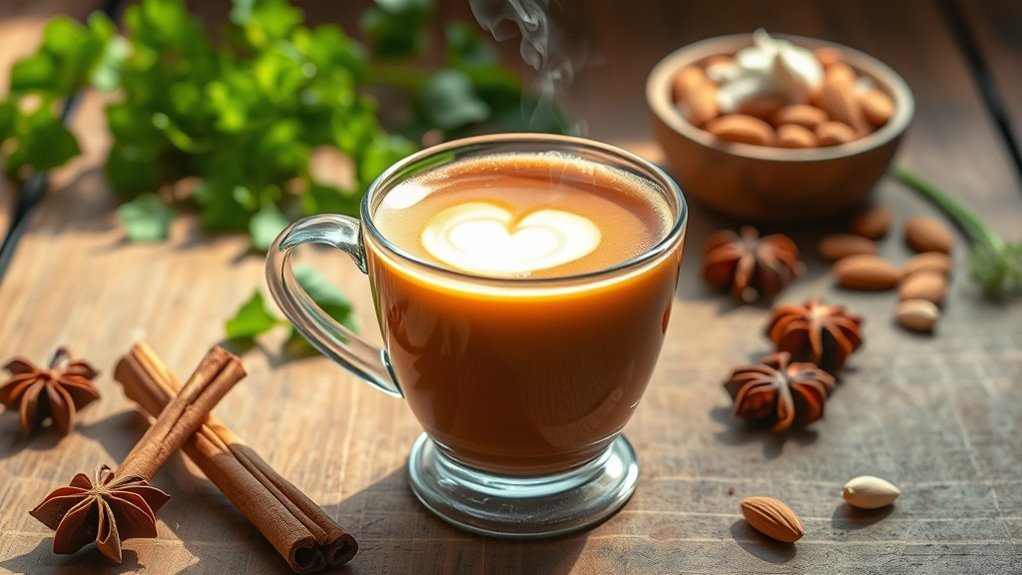

Chai tea can be keto-friendly if you choose the right ingredients. Stick to black tea, which is low in carbs, and opt for unsweetened almond or coconut milk instead of regular milk. Add spices like cinnamon and ginger, which are also low in carbs. Use natural sweeteners like stevia or erythritol to keep the sugar content down. With these adjustments, you can enjoy a delicious chai while staying on track with your keto diet. There’s even more to explore!
Understanding Chai Tea Ingredients
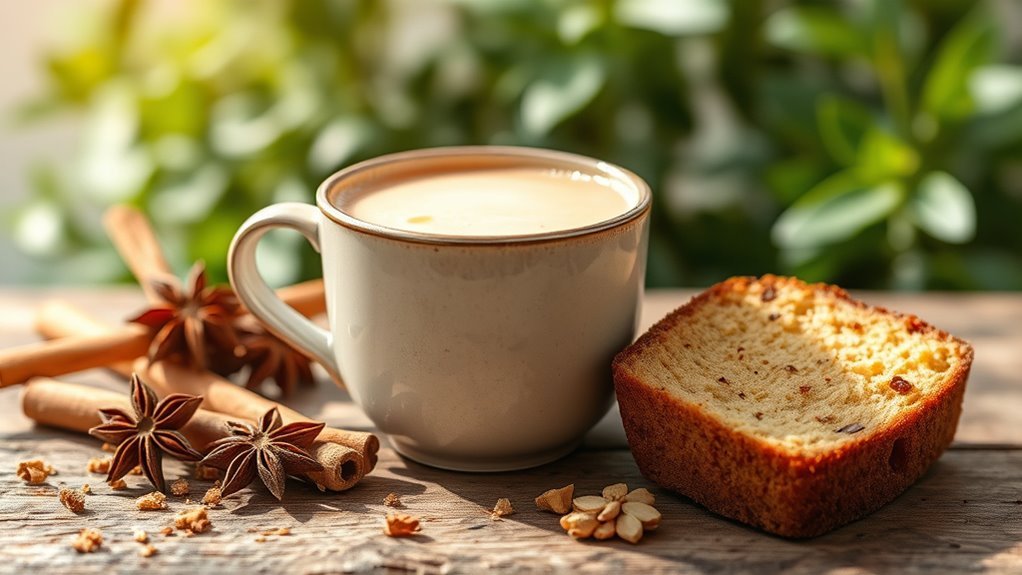
When you plunge into the world of chai tea, it’s essential to understand its core ingredients, as they can greatly impact its compatibility with a keto diet. Chai tea has rich origins in India, where blends vary by region, leading to diverse chai tea varieties. Traditional chai typically includes black tea, spices like ginger and cardamom, and milk or cream, which can add carbs.
To make it keto-friendly, you might consider using unsweetened almond milk or coconut milk instead of regular milk. Additionally, guarantee any sweeteners, if used, are low-carb alternatives. By understanding these components, you can enjoy chai tea while maintaining a keto lifestyle, embracing the freedom to savor its unique flavors without compromising your dietary goals.
Carb Content of Black Tea

Black tea, a staple in many chai blends, offers a low-carb beverage option, making it suitable for those following a keto diet. With virtually zero carbs, black tea provides a revitalizing drink without derailing your carb count. The black tea benefits extend beyond its carb content; it’s rich in antioxidants and can support heart health. When exploring black tea varieties, you’ll find options like Assam, Darjeeling, and Earl Grey, each offering unique flavors and aromas. These can be enjoyed on their own or as part of your chai tea preparation. So, if you’re looking for a way to satisfy your beverage cravings while staying keto-friendly, black tea is a perfect choice. Enjoy it guilt-free!
The Role of Milk in Chai Tea

While black tea forms the base of chai, the addition of milk plays a significant role in the overall flavor and texture of the beverage. You might be surprised by how milk enhances your chai experience. Here are three reasons why it’s essential:
- Creaminess: Milk adds a rich, velvety texture that can transform your chai from ordinary to extraordinary.
- Balance: The sweetness of milk balances the spices, making each sip harmonious and enjoyable.
- Nutritional Boost: Milk provides essential nutrients, making your chai not just a treat, but also a potential source of energy.
If you’re looking for keto-friendly options, consider milk alternatives like almond or coconut milk. With various chai variations, you can explore flavors while keeping your dietary preferences in mind.
Spices in Chai: Are They Keto-Friendly?
When considering chai tea on a keto diet, the spices used play an essential role. You’ll want to look at the carb content of common spices like cinnamon, ginger, and cardamom, as their health benefits can also impact your overall wellness. Understanding these factors can help you enjoy chai while staying within your keto goals.
Common Chai Spices
Chai tea is a fragrant blend that typically features a variety of spices, each contributing unique flavors and health benefits. If you’re considering traditional chai spices, you’ll be pleased to know many of them are keto-friendly. Here are three common chai spice combinations to savor:
- Cinnamon: Great for blood sugar control and adds warmth.
- Ginger: Known for its anti-inflammatory properties and zest.
- Cardamom: Offers digestive benefits and an aromatic kick.
These spices not only enhance the taste but also align with a low-carb lifestyle, making your chai experience both delicious and guilt-free. Enjoy exploring these chai spice combinations while staying committed to your health goals!
Carb Content Analysis
Understanding the carb content of the spices in chai is essential for anyone following a keto diet. Most spices used in chai, like cinnamon, ginger, and cardamom, are low in carbohydrates, making them generally keto-friendly. For example, cinnamon contains less than one gram of carbs per teaspoon, while ginger offers about two grams. These spices not only enhance flavor but also provide chai tea benefits, such as improved digestion and antioxidant properties.
When evaluating keto diet compatibility, remember that the overall carb count can rise if you add sweeteners or milk. Stick to unsweetened options and focus on the spice blend to enjoy a delicious drink that aligns with your keto lifestyle without compromising your carb goals.
Health Benefits Explored
Although you might think of chai primarily as a flavorful beverage, the spices used in its preparation offer a range of health benefits that can complement a keto lifestyle. Here are three key advantages:
- Immune Support: Spices like ginger and cinnamon can enhance your immune system, helping you stay resilient.
- Digestion Aid: Ingredients such as cardamom and black pepper can improve digestion, promoting gut health.
- Metabolism Boost: Cinnamon may help manage blood sugar levels and support weight management, making it easier to maintain your goals.
In addition to these benefits, chai also provides hydration and antioxidant properties, contributing to heart health and stress relief. Enjoying chai can be a delicious way to support your overall well-being while sticking to keto!
Sweetening Your Chai: Keto Options
When sweetening your chai on a keto diet, it’s important to choose options that won’t spike your blood sugar. Natural sweeteners like stevia and erythritol can satisfy your sweet tooth without adding carbs, while artificial sweeteners such as aspartame and sucralose offer alternative choices. Understanding these options can help you enjoy your chai while staying within your keto guidelines.
Natural Sweeteners Overview
As you explore ways to sweeten your chai tea while staying within keto guidelines, it’s essential to evaluate natural sweeteners that won’t spike your blood sugar. Using natural sweeteners not only enhances your drink but also aligns with your health goals. Here are three popular natural sweeteners types:
- Stevia – A plant-based sweetener with zero calories and a glycemic index of zero, making it a top keto choice.
- Monk Fruit – Another zero-calorie alternative, monk fruit offers a sweet taste without any carbs, perfect for maintaining ketosis.
- Erythritol – This sugar alcohol provides sweetness with minimal calories and doesn’t affect blood sugar levels.
Embracing these natural sweeteners benefits your chai while allowing you to enjoy your keto lifestyle freely.
Artificial Sweeteners Options
Have you considered how artificial sweeteners can fit into your chai tea while keeping your keto goals intact? Using the right artificial sweetener types can help you achieve that perfect blend of flavor without the carbs. Popular options include stevia, erythritol, and monk fruit, all of which have minimal to zero calories. When selecting a sweetener, it’s essential to follow keto sweetener guidelines, ensuring the product is free of added sugars and has a low glycemic index. These sweeteners can enhance your chai without derailing your diet. Just remember to adjust the amount based on the sweetness level, as some are far sweeter than sugar. Enjoy your chai tea guilt-free while sticking to your keto lifestyle!
How to Make Keto-Friendly Chai Tea
Although many traditional chai tea recipes are laden with sugar and carbohydrates, you can easily create a keto-friendly version that retains all the aromatic spices and rich flavors. Here’s how to make it using keto-friendly ingredients:
Transform traditional chai tea into a keto-friendly delight, preserving its rich flavors and aromatic spices without the carbs.
- Start with quality tea: Choose black tea or green tea to form the base of your chai.
- Add spices: Incorporate cinnamon, ginger, cardamom, and cloves for that authentic taste.
- Sweeten wisely: Use stevia, erythritol, or monk fruit to achieve the sweetness without carbs.
Feel free to experiment with chai tea variations, adjusting spices and flavors to suit your palate. This way, you’ll enjoy a delicious, guilt-free drink while sticking to your keto lifestyle. Embrace the freedom of flavorful, healthy choices!
Store-Bought Chai: What to Look For
When you’re short on time or simply prefer convenience, store-bought chai can be an appealing option. However, not all store-bought brands are created equal. Start by checking the ingredient labels; look for chai that contains natural spices like ginger, cardamom, and cinnamon without added sugars or artificial flavors. Avoid options with high-carb sweeteners or fillers that can kick you out of ketosis. Some brands even offer keto-friendly varieties, so keep an eye out for those. If you’re unsure, don’t hesitate to do a bit of research on the brand’s reputation and nutritional information. Making informed choices will help you enjoy your chai while sticking to your keto lifestyle without compromising on flavor or quality.
Portion Control and Serving Sizes
While enjoying chai tea can be a delightful experience, portion control and serving sizes play an essential role in maintaining a keto diet. To keep your chai tea keto-friendly, consider these tips:
- Stick to a 6-8 oz serving: This size helps manage carbs while still savoring the flavors.
- Limit sweeteners: If you’re adding sweeteners, keep it minimal. A little goes a long way in preserving keto goals.
- Mind the milk: Use unsweetened almond or coconut milk to control carbs and calories.
Benefits of Chai Tea on a Keto Diet
Chai tea offers several benefits that can complement your keto diet, especially since it’s rich in antioxidants and can boost your metabolism. The spices in chai, like ginger and cinnamon, may help regulate blood sugar levels, which is essential for maintaining ketosis. Additionally, chai can enhance your mood and mental clarity, thanks to its blend of ingredients, making it a great choice for those busy days on a keto plan. The hydration you get from chai also supports overall wellness, helping you feel energized and focused. Incorporating chai tea into your routine allows you to enjoy its unique flavors while reaping these chai tea benefits, making your keto diet even more enjoyable and effective.
Alternative Chai Recipes for Keto Lovers
If you’re looking to enjoy chai while sticking to a keto diet, there are plenty of low-carb variations to explore. You can swap out traditional sweeteners for keto-friendly alternatives and even create delicious dairy-free options that maintain the rich flavors you love. Let’s take a closer look at these alternatives to keep your chai experience satisfying and aligned with your dietary goals.
Low-Carb Chai Variations
When you’re on a keto diet, finding satisfying alternatives to traditional beverages can be challenging, but low-carb chai variations can hit the spot. These recipes maintain the delightful essence of chai tea while keeping your carb count low. Here are three delicious options to try:
- Coconut Milk Chai: Use unsweetened coconut milk for a creamy texture and rich flavor without the carbs.
- Almond Milk Chai: Swap regular milk for unsweetened almond milk to further reduce carbs while adding a nutty taste.
- Spiced Tea Infusion: Focus on spices like cinnamon and ginger to enhance flavor without adding sugars.
With these low-carb options, you can enjoy the warm, comforting sensation of chai tea while staying true to your keto lifestyle.
Sweetener Substitutes to Use
While traditional sweeteners can add unwanted carbs to your chai, there are plenty of keto-friendly alternatives that can satisfy your sweet tooth without derailing your diet. Popular sweetener types include stevia, erythritol, and monk fruit, all of which have minimal or no carbs. Stevia offers a sweet, almost licorice-like flavor profile, while erythritol provides a clean sweetness with a slight cooling effect. Monk fruit, on the other hand, has a more balanced sweetness that closely resembles sugar. You can experiment with these sweeteners to find the perfect combination that suits your taste. Just remember to start small, as some sweetener types are much sweeter than sugar, allowing you to enjoy your chai without compromising your keto lifestyle.
Dairy-Free Chai Options
For those following a keto lifestyle and looking to enjoy chai without dairy, there are several delicious alternatives that can maintain the beverage’s rich flavor. Here are three fantastic non-dairy milks you can try:
- Almond Milk: Low in carbs and offers a nutty flavor that complements chai spices beautifully.
- Coconut Milk: Creamy and rich, it adds a tropical twist while keeping carbs down.
- Hemp Milk: Packed with nutrients, it provides a subtle, earthy taste that pairs well with chai.
These chai alternatives not only fit your keto needs but also let you explore new flavors. Embrace the freedom to enjoy your favorite drink without sacrificing your dietary goals!
Frequently Asked Questions
Can I Drink Chai Tea on a Strict Keto Diet?
If you’re on a strict keto diet, you might wonder about chai tea. It can be a great option due to its potential benefits, like boosting metabolism and providing antioxidants. Just be cautious with added sugars and milk. Opt for unsweetened versions or use keto-friendly sweeteners. This way, you can enjoy the rich flavors of chai while staying within your carb limits. Explore other keto beverage options too, like herbal teas or black coffee.
How Does Chai Tea Affect Ketosis Levels?
Chai tea’s ingredients can impact your ketosis levels depending on how it’s prepared. Traditional chai often includes milk and sweeteners, which can add carbs and potentially kick you out of ketosis. However, if you use unsweetened almond milk and avoid sugar, you can enjoy it without greatly affecting your ketosis. It’s essential to monitor your overall carb intake, as even small amounts can influence your state of ketosis. Enjoy chai mindfully!
Are There Any Health Risks With Chai Tea on Keto?
When you sip on chai tea, you might feel a warm embrace, but there are a few hidden concerns to contemplate. If you’re sensitive to caffeine, that delightful kick could leave you jittery. Plus, potential allergens in spices or milk can cause unexpected reactions. It’s essential to know your body’s limits and monitor how chai impacts your well-being, especially on a keto journey where every choice counts. Enjoy, but be mindful!
Can I Use Alternative Milk for Keto Chai Tea?
Absolutely, you can use alternative milk for your chai tea! There are several milk alternatives like almond, coconut, and hemp that fit well within a keto diet. These options offer benefits such as lower carbs and fewer calories compared to regular milk, making them ideal for your keto lifestyle. Just make sure to choose unsweetened versions to keep your chai tea aligned with your dietary goals. Enjoy your flavorful cup without compromising your freedom!
Is Chai Tea Better Than Coffee for a Keto Diet?
When comparing chai tea to coffee for a keto diet, consider the benefits of each. Chai tea offers spices like cinnamon and ginger, which may boost metabolism and enhance digestion. Coffee provides caffeine, increasing alertness. If you enjoy flavors and potential health benefits, chai might be your go-to. However, if you need an energy kick, coffee’s a strong contender. Ultimately, it depends on your taste preference and how you feel after consuming each.
Frequently Asked Questions about Chai Tea and Keto Diet
1. Is chai tea keto-friendly?
Chai tea can be keto-friendly, but it largely depends on its ingredients. Traditional chai is a blend of black tea, spices, and milk. To make it keto-friendly, consider using unsweetened almond milk or coconut milk instead of regular dairy milk and sweetening it with keto-approved sweeteners like stevia or erythritol. Be cautious with any added sugars, as they can significantly increase the carbohydrate content.
2. What are the carbohydrate contents in chai tea?
The carbohydrate content in chai tea can vary significantly based on how it’s prepared. A traditional serving may contain 20-30 grams of carbs if made with sweetened milk and sugar. However, if you prepare chai with keto-friendly alternatives, the carb count can be reduced to 5 grams or less per serving, making it a suitable option for those following a ketogenic diet.
3. Can I sweeten my chai tea on a keto diet?
Yes, you can sweeten your chai tea on a keto diet! Instead of regular sugar, opt for low-carb sweeteners such as stevia, monk fruit, or erythritol. These alternatives provide sweetness without the added carbohydrates, allowing you to enjoy your chai without compromising your ketosis.
4. Are the spices in chai tea keto-friendly?
Yes, the spices commonly used in chai tea, such as cinnamon, ginger, cardamom, and cloves, are keto-friendly. These spices not only add flavor but also come with various health benefits. They are low in carbohydrates and can even help with metabolism, making them a great addition to your keto diet.
5. What are some keto-friendly chai tea recipes?
A simple keto-friendly chai tea recipe includes brewing black tea with your favorite spices (like cinnamon, ginger, and cardamom). After brewing, add unsweetened almond or coconut milk and sweeten with a low-carb sweetener. For a frothy version, you can blend the tea with the milk for a few seconds. Additionally, consider adding a scoop of collagen powder for added protein. Adjust the spices and sweetness according to your taste preferences!
References
- https://www.webmd.com/diet/what-to-know-about-keto-diet
- https://www.healthline.com/nutrition/keto-diet-foods
- https://www.ncbi.nlm.nih.gov/pmc/articles/PMC7010598/
- https://www.thekitchn.com/keto-diet-what-to-know-22909737
- https://www.verywellfit.com/keto-diet-5115852
- https://www.cdc.gov/healthyweight/healthy_eating/index.html
- https://www.nutrition.gov/topics/whats-food/keto-diet