
Yes, cauliflower rice is a keto-friendly alternative to traditional grains. With only about 5 grams of carbohydrates per cup, it fits well into a low-carb diet. This nutrient-rich option offers vitamins C and K, plus fiber that aids digestion and promotes fullness. You’ll find it versatile for various dishes, from stir-fries to grain bowls. If you’re curious about how to prepare it or explore exciting recipes, there’s much more to discover.
What Is Cauliflower Rice?
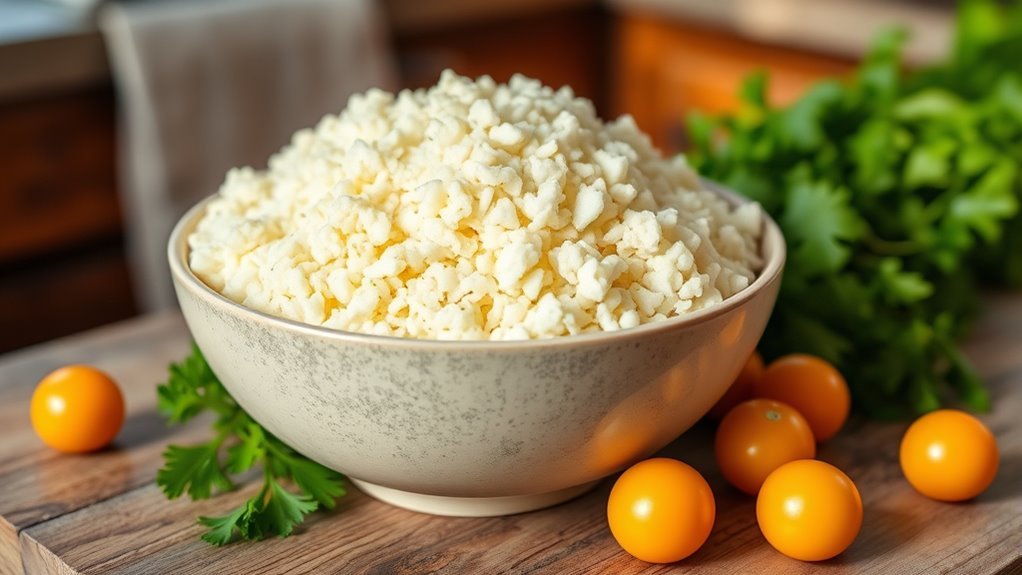
Cauliflower rice is a popular low-carb alternative to traditional rice, made by finely chopping or grating cauliflower florets until they resemble grains. This versatile dish has gained traction as a staple among those seeking healthier rice substitutes. Several cauliflower varieties, such as white, purple, and green, can be used to create this dish, each offering unique flavors and visual appeal. You can easily prepare it at home or find it pre-packaged in stores. Cauliflower rice not only provides a satisfying texture but also absorbs flavors well, making it an excellent base for various dishes, from stir-fries to grain bowls. Whether you’re on a keto diet or simply aiming for a lighter meal, cauliflower rice can help satisfy your cravings without the carbs.
Nutritional Profile of Cauliflower Rice
When you consider the nutritional profile of cauliflower rice, you’ll find it offers a low-calorie alternative to traditional rice. Its macronutrient breakdown reveals minimal carbohydrates and a decent amount of fiber, making it a suitable option for a keto diet. Understanding these aspects can help you assess how it fits into your overall dietary goals.
Macronutrient Breakdown
Though often overlooked, cauliflower rice offers a compelling macronutrient profile that makes it a popular choice for those following a keto diet. When you do a macronutrient comparison, you’ll find that cauliflower rice is low in carbs and calories, making it an excellent substitute for traditional rice.
Here are some key nutritional points:
- Carbohydrates: About 5 grams per cup, which is very low compared to regular rice.
- Protein: Roughly 2 grams per cup, providing a modest boost for your meals.
- Fat: Minimal fat content, around 0.5 grams, allowing for flexibility in your overall dietary fat intake.
With various serving suggestions, you can easily incorporate cauliflower rice into stir-fries, bowls, or salads, enhancing your keto lifestyle.
Fiber Content Insights
While many people focus on the low carbohydrate content of cauliflower rice, its fiber content is equally remarkable. A one-cup serving provides about 2 grams of fiber, making it a valuable addition to your diet. This fiber isn’t just about volume; it plays a significant role in promoting digestive health. By incorporating cauliflower rice alongside other fiber sources, you can help maintain regularity and support gut health. Plus, a high-fiber diet can enhance feelings of fullness, making it easier to manage your weight. So, if you’re seeking a keto-friendly option that doesn’t skimp on nutrition, cauliflower rice might be the perfect fit. Embracing this versatile ingredient can empower your culinary creativity while supporting your health goals.
Carbohydrate Content and Keto Compatibility
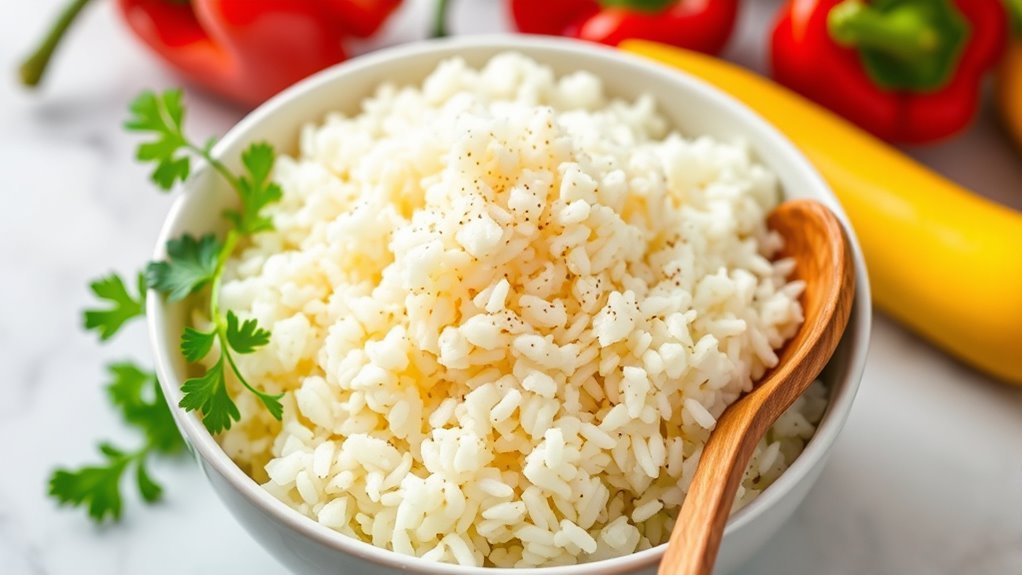
Since many people following a keto diet aim to minimize their carbohydrate intake, understanding the carbohydrate content of cauliflower rice is essential. Cauliflower rice, a popular keto substitution, is made from various cauliflower varieties and offers a low-carb alternative to traditional grains.
- One cup of cauliflower rice contains about 5 grams of carbohydrates.
- It’s considerably lower in carbs compared to brown rice, which has around 45 grams per cup.
- This makes cauliflower rice an excellent option for maintaining ketosis.
Health Benefits of Cauliflower Rice
Cauliflower rice not only serves as a low-carb alternative to traditional grains but also boasts a range of health benefits that can support your overall wellness. One of the key nutritional benefits is its high fiber content, which aids digestion and promotes a feeling of fullness. This can help you manage your weight more effectively. Additionally, cauliflower is rich in vitamins C and K, essential for immune function and bone health, respectively. The antioxidant properties may reduce inflammation, further contributing to your well-being. Incorporating cauliflower rice into your meals can also help lower blood pressure and improve cholesterol levels, offering significant health advantages. Overall, it’s a versatile and nutritious option that supports a healthier lifestyle while keeping your carb intake in check.
How to Prepare Cauliflower Rice
If you’re looking for a quick and easy way to prepare cauliflower rice, you’ll be pleased to know that the process is straightforward. You can use a few different cooking methods to achieve that perfect texture. Here’s how to get started:
- Grating or Food Processor: Grate cauliflower or pulse it in a food processor until it resembles rice.
- Cooking: Sauté in a pan with a bit of oil for about 5-7 minutes until tender, or steam it for a lighter option.
- Seasoning Options: Enhance the flavor with garlic, onion powder, or herbs like parsley and basil.
Cauliflower Rice Recipes for a Keto Diet
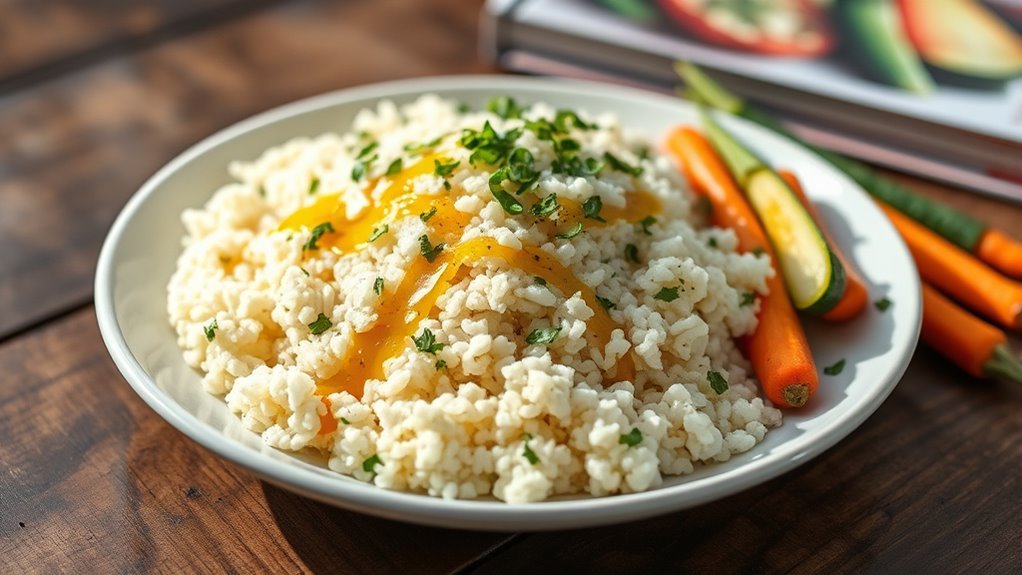
When you’re aiming to stick to a keto diet, incorporating cauliflower rice into your meals can be a game-changer. One delicious option is a cauliflower stir fry, where you can sauté cauliflower rice with your favorite low-carb vegetables and protein sources like shrimp or chicken. Season with soy sauce or coconut aminos for added flavor. Another fantastic recipe is cheesy cauliflower, where you mix cauliflower rice with cream cheese and shredded cheese, then bake until bubbly. This creates a satisfying side dish that complements various meats. Both recipes are not only easy to prepare but also provide essential nutrients while keeping your carb intake in check. Embrace these options for a delicious and fulfilling keto-friendly diet!
Potential Drawbacks of Cauliflower Rice
While cauliflower rice is a popular low-carb alternative, it does come with some potential drawbacks. You might find that it lacks the nutrient density of whole grains and can have a texture and flavor that doesn’t quite satisfy when compared to traditional rice. It’s important to weigh these factors when deciding if cauliflower rice fits your dietary needs and preferences.
Nutrient Density Concerns
Although cauliflower rice is often celebrated as a low-carb alternative to traditional grains, it’s important to contemplate its nutrient density, as it may not provide the same range of vitamins and minerals found in whole grains and other vegetables. When you do a nutrient comparison, you might find that cauliflower rice falls short in several areas:
- Lower fiber content compared to whole grains
- Limited vitamin content, particularly B vitamins
- Reduced mineral diversity, lacking in iron and magnesium
While it offers some benefits, such as being low in calories and carbs, relying solely on cauliflower rice might not meet all your nutritional needs. Balancing your meals with a variety of whole foods could help guarantee you’re getting the vitamins and minerals your body craves.
Texture and Flavor Limitations
Even if cauliflower rice is a popular low-carb substitute, it often falls short when it comes to texture and flavor, which can be significant drawbacks for many. In a texture comparison, you’ll find that cauliflower rice can feel grainy and lacks the satisfying chewiness of traditional rice. Furthermore, its mild flavor may not stand up well in certain dishes, leaving you craving more robust tastes.
| Aspect | Cauliflower Rice | Traditional Rice |
|---|---|---|
| Texture | Grainy | Chewy |
| Flavor | Mild | Rich |
| Cooking Time | Quick | Moderate |
| Versatility | Limited | High |
To achieve flavor enhancement, consider seasoning or pairing it with bold ingredients.
Alternatives to Cauliflower Rice
If you’re looking for alternatives to cauliflower rice, there are several options that can fit well into a keto diet. These substitutes not only provide variety but also offer unique flavors and textures to your meals. Here are a few to contemplate:
- Zucchini noodles: A light, versatile option that works well in various dishes.
- Spaghetti squash: This can mimic traditional pasta while being low in carbs.
- Broccoli rice: A nutritious choice that adds a crunch to your meals.
Other great options include riced turnips, cabbage stir fry, konjac noodles, and even a delightful mushroom risotto. You can also try eggplant mash, vegetable medley, or radish hash for more variety. Enjoy experimenting with these alternatives!
Incorporating Cauliflower Rice Into Your Meal Plan
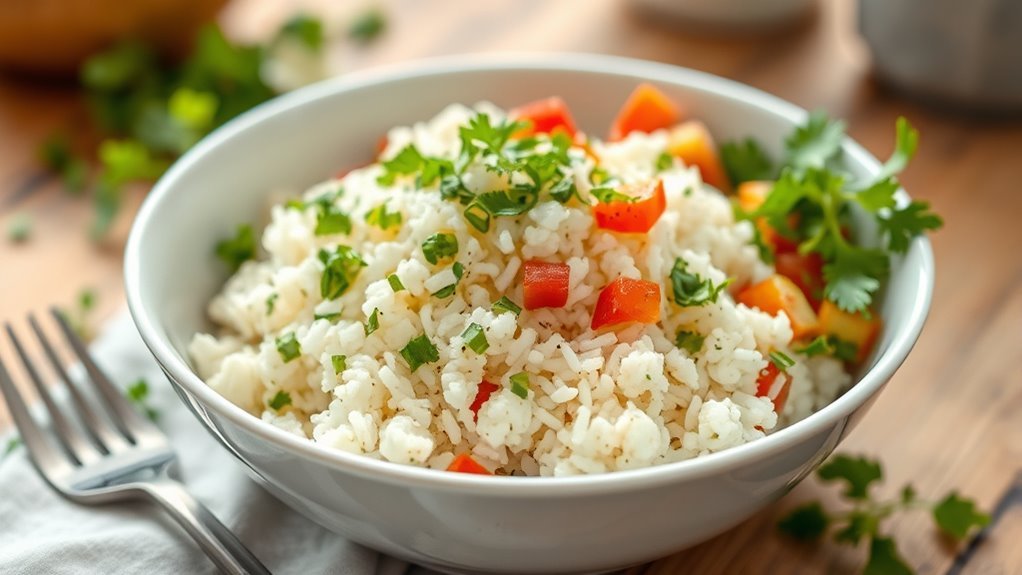
Cauliflower rice can be a fantastic addition to your meal plan, especially if you’re aiming to keep your carb intake low while still enjoying filling and satisfying dishes. For effective meal prep, consider batch-cooking cauliflower rice and storing it in airtight containers for quick access throughout the week. It’s versatile; you can pair it with various flavors—think garlic, ginger, or herbs like cilantro and parsley. Mix it with stir-fried vegetables, protein, or use it as a base for curries and stews. Experiment with flavor pairings to keep your meals exciting while adhering to keto guidelines. By incorporating cauliflower rice, you’re not just reducing carbs—you’re also enhancing your meals with nutrients and taste, all while enjoying the freedom of diverse culinary options.
Frequently Asked Questions about Cauliflower Rice and Keto
1. Is cauliflower rice suitable for a keto diet?
Yes, cauliflower rice is an excellent choice for a keto diet. It is low in carbohydrates and high in fiber, making it a perfect substitute for traditional rice, which is much higher in carbs. One cup of cauliflower rice contains about 5 grams of carbs, compared to around 45 grams in a cup of cooked white rice. This makes cauliflower rice a great option for those looking to maintain a state of ketosis.
2. How do I prepare cauliflower rice for a keto meal?
To prepare cauliflower rice, start by removing the leaves and stem from a head of cauliflower. Cut it into smaller chunks and pulse it in a food processor until it resembles the texture of rice. You can also use a box grater for a similar effect. Sauté the riced cauliflower in a pan with a little olive oil or butter for about 5-7 minutes, or until tender. Season as desired for a flavorful addition to your keto meals.
3. What are the nutritional benefits of cauliflower rice?
Cauliflower rice is packed with nutritional benefits. It is low in calories, with only about 25 calories per cup, and provides a good source of vitamins C and K. Additionally, it contains antioxidants and is rich in fiber, which aids in digestion and promotes a feeling of fullness. These attributes make cauliflower rice not only a keto-friendly option but also a nutritious addition to any diet.
4. Can I use frozen cauliflower rice for keto meals?
Yes, frozen cauliflower rice is a convenient option for keto meals. It is typically pre-riced and can be found in most grocery stores. When using frozen cauliflower rice, simply heat it directly from the freezer in a pan, following the cooking instructions on the package. This saves time and allows for easy meal prep while still keeping your carb intake low.
5. Are there any downsides to eating cauliflower rice on a keto diet?
While cauliflower rice is a healthy keto-friendly option, some individuals may experience digestive discomfort if they consume it in large quantities due to its high fiber content. Additionally, cauliflower can be a member of the cruciferous vegetable family, which may cause gas or bloating in some people. It’s best to introduce cauliflower rice gradually into your diet to see how your body reacts.
References
- https://www.healthline.com/nutrition/cauliflower-rice-keto
- https://www.medicalnewstoday.com/articles/324112
- https://www.washingtonpost.com/food/2020/08/12/cauliflower-rice-keto-diet/
- https://www.ncbi.nlm.nih.gov/pmc/articles/PMC7020523/
- https://www.eatright.org/health/wellness/preventing-illness/what-is-the-keto-diet
- https://www.verywellfit.com/what-is-cauli-rice-5199097
- https://www.heart.org/en/healthy-living/healthy-eating/eat-smart/nutrition-basics/keto-diet-what-you-need-to-know
- https://www.cdc.gov/healthyweight/healthy_eating/vegetables.html