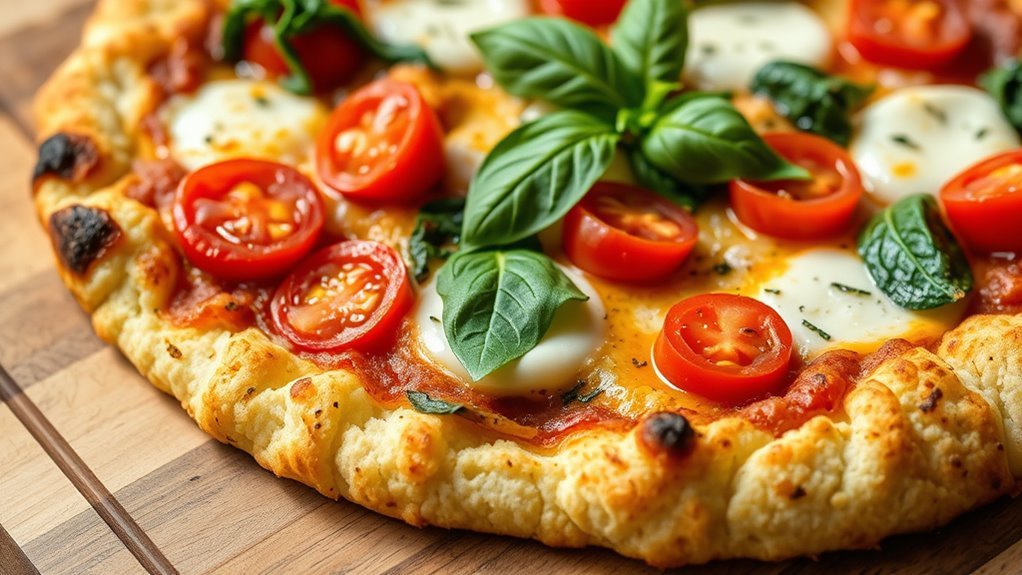

Yes, cauliflower crust is a keto-friendly option. It’s low in carbs, typically containing just 3-5 grams of net carbs per slice, making it a great alternative to traditional pizza crusts that have over 30 grams. Plus, it’s gluten-free and packed with vitamins. You can easily customize the flavor with herbs and toppings, keeping it aligned with your dietary goals. If you want to explore more about making your own or other low-carb alternatives, there’s plenty to discover.
Understanding Cauliflower Crust
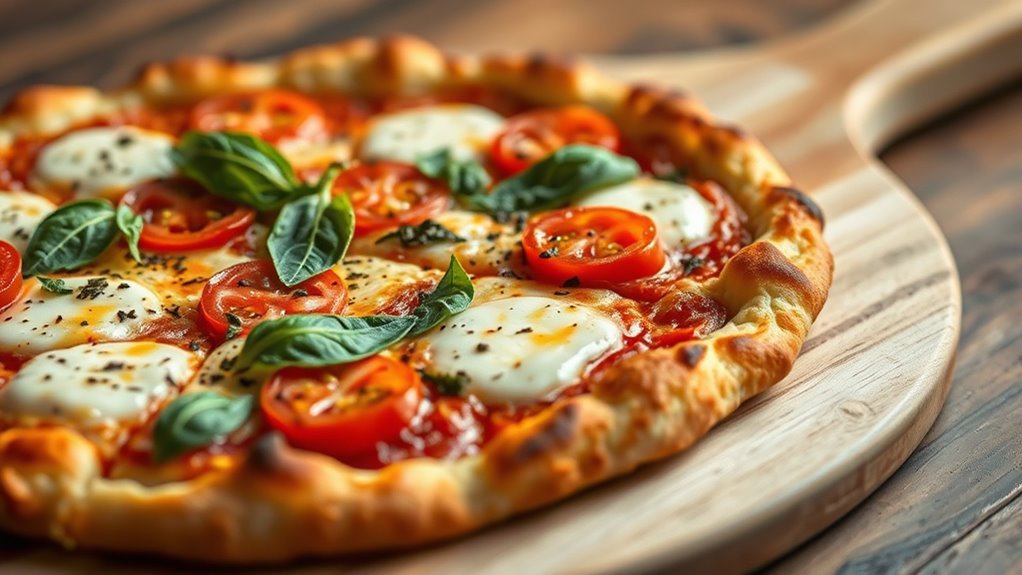
While many people enjoy traditional pizza crusts, understanding cauliflower crust can help you make healthier choices without sacrificing flavor. Cauliflower crust offers numerous benefits, like being lower in carbs and gluten-free, making it an appealing option for those on keto or gluten-sensitive diets. You can easily customize crust variations by adding herbs and spices, enhancing both taste and nutritional value. This versatile base can absorb flavors well, allowing you to create different textures and tastes. Plus, by incorporating cauliflower, you’re getting a good dose of vitamins and antioxidants. So whether you’re looking to cut carbs or explore new culinary options, cauliflower crust can be a satisfying and guilt-free alternative to traditional pizza.
Nutritional Breakdown of Cauliflower Crust
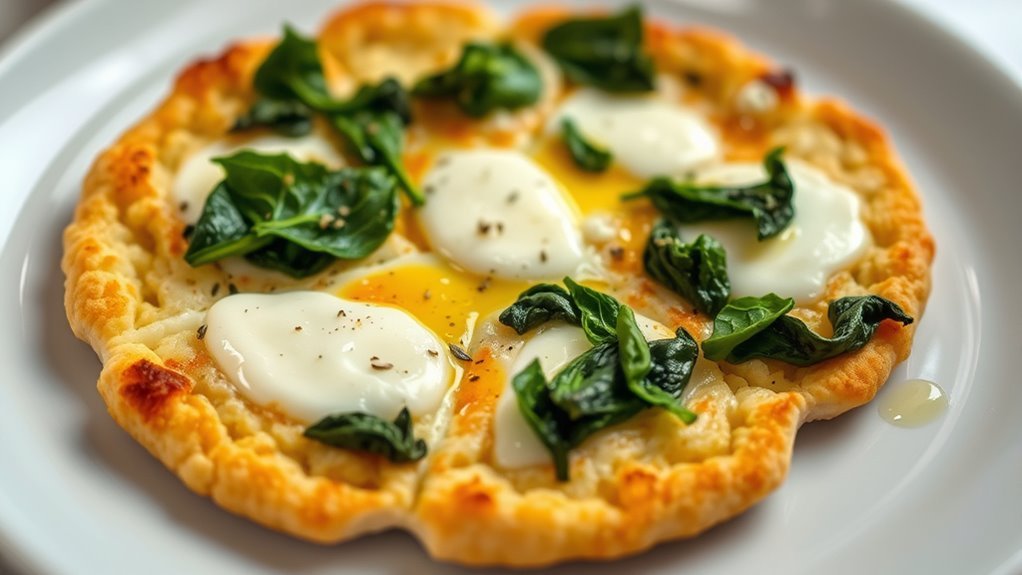
When considering cauliflower crust, it’s crucial to look at its carbohydrate content and overall nutrient profile. You’ll find that cauliflower crust typically contains fewer carbs than traditional dough, making it a popular choice for those on a keto diet. Comparing its nutrient profile with other crust options can help you make informed decisions about your meals.
Carbohydrate Content Analysis
Cauliflower crust has gained popularity among those following a keto diet, thanks primarily to its lower carbohydrate content compared to traditional wheat crusts. When analyzing the carbohydrates in cauliflower crust, consider these points:
- Carbohydrate Types: Cauliflower mainly contains non-starchy carbs, making it a better choice for keto.
- Net Carbs: Typically, a slice has about 3-5 grams of net carbs, allowing room for other meals.
- Fiber Content: It offers a decent amount of fiber, which aids digestion and keeps you feeling full.
- Comparison to Wheat: Traditional crusts can exceed 30 grams of carbs per slice, highlighting cauliflower’s benefit.
With this insight, you can make informed decisions about your keto-friendly pizza options.
Nutrient Profile Comparison
The nutritional profile of cauliflower crust makes it an appealing option for those on a keto diet. This alternative boasts low carbohydrates while packing in valuable nutrients. Cauliflower benefits you by providing a good source of vitamins C and K, along with fiber, which aids digestion. When you compare its nutrient density to traditional crusts, you’ll find that cauliflower offers fewer calories and more essential nutrients per serving. This means you can enjoy your favorite pizza without compromising your health goals. Plus, the antioxidants in cauliflower may support overall wellness, making it a smart choice. By opting for cauliflower crust, you’re not just reducing carbs; you’re also enhancing your nutrient intake, aligning perfectly with a balanced keto lifestyle.
Comparing Cauliflower Crust to Traditional Pizza Crust
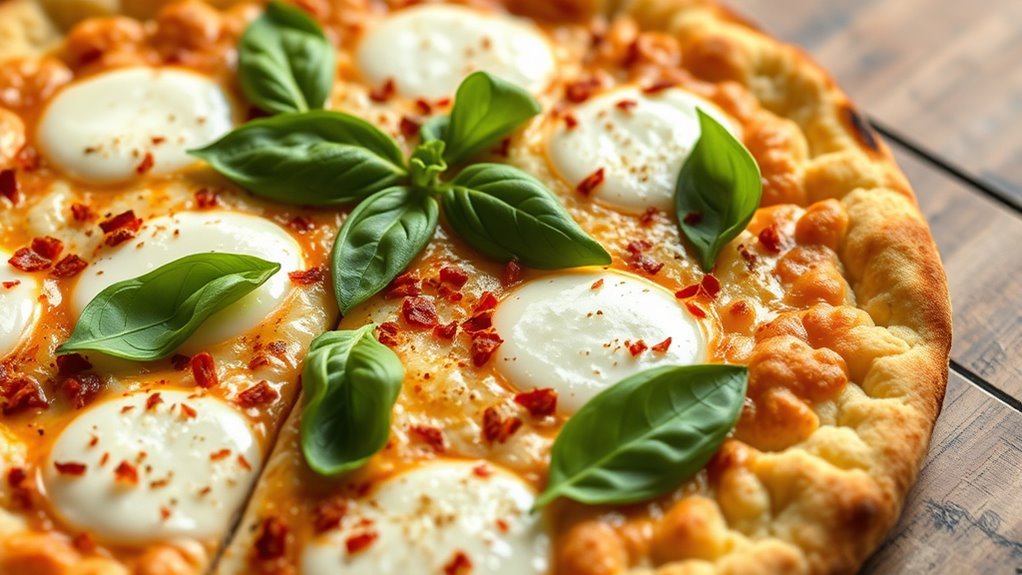
While many pizza lovers cherish the traditional crust for its chewy texture and rich flavor, cauliflower crust has emerged as a popular alternative, particularly among those following a ketogenic diet. Here’s how they compare:
- Cauliflower Benefits: Cauliflower is low in carbs and high in vitamins, making it a nutritious choice.
- Crust Texture: Traditional crust offers a more chewy and satisfying bite, while cauliflower crust tends to be denser and crumblier.
- Calories: Cauliflower crust generally contains fewer calories than traditional crust, appealing to those managing their intake.
- Flavor: Traditional crust has a distinct flavor that many crave, while cauliflower’s mild taste allows for versatile toppings.
Ultimately, your choice may depend on your dietary goals and taste preferences. Enjoy the freedom to experiment!
The Role of Carbohydrates in a Keto Diet
In a keto diet, understanding the role of carbohydrates is essential since it typically restricts carb intake to encourage fat burning. You’ll want to compare the carb content of cauliflower crust with traditional pizza crust, especially focusing on net carbs, which account for fiber and other factors. This knowledge can help you make informed choices that align with your keto goals.
Understanding Keto Carbs
How do carbohydrates fit into a ketogenic diet, and why is understanding their role essential for success? Grasping how carbs function within keto guidelines can empower you to make better food choices and enhance your results. Here’s what you need to know about carb counting:
- Net Carbs: Focus on net carbs, which are total carbs minus fiber and certain sugar alcohols.
- Carb Limits: Generally, aim for 20-50 grams of net carbs per day to maintain ketosis.
- Types of Carbs: Prioritize low-carb veggies and whole foods over processed sugars and grains.
- Monitoring: Regularly track your carb intake to stay aligned with your goals.
Understanding these aspects can help you navigate your keto journey with freedom and confidence.
Cauliflower vs. Traditional Crust
Cauliflower crust has become a popular alternative to traditional pizza crust, especially for those following a ketogenic diet. One of the main cauliflower benefits is its low carbohydrate content, making it a great choice for keto enthusiasts. Regarding texture differences, cauliflower crust tends to be softer and less chewy than wheat-based crusts, which can alter the overall pizza experience. Flavor comparison shows that while traditional crust offers a distinct wheat flavor, cauliflower has a milder taste that can easily absorb toppings. Various cooking methods, such as baking or air frying, can enhance the crust’s crispiness. Ultimately, whether you prefer the classic or innovative option, both can be tailored to fit your dietary needs and personal preferences.
Net Carbs Explained
Understanding net carbs is crucial for anyone following a ketogenic diet, as it directly influences your body’s ability to maintain ketosis. Net carbs are the total carbohydrates in a food minus fiber and certain sugar alcohols, which don’t greatly impact blood sugar levels. Here’s why you should pay attention to net carbs:
- Ketosis Maintenance: Keeping net carbs low helps sustain ketosis, the metabolic state that burns fat for energy.
- Fiber Benefits: Fiber is essential for digestion and can help you feel full, supporting keto principles.
- Blood Sugar Control: Monitoring net carbs aids in stabilizing blood sugar levels.
- Food Choices: Understanding net carbs allows you to make informed decisions about what to eat while enjoying your freedom on a keto diet.
How to Make Your Own Cauliflower Crust
If you’re looking to create a delicious and low-carb alternative to traditional pizza crust, making your own cauliflower crust can be a simple and rewarding process. Begin with cauliflower preparation: steam or microwave cauliflower florets until tender, then drain and squeeze out excess moisture. Next, pulse the cauliflower in a food processor until it resembles rice. Combine it with cheese, eggs, and seasonings for a flavorful base.
| Ingredient | Quantity | Purpose |
|---|---|---|
| Cauliflower | 1 medium head | Main ingredient |
| Cheese | 1 cup | Binding agent |
| Egg | 1 | Adds structure |
| Seasoning | To taste | Flavor enhancement |
Now, shape and bake your crust for a delightful pizza experience!
Store-Bought vs. Homemade Cauliflower Crust
When you’re deciding between store-bought and homemade cauliflower crust, you’ll want to reflect on factors like convenience, taste, and nutritional content. Here are some points to take into account:
- Convenience: Store-bought options save time, perfect for busy nights.
- Flavor Control: Homemade recipes let you customize spices and ingredients to suit your palate.
- Nutritional Content: You can control what goes into your crust when you make it at home, potentially avoiding additives.
- Cost: Making your own can be cheaper over time, especially if you regularly enjoy cauliflower crust.
Ultimately, both options have their pros and cons. Weighing these factors will help you choose the right path for your keto journey.
Tips for Enjoying Cauliflower Crust on Keto
To truly savor cauliflower crust on your keto journey, consider enhancing its texture and flavor through proper preparation techniques. Start by squeezing excess moisture from the cauliflower, which helps achieve a crispy crust. For cooking methods, pre-baking the crust before adding toppings can prevent sogginess and improve its structural integrity. When it comes to topping suggestions, opt for high-fat, low-carb ingredients like mozzarella cheese, pepperoni, or fresh vegetables like spinach and bell peppers. Don’t forget to season your crust with herbs and spices for an extra flavor boost. By experimenting with these techniques, you’ll create a delicious and satisfying cauliflower pizza that aligns perfectly with your keto lifestyle. Enjoy the freedom of creating your own unique flavor combinations!
Other Low-Carb Pizza Alternatives
While cauliflower crust is a popular choice for those following a keto diet, there are several other low-carb pizza alternatives worth exploring. These options can provide you with delicious flavors while keeping your carb count low:
- Zucchini Crust: Grated zucchini mixed with almond flour creates a satisfying base.
- Eggplant Slices: Thick, roasted eggplant slices serve as a unique and hearty crust.
- Portobello Mushrooms: Large mushroom caps can hold toppings for a savory, meaty alternative.
- Cheese Base: Melted cheese combined with flaxseed meal forms a flavorful, low-carb crust.
Each of these alternatives allows you to enjoy pizza without compromising your keto lifestyle, so get creative and find your favorite!
1. What is cauliflower crust?
Cauliflower crust is a popular alternative to traditional pizza crust made from flour. It is primarily made from finely grated cauliflower, which is cooked, drained of excess moisture, and then mixed with cheese, eggs, and spices to form a dough-like consistency. This crust is particularly favored by those following low-carb or gluten-free diets.
2. Is cauliflower crust keto-friendly?
Yes, cauliflower crust is generally considered keto-friendly. It is low in carbohydrates compared to traditional wheat-based crusts, making it suitable for those following a ketogenic diet. A typical serving of cauliflower crust may contain around 5-10 grams of net carbs, depending on the specific recipe, while traditional crust can have upwards of 30 grams per serving.
3. How do you make cauliflower crust?
To make cauliflower crust, start by preheating your oven to 400°F (200°C). Grate a head of cauliflower into rice-sized pieces and steam or microwave it until tender. After cooking, place the cauliflower in a clean dish towel and squeeze out as much moisture as possible. Mix the drained cauliflower with cheese (like mozzarella), an egg, and seasonings of your choice. Shape the mixture into a pizza crust on a baking sheet lined with parchment paper, then bake for about 20-25 minutes until golden brown before adding toppings and baking again.
4. Can I buy pre-made cauliflower crust?
Yes, many grocery stores now offer pre-made cauliflower crusts in the frozen or refrigerated sections. These products vary in nutritional content, so it’s important to check the label for carbohydrate levels and other ingredients to ensure they fit your keto diet. Brands like Caulipower and others provide convenient options for those who want to enjoy cauliflower crust without the hassle of making it from scratch.
5. What are some toppings to consider for a keto cauliflower crust pizza?
When topping a keto cauliflower crust pizza, consider using high-fat, low-carb ingredients. Some great options include mozzarella cheese, pepperoni, olives, mushrooms, spinach, and grilled chicken. Avocado and pesto can also add flavor without increasing carb counts. Be cautious with sauces; opt for sugar-free marinara or olive oil to keep the carb levels low. Always check ingredient labels to ensure they align with your keto dietary needs.
References
- https://www.healthline.com/nutrition/cauliflower-crust-keto
- https://www.medicalnewstoday.com/articles/cauliflower-crust
- https://www.ncbi.nlm.nih.gov/pmc/articles/PMC7072338/
- https://www.journalofnutrition.org/content/early/2020/01/14/jn.nxyz
- https://www.verywellfit.com/what-is-cauliflower-crust-5194786
- https://www.cdc.gov/healthyweight/healthy_eating/vegetables.html
- https://www.eatright.org/health/wellness/healthy-eating/what-are-the-health-benefits-of-cauliflower
- https://www.nutrition.org.uk/healthyliving/healthydiet/vegetables.html