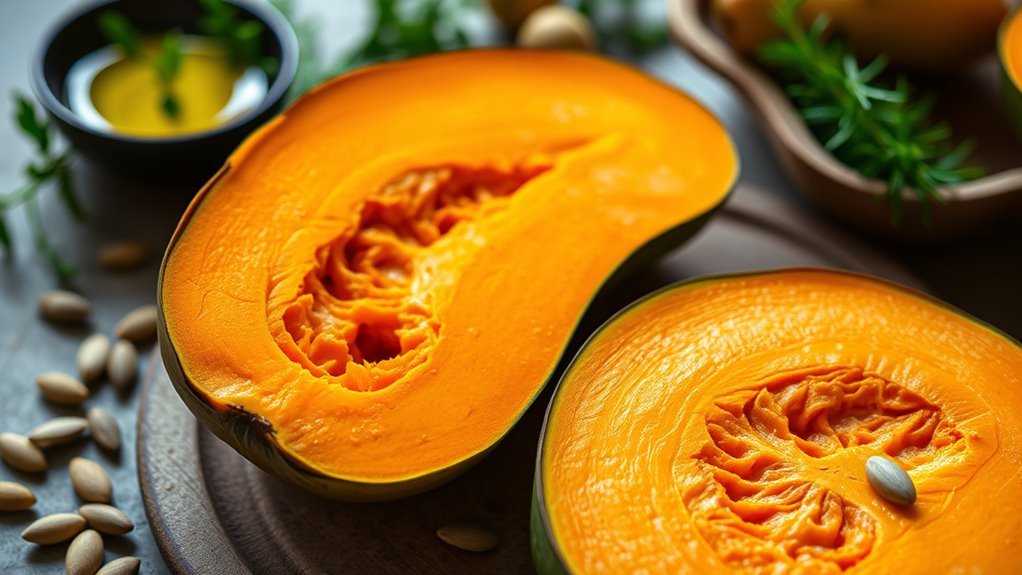

Butternut squash isn’t strictly keto-friendly due to its carb content, with about 12 grams of carbs per 100 grams. However, you can enjoy it in moderation by controlling portion sizes, as its fiber helps manage blood sugar levels. Pairing it with high-fat foods can also keep your macros balanced. Consider opting for smaller servings and incorporating it thoughtfully into your meals. Learn more about how to make butternut squash fit into your keto lifestyle.
Understanding the Carb Content of Butternut Squash
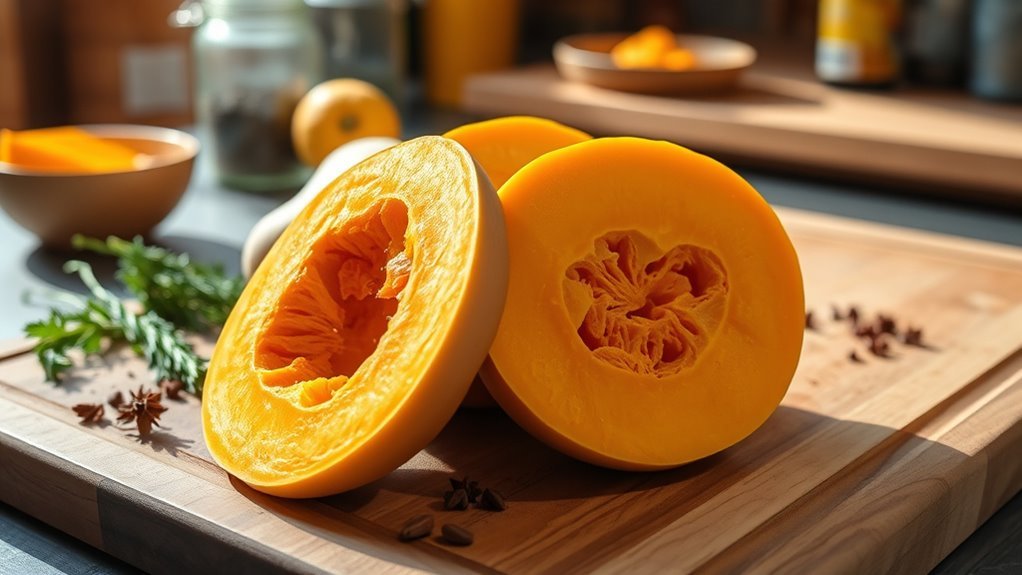
When considering a keto diet, understanding the carb content of butternut squash is essential, especially since this vegetable can be a delicious addition to your meals. Butternut squash contains about 12 grams of carbs per 100 grams, which means if you’re focused on carb counting, it’s vital to factor this into your daily intake. While it has a moderate glycemic index, indicating it can raise blood sugar levels, the fiber content helps mitigate this effect. If you enjoy butternut squash, consider pairing it with high-fat foods to maintain ketosis. Ultimately, balance is key, so you can still savor this nutritious vegetable while adhering to your keto lifestyle. Enjoy the freedom to explore flavors without compromising your dietary goals.
Nutritional Benefits of Butternut Squash
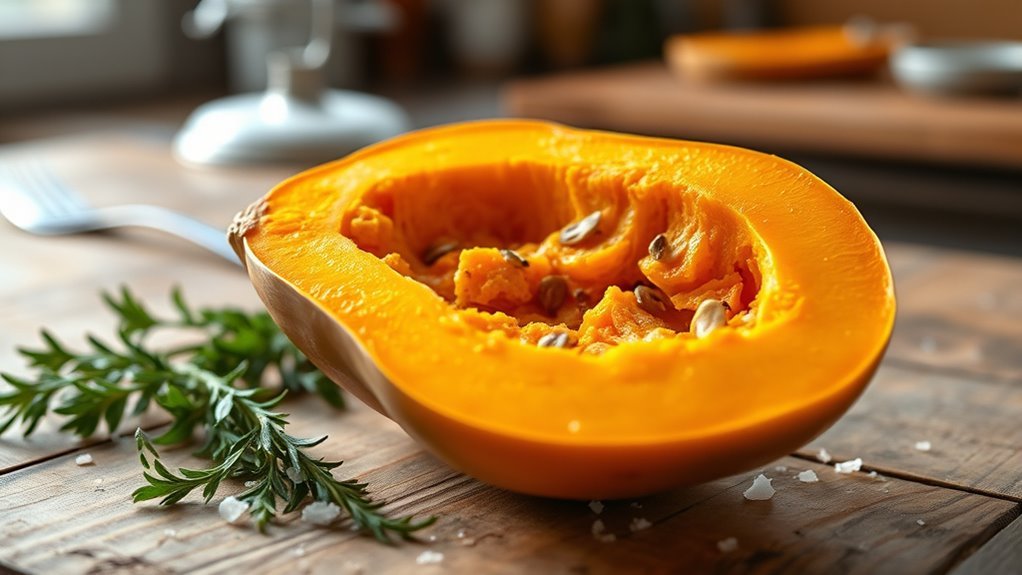
While keeping an eye on carb content is important, it’s equally beneficial to recognize the nutritional advantages that butternut squash offers. This vibrant vegetable isn’t just delicious; it’s packed with health benefits and a rich vitamin content.
Consider these highlights:
- High in Vitamin A: Supports eye health and boosts immunity.
- Rich in Antioxidants: Helps combat oxidative stress and inflammation.
- Source of Fiber: Aids digestion and promotes a feeling of fullness.
- Low in Calories: A great option for those watching their weight.
Incorporating butternut squash into your meals can enhance your overall nutrient intake while still allowing for a satisfying culinary experience. Enjoy its versatility and reap the nutritional rewards!
How Butternut Squash Fits Into a Keto Diet
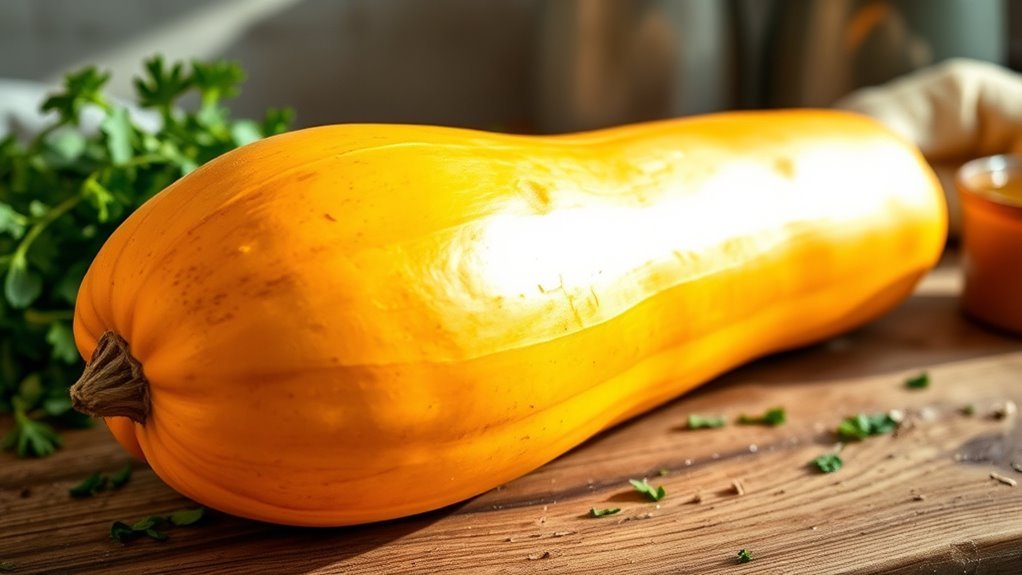
Although butternut squash is often celebrated for its nutritional benefits, its role in a keto diet can be a bit nuanced due to its carbohydrate content. With around 12 grams of carbs per cup, it can challenge your adherence to keto guidelines. However, you don’t have to completely eliminate it from your meals. Moderation is key; using smaller portions can allow you to enjoy butternut nutrition without exceeding your carb limits. Consider pairing it with high-fat ingredients, which can help balance your macros. If you’re mindful of your overall carb intake and plan your meals accordingly, butternut squash can still fit into your keto lifestyle, providing fiber and essential vitamins while satisfying your culinary cravings.
Comparing Butternut Squash to Other Low-Carb Vegetables
Butternut squash, despite its popularity, isn’t the only vegetable worth considering on a low-carb diet. When you look at a butternut squash comparison, several low-carb alternatives might catch your eye. These options can help diversify your meals while keeping your carb intake in check.
- Zucchini, with its mild flavor and versatility
- Cauliflower, perfect for rice and mash substitutes
- Spinach, packed with nutrients and low in carbs
- Broccoli, offering fiber and vitamins in every bite
Each of these vegetables has its unique benefits, providing you with options to enjoy while staying aligned with your low-carb goals. Embracing a variety of low-carb alternatives can enhance both taste and nutrition in your meals.
Delicious Keto-Friendly Butternut Squash Recipes
If you’re looking to incorporate butternut squash into your keto meal plan, you’ll be pleased to know there are plenty of delicious recipes that can satisfy your cravings without derailing your carb count. Here are a couple of keto-friendly options to try:
| Recipe | Ingredients | Cooking Method |
|---|---|---|
| Butternut Squash Soup | Squash, broth, cream, spices | Blend and simmer |
| Creamy Squash Risotto | Squash, cauliflower rice, cheese | Stir and cook slowly |
These recipes allow you to enjoy the rich, nutty flavors of butternut squash while keeping your carb intake in check. They’re not only satisfying but also packed with nutrients, making them perfect additions to your keto lifestyle. Enjoy your culinary freedom!
Tips for Preparing and Cooking Butternut Squash
When preparing butternut squash, using the right cutting techniques can make a big difference in your cooking experience. Whether you choose to roast or steam, each method offers distinct flavors and textures that can elevate your dish. Understanding these approaches will help you maximize the squash’s natural sweetness while keeping it keto-friendly.
Cutting Techniques for Squash
Preparing butternut squash can seem intimidating, but mastering a few cutting techniques can make the process much easier. Start by using effective peeling methods—consider a vegetable peeler for the skin or a sharp knife for more control. Once peeled, you can employ various slicing techniques to create uniform pieces for even cooking.
- Cut the squash in half lengthwise for easy access to the seeds.
- Scoop out the seeds with a spoon to prepare for cooking.
- Dice the squash into cubes for soups or stews.
- Slice it into wedges for roasting.
With these tips, you’ll be able to transform butternut squash into delicious dishes without the hassle!
Roasting vs. Steaming Methods
While both roasting and steaming are popular methods for cooking butternut squash, each offers distinct advantages that can enhance your culinary experience. Roasting techniques, like tossing squash with olive oil and spices, caramelize the sugars, resulting in a rich, deep flavor. This method also creates a pleasing texture, perfect for adding to salads or as a side dish. On the other hand, steaming benefits include preserving more nutrients and moisture, making it a healthier option if you’re watching your macros. Steamed squash can be blended into soups or purees, maintaining its vibrant color and flavor. Ultimately, the choice between roasting and steaming comes down to your taste preference and nutritional goals. Enjoy experimenting with both!
Making Informed Choices: Portion Control and Serving Suggestions
When it comes to butternut squash, portion size really matters, especially on a keto diet. To balance out the carbs, consider pairing it with proteins like chicken or fish, which can help keep your meal more keto-friendly. By being mindful of your servings and combinations, you can enjoy butternut squash without compromising your dietary goals.
Portion Size Matters
Understanding portion sizes is essential for anyone following a keto diet, especially when it comes to foods like butternut squash. While it’s nutritious, its carb content can add up quickly. Practicing portion control helps you enjoy its flavor without derailing your diet.
Consider these serving sizes:
- A half-cup of roasted butternut squash has about 12 grams of carbs.
- A quarter-cup of puréed squash provides a creamy addition with fewer carbs.
- One cup of raw squash, chopped, is perfect for salads or stir-fries.
- A tablespoon of butternut squash seeds can be a crunchy topping.
Pairing With Proteins
To maximize the benefits of butternut squash on a keto diet, pairing it with the right proteins can enhance both flavor and nutritional balance. Consider combining it with grilled chicken or turkey for a hearty meal idea. The savory notes of these proteins complement the natural sweetness of butternut squash, creating delightful flavor combinations. For a plant-based option, try it with tofu or tempeh, which provide a satisfying protein boost. Serving suggestions include a butternut squash salad topped with sliced almonds and feta, or a creamy squash soup with added shrimp. These protein pairings not only enhance taste but also maintain the low-carb integrity of your meal, allowing you the freedom to enjoy delicious, nutrient-rich dishes.
Frequently Asked Questions about Butternut Squash and Keto Diet
1. Is butternut squash considered keto-friendly?
Butternut squash is somewhat moderate in carbohydrates, which makes it a bit tricky for strict keto dieters. One cup of cooked butternut squash contains approximately 16 grams of carbohydrates, with around 2 grams of fiber, resulting in about 14 grams of net carbs. While some people on a keto diet may include small portions of butternut squash, it’s essential to monitor your total carbohydrate intake to ensure you stay within your daily limits.
2. How can I incorporate butternut squash into a keto diet?
If you want to include butternut squash in your keto meal plan, consider using it sparingly. You can create dishes that incorporate small amounts, such as butternut squash soup, roasted cubes in salads, or as a side dish paired with protein. Opt for recipes that balance the squash with low-carb ingredients, and keep track of your portion sizes to maintain your carbohydrate goals.
3. What are the nutritional benefits of butternut squash?
Butternut squash is rich in vitamins A and C, which are essential for immune function, skin health, and vision. It also contains antioxidants and is a good source of potassium, which supports heart health and muscle function. Additionally, its fiber content aids in digestion, making it a nutritious option even for those watching their carbohydrate intake.
4. Are there keto-friendly alternatives to butternut squash?
Yes, there are several low-carb alternatives to butternut squash that fit well within a keto diet. Some popular options include cauliflower, zucchini, and spaghetti squash. Cauliflower, in particular, can be used to create a rice or mash substitute, while zucchini can be spiralized into noodles or used in a variety of dishes. These substitutes provide similar textures while being much lower in carbohydrates.
5. What is the best way to prepare butternut squash for a keto diet?
To prepare butternut squash in a keto-friendly manner, consider roasting, steaming, or sautéing it with healthy fats such as olive oil or butter. Roasting enhances its natural sweetness and flavor while keeping the carbohydrate content intact. Be mindful of portion sizes, and pair it with high-protein foods or healthy fats to create a balanced meal that fits within your keto guidelines.
References
- https://www.ncbi.nlm.nih.gov/pmc/articles/PMC6465950/
- https://www.healthline.com/nutrition/keto-diet-foods#vegetables
- https://www.webmd.com/diet/obesity/butternut-squash-nutrition
- https://www.medicalnewstoday.com/articles/323063
- https://www.nutritionvalue.org/vegetables/nutrition/butternut_squash
- https://www.hsph.harvard.edu/nutritionsource/what-should-you-eat/vegetables/