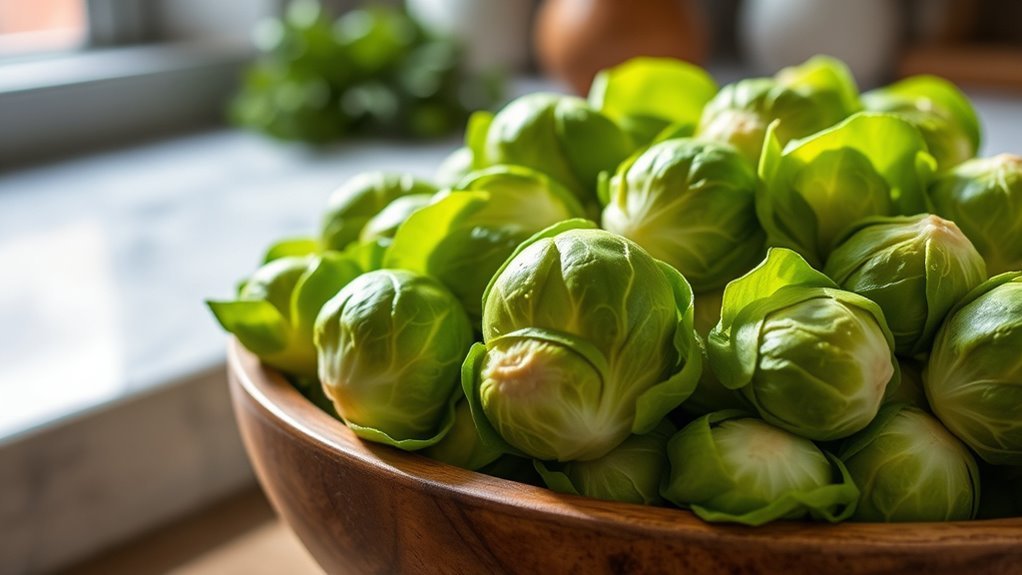

Yes, Brussels sprouts are definitely keto-friendly! One cup of cooked Brussels sprouts contains about 8 grams of total carbs, but with 4 grams of fiber, you’ll only get 4 grams of net carbs. They’re packed with vitamins C and K, along with antioxidants that promote overall health. Plus, their low glycemic index helps stabilize blood sugar levels. If you’re curious about cooking methods and pairing suggestions, there’s plenty more to explore!
Nutritional Profile of Brussels Sprouts
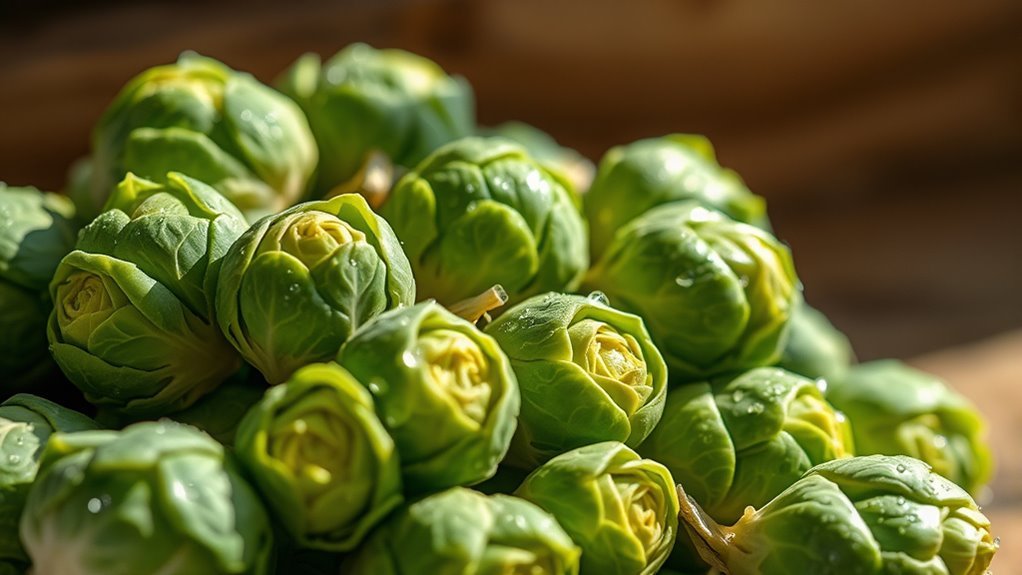
Brussels sprouts are a nutrient-dense vegetable that can fit well into a keto diet. Their impressive fiber content aids digestion while keeping you full without spiking your blood sugar, thanks to their low glycemic index. Packed with vitamins C and K, their vitamin profile supports immune function and bone health. Additionally, the mineral content, including potassium and manganese, contributes to various bodily functions. Brussels sprouts boast strong antioxidant properties, which help combat oxidative stress, and their phytochemical benefits may reduce inflammation. With a calorie count of about 38 per cup, they’re a low-calorie option that doesn’t compromise on nutrition. Incorporating these little green gems into your meals can enhance both flavor and health benefits.
Carb Content in Brussels Sprouts
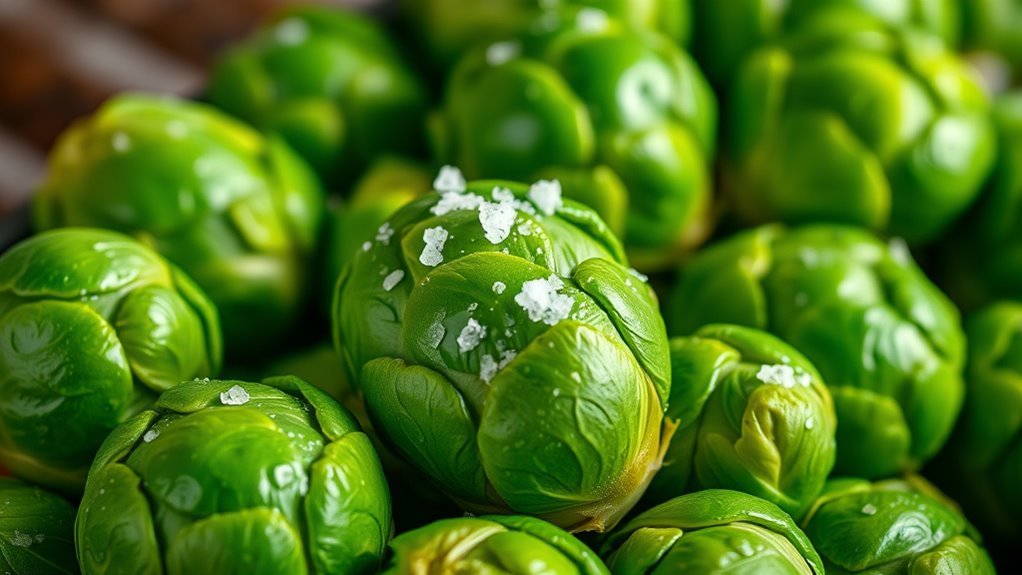
When considering the carb content in Brussels sprouts, you’ll find that they’re relatively low in carbohydrates, making them an excellent choice for a keto diet. In fact, one cup of cooked Brussels sprouts contains about 8 grams of total carbohydrates, with 4 grams coming from dietary fiber. This means you’ll only net around 4 grams of carbs per serving, which fits well within the typical daily carb limit for keto enthusiasts. Plus, the high fiber content not only aids digestion but also helps you feel full, supporting your weight management goals. So, if you’re looking to enjoy a nutritious vegetable without derailing your keto journey, Brussels sprouts can be a flavorful and satisfying option.
Health Benefits of Brussels Sprouts
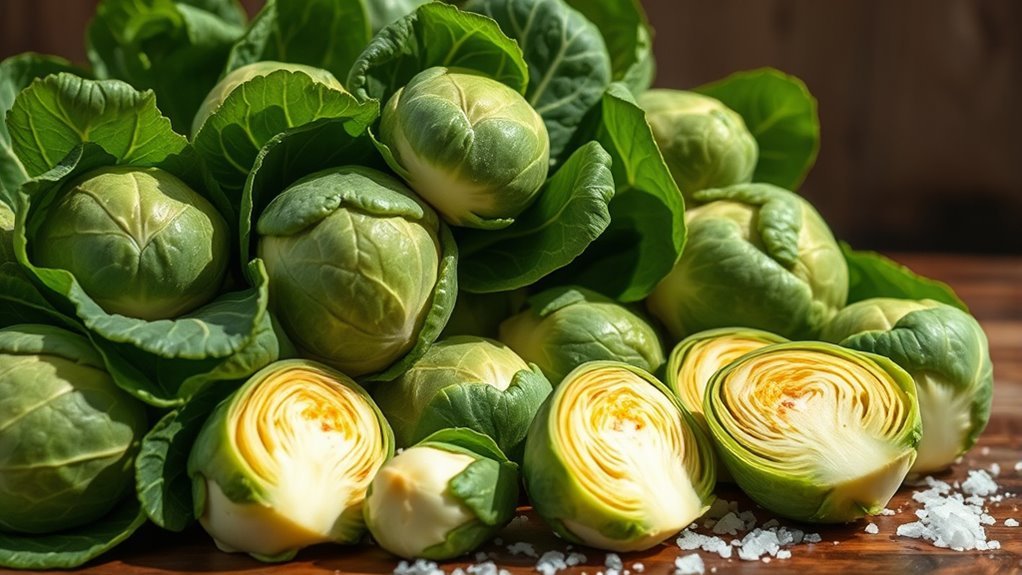
Although you might think of Brussels sprouts merely as a side dish, these little cruciferous vegetables pack a significant health punch. Their impressive nutrient density makes them a fantastic addition to your diet, offering numerous health benefits:
- Rich in antioxidants, which help combat oxidative stress.
- High in fiber, promoting digestive health and satiety.
- Packed with vitamins, particularly K and C, essential for immune function and bone health.
- Supports heart health by reducing inflammation and lowering cholesterol levels.
Including Brussels sprouts in your meals not only enhances flavor but also empowers your body with essential nutrients. Embrace these tiny powerhouses and enjoy the freedom of better health!
How Brussels Sprouts Fit Into a Keto Diet
When you consider incorporating Brussels sprouts into your keto diet, it’s crucial to look at their nutritional profile and carb count. These veggies are low in carbs while being rich in fiber and nutrients, making them a suitable choice for maintaining ketosis. Understanding how they fit into your daily carb allowance can help you enjoy their benefits without compromising your dietary goals.
Nutritional Profile Overview
Brussels sprouts are a surprisingly versatile vegetable that can fit well into a keto diet, especially due to their low carbohydrate content. Beyond their carb count, they offer a wealth of health benefits, making them a fantastic choice for those seeking freedom in their dietary choices. Here are some key points to ponder:
- Rich in vitamins C and K, boosting your immune system.
- A good source of antioxidants, supporting overall health.
- High in fiber, promoting gut health and satiety.
- Low in calories, making them a guilt-free addition to meals.
When cooking, try roasting or sautéing them to enhance their natural flavors. With these cooking tips, you can enjoy Brussels sprouts while reaping their nutritional rewards on your keto journey.
Carb Count Analysis
If you’re monitoring your carb intake on a keto diet, you’ll be pleased to know that Brussels sprouts are an excellent choice. These nutrient-dense vegetables contain about 4 grams of net carbs per cup, making them a smart carb source for meal planning. Their low carb count allows you to enjoy the keto benefits without compromising your dietary goals. Plus, Brussels sprouts serve as a fantastic vegetable alternative to higher-carb options like potatoes or grains. When cooking, try roasting or sautéing them with healthy fats to enhance flavor and maintain their nutritional value. Incorporating Brussels sprouts into your meals can add variety while keeping your carb intake in check. Enjoy experimenting with different recipes and cooking tips!
Portion Sizes and Serving Suggestions
When incorporating Brussels sprouts into your keto diet, it’s important to contemplate the ideal portion size, typically around one cup cooked, to keep your carb intake in check. Different cooking methods, like roasting or sautéing, can enhance their flavor and texture, making them a delicious addition to your meals. Pair them with ingredients like bacon or garlic for added taste, ensuring your dish remains both satisfying and keto-friendly.
Ideal Portion Size
Finding the right portion size for Brussels sprouts can enhance your keto diet while ensuring you meet your nutritional goals. An ideal serving is about one cup, which offers the perfect balance of nutrients while respecting portion control. This helps you enjoy the health benefits without overindulging.
Consider these tips for your Brussels sprouts servings:
- Aim for one cup to maintain your carb limits.
- Pair them with healthy fats like olive oil for better flavor and satiety.
- Experiment with seasonings to keep meals exciting.
- Use them as a side dish to complement proteins for a well-rounded meal.
Enjoy the freedom of exploring different combinations while staying true to your keto lifestyle!
Cooking Methods
While Brussels sprouts can be prepared in various ways, the cooking methods you choose can greatly impact their flavor and texture, as well as how they fit into your keto meal plan. Steaming benefits include preserving nutrients while softening the sprouts without adding extra fats. This method maintains their natural flavor, making them a healthy option. On the other hand, roasting techniques caramelize the sprouts, enhancing their sweetness and adding a delightful crunch. Tossing them with olive oil and seasoning before roasting can create a satisfying side dish. Remember to keep portion sizes in mind, as these cooking methods can influence how filling your meal is. Enjoy experimenting to find the perfect balance that suits your tastes and dietary goals!
Flavor Pairing Suggestions
Although Brussels sprouts have a unique flavor on their own, pairing them with complementary ingredients can elevate your meal. Discovering the right flavor combinations can truly enhance your dining experience. Here are some seasoning suggestions to get you started:
- Bacon or pancetta: Adds richness and a delightful crunch.
- Garlic and lemon: Brightens the dish with zesty freshness.
- Parmesan cheese: Introduces a savory, umami depth.
- Balsamic vinegar: Offers a sweet-tart contrast that balances well.
Experimenting with these pairings not only enhances the taste but also keeps your keto meals exciting. Remember, portion sizes matter too—about one cup of cooked Brussels sprouts is a satisfying serving that fits well within your daily carb limits. Enjoy your culinary freedom!
Cooking Methods for Brussels Sprouts
Brussels sprouts can be prepared in a variety of delicious ways, making them a versatile addition to any keto-friendly meal. One popular method is roasting, which enhances their natural sweetness and creates a crispy texture. You can experiment with different roasting techniques, like adding olive oil and seasonings, to elevate the flavor. Sautéing is another fantastic option; it allows you to quickly cook the sprouts while keeping them tender. With sautéing options, you can incorporate garlic or bacon for added richness. Both methods retain the nutritional benefits of Brussels sprouts, ensuring you stay aligned with your keto goals. So, whether you roast or sauté, these cooking methods will make your Brussels sprouts a delightful and satisfying dish.
Pairing Brussels Sprouts With Other Keto Foods
Pairing Brussels sprouts with other keto foods can elevate your meals and enhance their flavor profiles. You’ll find that these little veggies can complement a variety of ingredients, making your keto recipes even more delicious. Here are some great flavor combinations to take into account during meal prep:
- Bacon or pancetta for a savory, smoky twist
- Garlic and lemon to brighten up their natural taste
- Parmesan cheese for a rich, creamy touch
- Nuts like almonds or walnuts for added crunch and healthy fats
Incorporating these pairings not only enhances the taste but also guarantees you’re sticking to your keto lifestyle. So, get creative and enjoy the freedom of exploring new flavors with Brussels sprouts!
Common Myths About Brussels Sprouts and Keto
While many people embrace Brussels sprouts as a keto-friendly vegetable, several myths persist about their suitability for a low-carb diet. One common misconception is that they’re too high in carbs. In reality, a cup of cooked Brussels sprouts contains about 8 grams of carbs, making them a manageable option within a keto meal plan. Another myth suggests that they can’t be enjoyed in various recipes, but with some creativity, you can incorporate them into diverse dishes. Myth busting reveals that these veggies are rich in fiber and nutrients, supporting your overall health. So, don’t let keto misconceptions deter you—Brussels sprouts can be a delicious and nutritious addition to your low-carb lifestyle.
Tips for Including Brussels Sprouts in Your Meal Plan
If you’re looking to incorporate Brussels sprouts into your meal plan, there are several simple strategies you can use to make them a regular part of your diet. Here are some tips to enhance your meal prep:
- Roast them with olive oil and garlic for a crispy texture.
- Try different seasoning ideas, like balsamic vinegar or lemon zest, to elevate their flavor.
- Add them to stir-fries or salads for extra crunch and nutrition.
- Freeze them for easy access during busy weeks.
Frequently Asked Questions
Can I Eat Brussels Sprouts Raw on a Keto Diet?
You can absolutely eat raw Brussels sprouts on a keto diet! Imagine strolling through a vibrant garden, plucking fresh greens. Raw Brussels sprouts pack a punch of nutrients, offering benefits like high fiber and vitamin C. Toss them into a keto salad with avocado and feta for a delicious crunch. Embracing these little powerhouses brings freedom to your plate while keeping carbs in check. Enjoy discovering the fresh, crisp world of raw Brussels sprouts!
Are Frozen Brussels Sprouts as Keto-Friendly as Fresh Ones?
Yes, frozen Brussels sprouts can be just as keto-friendly as fresh ones. They retain most of their frozen nutrition, making them a convenient choice. However, cooking methods matter—steaming or roasting preserves their nutrients better than boiling. If you’re looking for an easy, low-carb side, frozen sprouts are perfect. Just watch out for added sauces or seasonings that might contain hidden carbs, and enjoy the freedom to incorporate them into your meals!
Do Brussels Sprouts Cause Bloating on a Keto Diet?
Brussels sprouts can cause bloating symptoms for some people, with studies showing that nearly 30% of individuals experience digestive discomfort after eating them. This cruciferous vegetable is high in fiber, which can be tough on sensitive digestive systems. If you’re pursuing digestive health on a keto diet, consider starting with smaller portions to gauge your body’s response. Remember, everyone’s digestion is unique, so listen to your body for the best results!
Can I Use Brussels Sprouts in Keto Desserts?
Yes, you can use Brussels sprouts in keto desserts! While it might sound unconventional, their unique flavor can add depth to recipes. Try incorporating them into keto dessert recipes like brownies or smoothies, blending them well to mask their taste. They’re low in carbs and high in fiber, making them a great choice for a keto-friendly treat. Just be sure to balance their flavor with sweeteners and other ingredients to create a delicious dessert.
How Do Brussels Sprouts Compare to Other Keto Vegetables?
Brussels sprouts shine brightly among keto vegetables, boasting a rich nutritional profile. With about 6 grams of carbs per cup, they’re lower than many options, like carrots or peas. Imagine savoring their nutty flavor while knowing they’re packed with vitamins C and K. They offer fiber, too, aiding digestion. So, if you’re seeking variety in your keto journey, Brussels sprouts are a delightful choice, providing freedom from monotony while keeping your carb count in check.
Frequently Asked Questions about Brussel Sprouts and Keto
1. Are Brussel sprouts keto-friendly?
Yes, Brussel sprouts are considered keto-friendly. They are low in carbohydrates, with approximately 5 grams of net carbs per 100 grams, making them a suitable vegetable option for those following a ketogenic diet. Additionally, they are high in fiber, which can help you feel full and satisfied.
2. How many carbs are in Brussel sprouts?
Brussel sprouts contain approximately 9 grams of total carbohydrates per 100 grams. However, they also provide about 4 grams of dietary fiber, resulting in around 5 grams of net carbs. This low carbohydrate count makes them an excellent vegetable choice for maintaining ketosis.
3. Can I eat Brussel sprouts on a keto diet?
Absolutely! Brussel sprouts can be included in a keto diet. They can be roasted, sautéed, or steamed, and make a delicious side dish or salad ingredient. Just be mindful of portion sizes to keep your carb intake within your daily limits.
4. What are the health benefits of eating Brussel sprouts on keto?
Brussel sprouts are rich in vitamins C and K, antioxidants, and other essential nutrients. Their high fiber content aids in digestion and may help regulate blood sugar levels, which is beneficial on a keto diet. Additionally, they support heart health and may reduce inflammation, aligning well with keto’s emphasis on healthy fats and whole foods.
5. How can I prepare Brussel sprouts for a keto meal?
Brussel sprouts can be prepared in various ways while keeping them keto-friendly. You can roast them with olive oil, garlic, and herbs for added flavor. Sautéing them with bacon or pancetta is another popular method that adds healthy fats and enhances the taste. Additionally, they can be shredded and used in salads or stir-fries for a nutritious boost.
References
- https://www.healthline.com/nutrition/brussels-sprouts-keto
- https://www.ncbi.nlm.nih.gov/pmc/articles/PMC6342323/
- https://www.medicalnewstoday.com/articles/brussels-sprouts-nutrition
- https://www.webmd.com/diet/obesity/ss/slideshow-brussels-sprouts
- https://www.livescience.com/45548-brussels-sprouts-nutrition.html
- https://www.eatright.org/health/wellness/preventing-illness/brussels-sprouts-nutrition-facts
- https://www.bbcgoodfood.com/howto/guide/what-brussels-sprouts-nutrition-facts
- https://www.nutrition.gov/topics/whats-food/vegetables/brussels-sprouts