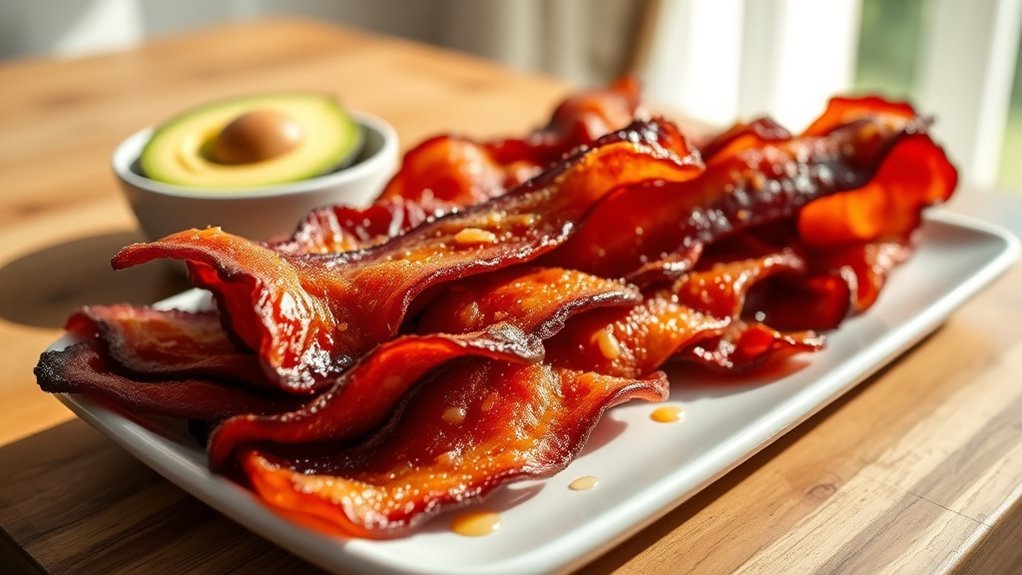

Yes, bacon is keto-friendly! It has a low carbohydrate content, typically containing 0 to 1 gram of carbs per slice. This makes it an excellent source of healthy fats, crucial for maintaining ketosis. Plus, bacon provides protein and important vitamins like B12. However, be mindful of sodium and preservatives, as they can impact your health. If you’re curious about how to integrate bacon into your meal plans or explore alternatives, there’s much more to discover!
Understanding the Ketogenic Diet
When you commence on a ketogenic diet, you’re fundamentally shifting your body’s primary energy source from carbohydrates to fats. This change relies on key keto principles—primarily high fat intake, moderate protein, and minimal carbs. As you adopt this lifestyle, it’s vital to debunk common diet misconceptions, like the belief that all fats are unhealthy. In reality, healthy fats, like those from avocados and nuts, are essential for energy and overall health. You’ll also need to be mindful of your protein intake, as excessive protein can be converted into glucose, potentially disrupting ketosis. Understanding these principles will empower you to make informed choices, leading to greater freedom in your dietary habits while promoting weight loss and improved energy levels.
Nutritional Profile of Bacon
Bacon is often celebrated in the ketogenic community for its rich flavor and high fat content, making it a popular choice among those looking to maintain ketosis. A typical slice of cooked bacon contains about 42 calories, primarily from fat, which is perfect for a low-carb diet. It’s also a good source of protein, providing about 3 grams per slice. Beyond calories, bacon contains essential vitamins like B12, which supports nerve function, and B3, important for metabolism. While it’s a flavorful addition to meals, moderation is key. Enjoying bacon can fit into your keto lifestyle, but be mindful of the overall balance in your diet to guarantee you’re meeting all your nutritional needs.
Carb Content in Bacon

When considering bacon’s carb content, it’s important to note that most varieties contain negligible amounts of carbohydrates. Generally, a typical serving of bacon has about 0 to 1 gram of carbs, making it a suitable choice for a keto diet. However, the type of bacon you choose can influence its nutritional profile, so it’s worth comparing options.
Bacon Nutritional Overview
For those following a ketogenic diet, understanding the nutritional makeup of foods is essential, especially when it comes to carb content. Bacon is a popular choice due to its low carb count, typically containing less than 1 gram of carbs per slice. However, the nutritional values can vary among bacon varieties, such as turkey bacon or pancetta, and depend on the bacon preparation method. For instance, crispy cooked bacon might have slightly different nutrient levels compared to thick-cut, less crispy options. While bacon is primarily a source of protein and fat, it’s important to take into account how it fits into your overall dietary goals. So, choose your bacon wisely to guarantee it aligns with your keto lifestyle while enjoying its savory flavor.
Carb Count Comparison
How does the carb content in different types of bacon stack up? Generally, most bacon types, including traditional pork bacon, turkey bacon, and even beef bacon, contain minimal carbohydrates—often less than 1 gram per serving. This makes them a great option for those following a keto diet. However, be cautious with processed varieties, as some may have added sugars or fillers that increase the carb count. When considering carb alternatives, you might explore options like tempeh bacon or coconut bacon, which can offer different flavors and textures but may have higher carbohydrates. Ultimately, understanding the carb content in your preferred bacon type allows you to enjoy your meals while sticking to your dietary goals.
Types of Bacon
Understanding the types of bacon available can help you make informed choices while keeping your carb intake low. Traditional smoked bacon is a popular favorite, typically containing no carbs per serving. If you’re seeking lower-fat options, turkey bacon is a viable alternative, though it may have added sugars that slightly increase its carb count. There are various bacon varieties, including organic bacon, which often comes from pigs raised without antibiotics or hormones. When choosing bacon strips, consider the type and brand, as some may have fillers or flavorings that can elevate carb levels. By being selective about the bacon types you consume, you can enjoy this delicious food while staying aligned with your keto-friendly goals.
Types of Bacon and Their Differences
While you might think all bacon is created equal, there are actually several types, each with distinct flavors and preparation methods. You’ve got crispy varieties like American bacon, which is cut from the belly and fried until crunchy. Then there are the thicker, meatier options like Canadian bacon, which comes from the loin and offers a more subtle taste. Smoked options are another popular choice, with flavors ranging from hickory to applewood, giving your dishes a unique twist. You might also encounter turkey bacon, a leaner alternative that’s often favored for lower fat content but can lack the rich flavor of traditional pork bacon. Understanding these differences can help you choose the best bacon for your culinary needs.
Health Benefits of Bacon on Keto
Bacon’s high fat content makes it a popular choice for those on a keto diet, helping you stay in ketosis. It’s also a good source of protein, providing essential amino acids that support muscle maintenance. Additionally, bacon contains various nutrients, including B vitamins and minerals, contributing to its overall nutrient density.
High Fat Content
When you follow a ketogenic diet, incorporating high-fat foods like bacon can offer several health benefits. Different bacon varieties provide varying fat ratios, making it easy to find options that fit your nutritional goals. Here are three key benefits of including bacon in your keto lifestyle:
- Increased Satiety: The high-fat content helps you feel fuller for longer, reducing the urge to snack.
- Energy Source: Fats are a primary energy source on keto, and bacon can fuel your body effectively.
- Nutrient Density: Bacon is rich in essential vitamins and minerals, including B vitamins and selenium, supporting overall health.
Protein Source
In addition to its high-fat content, bacon serves as a significant protein source, making it a valuable addition to a ketogenic diet. With various bacon varieties available, including thick-cut and uncured options, you can choose based on your taste preferences while still benefiting from its protein quality. Bacon typically contains around 12 grams of protein per 100 grams, which can help you meet your daily protein needs. The amino acids found in bacon support muscle maintenance and overall health, especially important on a low-carb diet. While moderation is key due to its sodium content, incorporating bacon into your meals can enhance flavor and help you feel satisfied, allowing you to enjoy the freedom of a delicious keto lifestyle.
Nutrient Density
Although often considered a guilty pleasure, bacon can be surprisingly nutrient-dense, offering several health benefits that align well with a ketogenic diet. When you consider bacon as a nutrient source, it stands out in a nutrient comparison with other foods. Here are three important benefits:
- High in Healthy Fats: Bacon provides essential fatty acids that support energy production and hormone regulation.
- Rich in Vitamins: It contains B vitamins, particularly B12, which are vital for energy metabolism and brain health.
- Mineral Content: Bacon is a good source of selenium and phosphorus, supporting immune function and bone health.
Embracing bacon on your keto journey can be both satisfying and beneficial, giving you the freedom to enjoy flavor while nourishing your body.
Potential Drawbacks of Bacon Consumption
While bacon can be a popular choice for those following a ketogenic diet, it’s essential to contemplate the potential drawbacks of its consumption. High sodium content and bacon preservatives can lead to increased blood pressure and digestive issues for some. Additionally, the saturated fats and cholesterol levels in bacon may pose risks for heart health. Processed meats, including bacon, have also been linked to a higher cancer risk.
| Drawback | Impact | Considerations |
|---|---|---|
| Sodium Content | Increased blood pressure | Limit intake |
| Bacon Preservatives | Potential health risks | Choose natural options |
| Saturated Fats | Heart health concerns | Balance with healthy fats |
| Digestive Issues | Discomfort | Monitor your response |
| Cancer Risk | Long-term health concerns | Moderation is key |
Integrating Bacon Into Your Meal Plan
Despite the potential drawbacks associated with bacon consumption, many find it a flavorful addition to their ketogenic meal plans. If you’re looking to integrate bacon into your routine, consider these tips:
- Bacon Recipes: Experiment with various bacon recipes like bacon-wrapped asparagus or bacon-infused cauliflower mash for a tasty twist.
- Meal Prep: Cook a batch of bacon at the beginning of the week. It’s a versatile protein source perfect for quick breakfasts or salads.
- Balance: Pair bacon with low-carb veggies to guarantee you’re getting a variety of nutrients while satisfying your cravings.
Alternatives to Bacon for Keto Dieters
If you’re looking to diversify your protein sources while staying within the keto guidelines, there are several tasty alternatives to bacon that can still satisfy your savory cravings. Here are some delicious options:
| Protein Source | Snack Option | Fun Twist |
|---|---|---|
| Turkey Bacon | Cheese Crisps | Spicy Seasoning |
| Pork Belly | Avocado Slices | Lime Zest |
| Beef Jerky | Coconut Chips | Chocolate Drizzle |
| Sausage Links | Nut Butter | Celery Sticks |
| Hard-Boiled Eggs | Beef Sticks | Mustard Dip |
These alternatives not only provide variety but also align with your keto lifestyle, ensuring you enjoy every meal without feeling restricted.
Final Thoughts on Bacon and Keto
As you navigate the keto diet, it’s essential to reflect on both the benefits and potential downsides of incorporating bacon into your meal plan. While bacon can be a delicious addition, it’s important to take into account a few key factors:
- Bacon Varieties: Different types of bacon, like turkey or uncured, offer varying nutritional profiles.
- Sodium Content: Many bacon products are high in sodium, which can affect your health if consumed excessively.
- Keto Recipes: Incorporating bacon into keto recipes can enhance flavors, but balance it with other nutrient-dense foods.
Ultimately, enjoying bacon in moderation can fit within a keto lifestyle. Just stay mindful of the choices you make and how they align with your overall health goals.
Frequently Asked Questions about Bacon and the Keto Diet
Is bacon keto-friendly?
Yes, bacon is considered keto-friendly. It is high in fat and low in carbohydrates, which aligns well with the macronutrient ratios of a ketogenic diet. However, it’s important to choose high-quality bacon without added sugars or fillers to maintain its keto-friendly status.
What type of bacon is best for a keto diet?
The best type of bacon for a keto diet is organic or nitrate-free bacon that does not contain added sugars. Look for brands that list minimal ingredients, ideally just pork and salt. Uncured bacon is also a good option as it typically avoids artificial preservatives.
How much bacon can I eat on a keto diet?
The amount of bacon you can eat on a keto diet depends on your personal macronutrient goals and overall daily calorie intake. Generally, bacon can be enjoyed in moderation, as part of a well-rounded diet that includes other sources of healthy fats, proteins, and vegetables. Always pay attention to your body’s responses and adjust accordingly.
Are there any health concerns with eating bacon on a keto diet?
While bacon can be included in a keto diet, it’s important to consume it in moderation. Bacon is high in saturated fats and sodium, which may pose risks for heart health if consumed excessively. Balancing bacon intake with other healthy fats and protein sources, such as avocados, nuts, and fish, can help mitigate these concerns.
Can I eat bacon every day on a keto diet?
While you technically can eat bacon every day on a keto diet due to its low carbohydrate content, it is advisable to include variety in your diet for overall health. Daily consumption of bacon may lead to an imbalance in nutrients and could increase the risk of health issues associated with high sodium and saturated fat intake. It’s best to combine bacon with a diverse array of whole foods.
References
- https://www.ncbi.nlm.nih.gov/pmc/articles/PMC6313445/
- https://www.healthline.com/nutrition/keto-diet-foods#meat
- https://www.webmd.com/diet/what-is-the-keto-diet
- https://www.cdc.gov/healthyweight/assessing/bmi/adult_bmi/english_bmi_calculator/bmi_calculator.html
- https://www.nutrition.gov/topics/nutrition-101/nutrition-basics
- https://www.reuters.com/article/us-health-keto-diet-idUSKBN1W10SK
- https://www.theguardian.com/lifeandstyle/2020/jan/02/what-is-the-keto-diet-and-how-does-it-work
- https://www.ncbi.nlm.nih.gov/pmc/articles/PMC7071240/