

Asparagus is indeed keto-friendly, making it a great addition to your low-carb meals. This nutrient-dense vegetable is low in carbohydrates and high in fiber, which aligns perfectly with the principles of a ketogenic diet. In this article, we will delve into the nutritional profile of asparagus, its health benefits, and how to incorporate it effectively into your keto meal plan.
Nutritional Profile of Asparagus

Asparagus is a powerhouse of nutrition while being low in calories and carbohydrates, making it an ideal choice for those following a ketogenic diet. In fact, approximately 100 grams of asparagus contains only about 2 grams of net carbs. This low carbohydrate content is crucial for maintaining ketosis, a metabolic state where the body burns fat for fuel instead of carbohydrates. Additionally, asparagus is low in calories, providing only 20 calories per 100 grams, which allows you to enjoy generous portions without the risk of exceeding your caloric intake.
In terms of vitamins and minerals, asparagus is rich in several essential nutrients. It boasts high levels of vitamins A, C, E, and K, as well as folate—a B vitamin critical for DNA synthesis and repair. Each of these nutrients contributes to overall health and wellness. For instance, vitamin K plays a vital role in bone health, vitamin C is a powerful antioxidant, and folate is essential for cellular function and tissue growth. Thus, incorporating asparagus into your diet not only supports your keto goals but also enhances your nutritional intake.
Health Benefits of Asparagus
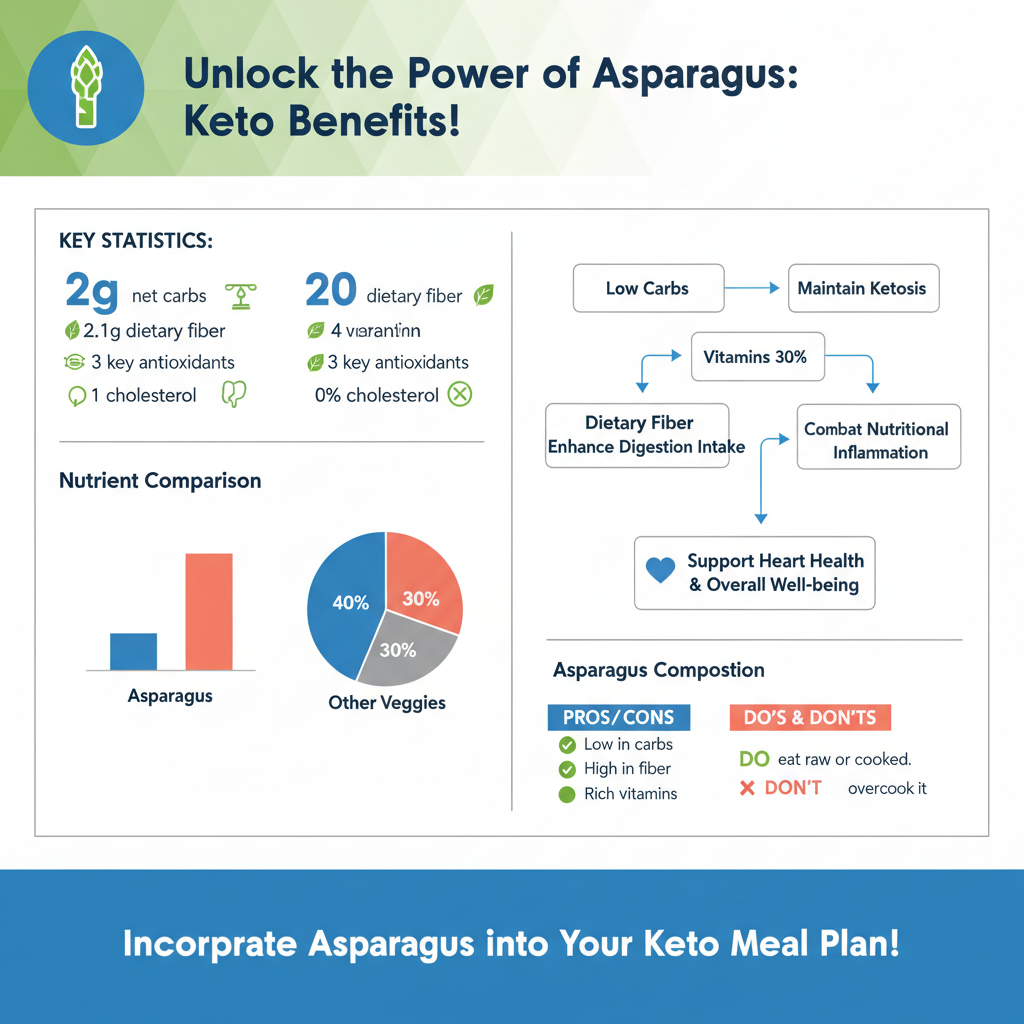

Asparagus is more than just a low-carb vegetable; it is also a potent source of health benefits that can contribute positively to overall well-being. One of its standout features is its high antioxidant content. Antioxidants play a critical role in combating oxidative stress in the body, which can lead to chronic diseases and inflammation. The antioxidants found in asparagus, such as quercetin, isorhamnetin, and kaempferol, help protect cells from damage and may reduce the risk of conditions like heart disease and cancer.
Moreover, asparagus is an excellent source of dietary fiber, with about 2.1 grams of fiber per 100 grams. This high fiber content is especially beneficial for those on a low-carb diet, as it supports healthy digestion and promotes gut health. Fiber aids in regulating blood sugar levels, enhances satiety, and prevents constipation, making it easier to maintain a healthy weight. This is particularly important for individuals following a keto diet, where fiber intake can sometimes be lacking due to the restriction of many carbohydrate sources.
How to Incorporate Asparagus into Your Keto Meals
Incorporating asparagus into your keto meal plan can be both simple and delicious. One of the easiest methods to prepare asparagus is by roasting or grilling it. Drizzle fresh asparagus with olive oil, sprinkle with salt, pepper, and any preferred seasoning, and roast it in the oven at 425°F (220°C) for about 12-15 minutes until tender. This creates a flavorful side dish that pairs well with meats like chicken, fish, or steak.
Another creative way to add asparagus to your meals is by including it in omelets or frittatas. Simply sauté chopped asparagus with onions and bell peppers, add beaten eggs, and cook until set for a nutritious and filling breakfast option. Asparagus can also be added to salads, where its unique texture and flavor can enhance the overall dish. Consider a simple salad of blanched asparagus, cherry tomatoes, and feta cheese drizzled with balsamic vinaigrette for a refreshing and satisfying meal.
Asparagus versus Other Vegetables in a Keto Diet
When comparing asparagus to other vegetables in a ketogenic diet, its low carbohydrate content and nutrient density set it apart. Starchy vegetables, such as potatoes, corn, and peas, contain significantly higher amounts of carbohydrates that can easily disrupt ketosis. In contrast, non-starchy vegetables, including leafy greens and cruciferous vegetables, also fit well within a keto framework but may not offer the same unique combinations of vitamins and minerals as asparagus.
For example, while both broccoli and spinach are excellent low-carb options, asparagus is particularly notable for its high vitamin K and folate levels. Furthermore, the distinct taste and texture of asparagus can provide variety to meals, which is essential in preventing diet fatigue. Including a diverse array of vegetables in your meal plan not only enhances flavor but also ensures a broader spectrum of nutrients.
Common Misconceptions About Asparagus and Keto
A common misconception regarding the ketogenic diet is the belief that all vegetables are too high in carbs to be included. This misunderstanding can lead to the exclusion of valuable nutrient sources like asparagus. While it is true that some vegetables contain higher carbohydrate levels, asparagus stands out as a low-carb vegetable that can be enjoyed without the fear of exceeding daily carb limits.
Another misconception is the notion that all green vegetables offer equivalent health benefits. While many greens provide essential nutrients, asparagus contains specific antioxidants and vitamins that can be particularly beneficial. For instance, its high levels of folate are crucial for pregnant women and those looking to support healthy cell growth. Understanding these distinctions can help individuals make more informed dietary choices.
Recipes Featuring Asparagus for Keto Enthusiasts
For those looking to expand their culinary repertoire, asparagus offers a wealth of recipe possibilities that align with a ketogenic lifestyle. One simple yet delicious option is asparagus soup. To prepare, sauté onions and garlic in a pot, add chopped asparagus and vegetable broth, and simmer until tender. Blend until smooth, and season with salt, pepper, and a touch of cream for added richness.
Another flavorful dish is stir-fried asparagus with garlic. Heat a pan with a bit of coconut oil, add chopped asparagus and minced garlic, and sauté until slightly crispy. This quick dish can be served as a side or over cauliflower rice for a complete meal. Additionally, consider a refreshing asparagus salad with feta cheese, olives, and a lemon vinaigrette, perfect for light lunches or as a side at dinner.
Experimenting with various cooking methods—such as grilling, steaming, and roasting—can keep meals exciting and flavorful. The versatility of asparagus allows it to shine in many cuisines, from Italian to Asian, making it a great ingredient to have on hand.
Asparagus is a versatile and nutritious vegetable that fits well within a ketogenic diet. It offers numerous health benefits, including antioxidant properties and digestive support, and can be easily incorporated into a variety of dishes. By understanding its nutritional profile and exploring creative recipes, you can enhance your keto meals significantly. If you’re looking to elevate your low-carb diet, consider adding asparagus to your grocery list today!
Frequently Asked Questions
Is asparagus considered a keto-friendly vegetable?
Yes, asparagus is considered a keto-friendly vegetable due to its low carbohydrate content. A 100-gram serving of asparagus contains only about 2 grams of net carbs, making it an excellent choice for those following a ketogenic diet. Additionally, asparagus is rich in vitamins, minerals, and antioxidants, which can support overall health while adhering to keto principles.
How can I incorporate asparagus into my keto meal plan?
Incorporating asparagus into your keto meal plan can be simple and delicious. You can roast, grill, or sauté asparagus with olive oil, garlic, and spices for a flavorful side dish. Additionally, it can be added to salads, omelets, or stir-fries, providing a nutritious boost without exceeding your carb limits.
Why is asparagus a good choice for a ketogenic diet?
Asparagus is a great choice for a ketogenic diet for several reasons. Firstly, its low carb content helps maintain ketosis, which is essential for effective weight loss on keto. Moreover, asparagus contains fiber that aids digestion and supports gut health, along with a variety of vitamins, such as vitamin K, which is vital for bone health and blood clotting.
What are the nutritional benefits of asparagus on a keto diet?
Asparagus offers numerous nutritional benefits that align well with a keto diet. It is low in calories and high in fiber, which can help you feel full longer. Additionally, it provides essential vitamins such as vitamin A, C, E, and K, as well as minerals like folate and potassium, all of which contribute to overall well-being while minimizing carbohydrate intake.
Which cooking methods are best for preserving the keto benefits of asparagus?
To preserve the keto benefits of asparagus, cooking methods such as steaming, grilling, or roasting are recommended. These methods maintain the vegetable’s nutrient profile while avoiding the addition of high-carb ingredients. For the healthiest preparation, try tossing asparagus in olive oil and seasoning before grilling or roasting to enhance flavor without compromising its keto-friendly attributes.
References
- Asparagus
- https://www.healthline.com/nutrition/asparagus-keto
- https://www.ncbi.nlm.nih.gov/pmc/articles/PMC6466778/
- https://www.medicalnewstoday.com/articles/319179
- https://www.dietdoctor.com/low-carb/vegetables/asparagus
- Health Benefits of Asparagus, Nutrients per Serving, and Preparation Information
- https://www.verywellfit.com/asparagus-nutrition-facts-4114586
- https://www.researchgate.net/publication/317486098_Asparagus_Officinalis_A_Nutraceutical_Review