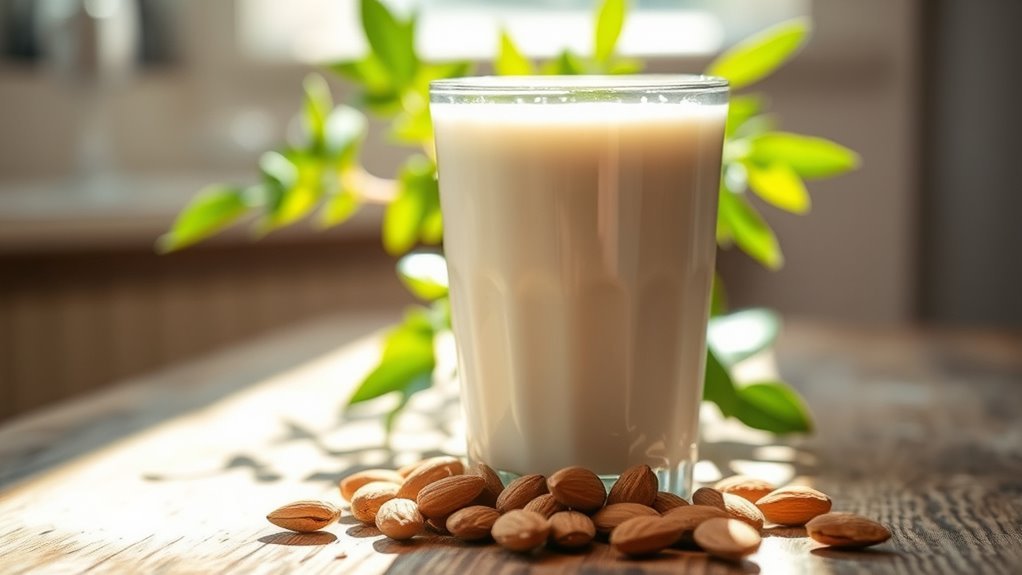

Almond milk is keto-friendly due to its low carbohydrate content, typically containing just 1-2 grams of carbs per cup, especially in unsweetened varieties. It’s also rich in healthy fats and Vitamin E, supporting heart health. While it’s a great substitute for those on a keto diet, be cautious of sweetened versions as they can contain added sugars. You might want to explore how to incorporate almond milk into delicious recipes that fit your keto lifestyle.
Understanding the Keto Diet
The ketogenic diet, often simply referred to as “keto,” is a low-carb, high-fat eating plan designed to shift your body’s metabolism into a state called ketosis. By reducing carbohydrate intake, you encourage your body to burn fat for energy, a principle central to keto. However, diet misconceptions abound; many think keto is just about eating bacon and cheese. In reality, it emphasizes whole foods, healthy fats, and adequate protein. Understanding these keto principles helps you navigate the diet effectively, empowering you to make informed choices. Remember, it’s not just about what you eat but how those choices fit into your lifestyle. Embracing this can offer you the freedom to enjoy a varied and satisfying way of eating while achieving your health goals.
Nutritional Profile of Almond Milk
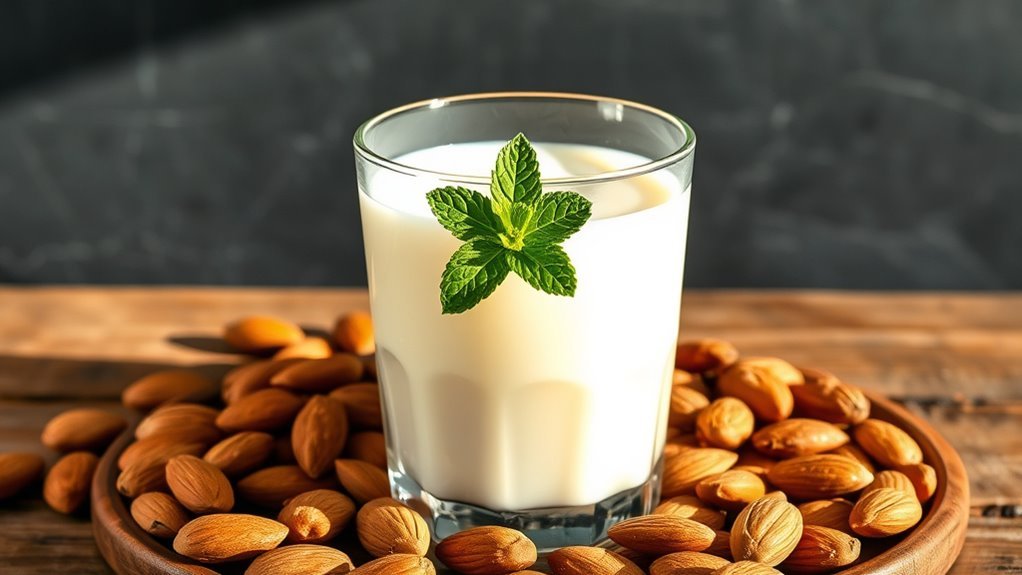
When considering almond milk, it’s important to look at its caloric content and carbohydrate levels. You’ll find that almond milk generally contains fewer calories compared to traditional dairy milk, making it an appealing choice for those on a keto diet. Additionally, understanding its carbohydrate levels can help you determine how it fits into your overall nutritional plan.
Caloric Content Comparison
Although many people turn to almond milk as a dairy alternative, it’s essential to examine its caloric content to determine if it fits within a keto-friendly diet. When considering caloric comparison, serving sizes play a significant role. Here’s a breakdown of almond milk’s caloric profile:
| Serving Size | Calories (Unsweetened) | Calories (Sweetened) |
|---|---|---|
| 1 cup (240 ml) | 30 | 60 |
| 1/2 cup (120 ml) | 15 | 30 |
| 1 oz (30 ml) | 8 | 15 |
| 1 tbsp (15 ml) | 4 | 8 |
As you can see, unsweetened almond milk is lower in calories, making it a viable option for those looking to maintain a keto lifestyle while enjoying a creamy beverage.
Carbohydrate Levels Explained
Carbohydrate levels in almond milk are crucial for those following a keto diet, as staying within low carb limits is essential for maintaining ketosis. Almond milk generally contains about 1-2 grams of carbohydrates per cup, making it a preferable choice over traditional dairy milk. The majority of these carbs come from dietary fiber, which is beneficial for digestion and can help you feel full longer. Unlike other carbohydrate sources, almond milk is low in sugars, aligning well with keto principles. When choosing almond milk, opt for unsweetened varieties to minimize carb intake. This way, you can enjoy a creamy, low-carb beverage without derailing your keto goals. Knowing the carbohydrate levels helps you make informed choices on your dietary journey.
Carbohydrate Content in Almond Milk
Many people considering a keto diet often wonder about the carbohydrate content in almond milk, especially since it can vary considerably between different brands and types. Understanding the nutritional comparison can help you choose wisely, as some almond milk products may contain added sugars or other carbohydrate sources.
Here’s a quick look at the carbohydrate content in some popular almond milk options:
| Brand | Carbs per 1 cup | Type |
|---|---|---|
| Unsweetened | 1g | Almond Milk |
| Sweetened | 7g | Almond Milk |
| Vanilla Flavored | 8g | Almond Milk |
Opting for unsweetened almond milk can keep your carb intake low, making it a more suitable choice for your keto lifestyle.
Types of Almond Milk: Unsweetened vs. Sweetened
When selecting almond milk, you’ll find two primary types: unsweetened and sweetened. Understanding the nutritional differences between these options can help you choose what’s best for your diet. Unsweetened almond milk typically contains fewer calories and carbohydrates, making it a popular choice for those on keto. Sweetened varieties, on the other hand, can have added sugars, which may not align with low-carb goals.
Consider these aspects when choosing:
- Calories: Unsweetened has fewer.
- Carbohydrates: Unsweetened is lower.
- Flavor profiles: Sweetened offers a richer taste.
- Versatility: Unsweetened is more adaptable in recipes.
- Sweeteners: Check labels for added sugars.
Health Benefits of Almond Milk
While you might be considering almond milk for its low-carb profile, it also offers a range of health benefits that can enhance your overall well-being. Almond milk is low in calories and packed with essential nutrients, making it a great choice for those seeking nutritional advantages.
| Health Benefit | Nutritional Advantage | Evidence-Based Support |
|---|---|---|
| Rich in Vitamin E | Antioxidant properties | Protects cells from damage |
| Heart Health | Lowers cholesterol | Reduces heart disease risk |
| Bone Health | Contains calcium | Supports bone density |
| Weight Management | Low-calorie alternative | Aids in weight loss |
| Lactose-Free | Suitable for lactose-intolerant | Prevents digestive issues |
Incorporating almond milk into your diet can be a simple way to boost your health.
Almond Milk vs. Other Plant-Based Milks
Almond milk stands out among plant-based milks due to its unique nutritional profile and versatility, making it a popular choice for those seeking dairy alternatives. When comparing almond milk with other options, you’ll find that its low calorie count and healthy fats offer distinct almond milk benefits. Here’s how it stacks up against other plant-based milks:
- Lower in calories than soy and oat milk
- High in vitamin E, promoting skin health
- Lactose-free, suitable for lactose intolerant individuals
- Minimal sugar content, great for low-carb diets
- Available in various flavors and unsweetened versions
While almond milk alternatives like soy or coconut milk each have their advantages, almond milk remains a top contender for those prioritizing health and versatility.
Incorporating Almond Milk Into a Keto Diet
Incorporating almond milk into your keto diet can be a smart choice, thanks to its low carbohydrate count and nutritional benefits. You can explore various recipe ideas, from smoothies to keto-friendly baking, that enhance your meals while keeping you within your macro goals. Understanding its nutritional profile will help you make informed decisions to maximize your keto success.
Nutritional Profile Overview
When considering how to integrate almond milk into a keto diet, it is essential to examine its nutritional profile. Almond milk offers several nutritional benefits that can complement your keto lifestyle. Here’s what you can expect:
- Low in carbohydrates: Typically around 1-2 grams per cup.
- Rich in healthy fats: Contains unsaturated fats beneficial for heart health.
- Vitamin E: An antioxidant that supports skin and eye health.
- Low calorie: Great for those monitoring their caloric intake.
- Dairy-free: A suitable choice if you’re avoiding traditional milk or other almond milk alternatives.
Recipe Ideas and Uses
Adding almond milk to your keto diet opens up a world of culinary possibilities. You can enjoy both sweet and savory dishes without sacrificing your low-carb lifestyle. Here are some recipe ideas to inspire you:
| Type | Recipe Idea | Benefits |
|---|---|---|
| Almond Milk Dessert | Keto Chocolate Pudding | Low in carbs, rich in flavor |
| Savory Almond Milk | Creamy Garlic Soup | Nutrient-dense, satisfying |
| Almond Milk Smoothie | Spinach Avocado Smoothie | Packed with healthy fats |
These options show how versatile almond milk can be, allowing you to create delicious almond milk desserts or incorporate savory almond milk into your meals while maintaining your keto goals. Enjoy the freedom to experiment!
Potential Drawbacks of Almond Milk on Keto
While almond milk can be a popular choice for those following a keto diet, it’s important to reflect on its potential drawbacks. You might find that almond milk, while low in carbs, can impact your nutrient absorption due to its lower nutritional content compared to whole dairy options. If you’re lactose intolerant, almond milk is a great alternative, but it may lack essential vitamins and minerals that dairy provides. Additionally, some brands add sugars or additives that can derail your keto goals. Here are a few points to ponder:
- Lower protein content
- Possible added sugars
- Nutrient deficiencies
- Potential allergens
- Not suitable for all recipes
Delicious Keto-Friendly Almond Milk Recipes
If you’re looking for delicious ways to incorporate almond milk into your keto diet, you’re in luck. From a creamy almond milk latte to a revitalizing almond milk smoothie bowl and even keto almond milk pancakes, there are plenty of tasty options. These recipes not only satisfy your cravings but also keep you aligned with your keto goals.
Creamy Almond Milk Latte
Although many coffee lovers might think they need to give up their lattes on a keto diet, a creamy almond milk latte can be a delightful alternative that fits right into your low-carb lifestyle. By using unsweetened almond milk, you can enjoy creamy espresso topped with luscious almond froth without the carbs. Here’s how to make it even more enjoyable:
- Choose high-quality espresso for a robust flavor.
- Sweeten with a keto-friendly sweetener like stevia or erythritol.
- Add a dash of cinnamon for extra warmth.
- Experiment with vanilla extract for a hint of sweetness.
- Enjoy it hot or iced to suit your preference.
With this creamy almond milk latte, you can savor your coffee while staying true to your keto goals!
Almond Milk Smoothie Bowl
After enjoying a creamy almond milk latte, you might want to explore another delightful way to incorporate almond milk into your keto diet: the almond milk smoothie bowl. This versatile dish allows you to blend almond milk with low-carb ingredients like spinach, avocado, or berries, creating a nutritious base. You can customize your smoothie bowl with various toppings, such as chia seeds, crushed nuts, or unsweetened coconut flakes, which enhance both flavor and texture while keeping it keto-friendly. For smoothie bowl variations, consider adding a scoop of protein powder or a handful of nut butter for extra richness. By experimenting with different combinations, you’ll find the perfect almond milk smoothie bowl that suits your taste and dietary needs.
Keto Almond Milk Pancakes
While many traditional pancake recipes are packed with carbs, keto almond milk pancakes offer a delicious alternative that keeps your diet on track. Using almond milk as a base, these pancakes are low in carbs and can be customized with various keto-friendly toppings.
To enhance your pancake experience, consider these options:
- Sugar-free syrup
- Fresh berries
- Whipped cream made with heavy cream
- Chopped nuts for crunch
- A sprinkle of cinnamon
If you’re looking for almond milk substitutes, options like coconut milk or unsweetened soy milk can work well. Enjoy these pancakes without guilt, knowing they align with your keto lifestyle while still offering freedom in your culinary choices!
Making Informed Choices: Selecting the Right Almond Milk
When choosing almond milk, how can you ascertain it aligns with your keto lifestyle? Start by checking the nutrition label for carbohydrates; opt for unsweetened varieties, which typically have fewer carbs. Flavor variations can be tempting, but sweetened options often contain added sugars that can sabotage your diet. Pay attention to ingredient sourcing as well; choose brands that use high-quality almonds and avoid those with fillers or artificial ingredients. Look for almond milk with minimal ingredients, ideally just almonds and water. This guarantees you’re getting a product that’s clean and keto-friendly. Ultimately, being informed about what you’re consuming gives you the freedom to enjoy almond milk without compromising your dietary goals.
Frequently Asked Questions about Almond Milk and Keto
1. Is almond milk keto-friendly?
Yes, almond milk is generally considered keto-friendly. Unsweetened almond milk contains only about 1 gram of carbohydrates per cup, making it a suitable option for those following a ketogenic diet. However, it’s important to choose unsweetened varieties to avoid added sugars that can increase carbohydrate content.
2. How many carbs are in unsweetened almond milk?
Unsweetened almond milk typically contains about 1 gram of carbohydrates per cup (240 ml). This low carbohydrate content makes it an excellent choice for a ketogenic diet, allowing you to enjoy a dairy alternative without exceeding your carb limits.
3. Can I use almond milk in keto recipes?
Absolutely! Almond milk can be used in a variety of keto recipes, including smoothies, soups, sauces, and baked goods. Just ensure you opt for unsweetened varieties to keep the carbohydrate content low. It can also be a great base for keto-friendly desserts.
4. Are there any nutritional drawbacks to almond milk on a keto diet?
While almond milk is low in carbs, it is also relatively low in protein compared to cow’s milk and other dairy alternatives. If you rely heavily on almond milk for your protein intake, you may need to supplement with other sources of protein. Additionally, some brands may contain additives or preservatives, so it’s important to read labels carefully.
5. What should I look for when choosing almond milk for a keto diet?
When selecting almond milk for a keto diet, look for unsweetened varieties to minimize carbohydrate intake. Check the ingredient list for any added sugars or unnecessary additives. Additionally, consider the nutritional profile, including fat content, to ensure it aligns with your dietary needs. Brands fortified with vitamins and minerals can also provide added nutritional benefits.
References
- https://www.healthline.com/nutrition/almond-milk-keto-friendly
- https://www.medicalnewstoday.com/articles/319677
- https://www.verywellfit.com/almond-milk-and-the-keto-diet-5114689
- https://www.ncbi.nlm.nih.gov/pmc/articles/PMC6838821/
- https://www.foodnetwork.com/healthy-eating/what-is-keto-diet-what-to-know-4530211
- https://www.mayoclinic.org/healthy-lifestyle/nutrition-and-healthy-eating/expert-answers/almond-milk/faq-20057992
- https://www.nutrition.org.uk/healthyliving/healthyeating/almond-milk.html