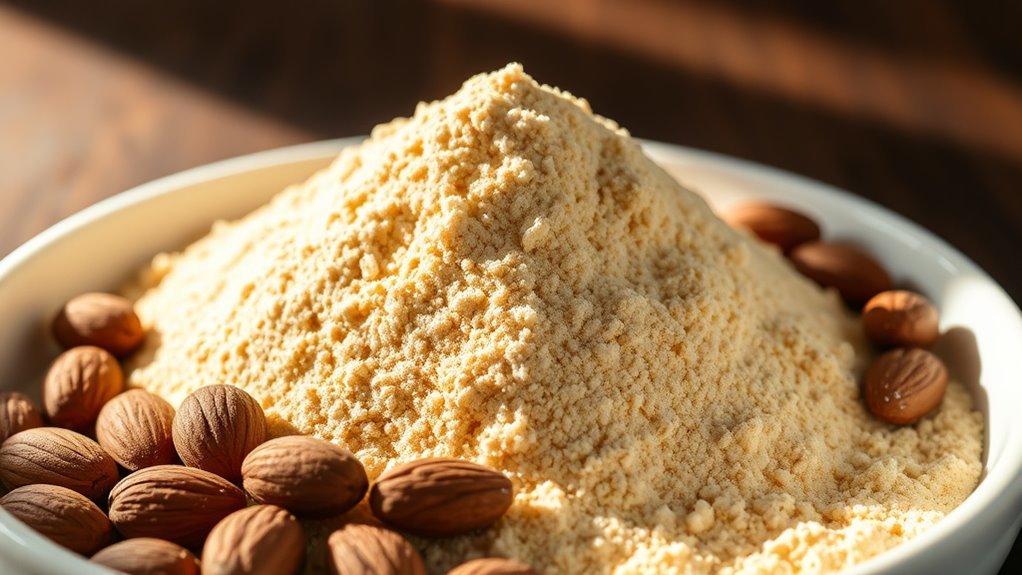

Yes, almond flour is keto-friendly! It’s low in net carbs, with about 3 grams per 2-tablespoon serving, making it a great option for maintaining ketosis. This flour is high in healthy fats and protein, which can support satiety and muscle growth. However, it’s important to monitor portion sizes due to its caloric density. There’s much more to discover about almond flour’s benefits and uses, so keep going to learn how to incorporate it into your meals!
Understanding Almond Flour
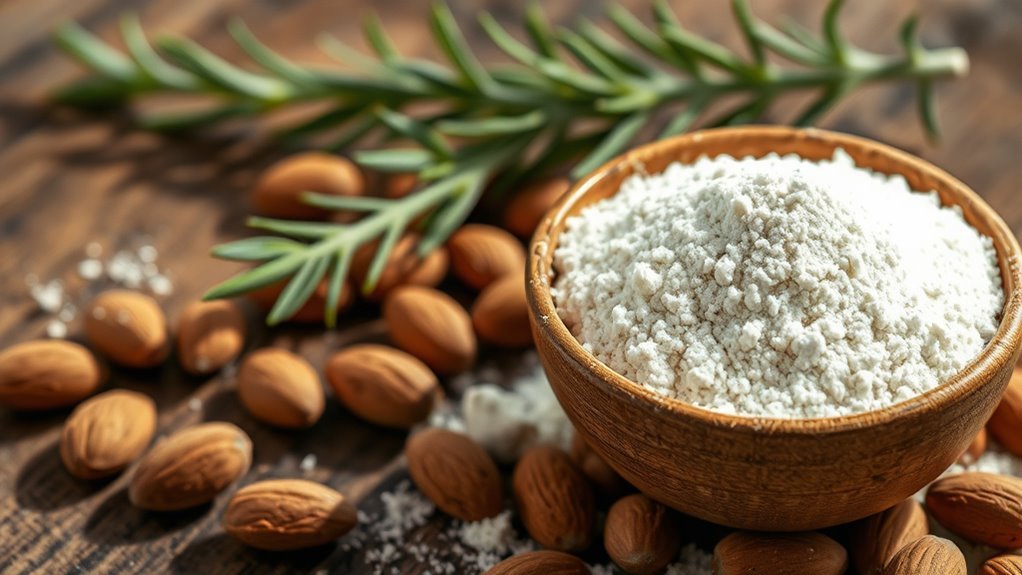
Almond flour, a popular alternative to traditional wheat flour, is made from finely ground almonds and is often favored in low-carb and gluten-free diets. When you explore its nutritional benefits, you’ll find that almond flour is rich in healthy fats, fiber, and protein, making it a satisfying choice for those seeking to maintain energy levels. Regarding baking techniques, almond flour behaves differently than wheat flour; it typically requires adjustments in liquid and leavening agents. When you bake with almond flour, consider using eggs for binding, as they help improve texture and structure. Embracing this versatile ingredient can lead to delicious, guilt-free creations, allowing you to enjoy your favorite dishes without compromising your dietary preferences.
Nutritional Profile of Almond Flour
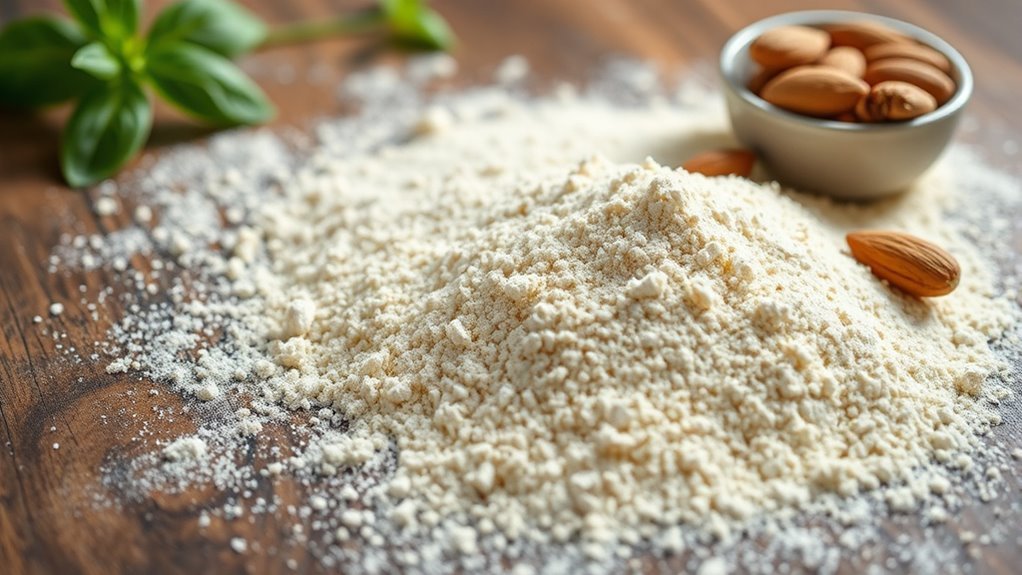
With about 6 grams of protein and 3 grams of net carbs per 2-tablespoon serving, almond flour stands out as a nutrient-dense option for those following a keto diet. A nutritional analysis reveals that almond flour is rich in healthy fats, primarily monounsaturated fats, which can support heart health. Additionally, it contains essential vitamins and minerals, including vitamin E and magnesium, contributing to overall well-being. The fiber content in almond flour aids digestion and promotes satiety, making it a great choice for those seeking to maintain energy levels while managing carbohydrate intake. Overall, almond flour provides a versatile and health-conscious alternative for cooking and baking, allowing you the freedom to enjoy delicious meals without sacrificing your dietary goals.
Carb Content in Almond Flour
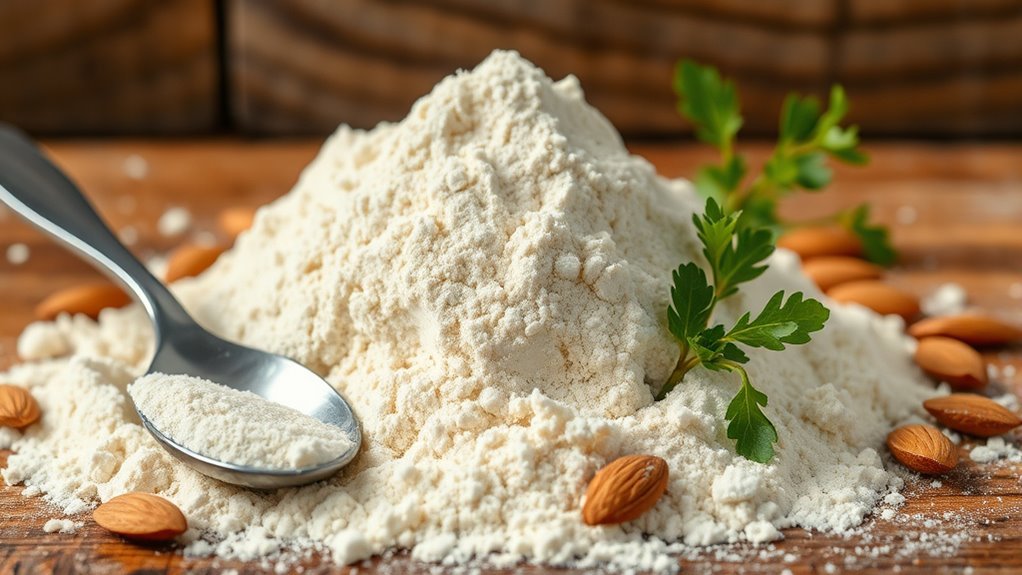
When it comes to carb content, almond flour typically contains about 3 grams of net carbs per 2-tablespoon serving, making it an appealing choice for those on a keto diet. If you’re carb counting, this low carb content allows you to enjoy baked goods without derailing your goals. Plus, almond flour’s nutritional value includes healthy fats and protein, which can help keep you satisfied. Unlike traditional flours, almond flour doesn’t spike your blood sugar, making it a smart choice for maintaining stable energy levels. You’ll find that using almond flour in your recipes can provide both versatility and flavor, enabling you to indulge in your favorite dishes while sticking to your desired carb limits.
Health Benefits of Almond Flour
One of the standout features of almond flour is its impressive nutritional profile, which offers several health benefits. Its nutrient richness makes it a fantastic choice for those seeking a healthier lifestyle. Here are some notable advantages:
Almond flour boasts a remarkable nutritional profile, making it an excellent choice for a healthier lifestyle.
- Rich in healthy fats: Supports heart health and helps keep you satiated.
- High in protein: Aids in muscle repair and growth.
- Packed with vitamins and minerals: Contributes to overall wellness.
- Low in carbs: Ideal for maintaining stable blood sugar levels.
- Gluten-free: A great alternative for those with gluten sensitivities.
Incorporating almond flour into your diet can not only enhance your meals but also align with your health goals, giving you the freedom to enjoy delicious, nutritious options without compromise.
Comparing Almond Flour to Other Flours
While many flours are available, almond flour stands out due to its unique properties and benefits. Compared to coconut flour, almond flour has a higher protein content, making it a great option for those seeking to boost their intake. Both are gluten-free flours, but almond flour offers better baking properties, resulting in moist and tender baked goods. Coconut flour, on the other hand, absorbs more liquid, requiring recipe adjustments. If you’re looking for versatility in your baking, almond flour’s texture and flavor can enhance a variety of recipes, from pancakes to cookies. Ultimately, choosing almond flour over other flours can empower your cooking while aligning with your dietary preferences. Consider its advantages for your next culinary adventure!
How Almond Flour Fits Into a Keto Diet
Almond flour is a popular choice in keto diets due to its low carbohydrate content and high healthy fat levels, making it a suitable alternative to traditional flours. Its nutritional profile offers essential vitamins and minerals, while also providing versatility in cooking and baking. Whether you’re making bread, pancakes, or desserts, almond flour can help you stay within your daily carb limits while still enjoying delicious meals.
Nutritional Profile Overview
Incorporating almond flour into your keto diet offers a wealth of nutritional benefits that can help you maintain your low-carb lifestyle. Understanding its nutritional comparison to other flours highlights its value. Almond flour, derived from ground almonds, boasts a rich nutrient profile that supports your health goals. Here are some key benefits:
- Low in carbohydrates, promoting ketosis
- High in healthy fats, aiding satiety
- Rich in protein for muscle maintenance
- Packed with vitamins and minerals, enhancing overall health
- Contains fiber, supporting digestive health
These qualities make almond flour an ideal choice for keto enthusiasts. By embracing its origins and nutritional advantages, you can enjoy the freedom to create satisfying meals while staying true to your low-carb journey.
Cooking and Baking Uses
When it comes to cooking and baking on a keto diet, almond flour stands out as a versatile ingredient that can replace traditional flours in many recipes. It’s not just low in carbs; it also adds a delightful nutty flavor and moisture to your dishes. You can easily utilize almond flour in various keto baking techniques, ensuring delicious results without the carbs.
Here’s a quick reference table for almond flour substitutions:
| Recipe Type | Almond Flour Substitution |
|---|---|
| Bread | 1 cup almond flour = 1/4 cup coconut flour |
| Pancakes | 1 cup almond flour = 1/2 cup flaxseed meal |
| Muffins | 1 cup almond flour = 1/4 cup coconut flour |
| Cookies | 1 cup almond flour = 1/2 cup coconut flour |
| Pizza Crust | 1 cup almond flour = 1/2 cup ground sunflower seeds |
Experimenting with these substitutions can open up a world of keto-friendly baking!
Cooking and Baking With Almond Flour
When you cook and bake with almond flour, you’re not just enjoying its unique flavor; you’re also reaping its nutritional benefits, like healthy fats and protein. There are plenty of delicious recipes that highlight almond flour’s versatility, making it a great choice for keto-friendly treats. Let’s explore how you can incorporate almond flour into your favorite dishes while keeping your meals nutritious and satisfying.
Nutritional Benefits of Almond Flour
While many people are turning to almond flour as a staple in keto-friendly cooking and baking, its nutritional benefits extend far beyond just being low in carbs. Almond flour offers several nutritional advantages that make it a smart choice for health-conscious individuals:
- Packed with healthy fats, promoting heart health
- Rich in vitamin E, acting as a powerful antioxidant
- High in protein, aiding in muscle building and repair
- Loaded with fiber, supporting digestion and satiety
- Contains essential minerals like magnesium and calcium, contributing to bone health
Incorporating almond flour into your diet not only enhances your meals but also provides these crucial nutrients. Embracing this versatile ingredient can empower you to enjoy your favorite dishes while nourishing your body.
Best Recipes for Baking
Almond flour opens up a world of delicious baking possibilities, especially for those following a keto diet. You can create a variety of treats that satisfy your cravings without sacrificing your dietary goals. Here are some fantastic recipe ideas to inspire your baking adventures:
| Recipe Type | Description |
|---|---|
| Keto Muffins | Fluffy, low-carb breakfast bites |
| Almond Flour Bread | A hearty, grain-free loaf |
| Cookies | Chewy, nutty dessert delights |
| Pancakes | Fluffy, satisfying breakfast |
| Brownies | Rich, fudgy chocolate treats |
When experimenting with almond flour, remember these baking tips: often, you’ll need to adjust liquids or add eggs for binding. With these dessert ideas and bread recipes, you’ll enjoy guilt-free indulgence!
Tips for Using Almond Flour Effectively
Since incorporating almond flour into your cooking can elevate your keto-friendly meals, it’s essential to understand how to use it effectively. Here are some tips to enhance your experience:
Incorporating almond flour can elevate your keto meals; mastering its use is key to delicious results.
- Use precise tips for measuring to guarantee consistent results.
- Follow proper storage tips to maintain freshness and prevent spoilage.
- Experiment with recipe substitutions to discover new flavors and textures.
- Consider flavor enhancements like vanilla or spices to elevate your dishes.
- Explore texture variations by blending almond flour with coconut flour for unique outcomes.
Potential Drawbacks of Almond Flour
While almond flour can be a great alternative for keto diets, there are some potential drawbacks to ponder. It can lead to nutrient imbalances due to its low carbohydrate content and lack of certain vitamins and minerals. Additionally, its higher caloric density might pose challenges if you’re not keeping an eye on portion sizes.
Nutrient Imbalance Concerns
Although almond flour is often praised for its low carbohydrate content and suitability for keto diets, it can lead to nutrient imbalances if consumed excessively. Relying too heavily on almond flour may impact your dietary balance and nutrient absorption, which can have consequences for your health.
Consider these potential drawbacks:
- Low in fiber compared to whole grains
- Limited vitamin variety, especially B vitamins
- High in omega-6 fatty acids that can promote inflammation
- Potential for magnesium deficiency due to excess calcium
- Increased risk of nutrient deficiencies over time
To maintain a well-rounded diet, make sure to incorporate a variety of foods. Embrace the freedom of choice while ensuring you nourish your body with a broad spectrum of nutrients.
Caloric Density Issues
When you incorporate almond flour into your diet, you might not realize its high caloric density could pose challenges for weight management. Though it’s a great source of healthy fats and protein, almond flour contains around 640 calories per cup, considerably more than wheat flour. This means it’s easy to overconsume if you’re not mindful. While its nutritional benefits are notable, you should balance portion sizes to avoid unintentional weight gain. Additionally, if you’re following a keto diet, it’s essential to account for those calories in your daily intake. So, enjoy almond flour in moderation, and consider blending it with other low-calorie ingredients to maintain your weight management goals without sacrificing taste or freedom in your meals.
Delicious Keto Recipes Featuring Almond Flour
If you’re looking to enhance your keto cooking with a versatile ingredient, almond flour is a fantastic choice. It’s not only low in carbs but also rich in healthy fats, making it perfect for keto almond flour recipes. Here are some delicious ways to incorporate almond flour into your meals:
- Fluffy pancakes for a satisfying breakfast.
- Crunchy breading for crispy chicken or fish.
- Moist muffins that satisfy your sweet tooth.
- Savory pizza crusts for a guilt-free dinner option.
- Decadent cookies that bring back fond memories.
These almond flour recipes allow you to enjoy your favorite dishes while staying true to your keto lifestyle. Embrace the freedom of cooking creatively with almond flour!
Frequently Asked Questions about Almond Flour and Keto Diet
1. Is almond flour keto-friendly?
Yes, almond flour is considered keto-friendly. It is low in carbohydrates and high in healthy fats, making it a great alternative to traditional flours for those following a ketogenic diet. Almond flour contains about 2 grams of net carbs per 1/4 cup, which fits well within the typical daily carb limit for a keto diet.
2. How does almond flour compare to other flours in terms of carbs?
Almond flour is significantly lower in carbohydrates compared to all-purpose flour or wheat flour. For example, 1/4 cup of all-purpose flour contains around 24 grams of carbs, while almond flour has only about 2 grams of net carbs. This makes almond flour a much better option for those on a low-carb or keto diet.
3. Can I use almond flour in keto baking?
Absolutely! Almond flour is a popular choice for keto baking. It can be used to make a variety of baked goods, including bread, muffins, and cookies. However, it is important to note that almond flour behaves differently than traditional flour, so it’s advisable to follow recipes specifically designed for almond flour to achieve the best results.
4. Are there any downsides to using almond flour on a keto diet?
While almond flour is generally healthy and keto-friendly, it is calorie-dense and can lead to overeating if not used in moderation. Additionally, some individuals may have nut allergies or sensitivities, which would make almond flour unsuitable for them. Always consider your personal health and dietary needs when incorporating almond flour into your meals.
5. What are the nutritional benefits of almond flour?
Almond flour is rich in nutrients such as vitamin E, magnesium, and fiber. It also contains healthy monounsaturated fats, which can help support heart health. The high fiber content can aid in digestion and promote feelings of fullness, making it a nutritious option for those on a keto diet. Additionally, almond flour is gluten-free, making it suitable for those with gluten sensitivities.
References
- https://www.healthline.com/nutrition/almond-flour-keto-friendly
- https://www.ncbi.nlm.nih.gov/pmc/articles/PMC6011134/
- https://www.diabetes.org/healthy-living/recipes/nutrition-and-healthy-eating/healthy-baking
- https://www.ncbi.nlm.nih.gov/pmc/articles/PMC6070345/
- https://www.wheatintolerance.org/almond-flour-keto/
- https://www.cdc.gov/healthyweight/assessing/bmi/index.html
- https://www.researchgate.net/publication/283391852_Almond_flour_and_its_health_benefits
- https://www.jamanetwork.com/journals/jama/fullarticle/2677353
- https://www.theguardian.com/lifeandstyle/2019/jun/10/what-is-keto-diet-uk-healthy-eating-guide
- https://www.nutrition.gov/topics/whats-in-food/food-ingredients-and-labels/almonds-nutrition-facts