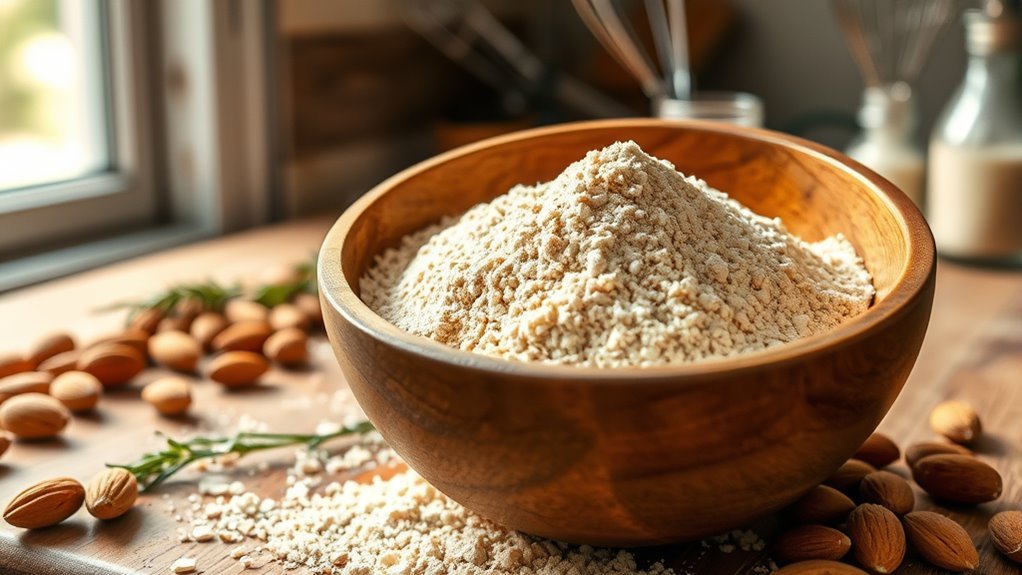

Yes, almond flour is keto-friendly! It’s low in carbs, with only about 2g of net carbs per 28g serving, and high in healthy fats, making it perfect for maintaining ketosis. Plus, it’s versatile—great for baking and cooking, whether you’re making pancakes, bread, or desserts. However, be mindful of portion sizes since it’s calorie-dense. If you want to know more about its benefits, cooking techniques, and popular recipes, keep exploring!
Nutritional Profile of Almond Flour

When you consider the nutritional profile of almond flour, you’ll find it’s a compelling choice for those following a keto diet. Almond flour’s macronutrient breakdown shows it’s high in healthy fats and protein while being low in carbohydrates. Typically, a 1/4 cup serving contains about 14 grams of fat, 6 grams of protein, and only 6 grams of carbs. This low carb count is essential for keto enthusiasts aiming to maintain ketosis. Additionally, almond flour is rich in vitamin E, magnesium, and fiber, which can support overall health. By incorporating almond flour into your meals, you’re not just enjoying a versatile ingredient but also making a choice that aligns well with your dietary goals and freedom to explore flavorful options.
Benefits of Almond Flour on a Ketogenic Diet
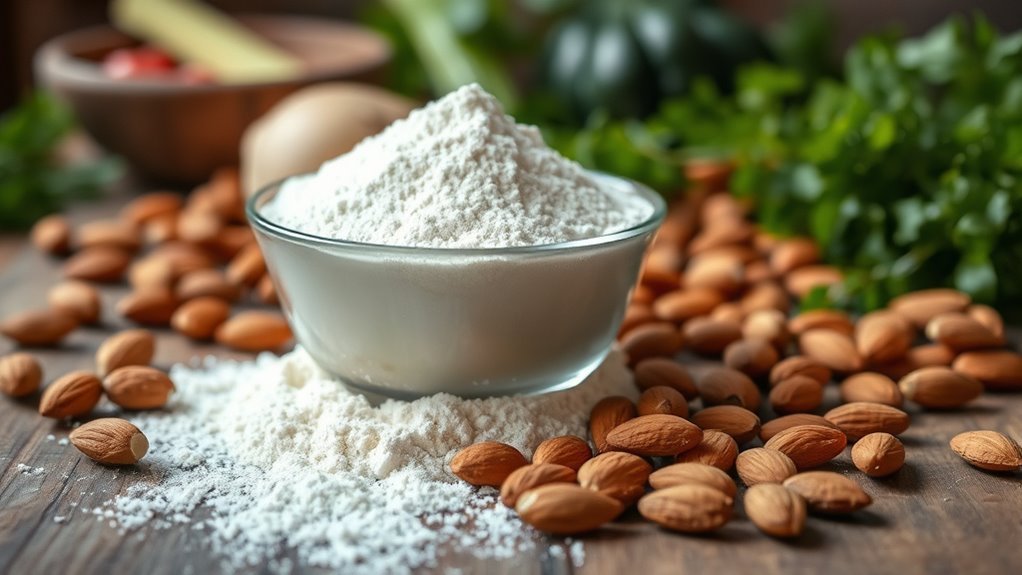
When you’re following a ketogenic diet, almond flour offers several advantages that can support your goals. Its low carb content makes it a suitable choice for maintaining ketosis, while its nutrient-dense profile guarantees you get essential vitamins and minerals. Plus, being gluten-free, it’s a great alternative for those with gluten sensitivities or celiac disease.
Low Carb Content
Almond flour stands out as a popular choice for those following a ketogenic diet, primarily due to its low carb content. With just 2 grams of net carbs per 28-gram serving, it offers significant low carb benefits, allowing you to enjoy baked goods without derailing your ketosis. This versatility means you can use almond flour in everything from pancakes to bread, creating a satisfying array of meals that fit your lifestyle. Additionally, incorporating healthy fats into your diet, such as those found in nuts, can further enhance your keto experience.
| Benefit | Details |
|---|---|
| Low Carb Content | 2g net carbs per 28g serving |
| Versatile Usage | Ideal for baking and cooking |
| Satisfying Texture | Mimics traditional flour |
Nutrient Dense Option
Incorporating almond flour into your ketogenic diet not only supports low carb goals but also provides a wealth of nutrients. It’s known for its high nutrient density, offering essential vitamins and minerals like vitamin E, magnesium, and potassium. These nutrients can contribute to overall health benefits, including improved heart health and better blood sugar control. Almond flour is also rich in healthy fats and protein, which can promote satiety and help maintain energy levels throughout the day. By choosing almond flour over traditional wheat flour, you’re not just cutting carbs; you’re enhancing your meals with nutrient-rich ingredients. This makes it a smart choice for those seeking both freedom in their dietary choices and a focus on nutritional quality.
Gluten-Free Alternative
Since many people are looking for gluten-free options in their diets, almond flour stands out as an excellent choice for those following a ketogenic lifestyle. It’s low in carbohydrates and high in healthy fats, making it a perfect fit for keto enthusiasts. When it comes to gluten-free baking, almond flour provides a moist texture and rich flavor, enhancing your favorite recipes without the carbs associated with traditional flour. Plus, it’s versatile—if you’re in need of almond flour substitutes, options like coconut flour or flaxseed meal can be used, although they may require adjustments in liquid. By incorporating almond flour into your diet, you can enjoy delicious baked goods while maintaining your commitment to gluten-free and ketogenic principles. Additionally, almond flour is a great source of healthy fats that supports overall health.
Potential Drawbacks of Almond Flour
While almond flour can be a great addition to a keto diet, it’s important to take into account its high caloric content, which might hinder weight loss for some. Additionally, if you have nut allergies, using almond flour could pose serious health risks. Balancing these factors is essential for making informed dietary choices.
High Caloric Content
Almond flour packs a hefty caloric punch, with around 100 calories per ounce, which is considerably higher than traditional wheat flour. This high caloric density can be a double-edged sword in a ketogenic diet. While it offers healthy fats and nutrients, those calories can add up quickly if you’re not mindful. Practicing portion control is essential; it’s easy to overconsume and inadvertently exceed your daily caloric goals. For those seeking freedom in their diet, understanding how almond flour fits into your overall intake is vital. You can enjoy its benefits, but be wary of its caloric content. Natural peanut butter’s low-sugar options can be a great addition to balance your meals and provide healthy fats. Balancing your meals and staying aware of portion sizes can help you maintain your desired weight while still enjoying almond flour’s unique flavor and texture.
Potential Allergies Risks
If you have a nut allergy, incorporating almond flour into your diet could pose significant risks. Almond allergies can trigger severe reactions, ranging from hives to anaphylaxis. Even if you don’t have a nut allergy, you might have nut sensitivities that could make almond flour problematic for you. Additionally, cross-contamination risks are prevalent in manufacturing environments, where almond flour could come into contact with other allergens. If you’re managing dietary restrictions, it’s essential to take these factors into account carefully. Always check labels and consult with a healthcare professional before adding almond flour to your meals. This way, you can guarantee that your dietary choices remain safe and enjoyable without compromising your health.
Comparing Almond Flour to Other Low-Carb Flours
When exploring low-carb flours, it’s important to contemplate how almond flour stacks up against alternatives like coconut flour and flaxseed meal. Almond flour is often favored for its nutty flavor and texture, making it ideal for almond flour baking. In contrast, coconut flour absorbs more moisture and requires adjustments in recipes. When comparing almond flour vs coconut flour, you’ll find that almond flour is lower in carbs but higher in fat, which can benefit a ketogenic diet. Flaxseed meal, on the other hand, is rich in omega-3 fatty acids and fiber, providing additional health benefits. Each flour has its unique properties, so your choice will depend on your personal taste and dietary goals. Additionally, the recommended daily carb intake for maintaining ketosis is crucial when selecting flour options.
Tips for Using Almond Flour in Keto Recipes
While experimenting with almond flour in keto recipes, it’s essential to understand its unique properties to achieve the best results. First, remember that almond flour has a higher fat content, which can affect your final dish’s texture and moisture. If you’re substituting almond flour for wheat flour, use about one-quarter of the amount, as it’s denser. Also, consider adding an egg to help bind your ingredients. For ideal almond flour storage, keep it in an airtight container in the fridge or freezer to maintain freshness. Finally, don’t hesitate to mix almond flour with other low-carb flours for varied textures and flavors. Incorporating low-carb vegetables into your dishes can further enhance their nutritional value. With these tips, you’ll enhance your keto cooking experience while enjoying the freedom of delicious, healthy meals.
Popular Keto Recipes Featuring Almond Flour
Almond flour opens up a world of delicious possibilities in keto cooking, allowing you to create a variety of satisfying dishes without compromising your dietary goals. One popular choice is almond flour pancakes, which are fluffy and satisfying while keeping carbs low. By combining almond flour with eggs and a splash of almond milk, you can whip up a breakfast treat that feels indulgent yet aligns with your keto lifestyle. Another great option is almond flour bread, perfect for sandwiches or as a side with your favorite meals. Its nutty flavor enhances any dish, and it’s simple to make. These recipes not only satisfy cravings but also allow you to enjoy the freedom of delicious, low-carb eating.
How to Incorporate Almond Flour Into Your Daily Meals
Incorporating almond flour into your daily meals can be a game-changer for your keto diet. Start your day with delicious almond flour pancakes; they’re low in carbs and high in healthy fats, keeping you satisfied longer. For lunch or dinner, consider making almond flour bread. It’s a versatile option that can replace traditional bread in sandwiches or serve as a side with your favorite keto meals. You can also use almond flour as a thickener for soups and sauces, enhancing their texture without adding unwanted carbs. Finally, don’t forget to experiment with baking desserts, like muffins or cookies, using almond flour. By integrating almond flour into various meals, you’ll discover new flavors while sticking to your keto lifestyle.
Frequently Asked Questions
Can Almond Flour Cause Allergies in Some Individuals?
Yes, almond flour can cause allergies in some individuals. If you have a nut allergy or almond sensitivity, consuming almond flour might trigger adverse reactions, ranging from mild symptoms to serious anaphylaxis. It’s essential to be aware of your dietary restrictions and consult a healthcare professional if you suspect an allergy. Always read labels carefully, as even trace amounts can provoke a response in sensitive individuals, ensuring your freedom to enjoy food safely.
How Does Almond Flour Affect Blood Sugar Levels?
Imagine a smooth sail on calm waters—almond flour can keep your blood sugar levels steady. With a low glycemic index, it doesn’t spike your blood sugar like traditional flours can. Instead, it provides sustained energy without the rollercoaster effect of high-carb options. This means you can enjoy your meals without worrying about sudden crashes. Incorporating almond flour into your diet may help maintain balanced blood sugar levels while enjoying delicious dishes.
Is Almond Flour Suitable for Gluten-Free Diets?
Yes, almond flour’s suitable for gluten-free diets. It offers nutritional benefits like healthy fats, protein, and fiber, making it a great dietary alternative to wheat flour. Using almond flour can help you maintain a gluten-free lifestyle without sacrificing taste or texture in your meals. It’s a versatile option that can enhance your baking and cooking, providing the freedom to enjoy various recipes while adhering to your dietary needs.
Can Almond Flour Be Used in Baking Bread?
Absolutely, you can use almond flour in baking bread! It’s a fantastic alternative for various bread types, especially for gluten-free or low-carb options. When you experiment with baking techniques, you might need to adjust the liquid ingredients, as almond flour absorbs moisture differently. Many bakers find that combining it with other flours or adding binding agents, like eggs, helps achieve the desired texture. So, get creative and enjoy the freedom of almond flour in your baking!
How Should Almond Flour Be Stored for Freshness?
To keep almond flour at its best, store it in an airtight container in a cool, dark place. For ideal freshness, consider refrigerating or freezing it, especially if you don’t use it often. This’ll help prevent rancidity and preserve its flavor. If you choose to freeze, label the container with the date so you remember when you stored it. By following these guidelines, you’ll enjoy almond flour at its peak quality.
References
- https://www.wikihealth.com/almond-flour/
- https://www.healthline.com/nutrition/almond-flour
- https://www.ncbi.nlm.nih.gov/pmc/articles/PMC6340518/
- https://www.cdc.gov/healthyweight/healthy_eating/index.html
- https://www.mayoclinic.org/healthy-lifestyle/nutrition-and-healthy-eating/in-depth/low-carb-diets/art-20045839
- https://www.diabetes.org/healthy-living/recipes-nutrition/understanding-carbohydrates
- https://www.nutrition.org.uk/healthyliving/healthydiet/healthy-eating.html
- https://www.webmd.com/diet/ss/slideshow-low-carb-diet-overview
- https://www.jamanetwork.com/journals/jama/fullarticle/2708984