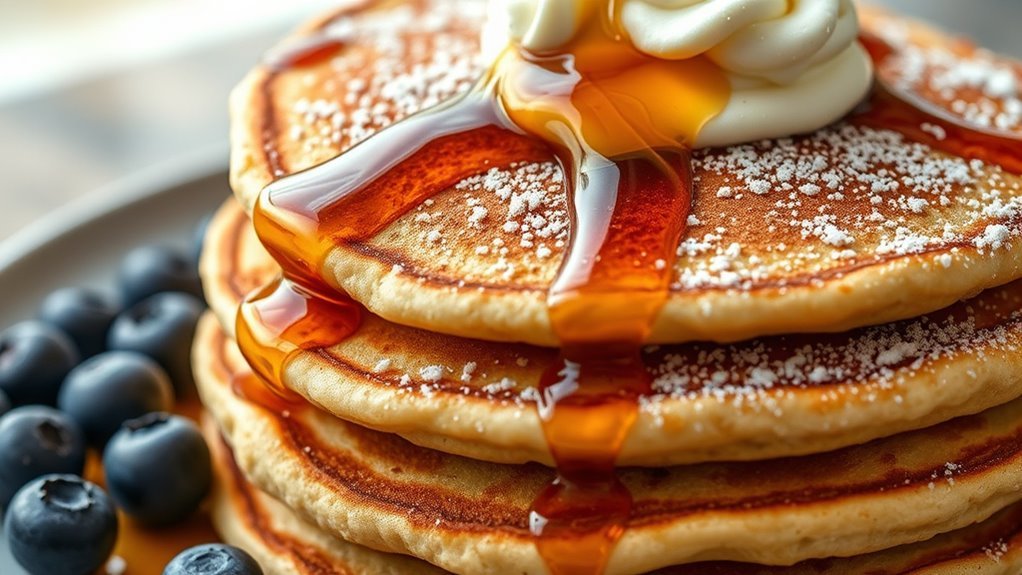

To make keto pancakes, combine almond or coconut flour, eggs, and a sugar-free sweetener like erythritol. Start by mixing dry ingredients in one bowl and whisking wet ingredients in another. Gradually combine them, ensuring the batter is smooth but not overmixed. Cook in a heated non-stick skillet for 2-3 minutes on each side. Serve with low-carb toppings like berries or cream. There’s more to explore about variations and storage methods for your keto pancake experience.
Ingredients for Keto Pancakes

When it comes to making delicious keto pancakes, the right ingredients are key to achieving that perfect fluffy texture while keeping the carb count low. You’ll want to explore various keto flour options like almond flour, coconut flour, or even a blend for ideal results. Almond flour is particularly popular due to its mild flavor and high-fat content, while coconut flour absorbs more moisture, so you’ll need to adjust your liquid ingredients accordingly. For sweetness, you have several sweetener choices such as erythritol, stevia, or monk fruit sweetener. Each has its unique flavor profile and sweetness level, so it’s worth experimenting to find what suits your taste best. With these thoughtful selections, you’re well on your way to enjoying guilt-free pancakes!
Preparation Steps

Start by gathering all your ingredients and tools to streamline the pancake-making process. You’ll need a mixing bowl, whisk, and measuring cups for easy mixing. Begin by combining your dry ingredients, like almond flour and baking powder, in one bowl. In another, mix your wet ingredients, such as eggs and unsweetened almond milk. Gradually combine the two mixtures, stirring until you achieve a smooth batter consistency. It’s important not to overmix; a few lumps are okay. This step guarantees your pancakes will be light and fluffy. If you find the batter too thick, feel free to add a splash more almond milk. With everything ready, you’re set to move on to the cooking instructions for delicious keto pancakes!
Cooking Instructions
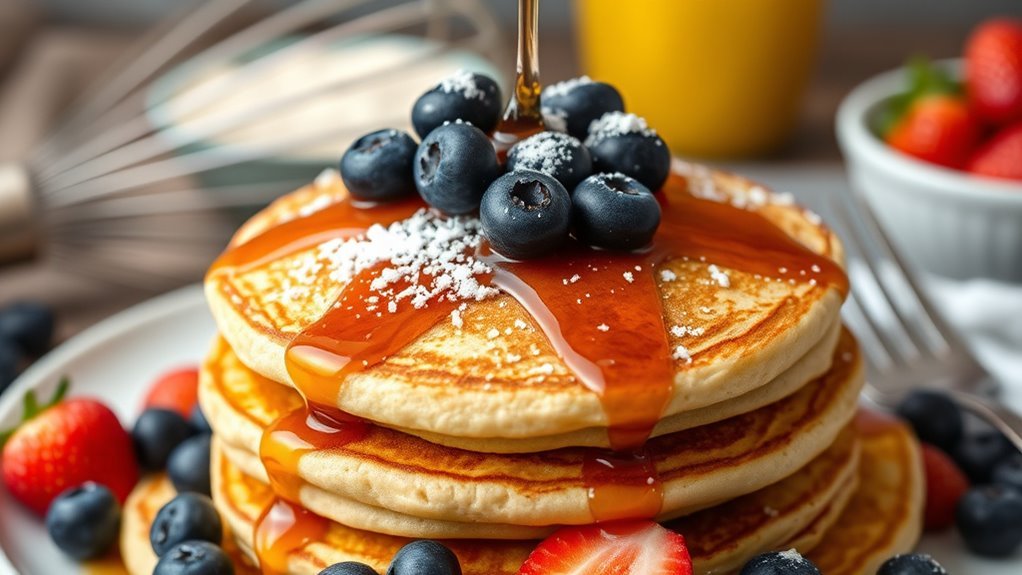
Heat a non-stick skillet or griddle over medium heat until it’s hot but not smoking. Pour your batter onto the skillet, using about 1/4 cup for each pancake. Cook for 2-3 minutes or until bubbles form on the surface, indicating it’s time for pancake flipping. Carefully flip the pancake and cook for another 1-2 minutes until golden brown.
Here’s a quick guide to cooking techniques:
| Technique | Description |
|---|---|
| Pouring | Use a measuring cup for evenness. |
| Cooking Time | 2-3 minutes per side for best results. |
| Temperature Check | A hot skillet guarantees crispiness. |
| Flipping | Use a spatula for smooth shifts. |
| Serving | Keep warm in a low oven if needed. |
Enjoy your delicious keto pancakes!
Toppings and Variations
Once you’ve perfected your keto pancakes, the next step is to explore a variety of toppings and variations that can elevate your breakfast experience. You can mix and match topping combinations like fresh berries, whipped cream, or a drizzle of sugar-free syrup for that sweet touch. For a savory twist, consider avocado slices, bacon bits, or even a dollop of cream cheese. Flavor variations can also be achieved by adding cinnamon, vanilla extract, or unsweetened cocoa powder to your batter. Don’t forget about nuts or seeds for added crunch! With so many options, you can customize your pancakes each time, ensuring you never get bored while enjoying the freedom of a delicious keto lifestyle.
Nutritional Information
When you’re following a keto diet, understanding the nutritional information of your meals is essential, especially when it comes to pancakes. A typical serving of keto pancakes often contains around 250-300 calories, with a caloric breakdown that emphasizes healthy fats and low carbs. You’ll find that most recipes utilize almond flour or coconut flour, which keeps the carb count low while providing fiber.
The nutrient profile of these pancakes usually includes about 20 grams of fat, 5 grams of net carbs, and 8-10 grams of protein. This balance helps sustain energy levels while keeping you in ketosis. By paying attention to these details, you can enjoy delicious pancakes without compromising your dietary goals.
Tips for Perfect Keto Pancakes
When making perfect keto pancakes, the selection of ingredients plays an essential role in achieving the right texture and flavor. Additionally, employing the correct cooking techniques can elevate your pancakes from ordinary to extraordinary. By focusing on these two aspects, you’ll guarantee a delicious breakfast that fits your keto lifestyle.
Ingredient Selection Matters
Selecting the right ingredients is essential for making perfect keto pancakes that not only taste great but also keep you within your carb limits. Start with almond flour or coconut flour, as they offer higher nutrient density compared to traditional flours. These options maintain a lower carb count while adding healthy fats. You’ll want to balance flavors, too; incorporating a pinch of salt and a splash of vanilla extract can elevate your pancakes considerably. Don’t forget to add eggs for structure and richness. Sweeteners like erythritol or stevia can provide the sweetness you crave without the carbs. By choosing nutrient-dense ingredients and focusing on flavor balance, you’ll create delicious pancakes that align with your keto lifestyle and satisfy your taste buds.
Cooking Technique Tips
To achieve perfectly cooked keto pancakes, it is crucial to master your cooking technique. Start with your whisking technique; combine the dry ingredients thoroughly before adding wet components. This helps to create an even batter consistency, ensuring your pancakes cook evenly. Allow the batter to rest for a few minutes; this helps the ingredients meld together, resulting in fluffier pancakes. Preheat your skillet over medium-low heat, and use a non-stick surface to prevent sticking. When pouring the batter, aim for a uniform thickness, about ¼ inch. Flip your pancakes only when bubbles form on the surface—this indicates they’re ready. With practice, you’ll find the perfect balance, liberating you to enjoy delicious keto pancakes anytime!
Storage and Reheating Methods
To keep your keto pancakes fresh, it’s important to know the best storage and reheating methods. You can refrigerate them for a few days or freeze them for longer-term storage. When it’s time to enjoy, there are effective reheating techniques to guarantee they taste just as good as when they were first made.
Refrigeration Techniques
Proper refrigeration techniques are crucial for keeping your keto pancakes fresh and ready to enjoy later. By storing them correctly, you’ll maximize refrigeration benefits and maintain their taste and texture at an ideal temperature. Here’s how to do it:
- Cool Completely: Allow pancakes to cool to room temperature before refrigerating to prevent condensation.
- Use Airtight Containers: Store pancakes in airtight containers to protect them from moisture and odors.
- Layer with Parchment Paper: If stacking, place parchment paper between pancakes to avoid sticking.
- Reheat with Care: To reheat, use a microwave or skillet on low heat to preserve their texture.
Following these tips guarantees your keto pancakes stay delicious and ready for your next meal!
Freezing Instructions
When you want to enjoy your keto pancakes later, freezing them is a fantastic option that preserves both flavor and texture. To start, make sure your pancakes are completely cooled before freezing. This prevents moisture buildup, which can lead to freezer burn. For best results, stack them with parchment paper in between each pancake. Use airtight storage containers or freezer bags to keep them fresh. Don’t forget to label your containers with the date, so you know when to use them. A good freezing tip is to keep your pancakes in portions—this makes it easy to grab just what you need. Enjoy the freedom of having delicious keto pancakes ready whenever you crave them!
Reheating Methods
Although reheating keto pancakes might seem straightforward, using the right methods can greatly enhance their taste and texture. Here are some effective reheating methods:
- Microwave Reheating: Place your pancakes on a microwave-safe plate, cover them with a damp paper towel, and heat for 20-30 seconds. This helps retain moisture.
- Oven Reheating: Preheat your oven to 350°F (175°C). Arrange pancakes on a baking sheet and cover with foil. Heat for about 10 minutes for even warmth.
- Skillet Reheating: Heat a non-stick skillet over low heat. Add pancakes, flipping occasionally until warmed through.
- Toaster Oven: Similar to oven reheating, but quicker. Just set it to 350°F and heat for about 5 minutes.
Choose the method that suits your preferences best!
1. What ingredients do I need to make keto pancakes?
To make keto pancakes, you typically need almond flour or coconut flour, eggs, cream cheese or Greek yogurt, baking powder, and a low-carb sweetener like erythritol or stevia. Additionally, you can add vanilla extract and a pinch of salt for flavor. These ingredients are low in carbohydrates, making them suitable for a ketogenic diet.
2. Can I make keto pancakes without eggs?
Yes, you can make keto pancakes without eggs by using egg substitutes. Common substitutes include flaxseed meal mixed with water (1 tablespoon of flaxseed meal with 3 tablespoons of water equals 1 egg) or unsweetened applesauce (1/4 cup for each egg). However, keep in mind that the texture and flavor may vary slightly compared to traditional egg-based recipes.
3. How do I prevent my keto pancakes from falling apart?
To prevent keto pancakes from falling apart, ensure you use the right ratio of wet to dry ingredients. Adding a binding agent like xanthan gum can also help improve the structure. Additionally, allow the batter to rest for a few minutes before cooking, which helps the ingredients to meld together. Cooking the pancakes on a low to medium heat allows them to set properly without burning.
4. Can I store leftover keto pancakes?
Yes, you can store leftover keto pancakes. Allow them to cool completely, then place them in an airtight container or wrap them in plastic wrap. They can be stored in the refrigerator for up to 3 days or frozen for up to a month. To reheat, simply microwave or place them in a toaster until warmed through.
5. What can I serve with keto pancakes?
You can serve keto pancakes with various low-carb toppings. Popular options include sugar-free syrup, whipped cream, fresh berries, or nuts. You can also try adding nut butter or cream cheese for added flavor and richness. Be mindful of portion sizes to keep within your carbohydrate limits while enjoying your meal.