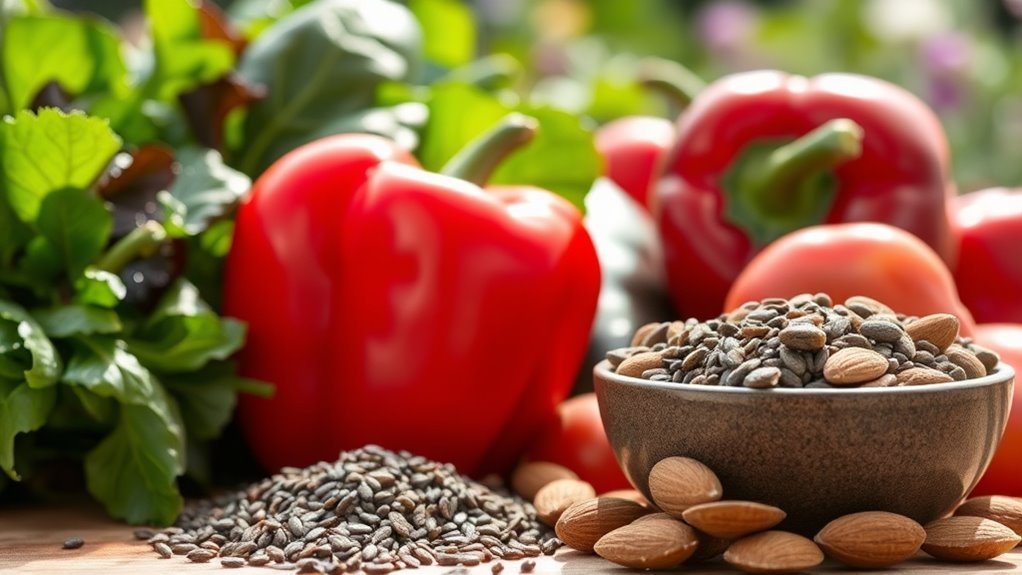

To get fiber on a keto diet, focus on low-carb veggies like spinach, broccoli, and avocados, which are high in fiber and low in carbs. Nuts and seeds, such as almonds and chia seeds, also boost your fiber intake while providing healthy fats. Consider adding psyllium husk to your meals for an extra fiber punch without the carbs. Incorporating these foods into your meals can enhance digestive health and keep you satisfied; there’s much more to explore, too.
Low-Carb Vegetables Packed With Fiber

When you’re on a keto diet, finding low-carb vegetables that are high in fiber can be a game-changer for your digestive health. Incorporating keto vegetable options like spinach, kale, and broccoli into your meals not only keeps your carb count in check but also boosts your fiber intake. These veggies are fantastic for creating fiber-rich salads that satisfy your cravings while promoting gut health. For instance, a salad with mixed greens, avocado, and cucumbers can provide essential nutrients without derailing your keto goals. Additionally, adding a sprinkle of chia seeds or flaxseeds can further enhance the fiber content. By focusing on these low-carb, high-fiber options, you can enjoy the freedom of a diverse and satisfying keto diet while supporting your digestive wellness. Furthermore, including leafy greens in your meals can significantly increase your intake of vitamins A, C, and K.
Nuts and Seeds: Nutrient-Dense Fiber Sources

Nuts and seeds are among the most nutrient-dense foods you can incorporate into your keto diet, offering a fantastic source of fiber. Various nut varieties, like almonds, walnuts, and chia seeds, not only provide healthy fats but also pack a fiber punch that aids digestion and promotes satiety. Including these foods in your meals can help you maintain your desired carb intake while enjoying the fiber benefits that support overall gut health. For instance, just a handful of almonds delivers about 3.5 grams of fiber, making it an excellent snack. Additionally, chia seeds are a versatile ingredient that can be easily added to meals for enhanced nutrition while staying within your carb limits. So, when you’re looking for a crunchy, satisfying addition to your keto meals, turn to nuts and seeds for a nutritious boost that aligns with your low-carb lifestyle.
Avocado: The Keto Fiber Superstar
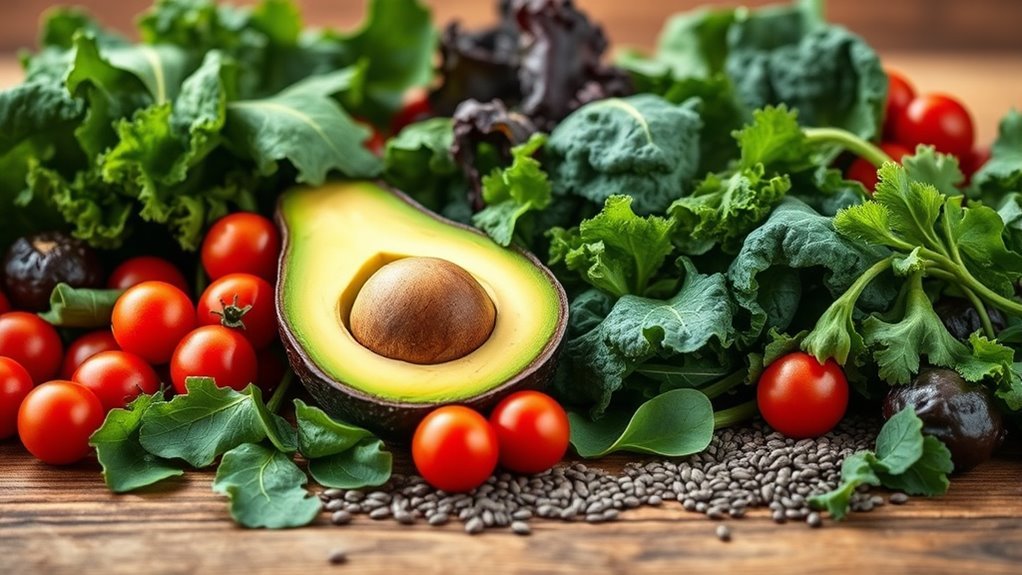
Although many fruits are off-limits on a keto diet, avocados stand out as a fiber-rich exception that perfectly fits your low-carb lifestyle. Packed with around 10 grams of fiber per fruit, avocados not only help with digestion but also keep you feeling full longer. Their healthy fats contribute to satiety while providing essential nutrients, making them a powerhouse for your diet. Additionally, their low carb count makes avocados a perfect fit for a ketogenic lifestyle.
You can enjoy avocado benefits in various ways—try them in salads, smoothies, or as a spread on low-carb bread. For a delicious twist, whip up guacamole or blend avocados into creamy dressings. With endless avocado recipes at your fingertips, you can easily incorporate this fiber superstar into your meals and savor the freedom of flavorful, healthy eating.
Psyllium Husk and Other Supplements
While it might seem challenging to meet your fiber needs on a keto diet, incorporating psyllium husk and other supplements can be a game-changer. Psyllium husk is rich in soluble fiber, offering numerous psyllium benefits like improved digestion and enhanced gut health. It absorbs water, forming a gel-like substance that helps maintain regularity without impacting your carb intake. Additionally, incorporating low-carb vegetables into your meals can further support your fiber intake while adhering to keto guidelines.
If you’re seeking supplement alternatives, consider options like chia seeds, flaxseeds, or even fiber powders. These can easily be added to your meals or smoothies, ensuring you get the fiber you need while staying within your keto macros. Embracing these supplements can provide the freedom to enjoy a varied diet without compromising your nutritional goals.
Creative Keto Recipes to Boost Fiber Intake
To increase your fiber intake on a keto diet, you can get creative with your meals by incorporating high-fiber ingredients into delicious recipes. Consider whipping up keto smoothies with spinach, avocado, and chia seeds; they’re not only tasty but packed with fiber. For a comforting option, try making fiber-rich soups using cauliflower, broccoli, or zucchini. These veggies not only add bulk but also enhance flavor while keeping carbs low. You can even blend in some psyllium husk to thicken your soups while boosting fiber content. Additionally, incorporating low-carb vegetables like Brussels sprouts into your meals can significantly help increase your fiber intake. Experimenting with these recipes allows you to enjoy variety while ensuring you meet your fiber needs—giving you the freedom to stay on track with your keto lifestyle without sacrificing taste.
Frequently Asked Questions
Can I Get Fiber From Keto-Friendly Fruits?
Absolutely, you can get fiber from keto-friendly fruits! Think of them as the hidden gems in a treasure hunt. Options like avocados, strawberries, and raspberries provide low carb choices packed with fiber. For instance, half an avocado contains around 5 grams of fiber while keeping carbs low. By incorporating these fruits into your meals, you’re not just satisfying your cravings, you’re also boosting your fiber intake without breaking your keto lifestyle. Enjoy the freedom!
How Much Fiber Do I Need on a Keto Diet?
You should aim for about 25 grams of fiber daily on a keto diet. This helps maintain digestive health while keeping your carb intake low. Focus on keto fiber sources like avocado, chia seeds, and flaxseeds. Incorporating fiber-rich vegetables such as spinach, broccoli, and cauliflower can also help you meet your fiber goals. Balancing these foods will keep your meals satisfying and nutritious, giving you the freedom to enjoy a variety of flavors.
Are Fiber Supplements Safe on a Keto Diet?
Absolutely, fiber supplements can be safe on a keto diet, like a parachute providing a soft landing during a free fall. When choosing, consider various supplement types—like psyllium husk or inulin—that can help you meet your fiber needs. Just make sure you’re getting fiber from diverse fiber sources as well, like low-carb vegetables. Always listen to your body, and consult a healthcare professional if you have concerns, making certain your keto journey remains smooth and enjoyable.
Can I Track Fiber Intake With Keto Apps?
Yes, you can track fiber intake with keto apps. Most popular keto apps offer fiber tracking features, allowing you to monitor your daily intake easily. By inputting your food choices, you can see how much fiber you’re consuming alongside your carb counts. This helps guarantee you’re meeting your nutritional needs while enjoying the flexibility of a keto lifestyle. Just remember to choose high-fiber, low-carb foods for the best results!
What Are the Signs of Fiber Deficiency?
Think of your digestive system as a bustling highway; without enough fiber, it’s bound to get jammed. Signs of fiber deficiency include constipation, bloating, and irregular bowel movements. You might also notice increased cravings and fatigue. If you’re not getting adequate dietary sources, you could face serious health consequences like digestive disorders or weight gain. Prioritizing fiber can help keep your body’s highway clear and running smoothly, allowing you the freedom to thrive.
Frequently Asked Questions
1. Why is fiber important on a keto diet?
Fiber is crucial on a keto diet as it helps maintain digestive health, regulates blood sugar levels, and promotes a feeling of fullness. Since the keto diet is low in carbohydrates, incorporating fiber-rich foods can help prevent constipation and other gastrointestinal issues commonly associated with low-carb diets.
2. What are some high-fiber foods that are keto-friendly?
Some high-fiber, keto-friendly foods include avocados, chia seeds, flaxseeds, nuts (like almonds and walnuts), and non-starchy vegetables such as spinach, broccoli, and cauliflower. These foods not only provide fiber but also healthy fats and essential nutrients, making them ideal for a keto diet.
3. How can I increase my fiber intake while staying under my carb limit?
To increase your fiber intake while adhering to your carb limit, focus on incorporating small portions of high-fiber, low-carb foods into your meals. For example, adding a tablespoon of chia seeds or flaxseeds to smoothies, using leafy greens as wraps instead of bread, and snacking on raw vegetables can boost your fiber intake without exceeding your carb allowance.
4. Is it okay to take fiber supplements on a keto diet?
Yes, fiber supplements can be a convenient way to increase your fiber intake on a keto diet, especially if you struggle to get enough from food alone. Look for keto-friendly options that are low in carbs and free from added sugars. However, it’s best to prioritize whole food sources of fiber to gain additional nutrients and health benefits.
5. What are the potential side effects of low fiber intake on a keto diet?
A low fiber intake on a keto diet can lead to a variety of digestive issues, including constipation, bloating, and discomfort. Additionally, inadequate fiber can disrupt gut health and may affect overall well-being. To avoid these side effects, it’s essential to include a variety of fiber-rich, low-carb foods in your diet.
References
- https://www.ncbi.nlm.nih.gov/pmc/articles/PMC6213183/
- https://www.health.harvard.edu/staying-healthy/the-benefits-of-fiber
- https://www.cdc.gov/nutrition/data-statistics/know-your-fiber.html
- https://www.washingtonpost.com/food/2020/10/19/what-is-keto-diet-fiber/
- https://www.eatright.org/health/wellness/preventing-illness/the-importance-of-fiber-in-your-diet
- https://www.medicalnewstoday.com/articles/324523
- https://www.thekitchn.com/how-to-eat-more-fiber-on-a-keto-diet-229965
- https://www.healthline.com/nutrition/fiber-on-keto#how-to-get-fiber