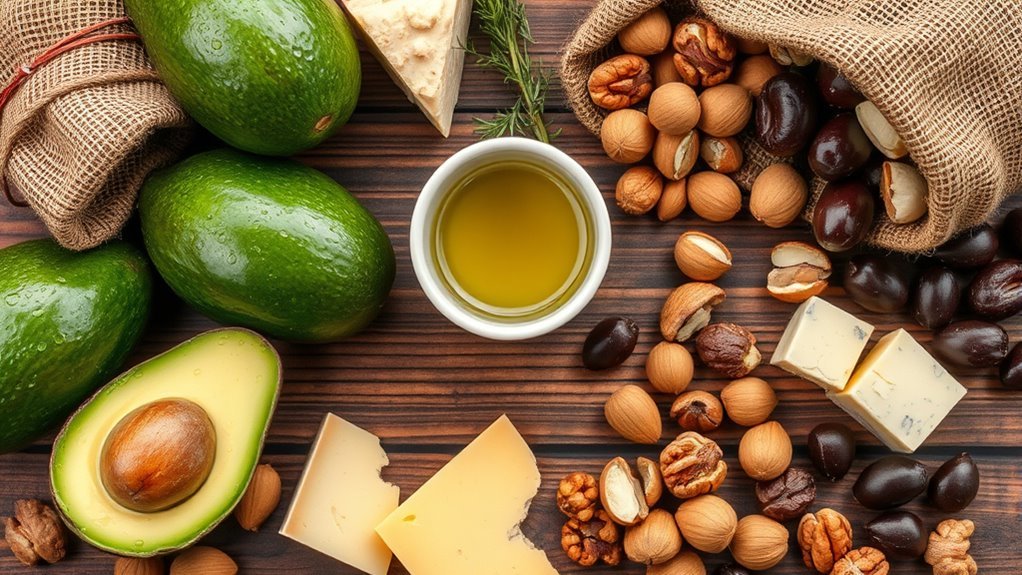

To get enough fat on a keto diet, aim for healthy fats to make up 70-80% of your daily caloric intake. Incorporate sources like avocados, nuts, seeds, and olive oil into your meals. Use high-quality cooking oils like coconut oil for frying or baking. Embrace fatty cuts of meat, such as salmon and ribeye, and think creatively about adding fats to dishes with dips or sauces. There’s plenty more to explore on how to optimize your fat intake.
Understanding the Importance of Healthy Fats on Keto
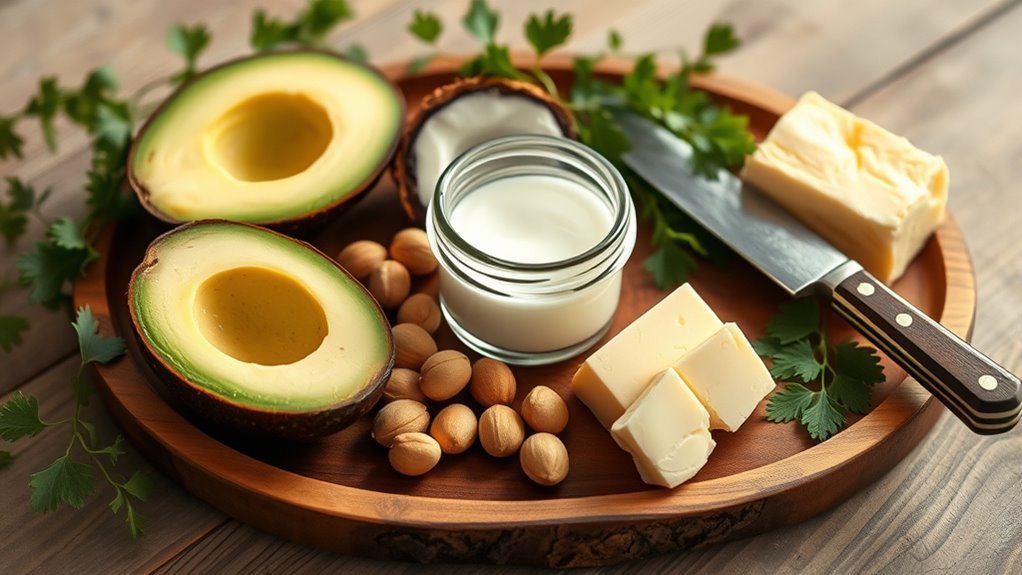
When you’re starting on a keto diet, understanding the role of healthy fats is vital, as these fats not only fuel your body but also support important functions. Healthy fats facilitate fat metabolism, allowing your body to efficiently burn fat for energy instead of carbohydrates. This shift not only helps with weight loss but also promotes mental clarity and sustained energy levels. However, achieving dietary balance is fundamental; it’s important to choose a variety of healthy fat sources to guarantee you’re getting the nutrients your body needs. Incorporating avocados, nuts, seeds, and olive oil can help maintain this balance. By embracing healthy fats, you empower yourself to thrive on a keto diet while enjoying the freedom that comes with improved well-being.
Top Sources of Healthy Fats for Your Keto Diet
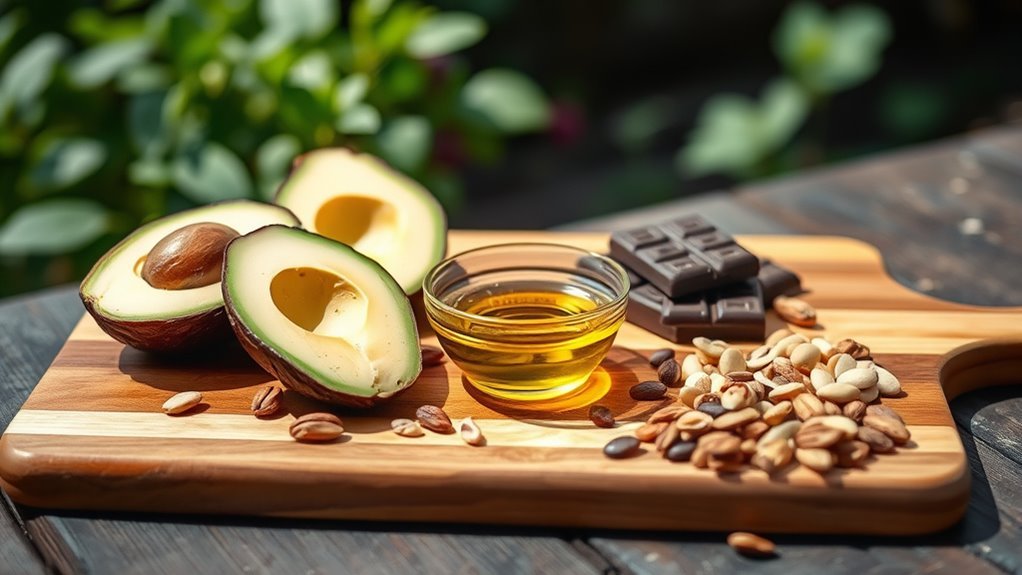
While you might feel overwhelmed by the variety of food choices on a keto diet, focusing on top sources of healthy fats can simplify your meal planning and enhance your nutritional intake. Avocado oil, olive oil, and coconut oil are excellent options that prioritize fat quality. Nuts and seeds, like almonds and chia seeds, provide both healthy fats and essential nutrients. Fatty fish, such as salmon, are rich in omega-3s, contributing to heart health. Incorporating these sources at appropriate nutrient timing can optimize your energy levels and support your keto journey. Remember, balancing fat quality is vital for overall health, making it essential to choose whole, unprocessed fats whenever possible. Enjoy the freedom to explore and create delicious meals!
Incorporating Avocado Into Your Meals
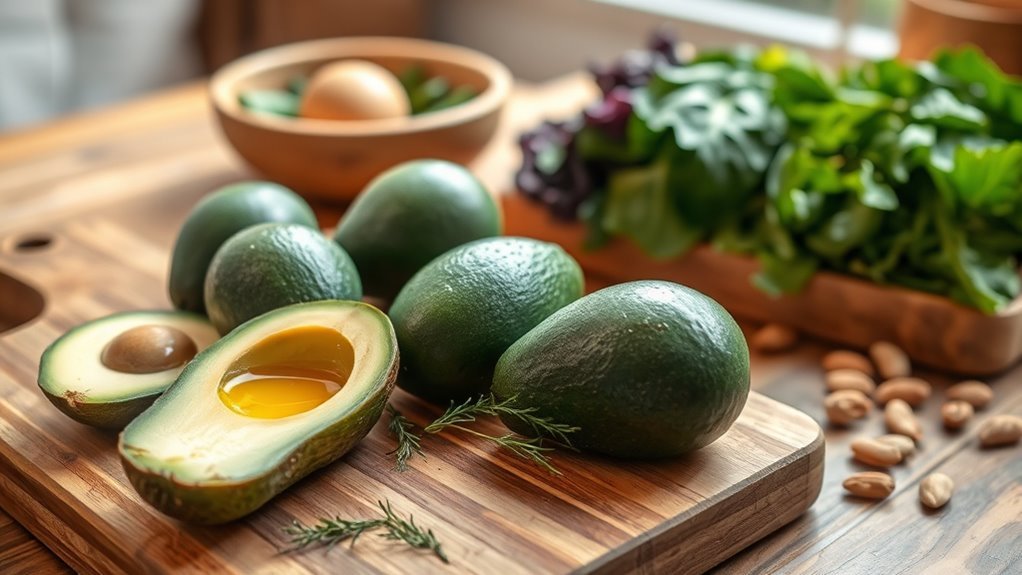
Avocados are a powerhouse of healthy fats, making them an excellent choice for your keto meals. Packed with fiber, vitamins, and essential nutrients, they not only enhance your dishes but also support your overall health. Let’s explore some easy avocado recipes that can help you incorporate this superfood into your diet.
Nutritional Benefits of Avocado
Incorporating avocados into your meals not only enhances flavor but also offers a wealth of nutritional benefits essential for those following a keto diet. With various avocado varieties available, you can enjoy diverse tastes while maximizing your intake of healthy fats. Avocado nutrition is impressive; they’re packed with monounsaturated fats, which can help improve heart health and keep you feeling full longer. Additionally, avocados are rich in fiber, vitamins E and C, and potassium, which supports proper bodily functions. Their low carbohydrate content makes them an ideal choice on a keto diet. So, whether you pick Hass or Fuerte, adding avocados to your meals can greatly contribute to your overall health and well-being while enjoying your keto journey.
Easy Avocado Recipes
Discovering easy avocado recipes can transform your keto meals into deliciously satisfying experiences. Avocados are versatile and packed with healthy fats, making them a perfect fit for your diet. Here are some quick ideas to incorporate avocados into your meals:
- Avocado Toast: Top almond flour bread with smashed avocado, salt, and pepper for a filling snack.
- Avocado Smoothies: Blend avocado with unsweetened almond milk and spinach for a creamy breakfast.
- Guacamole: Mash avocados with lime, cilantro, and garlic for a tasty dip.
- Stuffed Avocados: Fill halves with tuna or chicken salad for a protein-packed meal.
- Avocado Salad: Combine diced avocado with cucumber and tomatoes for a revitalizing side.
These recipes not only taste great but also help you reach your fat goals on keto.
Cooking With Oils: Choosing the Right Options
When you’re cooking on a keto diet, choosing the right oils is essential to guarantee you’re getting enough healthy fats. Olive oil benefits include its heart-healthy monounsaturated fats, making it perfect for dressings or low-heat cooking. For higher temperatures, consider coconut oil; its uses range from frying techniques to baking, thanks to its stable fat storage properties. If you’re looking for butter alternatives, ghee or avocado oil can enhance flavor profiles while providing healthy fats. Experimenting with oil blends can also elevate your dishes. For roasting tips, use oils with higher smoke points to prevent nutrient loss. With these options, you can enjoy the freedom to create delicious meals while adhering to your keto lifestyle.
The Benefits of Nuts and Seeds on a Keto Diet
Nuts and seeds are excellent nutrient-dense options that can greatly enhance your keto diet. They’re packed with healthy fats, fiber, and essential vitamins, making them a great choice for satisfying snacks. Incorporating these foods can not only help you meet your fat goals but also support overall health.
Nutrient-Dense Options
Incorporating nutrient-dense options like nuts and seeds into your keto diet can greatly enhance your overall health and satisfaction. These fat-rich foods not only provide essential fats but also offer a host of vitamins and minerals. Here are some benefits of adding these nutrient-dense alternatives to your meals:
- High in healthy fats
- Rich in protein and fiber
- Packed with antioxidants
- Promote heart health
- Support weight management
Including a variety of nuts and seeds can help you stay satisfied while meeting your dietary needs. They’re versatile and can be enjoyed in many ways, making it easy to find choices that suit your taste. Embrace these options for a fulfilling and nutritious keto journey!
Healthy Snack Ideas
A great way to stay on track with your keto diet is by snacking on nuts and seeds. These nutrient-dense options provide healthy fats that help maintain ketosis while also delivering essential vitamins and minerals. Almonds, walnuts, and macadamia nuts are excellent keto-friendly snacks, offering a satisfying crunch and richness. You can also explore various nut butter options, like almond or macadamia butter, which can be enjoyed on their own or paired with low-carb veggies. Not only are these snacks delicious, but they also promote satiety, making it easier to resist unhealthy cravings. Just remember to monitor portion sizes, as calories can add up quickly. Embrace the freedom of snacking smartly while staying true to your keto goals!
Dairy Delights: High-Fat Options for You
While many people associate dairy with carbohydrates, it can actually be a fantastic source of high-fat options for those following a keto diet. Incorporating these creamy delights can help you meet your fat goals without sacrificing flavor:
- Cream cheese: Perfect for spreads or as a cheesecake base.
- Sour cream: A tangy addition to dishes or a dip for veggies.
- Full-fat yogurt: Choose unsweetened varieties for a creamy snack.
- Butter substitutes: Use ghee or coconut oil for cooking without carbs.
- Heavy cream: Great for coffee or in recipes to boost richness.
Embracing Fatty Cuts of Meat
When following a keto diet, choosing fatty cuts of meat can greatly boost your fat intake. Options like ribeye, pork belly, and chicken thighs not only provide essential fats but also offer rich flavors. Understanding the best cooking techniques for these meats can help you enjoy satisfying meals while staying on track with your dietary goals.
Best Fatty Meats
Choosing the right cuts of meat is essential for successfully adhering to a keto diet, as fatty meats not only provide the necessary fats for energy but also enhance flavor and satisfaction in meals. When selecting your meats, aim for those rich in healthy fats. Here are some top choices:
- Pork belly: A deliciously fatty option that’s versatile for many dishes.
- Ribeye steak: Known for its marbling, offering both taste and texture.
- Ground beef (80/20): Affordable and perfect for a variety of recipes.
- Fatty fish (like salmon): Packed with omega-3s, great for heart health.
- Chicken thighs: Juicier and richer in fat compared to chicken breasts.
Incorporating these meats can keep your meals exciting while ensuring you meet your fat intake goals.
Cooking Techniques Explained
Understanding how to cook fatty cuts of meat can elevate your keto meals, ensuring you maximize flavor and maintain the desired fat content. Sautéing techniques, like using a hot skillet with a bit of oil, can render fat beautifully while creating a crispy exterior. Aim for cuts like ribeye or pork belly, which benefit from this method. Alternatively, roasting methods are fantastic for larger cuts, allowing the fat to baste the meat as it cooks. Preheat your oven and season generously, then let the magic happen. Both techniques not only enhance taste but also keep your meals satisfying and rich in healthy fats. Embrace these methods, and you’ll enjoy delicious, keto-friendly dishes that keep you feeling satisfied.
Creative Ways to Add Fat to Your Dishes
To guarantee you’re getting enough fat on a keto diet, think beyond traditional sources and explore creative ways to enhance your meals. Here are some delicious ideas to incorporate more fat:
Explore creative ways to boost your fat intake on a keto diet and keep your meals exciting!
- Whip up fatty dips like guacamole or spinach-artichoke dip for veggies.
- Drizzle oil over roasted veggies or salads for added richness.
- Add creamy sauces to your favorite egg dishes for extra flavor.
- Use nut butters or cheese spreads on low-carb crackers or veggies.
- Blend avocado smoothies with coconut cream for a satisfying treat.
With these options, you’ll find it easy to boost your fat intake while keeping your meals exciting. Remember, variety is key in maintaining your keto lifestyle and enjoying every bite!
Meal Prep Ideas for a Fat-Focused Keto Approach
Incorporating fat into your meals doesn’t just stop at creative additions; meal prepping can play a significant role in ensuring you meet your fat intake goals on a keto diet. Start by cooking large batches of high-fat staples like coconut oil, avocado, and grass-fed butter. You can create delicious fat bombs—mix nut butter with coconut oil and dark chocolate, then portion them for easy snacks.
When planning your meals, focus on recipes that emphasize fat storage, such as creamy soups or egg-based dishes. Assemble salads with olive oil dressings and plenty of avocados for a nutrient boost. By dedicating time to meal prep, you’ll effortlessly stay on track while enjoying the freedom of a fat-focused keto lifestyle.
Tracking Your Fat Intake Effectively
While tracking your fat intake on a keto diet might seem challenging, it’s essential for achieving your nutritional goals. Using effective tracking tools can make this process simpler and more enjoyable. Here are some tips to help you stay on top of your fat intake:
- Use a food diary or app to log your meals.
- Measure your portions for accuracy.
- Familiarize yourself with the fat content of common foods.
- Set daily fat targets to guide your meals.
- Regularly review your progress to stay motivated.
Frequently Asked Questions
1. What are the best sources of fat for a keto diet?
The best sources of fat on a keto diet include healthy oils such as olive oil, coconut oil, and avocado oil. Additionally, fatty fish like salmon, mackerel, and sardines are excellent choices. Full-fat dairy products, such as cheese, butter, and heavy cream, along with avocados and nuts (like almonds, walnuts, and macadamias), also provide good fats that fit into a keto lifestyle.
2. How can I increase my fat intake without feeling overly full?
To increase fat intake without feeling overly full, focus on incorporating liquid fats into your meals, such as adding olive oil or avocado oil to salads or vegetables. Additionally, consume high-fat, low-volume foods like nut butters or cheese, which provide a concentrated source of fat. You can also try using smoothies with added fats like coconut milk or MCT oil to help boost your intake while keeping the volume manageable.
3. Are there any common mistakes to avoid when trying to get enough fat on a keto diet?
Common mistakes include relying too heavily on processed foods that may contain unhealthy fats, such as trans fats or refined oils. Another mistake is underestimating the importance of variety—eating a limited range of fat sources can lead to nutrient deficiencies. Lastly, some individuals may forget to include enough calorie-dense foods, which can make it challenging to reach fat goals. Always aim for a balanced intake of healthy fats and monitor your overall macronutrients.
4. Can I consume too much fat on a keto diet?
While fat is a primary macronutrient in the keto diet, consuming excessive amounts can hinder weight loss or lead to unwanted health issues. It’s essential to balance fat intake with protein and carbohydrates according to your personal macronutrient goals. Overeating fats can lead to an increase in calorie intake, which might counteract the benefits of the diet. Monitoring your portions and focusing on the quality of fats is crucial for maintaining a healthy keto lifestyle.
5. How do I ensure I’m getting enough essential fatty acids on a keto diet?
To ensure you’re getting enough essential fatty acids (EFAs) on a keto diet, include sources of omega-3 and omega-6 fatty acids in your meals. Fatty fish, flaxseeds, chia seeds, and walnuts are great for omega-3s, while sunflower oil, safflower oil, and nuts can provide omega-6s. Consider supplementing with fish oil or algae oil if you find it challenging to meet your EFA needs through diet alone. Regularly incorporating a variety of fat sources will help you achieve a well-rounded fatty acid profile.
References
- https://www.ncbi.nlm.nih.gov/pmc/articles/PMC7071884/
- https://www.health.harvard.edu/staying-healthy/the-ketogenic-diet
- https://www.mayoclinic.org/healthy-lifestyle/nutrition-and-healthy-eating/expert-answers/keto-diet/faq-20446040
- https://www.cdc.gov/healthyweight/assessing/bmi/adult_bmi/english_bmi_calculator/bmi_calculator.html
- https://www.jamanetwork.com/journals/jama/fullarticle/2775451
- https://www.heart.org/en/healthy-living/healthy-eating/eat-smart/nutrition-basics/fats-101
- https://www.nutrition.gov/topics/nutrition-101/fats
- https://ods.od.nih.gov/factsheets/Fat-HealthProfessional/