

To calculate your keto macros, start by determining your daily caloric needs based on your basal metabolic rate (BMR) and activity level. Aim for a macro breakdown of 70-75% fats, 20-25% proteins, and 5-10% carbs. Use a keto macro calculator to personalize these ratios, and track your food intake to guarantee you’re staying within them. Adjust your intake as necessary for weight loss or maintenance. Keep going to discover more about optimizing your keto journey!
Understanding Keto Macros: Fats, Proteins, and Carbs

When starting on a ketogenic diet, understanding the balance of fats, proteins, and carbohydrates is crucial for success. Your macro breakdown typically consists of about 70-75% fats, 20-25% proteins, and only 5-10% carbs. Focus on healthy fat sources like avocados, nuts, and olive oil, while choosing protein types such as grass-fed meats and eggs. Keeping your carb limits low—usually under 50 grams per day—will help maintain ketosis. Meal planning is essential for staying on track, so prepare your food choices in advance. Also, consider nutrient timing; consuming fats and proteins strategically around workouts can optimize your results. Embrace this freedom to create meals that nourish your body while aligning with your keto goals.
Determining Your Daily Caloric Needs

Calculating your daily caloric needs is the next step in successfully managing your ketogenic diet. To find this number, you’ll need to evaluate your basal metabolic rate (BMR) and your activity level. BMR represents the calories your body burns at rest, while your activity level accounts for any exercise and daily movements.
To maintain your weight, aim for a caloric intake that matches your total daily energy expenditure (TDEE). If you want to lose weight, creating a caloric deficit is essential. This means consuming fewer calories than your TDEE. Be mindful of how your body responds, and adjust accordingly to stay aligned with your goals. Balancing these factors will empower you to navigate your keto journey with confidence and freedom.
Calculating Your Ideal Macro Ratios
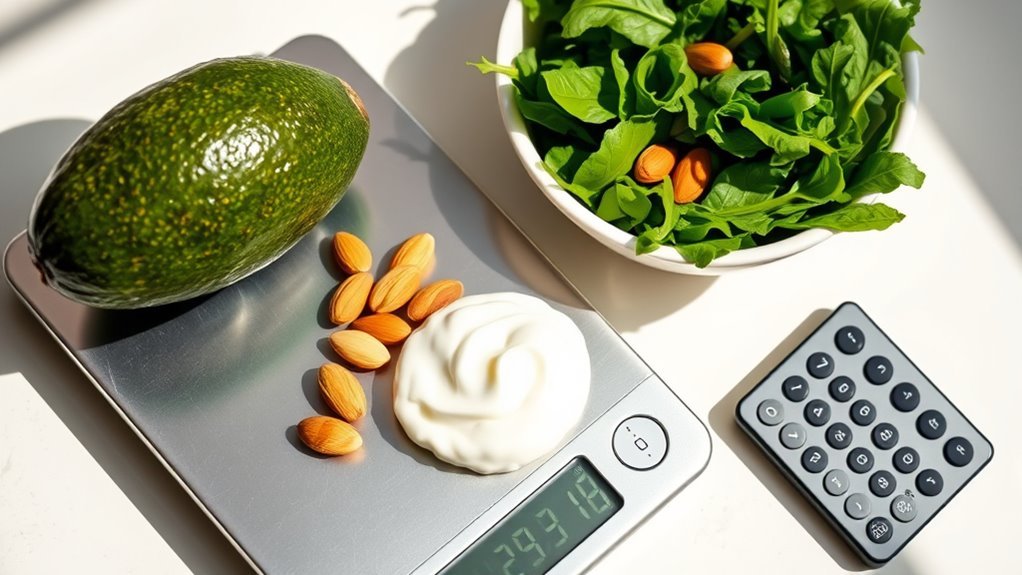
While the exact macro ratios can vary based on individual goals and preferences, determining your ideal ketogenic macronutrient breakdown is crucial for success on the diet. Here’s how to pinpoint your ideal macro percentages:
- Use Keto Macro Calculators: These tools can help you find your personalized ratios based on your activity level and weight-loss goals.
- Focus on Fat: Typically, a keto diet consists of around 70-75% fat, 20-25% protein, and 5-10% carbs. Adjust as needed.
- Track Your Intake: Monitor your food consumption to guarantee you’re sticking to your ideal macro percentages, making adjustments as necessary.
Adjusting Your Macros for Weight Loss or Maintenance
Adjusting your macros for weight loss or maintenance becomes essential once you’ve established your ideal ratios. To create a caloric deficit, you can either lower your overall caloric intake or increase your physical activity. A common approach is macro cycling, where you vary your macronutrient ratios throughout the week. For instance, you might consume higher carbs on workout days and lower carbs on rest days. This can help keep your metabolism engaged while still promoting fat loss. When switching to maintenance, gradually increase your caloric intake to find your balance without regaining weight. Remember, these adjustments should feel flexible, allowing you the freedom to enjoy your meals while staying aligned with your health goals.
Tips for Tracking and Sticking to Your Macro Goals
To effectively track and stick to your macro goals, it is crucial to establish a system that works for you. Here are three practical tips:
- Use a Macro Tracking App: Apps like MyFitnessPal or Cronometer simplify logging foods and calculating macros, making it easier to stay accountable.
- Plan Your Meals Ahead: Meal planning helps you control your macro intake. Prepare meals in advance to avoid impulsive eating that could throw off your goals.
- Stay Flexible: Life happens, and it’s okay to adjust your macro goals if you’re not feeling restrictive. Freedom in your approach can lead to lasting changes.
Frequently Asked Questions
What are keto macros?
Keto macros refer to the macronutrient ratios that are typically followed on a ketogenic diet. The primary goal is to maintain a low carbohydrate intake, moderate protein levels, and high fat consumption. A common macro ratio for the ketogenic diet is 75% fat, 20% protein, and 5% carbohydrates, which helps the body enter a state of ketosis, where it burns fat for fuel instead of carbohydrates.
How do I calculate my daily calorie needs for keto?
To calculate your daily calorie needs for keto, you first need to determine your Total Daily Energy Expenditure (TDEE). This can be done using the Mifflin-St Jeor equation, which takes into account your age, gender, weight, height, and activity level. Once you find your TDEE, you can set your macronutrient targets based on your calorie intake, using the typical keto ratios. For example, if your TDEE is 2000 calories, aim for 1500 calories from fats, 400 calories from protein, and 100 calories from carbs.
How can I track my macros effectively?
Tracking your macros effectively can be done using various methods. Many individuals use mobile apps like MyFitnessPal or Cronometer, which allow you to log your food intake and automatically calculate your macros. Additionally, keeping a food diary can help you manually track your meals. It’s essential to weigh your food and read nutrition labels to ensure accuracy. Regularly reviewing your intake will help you stay on target with your keto goals.
What are some common mistakes when calculating keto macros?
Common mistakes when calculating keto macros include miscalculating your TDEE, neglecting to account for hidden carbs in foods, and ignoring portion sizes. Additionally, some people may not adjust their macros as they lose weight or change their activity levels. It’s also important to ensure that the foods you choose fit within the keto-friendly guidelines, as not all high-fat foods are created equal.
Can I adjust my keto macros based on my goals?
Yes, you can and should adjust your keto macros based on your individual goals. For instance, if you are aiming for weight loss, you may want to maintain a calorie deficit while keeping your fat intake high. Conversely, if you are focused on muscle gain, you might increase your protein intake while still adhering to low carb limits. Regularly reassessing your goals and adjusting your macronutrient ratios accordingly is key to achieving success on the ketogenic diet.
References
- https://en.wikipedia.org/wiki/Ketogenic_diet
- https://www.ncbi.nlm.nih.gov/pmc/articles/PMC6313445/
- https://www.healthline.com/nutrition/keto-diet-macros
- https://www.dietdoctor.com/low-carb/keto
- https://www.researchgate.net/publication/301947135_Ketogenic_diet_An_overview
- https://www.cdc.gov/healthyweight/assessing/bmi/adult_bmi/index.html
- https://www.verywellfit.com/the-ketogenic-diet-and-exercise-5191000
- https://www.mayoclinic.org/healthy-lifestyle/nutrition-and-healthy-eating/expert-answers/keto-diet/faq-20450580