
To build muscle on a ketogenic diet, focus on optimizing your protein intake by aiming for 1.6 to 2.2 grams of protein per kg of body weight. Maintain a macronutrient balance of about 20-25% protein, 70-75% fats, and minimal carbs. Incorporate healthy fats for energy and hormone balance, and design a resistance training program with 3-5 sessions a week. Staying hydrated and using supplements like BCAAs can enhance recovery and growth. There’s much more to explore for effective results.
Understanding the Ketogenic Diet and Muscle Growth

When you consider building muscle on a ketogenic diet, it’s essential to understand how this low-carb, high-fat approach affects your body. The keto basics involve reaching a metabolic state known as ketosis, where your body becomes efficient at burning fat for fuel. This fat adaptation can support muscle preservation during your workouts. For effective muscle synthesis, focus on protein timing and nutrient timing around your exercise sessions. Consuming protein post-workout can enhance exercise recovery and stimulate muscle growth. Remember, while carbs are limited, your body can still build muscle by prioritizing high-quality fats and proteins. Additionally, it’s crucial to monitor protein intake to maintain balance on a keto diet and support your muscle-building goals. Embrace this freedom to explore how the ketogenic diet can work for your fitness goals, ensuring you maintain both strength and liveliness.
Optimizing Protein Intake for Muscle Development
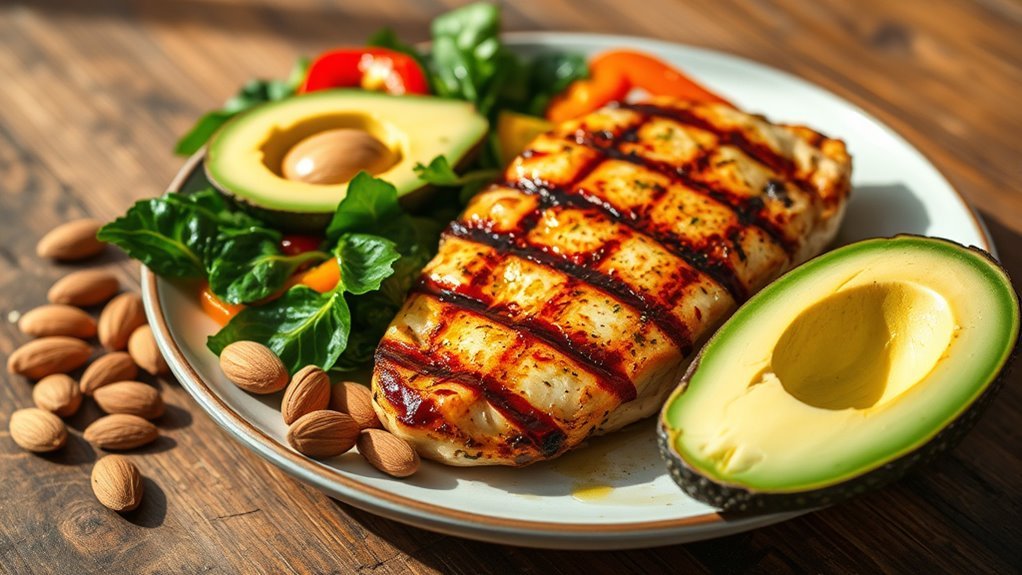
To effectively build muscle on a ketogenic diet, optimizing your protein intake is key. Here are four essential tips to help you:
- Calculate Your Needs: Aim for 1.6 to 2.2 grams of protein per kilogram of body weight to support muscle growth.
- Focus on Timing: Distribute your protein intake throughout the day, consuming 20-30 grams of protein every 3-4 hours, especially post-workout.
- Consider Nutrient Ratios: Maintain a macronutrient balance of 20-25% protein, 70-75% fats, and 5-10% carbs to stay in ketosis while building muscle.
- Choose Quality Sources: Opt for high-quality proteins like grass-fed beef, wild-caught fish, and organic eggs to guarantee you’re getting essential amino acids. Additionally, incorporating keto-approved berries can provide essential nutrients while keeping carbs low.
The Role of Healthy Fats in Muscle Building
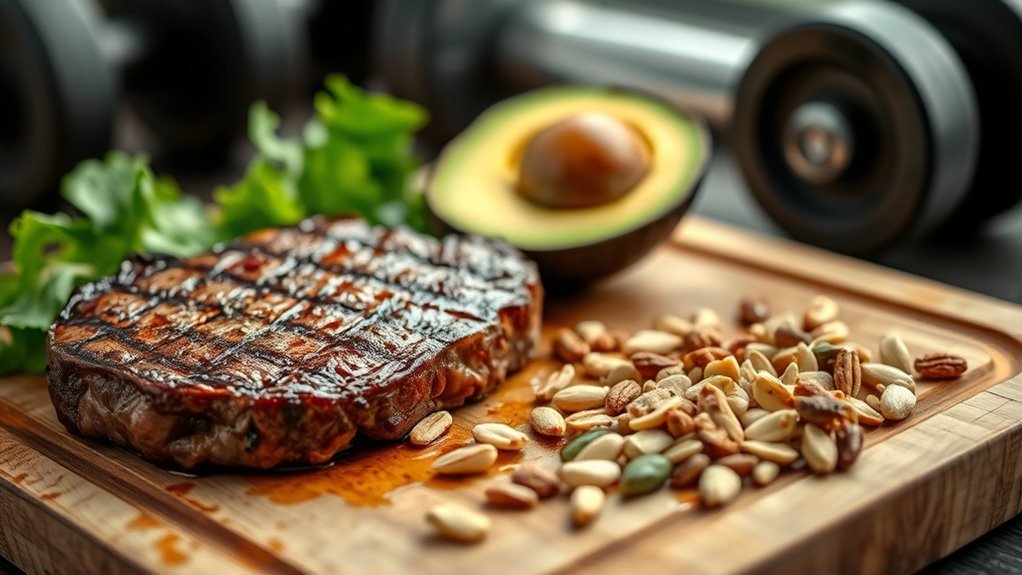
Healthy fats play an essential role in muscle building, especially on a ketogenic diet, as they provide the energy necessary for intense workouts while supporting overall recovery. Incorporating healthy fats like avocados, nuts, and olive oil not only fuels your body but also aids in muscle synthesis. These fats help maintain hormone balance, particularly testosterone, which is vital for muscle growth. Additionally, healthy fats can reduce inflammation, allowing for better recovery between workouts. When you prioritize these fats, you tap into a sustainable energy source that can enhance your performance and endurance. By focusing on quality fats, you’re not just fueling your workouts; you’re creating an environment conducive to building and maintaining muscle effectively. Furthermore, a macronutrient ratio that emphasizes high-quality fats can significantly improve your results on a keto diet.
Designing a Resistance Training Program
When designing a resistance training program, it’s essential to take into account both exercise frequency and volume to maximize muscle gains. Incorporating a mix of compound and isolation exercises can help target multiple muscle groups effectively while promoting strength. Balancing these elements guarantees you’re not only building muscle but also maintaining overall functional fitness. Additionally, understanding how the body burns fat on keto can enhance your training results, as it provides insight into optimizing energy levels and performance.
Exercise Frequency and Volume
Establishing the right exercise frequency and volume is essential for optimizing muscle growth, especially on a keto diet. It’s important to balance your workout intensity with adequate recovery to maximize results. Here’s how to structure your training program:
- Frequency: Aim for 3-5 resistance training sessions per week.
- Volume: Target 3-4 sets per exercise, with 8-12 reps for hypertrophy.
- Intensity: Incorporate heavier weights to stimulate muscle fibers while maintaining form.
- Recovery: Allow 48 hours between training the same muscle group to guarantee proper recovery and growth.
Compound vs. Isolation Exercises
Incorporating both compound and isolation exercises into your resistance training program is essential for maximizing muscle growth on a keto diet. Compound exercises, like squats and deadlifts, engage multiple muscle groups, enhancing workout efficiency and promoting greater overall strength. They’re fantastic for building a solid foundation while also aiding in muscle engagement across various areas. On the other hand, isolation exercises, such as bicep curls and tricep extensions, allow you to target specific muscles, ensuring balanced development and reducing the risk of injury. By blending both types, you gain training variety, keeping workouts exciting and effective. This balanced approach not only builds muscle but also supports your freedom to explore different training styles and techniques.
Importance of Hydration and Electrolytes
Hydration is vital for muscle growth, as it supports nutrient transport and recovery during intense workouts. Additionally, essential electrolytes like sodium, potassium, and magnesium play a key role in performance and muscle function. Be aware of signs of dehydration, such as fatigue or cramping, which can hinder your progress on the keto diet. Staying properly hydrated is critical, especially since kidneys excrete excess sodium and water during the transition to ketosis.
Hydration’s Role in Muscle Growth
A well-hydrated body is essential for ideal muscle growth, especially when following a keto diet. Staying hydrated not only improves your workout performance but also aids recovery and nutrient absorption. Here are some effective hydration strategies to bust common hydration myths:
- Drink before you’re thirsty: Thirst isn’t always a reliable indicator of hydration needs.
- Include electrolytes: They help maintain fluid balance, which is vital on keto.
- Monitor urine color: Pale yellow indicates proper hydration; dark urine suggests you need more fluids.
- Choose hydrating foods: Foods like cucumbers and leafy greens contribute to your overall hydration. Additionally, aim for 3 to 4 liters of water daily to counterbalance the diuretic effect of ketosis.
Essential Electrolytes for Performance
While you might focus on macronutrients like fats and proteins in a keto diet, neglecting essential electrolytes can hinder your performance and recovery. Maintaining sodium balance is essential for muscle contractions and nerve function. Incorporate potassium sources like avocados and leafy greens to support cellular function and fluid balance. Magnesium benefits include reducing cramps and enhancing recovery, so consider pumpkin seeds or almonds as great options. Don’t forget calcium intake, critical for bone health and muscle function; dairy or fortified alternatives can help. Pay attention to electrolyte timing—consume these nutrients around workouts for ideal results. Finally, hydration strategies, including electrolyte-rich drinks, can keep you energized and performing at your best while on keto. Additionally, proper hydration supports overall well-being and enhances your performance during workouts.
Signs of Dehydration Risk
Neglecting hydration can lead to a range of issues, particularly on a keto diet where electrolyte balance is already a concern. Recognizing dehydration symptoms is essential for maintaining your performance and well-being. Here are some signs to watch for:
- Increased thirst – Your body’s way of signaling it’s time to drink more fluids.
- Fatigue – Feeling unusually tired might indicate a lack of hydration.
- Dizziness – A common symptom that can interfere with workouts.
- Muscle cramps – Often linked to electrolyte imbalances from dehydration.
To combat these risks, implement effective hydration strategies such as drinking water consistently, incorporating electrolyte-rich foods, and monitoring your fluid intake. Staying hydrated will support your muscle-building efforts while on keto. Furthermore, maintaining electrolyte balance is crucial for optimizing performance and preventing muscle cramps.
Monitoring Progress and Adjusting Your Approach
To effectively build muscle on a keto diet, regularly evaluating your progress is essential, as it allows you to identify what’s working and what needs adjustment. Start with progress tracking, using metrics like body composition and strength gains to measure your success. Establish clear goal setting, so you know what you’re aiming for. Create feedback loops by evaluating your workouts and dietary habits weekly; this helps you stay aligned with your objectives. If you notice you’re not gaining muscle as expected, implement adjustment strategies, such as modifying your macronutrient ratios or changing your workout routine. Additionally, consider protein intake distribution to optimize muscle protein synthesis and support your goals. By staying proactive and adaptable, you’ll maintain control over your muscle-building journey while enjoying the freedom that comes with the ketogenic lifestyle.
Nutritional Supplements to Support Muscle Gain
As you pursue muscle gain on a keto diet, incorporating specific nutritional supplements can enhance your efforts and optimize results. Here are four key supplements to contemplate:
- BCAAs: These amino acids support muscle recovery and growth, helping reduce soreness and promoting protein synthesis.
- Creatine: Known for its effectiveness in boosting strength and muscle mass, creatine enhances performance during high-intensity workouts.
- Omega-3 Fatty Acids: These provide anti-inflammatory benefits and can improve overall health, supporting recovery and muscle function.
- Multivitamins: A necessity on a keto diet, they guarantee you maintain electrolyte balance and receive essential nutrients.
Additionally, reflect on collagen supplementation for joint support and glutamine for recovery. Focus on protein timing to maximize muscle gains!
Frequently Asked Questions
Can I Build Muscle Without Eating Carbs on Keto?
Yes, you can build muscle without eating carbs on keto, like a sculptor chiseling away at marble. Focus on high-quality protein sources, such as lean meats, fish, and eggs, to fuel your workouts. Make certain your workout intensity is high; this keeps your muscles challenged and promotes growth. Remember, while carbs can aid recovery, a well-planned keto diet can still support muscle gain if you’re strategic with your nutrition and training approach.
How Long Does It Take to See Muscle Gains on Keto?
You might start seeing muscle gains on keto in about 4 to 8 weeks, depending on your training intensity and nutrition. Prioritizing protein timing is essential; consuming protein right after workouts can enhance muscle recovery and growth. Make sure you’re meeting your protein needs to support these gains. Remember, individual results can vary, so stay consistent with your workouts and diet to optimize your muscle-building journey while enjoying the freedom of the keto lifestyle.
Is Intermittent Fasting Compatible With Muscle Building on Keto?
Yes, intermittent fasting can be compatible with muscle building on keto. By allowing your body to enter a fasting state, you might enhance muscle recovery and growth through increased human growth hormone levels. However, it’s essential to guarantee you’re consuming enough protein and calories during your eating window to support muscle gains. Balancing your fasting schedule with proper nutrient timing can help maximize both muscle recovery and overall performance.
Should I Avoid All Fruits While Trying to Build Muscle?
You shouldn’t avoid all fruits while trying to build muscle. Certain fruit types, like berries and avocados, can provide essential vitamins and antioxidants that aid muscle recovery. They offer fiber and can be low in sugar, fitting well into a balanced diet. Just remember to monitor your portions to stay within your carb limits. Enjoying fruits in moderation can enhance your overall health and performance without compromising your muscle-building goals.
How Can I Prevent Muscle Loss While on a Keto Diet?
To prevent muscle loss on a keto diet, you’ve gotta prioritize protein intake and maintain a consistent workout frequency. Aim for at least 0.7 to 1 gram of protein per pound of body weight daily to support muscle repair and growth. Incorporate resistance training at least three times a week to stimulate muscle retention. Staying active and ensuring adequate hydration can also help you preserve lean muscle mass while enjoying the benefits of keto.
References
- https://www.ncbi.nlm.nih.gov/pmc/articles/PMC5852754/
- https://www.health.harvard.edu/staying-healthy/the-ketogenic-diet
- https://www.cdc.gov/healthyweight/assessing/bmi/adult_bmi/english_bmi_calculator/bmi_calculator.html
- https://www.medicalnewstoday.com/articles/321477
- https://www.ncbi.nlm.nih.gov/pmc/articles/PMC6832900/
- https://www.nutrition.org.uk/healthyliving/basics/ketogenic-diet.html